Advertising disclosure: we earn commissions when you shop through the links below.
Acer
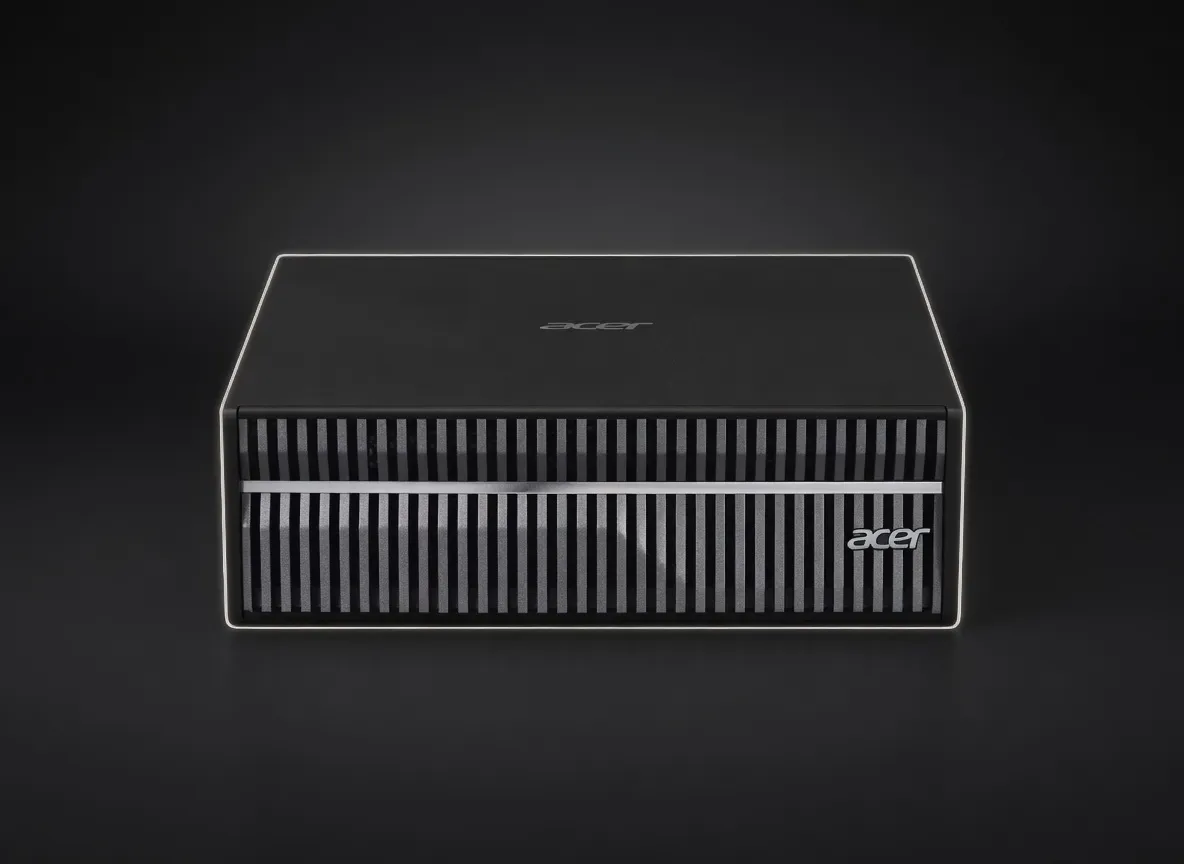
Acer Veriton GN100 AI Mini
A cost-effective GB10 edge workstation featuring locked-down internal storage for security-conscious enterprise edge deployments.
AI PCs & LaptopsIn Stock
Edge AIEnterprise

Quick Specs
VRAM128 GB
FP1629.71 TFLOPS
INT8250 TOPS
TDP140 W
Memory BW273 GB/s
Max Params200B
CPU Architecture20-Core Arm (10 Cortex-X925 + 10 Cortex-A725)
Network Interface10GbE LAN, Wi-Fi 7, BT 5.4, ConnectX-7
Power Supply240W External Adapter
Dimensions150 x 150 x 50.5 mm
Our Take
Sized for production serving of 70B–200B class models at full or lightly-quantized precision. Overkill for a homelab; right call when the workload pays for itself in token volume.
Pair this withKimi K2.7 Code (1000B)Largest popular open model that fits at Q4 — needs roughly 86.2 GB on this 128 GB card.
Generated from this product’s spec sheet. Editor reviews refine it over time.
Specifications
The Acer Veriton GN100 AI Mini is a high-density edge workstation built on the NVIDIA Spark architecture, specifically designed for enterprise-grade local inference and AI development. At its core is the NVIDIA GB10 Grace Blackwell Superchip, a unified architecture that integrates a 20-core Arm CPU with Blackwell-generation GPU cores. By consolidating compute and memory, the GN100 eliminates the traditional PCIe bottleneck between the CPU and GPU, making it a highly efficient platform for running local LLMs and agentic workflows.
Positioned between high-end consumer workstations and full-scale data center racks, the GN100 competes directly with the Apple Mac Studio (M2/M3 Ultra) and specialized small-form-factor (SFF) workstations like the ASUS NUC 14 Pro+. However, while consumer hardware often prioritizes creative workflows, the Veriton GN100 is purpose-built for the NVIDIA AI Enterprise ecosystem, shipping with NVIDIA DGX OS and a locked-down internal storage configuration for security-conscious edge deployments.
For AI engineers, the most critical metric for the Veriton GN100 is its 128GB of LPDDR5x unified memory. Unlike traditional PC builds where VRAM is limited by the GPU (e.g., an RTX 4090 with 24GB), the GN100 allows the Blackwell GPU to access the entire 128GB pool. This makes it one of the most compact "128GB GPUs for AI" available on the market today.
- Compute Performance: 29.71 TFLOPS (FP16); 250 TOPS (INT8).
- Memory Bandwidth: 273 GB/s. While lower than a H100, this bandwidth is optimized for the 140W TDP, providing a superior performance-per-watt ratio for 24/7 edge inference.
- Networking: Integrated NVIDIA ConnectX-7 SmartNIC with 10GbE LAN. This allows for multi-node scaling, where two GN100 units can be linked to double the available VRAM and compute for distributed inference.
- Efficiency: The 140W TDP is significantly lower than a dual-RTX 3090/4090 setup, allowing it to run on a 240W external adapter in environments with limited power or cooling infrastructure.
The 273 GB/s memory bandwidth directly impacts token generation speed. While it won't match the throughput of a dedicated H100 (which exceeds 3TB/s), it is more than sufficient for real-time interactive agents and RAG (Retrieval-Augmented Generation) pipelines where low latency for a single user or small team is the priority.
The Acer Veriton GN100 AI Mini is designed for hardware for running 200B parameter models. Its 128GB VRAM capacity allows it to host massive models that would typically require a multi-GPU server rack.
- Llama 3.1 405B: Can be run at heavy quantization (IQ2_XS or similar), though performance will be slow. It is better suited for a dual-node GN100 setup.
- Llama 3.1 70B: This is the "sweet spot." You can run the FP16 version or high-precision 8-bit (INT8) weights with room left over for a massive 128k context window.
- DeepSeek-R1 / Mixtral 8x22B: These MoE (Mixture of Experts) models fit comfortably in 128GB. You can run Q6_K or Q8_0 quantizations with high tokens-per-second, making it an ideal local alternative to cloud-based API inference.
- Qwen 2.5 72B: Fits easily with large KV caches, making it perfect for long-document analysis and complex agentic reasoning tasks.
For a 70B parameter model at 4-bit quantization (using llama.cpp or TensorRT-LLM), users can expect approximately 10-15 tokens per second. For smaller 8B models like Llama 3 or Mistral 7B, the system will likely hit the bottleneck of the software stack before the hardware, delivering 50+ tokens per second.
The Acer Veriton GN100 AI Mini for AI is not a general-purpose PC; it is a specialized tool for practitioners who need to move away from the cloud for privacy, latency, or cost reasons.
- Enterprise Edge Deployment: The locked-down internal storage and NVIDIA DGX OS make this ideal for "Smart City" or industrial applications where the hardware is deployed on-site to process sensitive data without an internet connection.
- Local LLM Development: AI engineers can prototype and fine-tune models locally before deploying them to the cloud. The 128GB VRAM allows for fine-tuning 7B and 14B models using QLoRA with ease.
- Agentic Workflows: For teams building local AI agents that require constant access to a large model (like DeepSeek-R1) to orchestrate tasks, the GN100 provides a dedicated, "always-on" inference server that fits in a desk drawer.
- Medical & Legal Research: The 150 x 150 mm footprint allows researchers to run private, high-parameter models in secure environments where data cannot leave the room.
The Acer Veriton GN100 AI Mini occupies a unique niche in the AI hardware directory.
The Mac Studio is the closest competitor in terms of unified memory. While the Mac Studio has higher raw memory bandwidth (up to 800 GB/s), the Veriton GN100 has the advantage of the NVIDIA AI software stack. Most SOTA (State of the Art) research, CUDA kernels, and TensorRT optimizations are built for NVIDIA first. If your workflow relies on specific NVIDIA libraries or you require the ConnectX-7 for multi-node scaling, the GN100 is the superior choice.
A custom PC with two RTX 3090s provides 48GB of VRAM and significantly higher FP16 performance for a lower price. However, that setup consumes 700W-850W of power, requires a massive chassis, and generates substantial heat. The GN100 provides nearly 3x the VRAM in a chassis that fits in the palm of your hand, using one-fifth of the power. For practitioners prioritizing model size (parameter count) over raw training speed, the GN100 is the more efficient "best AI chip for local deployment."
When evaluating the Acer Veriton GN100 AI Mini AI inference performance, the decision factor is almost always the 128GB of VRAM. It is currently the most power-efficient way to run 70B+ parameter models locally with a professional, enterprise-supported software stack.
Models That Run on This Device
The top models this device can run at 4-bit, ranked by fit and speed.
| Model | Grade | Speed | VRAM |
|---|---|---|---|
| Qwen3-30B-A3BAlibaba | SS | 40.8 tok/s | 5.4 GB |
| LFM2.5-8B-A1BLiquid AI | AA | 75.6 tok/s | 2.9 GB |
| Llama 3 8B InstructMeta | AA | 38.8 tok/s | 5.7 GB |
| Carnice-9b for Hermes agentkai-os | AA | 36.5 tok/s | 6.0 GB |
| PersonaPlex 7BNVIDIA | AA | 45.9 tok/s | 4.8 GB |
Similar Products
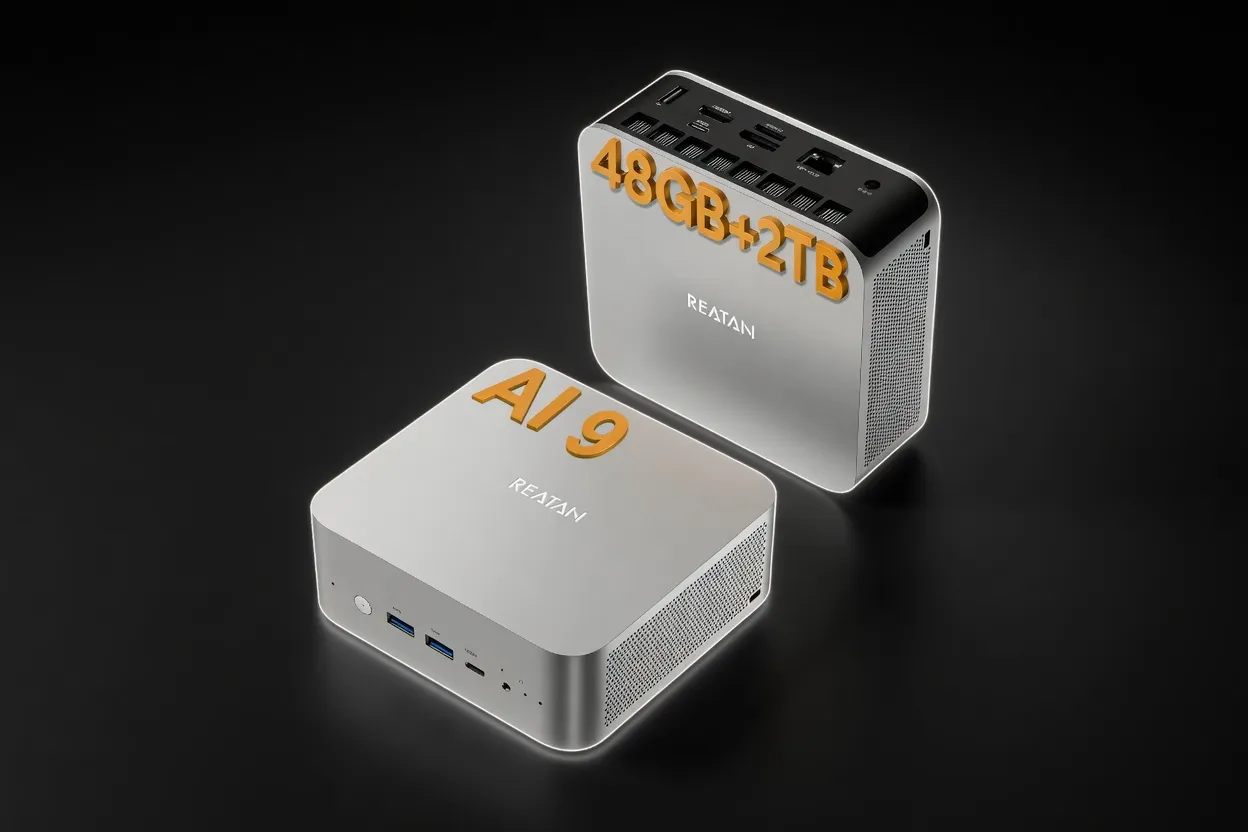
Reatan Mini Gaming PC (Ryzen AI 9 HX 470 with Speaker)
16 GB54 W
Edge AIMobile / On-DeviceEnergy Efficient
$999
Buy on Amazon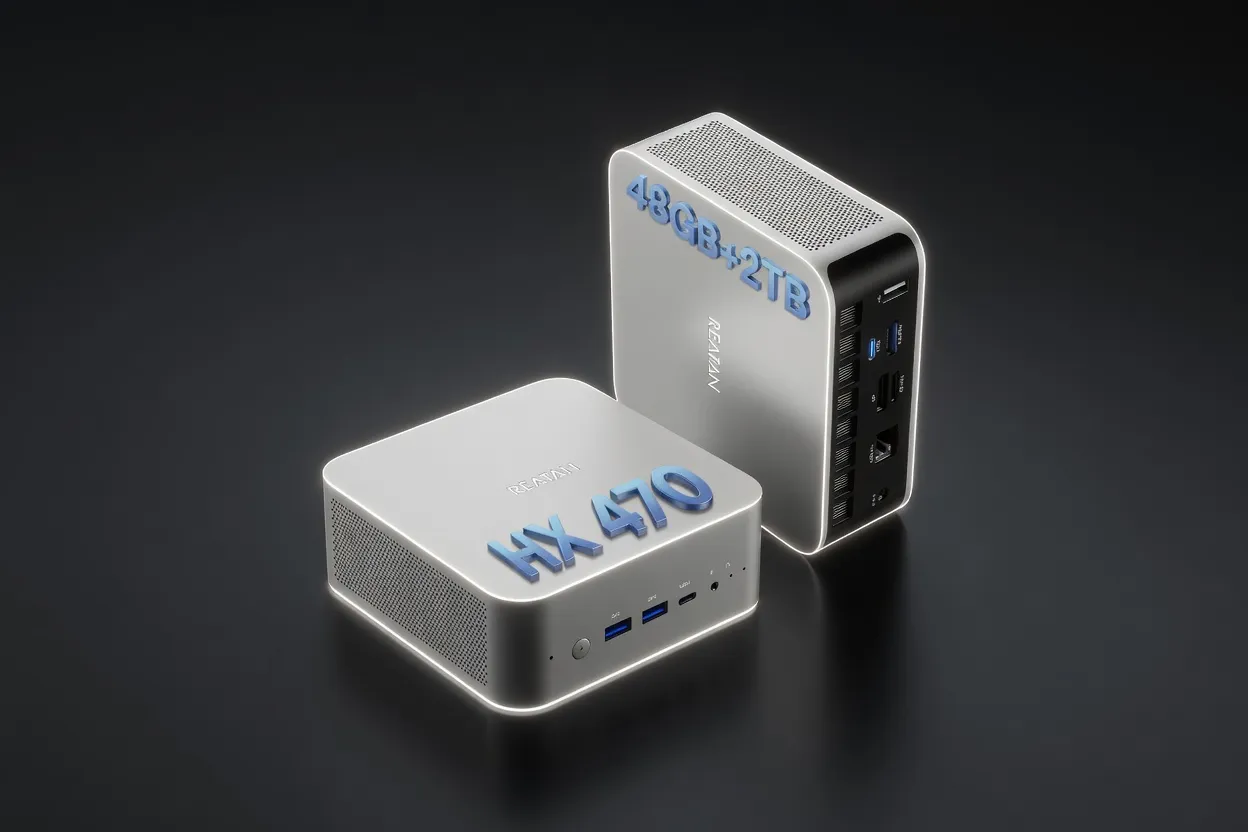
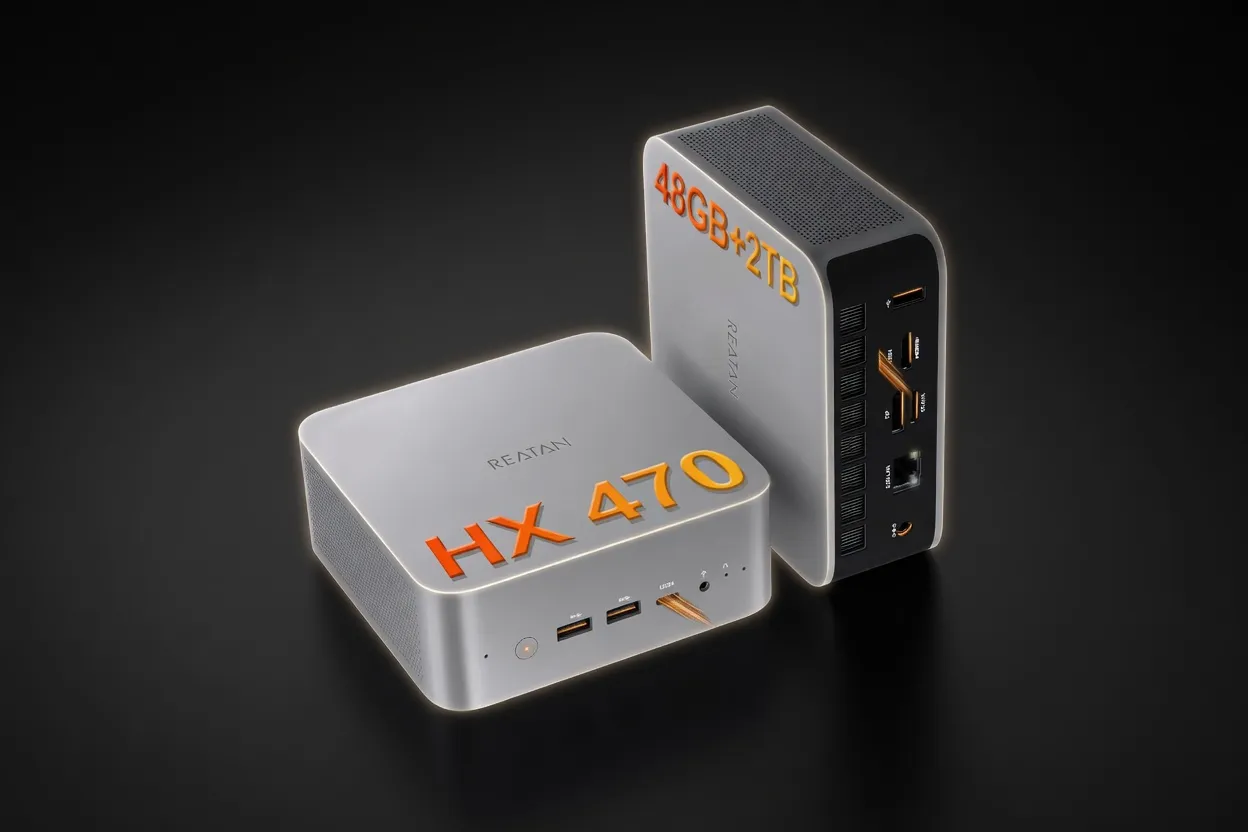
Reatan X8 (Ryzen AI 9 HX 470 48GB)
16 GB54 W
Edge AIMobile / On-DeviceEnergy Efficient
$999
Buy on Amazon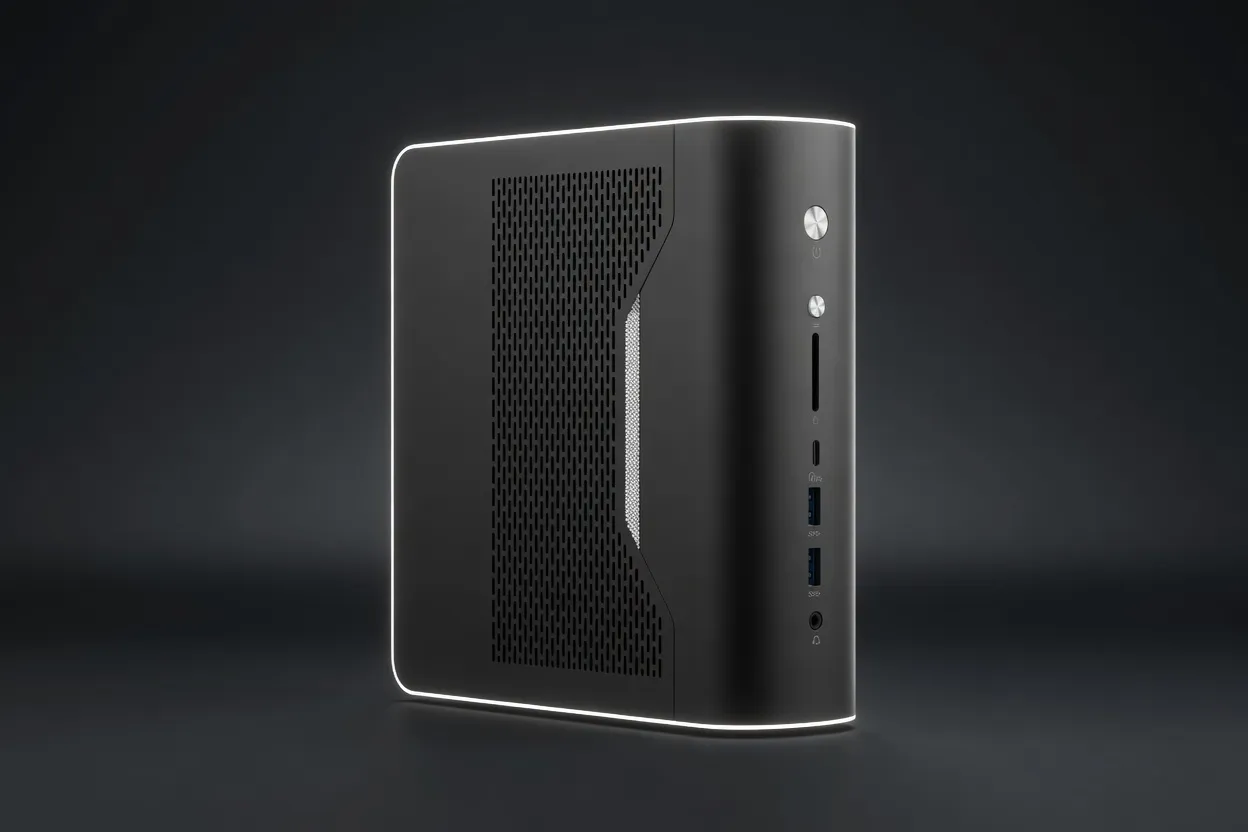
NIMO Mini PC (Ryzen AI Max+ 395 128GB)
96 GB120 W
Best for LLMsEdge AIEnergy Efficient
$2,299
Buy on AmazonPlan Your Setup

GPU Rental Price Index
Rent this class of GPU by the hour before you buy. Live prices from RunPod and Vast.ai.
AI Hardware ROI Calculator
Find the break-even between buying this hardware and paying for a cloud API.
AI Workstation Builder
Get a full budget-matched parts list for a local AI workstation.
Apple Silicon vs RTX
Mac vs NVIDIA for local inference, if you are still choosing a platform.