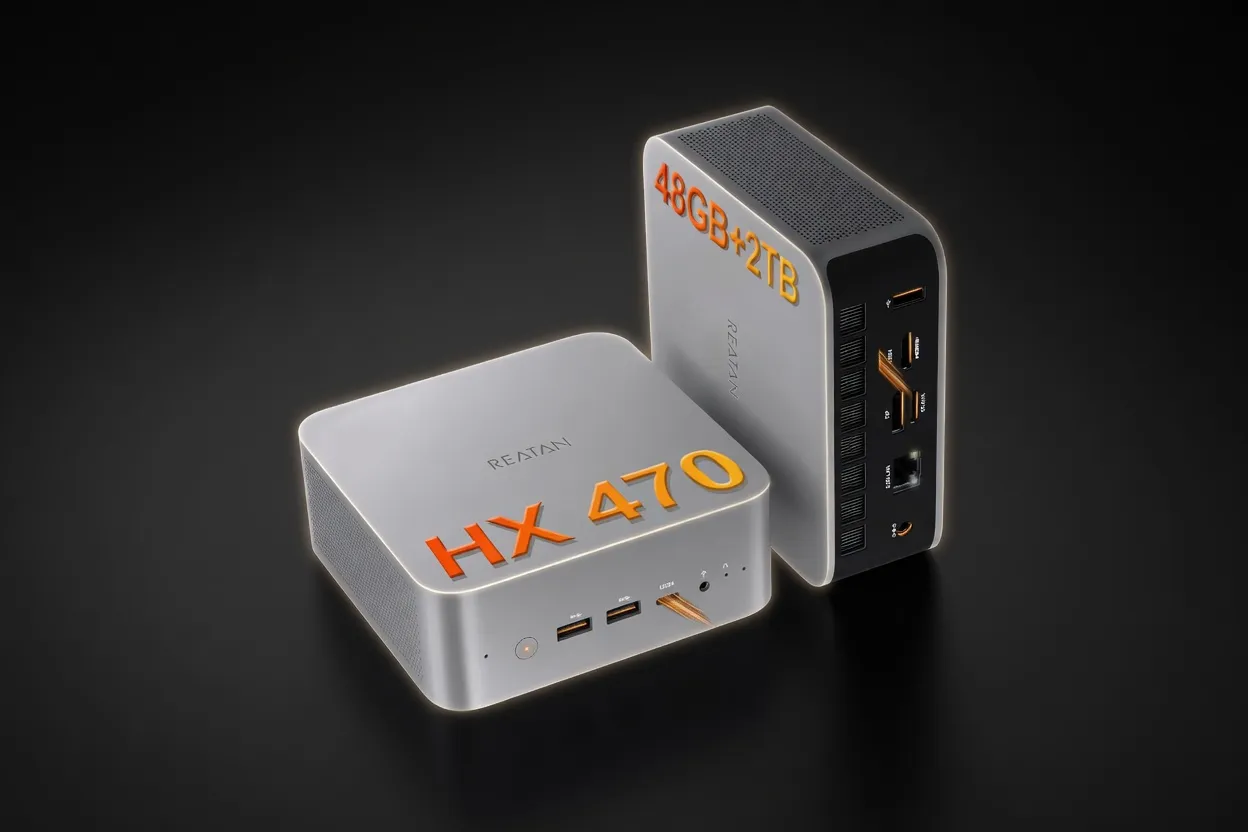
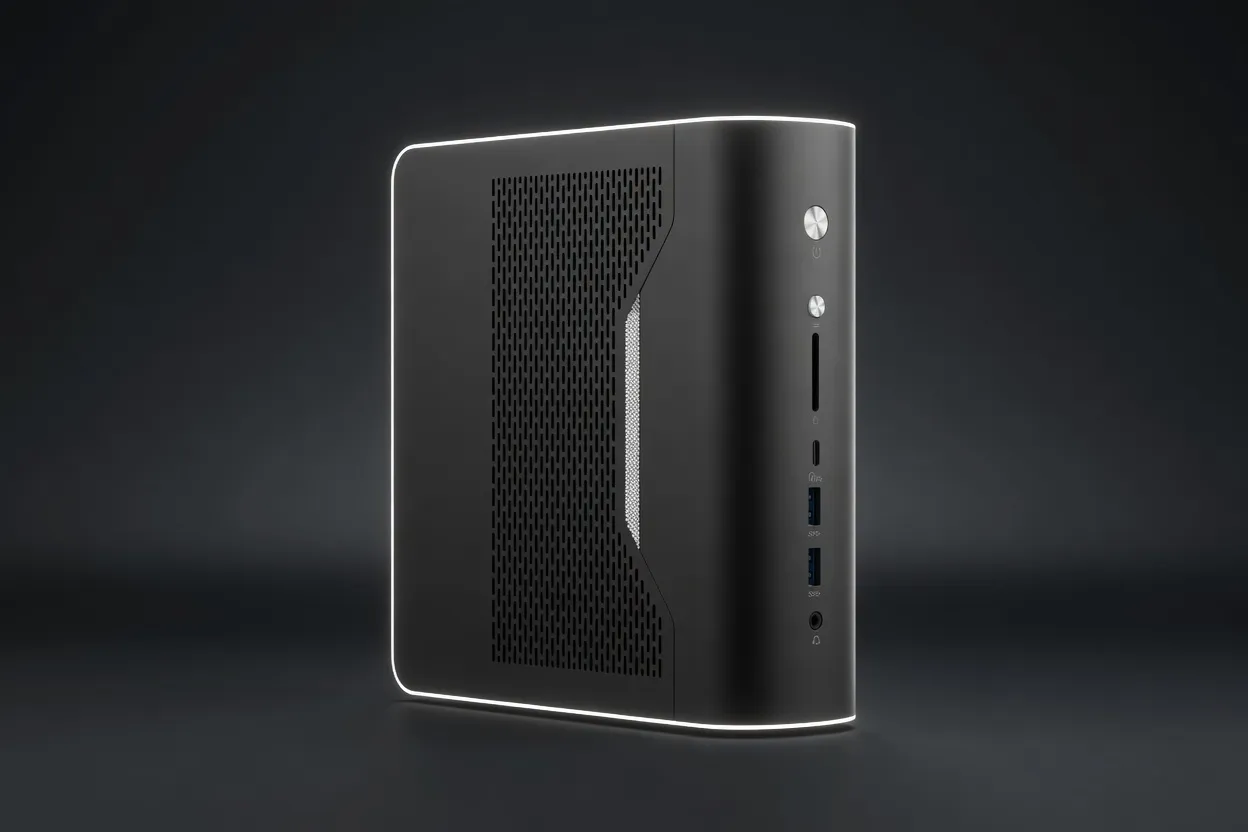
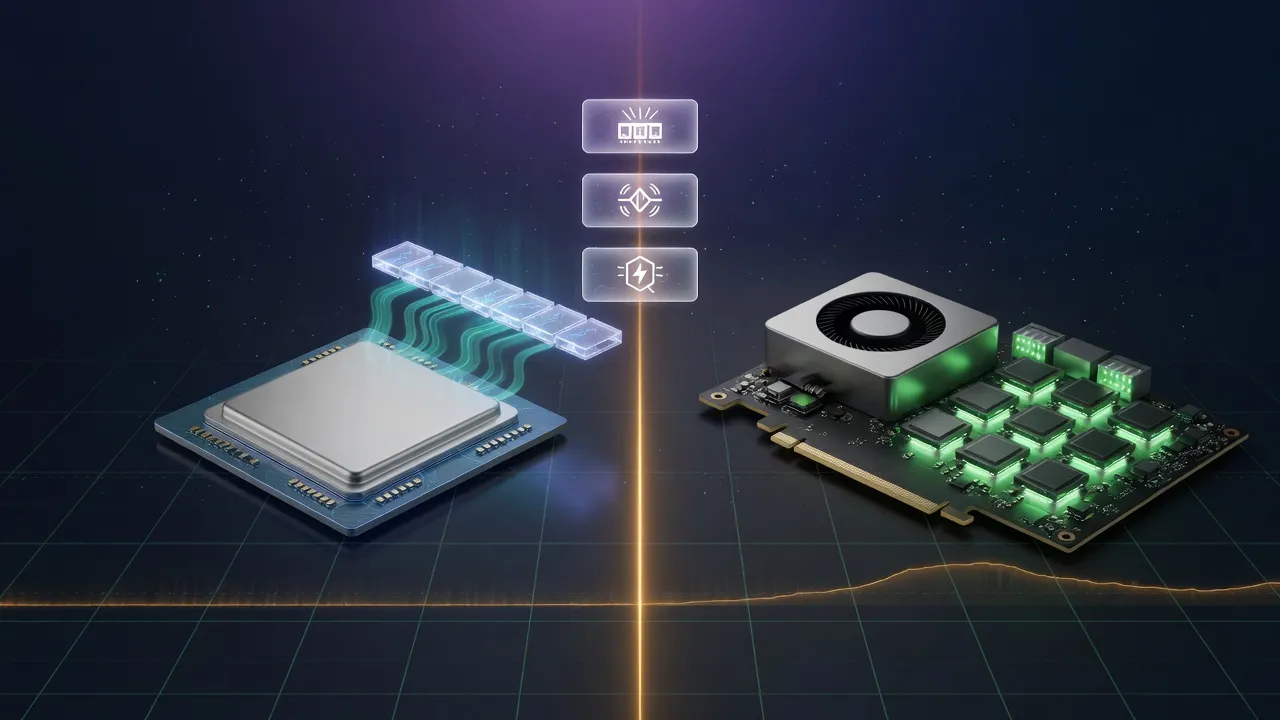
A robust GB10-powered enterprise system featuring Dell's MaxCool chassis and native hardware TPM security integration.
The Dell Pro Max with GB10 is a specialized AI workstation designed to bridge the gap between consumer-grade hardware and data center infrastructure. Built on the NVIDIA GB10 Blackwell architecture, this system is a compact, enterprise-grade appliance optimized for local inference, agentic workflows, and secure development environments. Unlike standard "AI PCs" that rely on low-power NPUs, the Pro Max with GB10 provides a unified 128GB memory pool, making it a viable desktop supercomputer for practitioners who need to run heavyweight models without the latency or privacy concerns of the cloud.
Positioned alongside the NVIDIA DGX Spark, the Dell Pro Max with GB10 differentiates itself through Dell’s L6 chassis and MaxCool thermal management. While consumer GPUs often struggle with sustained 24/7 workloads, this system is engineered for production-ready stability. For AI engineers and ML researchers, it serves as a high-density node capable of handling nearly any modern open-source Large Language Model (LLM) at high precision.
The core of the Dell Pro Max with GB10 is the Grace Blackwell GB10 platform, which utilizes a 20-core Arm CPU architecture (10 Cortex-X925 performance cores and 10 Cortex-A725 efficiency cores). This hybrid architecture ensures that background system tasks do not bottleneck the GPU's tensor operations.
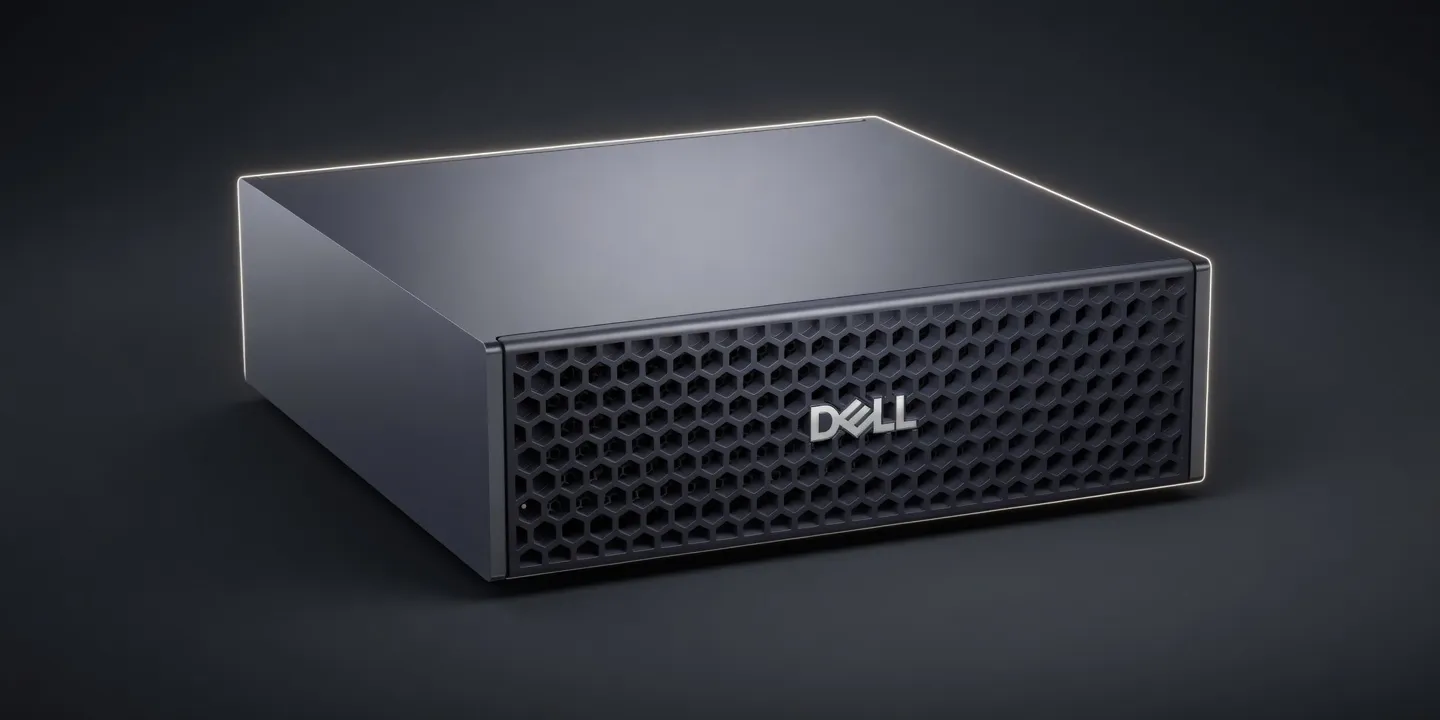
For LLM inference, memory capacity and bandwidth are the primary constraints. The Pro Max with GB10 features 128 GB of unified memory. This is a critical threshold for practitioners because it allows for the loading of massive models that typically require dual or triple-GPU setups in a standard PC.
While 273 GB/s is lower than H100 or H200 data center cards, it is significantly higher than most consumer-grade workstations, providing a consistent token-per-second (TPS) rate for long-context windows and multi-agent loops.
The system delivers 29.71 TFLOPS of FP16 performance and a substantial 250 TOPS of INT8 performance. For developers moving toward FP4 or INT8 quantization to maximize throughput, the Blackwell architecture offers specialized optimizations that significantly accelerate these lower-precision workloads. With a TDP of 140W, the system is remarkably efficient, allowing it to run in standard office environments without dedicated cooling or high-voltage power circuits.
The 128GB memory ceiling changes the calculus for local model selection. Most "AI Laptops" are limited to 16GB or 32GB, forcing users into heavy 4-bit quantization on small models. The Dell Pro Max with GB10 enables high-fidelity inference on flagship open-weights models.
The Dell Pro Max with GB10 is specifically marketed for agentic workflows. Because agents often require "always-on" availability and multiple model calls to execute a single task, the 140W TDP makes this system cost-effective for continuous operation. It is the ideal host for frameworks like NVIDIA OpenShell or LangChain where data privacy is paramount.
For teams building AI-powered applications, this system serves as a "sandbox" that mirrors production environments. The native Hardware TPM 2.0 security and PCIe Gen 4.0 interface ensure that sensitive corporate data remains encrypted and isolated. It is particularly suited for federal or legal sectors where air-gapped AI is a requirement.
For the "local LLM" enthusiast, this is the ultimate upgrade from a multi-RTX 3090/4090 setup. It eliminates the complexities of P2P over PCIe and power-supply-limiting issues, providing a unified memory space that simplifies model loading in libraries like Transformers, llama.cpp, and vLLM.
When evaluating the Dell Pro Max with GB10, it is most often compared to the NVIDIA DGX Spark and the Apple Mac Studio (M2/M3 Ultra).
The Dell Pro Max with GB10 is the definitive choice for practitioners who need a "set it and forget it" AI workstation that can handle the largest open-source models available today without the overhead of a rack-mount server.
Qwen3-30B-A3BAlibaba Cloud (Qwen) | 30B(3B active) | SS | 40.8 tok/s | 5.4 GB | |
BAGEL-7B-MoTBytedance | 14B(7B active) | AA | 45.9 tok/s | 4.8 GB | |
Stable Diffusion 3.5 LargeStability AI | 8.1B | AA | 40.2 tok/s | 5.5 GB | |
e5-mistral-7b-instructintfloat (Microsoft Research) | 7.1B | AA | 45.9 tok/s | 4.8 GB | |
SFR-Embedding-MistralSalesforce | 7.1B | AA | 45.9 tok/s | 4.8 GB | |
Linq-Embed-MistralLinq AI Research | 7.1B | AA | 45.9 tok/s | 4.8 GB | |
GritLM-7BGritLM (Contextual AI) | 7.2B | AA | 45.3 tok/s | 4.9 GB | |
llama-embed-nemotron-8bNVIDIA | 7.5B | AA | 45.9 tok/s | 4.8 GB | |
F2LLM-v2-8BCodeFuse-AI (Ant Group) | 7.6B | AA | 46.5 tok/s | 4.7 GB | |
Octen-Embedding-8BOcten AI | 7.6B | AA | 46.5 tok/s | 4.7 GB | |
Qwen3-Embedding-8BQwen/Alibaba | 7.6B | AA | 46.5 tok/s | 4.7 GB | |
gte-Qwen2-7B-instructAlibaba-NLP (Tongyi Lab) | 7.1B | AA | 49.0 tok/s | 4.5 GB | |
| 8B | AA | 38.8 tok/s | 5.7 GB | ||
| 9B | AA | 36.5 tok/s | 6.0 GB | ||
FLUX.2 [klein] 9BBlack Forest Labs | 9B | AA | 36.5 tok/s | 6.0 GB | |
| 9B | AA | 36.5 tok/s | 6.0 GB | ||
Llama 2 7B ChatMeta | 7B | AA | 45.9 tok/s | 4.8 GB | |
Phi-4-multimodal-instructMicrosoft | 5.6B | AA | 55.9 tok/s | 3.9 GB | |
Z-Image-TurboAlibaba | 6B | AA | 52.6 tok/s | 4.2 GB | |
BOOM_4B_v1ICT-CAS TIME / Querit | 4B | AA | 81.2 tok/s | 2.7 GB | |
F2LLM-v2-4BCodeFuse-AI (Ant Group) | 4B | AA | 81.2 tok/s | 2.7 GB | |
Qwen3-Embedding-4BQwen/Alibaba | 4B | AA | 81.2 tok/s | 2.7 GB | |
FLUX.2 [klein] 4BBlack Forest Labs | 4B | AA | 74.5 tok/s | 3.0 GB | |
Mochi 1 PreviewGenmo AI | 10B | AA | 33.2 tok/s | 6.6 GB | |
| 11.8B | AA | 30.9 tok/s | 7.1 GB |