Which models lead, where API prices moved, and what it costs to run them. Measured from live data.
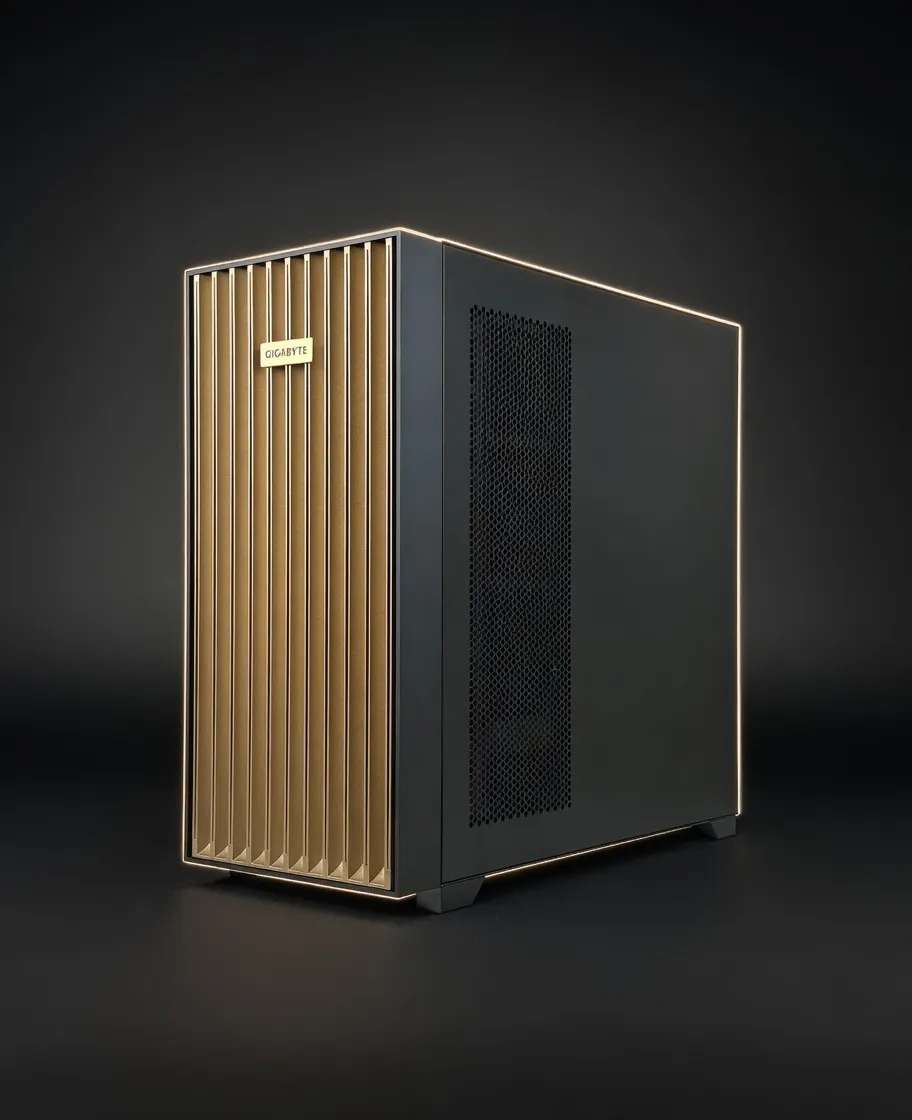
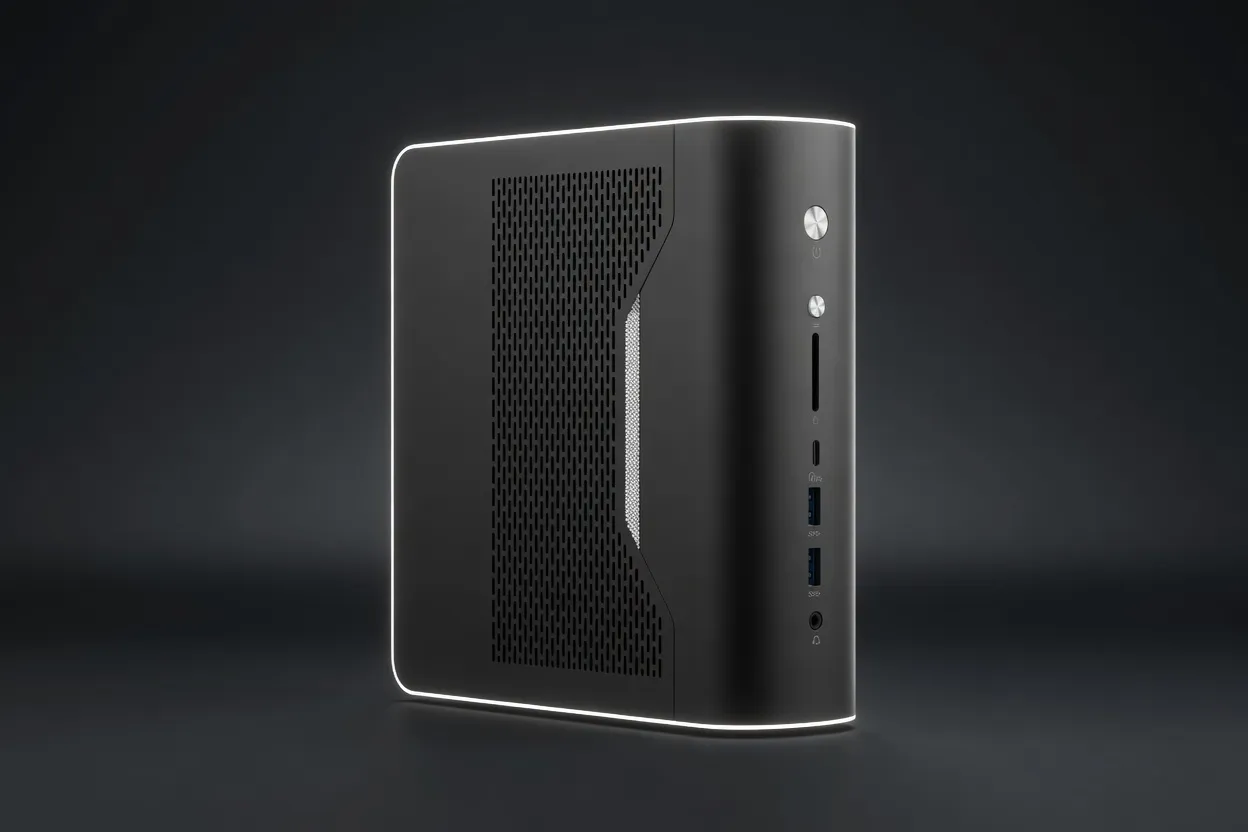
Gigabyte W775-V10-L01 Supercomputer | AI Hardware Directory
Quick Specs
VRAM775 GB
FP165000 TFLOPS
Our Take
Best for: Datacenter inference for flagship dense models
Sized for production serving of 70B–200B class models at full or lightly-quantized precision. Overkill for a homelab; right call when the workload pays for itself in token volume. Notably efficient for its compute class — strong perf-per-watt makes it a natural pick for always-on inference.
Generated from this product’s spec sheet. Editor reviews refine it over time.
Specifications
The Gigabyte W775-V10-L01 is a flagship enterprise workstation designed specifically for the most demanding local AI workloads. Built on the NVIDIA GB300 Grace Blackwell Ultra architecture, this system bridges the gap between traditional workstations and data center racks. It is engineered for engineers and researchers who require massive VRAM pools to run, fine-tune, or serve frontier-class models without the latency or privacy concerns of cloud-based APIs.
Unlike standard consumer-grade AI PCs, the W775-V10-L01 is a "Superchip" platform. It integrates a 72-core NVIDIA Grace Neoverse V2 CPU with a Blackwell Ultra GPU via a high-speed coherent interconnect. This architecture eliminates the traditional PCIe bottleneck between CPU and GPU, making it a premier choice for agentic workflows that require frequent context switching and high-throughput data processing. In the current market, it competes directly with the NVIDIA DGX Station and high-end Mac Studio configurations, though it offers significantly higher raw compute and VRAM capacity for professional ML pipelines.
AI Performance & Specifications
The defining characteristic of the Gigabyte W775-V10-L01 is its unified memory architecture and massive compute density. For practitioners, the most critical metric is the 775 GB of total available VRAM (comprising 252 GB of HBM3E on the GPU and 496 GB of LPDDR5X on the CPU side).
The 7,100 GB/s memory bandwidth is a transformative spec for local LLM inference. Since LLM token generation is typically memory-bandwidth bound rather than compute-bound, this throughput allows for near-instantaneous response times even with high-parameter models. The inclusion of PCIe Gen6 M.2 slots ensures that loading 100GB+ model weights from disk into VRAM is limited only by current NVMe technology, not the motherboard bus.
What Models Can It Run?
The Gigabyte W775-V10-L01 is one of the few desktop-class machines capable of running a 1-Trillion parameter model locally. While most consumer hardware struggles with 70B models at high quantization, this system opens the door to frontier-level research.
LLM Compatibility & Quantization
Llama 3.1 405B: Can run at FP16 or BF16 precision with room to spare for massive KV caches. This allows for full-precision inference of Meta’s largest open model, ensuring zero quality loss from quantization.
DeepSeek-V3 / DeepSeek-R1: These Mixture-of-Experts (MoE) models fit comfortably within the 775 GB VRAM pool, even at high precision, allowing for enterprise-grade reasoning agents to run entirely on-premise.
Grok-1: The 314B parameter model runs with significant overhead remaining for long-context windows.
Qwen 2.5 / Mixtral 8x22B: These models can be run in multi-tenant configurations, where one W775-V10-L01 serves multiple inference streams simultaneously without significant performance degradation.
Expected Throughput (Tokens Per Second)
Given the 7,100 GB/s bandwidth, practitioners can expect Llama 3.1 70B to run at speeds exceeding 100+ tokens per second (t/s) at 4-bit quantization, and even the 405B variant to maintain highly usable, human-readable speeds (15-25 t/s) at 8-bit quantization. This makes it a viable platform for real-time agentic loops where low latency is required for multi-step reasoning.
Use Cases & Target Audience
The W775-V10-L01 is not a general-purpose workstation; it is a specialized tool for AI development and high-throughput inference.
AI Research & Development
For teams building local AI agents, the W775-V10-L01 provides the necessary VRAM to hold the model, the vector database, and the active context in memory simultaneously. The high FP16 performance (5,000 TFLOPS) also makes it suitable for Parameter-Efficient Fine-Tuning (PEFT) techniques like LoRA and QLoRA on 70B+ parameter models, which would be impossible on standard 24GB or 48GB GPU setups.
Enterprise Inference Servers
Organizations that cannot use cloud APIs due to data sovereignty or compliance (HIPAA, GDPR) can use the W775-V10-L01 as a localized inference hub. With dual 400 Gb/s QSFP ports via NVIDIA ConnectX-8, this workstation can be integrated into high-speed fabric to serve model requests to an entire engineering department with minimal network overhead.
Multimodal and Long-Context Tasks
The 775 GB VRAM is particularly beneficial for long-context applications (e.g., analyzing 100,000+ line codebases or massive PDF libraries). As context windows expand, the memory required for the KV cache grows linearly; the W775-V10-L01 handles 128k or even 1M context windows on large models where other hardware would trigger Out-of-Memory (OOM) errors.
How It Compares
When evaluating the Gigabyte W775-V10-L01, practitioners typically look at two alternatives: the Apple Mac Studio (M2/M3 Ultra) and the NVIDIA DGX Station.
Vs. Mac Studio (192GB RAM): The Gigabyte W775-V10-L01 offers nearly 4x the total memory and significantly higher raw compute (TFLOPS). While the Mac is quieter and more power-efficient, it cannot run 405B+ models at high precision. The Gigabyte system is a dedicated "brute force" AI machine for those who have outgrown the unified memory limits of Apple Silicon.
Vs. NVIDIA DGX Station: The W775-V10-L01 utilizes the newer Blackwell Ultra architecture, providing a generational leap in INT8 and FP4 performance compared to older Hopper-based stations. Gigabyte's inclusion of PCIe Gen6 slots also provides a more future-proof I/O path for next-generation storage arrays.
Vs. Multi-GPU DIY Builds (e.g., 4x RTX 6000 Ada): While a 4x GPU build can reach ~192GB of VRAM, it suffers from PCIe bottlenecking and complex thermal management. The W775-V10-L01's closed-loop liquid cooling and Grace Blackwell coherent interconnect provide a more stable, performant, and "turnkey" solution for enterprise environments.
The Gigabyte W775-V10-L01 stands as a top-tier choice for 2026 AI development, specifically for those working with 1T parameter models and high-throughput agentic workflows. Its combination of liquid-cooled Blackwell silicon and massive unified memory makes it one of the most capable local inference machines ever produced.
Models That Run on This Device
The top models this device can run at 4-bit, ranked by fit and speed.