- Services
Advertising disclosure: we earn commissions when you shop through the links below.
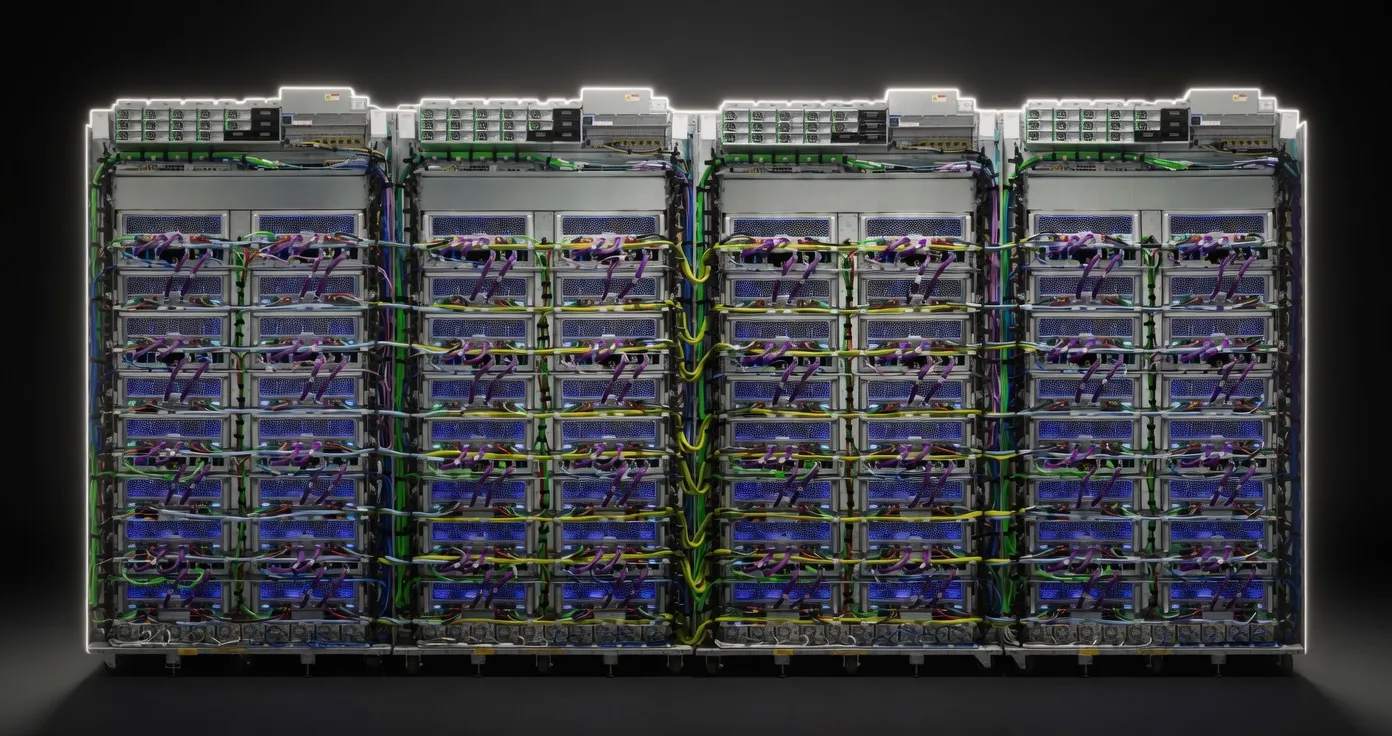
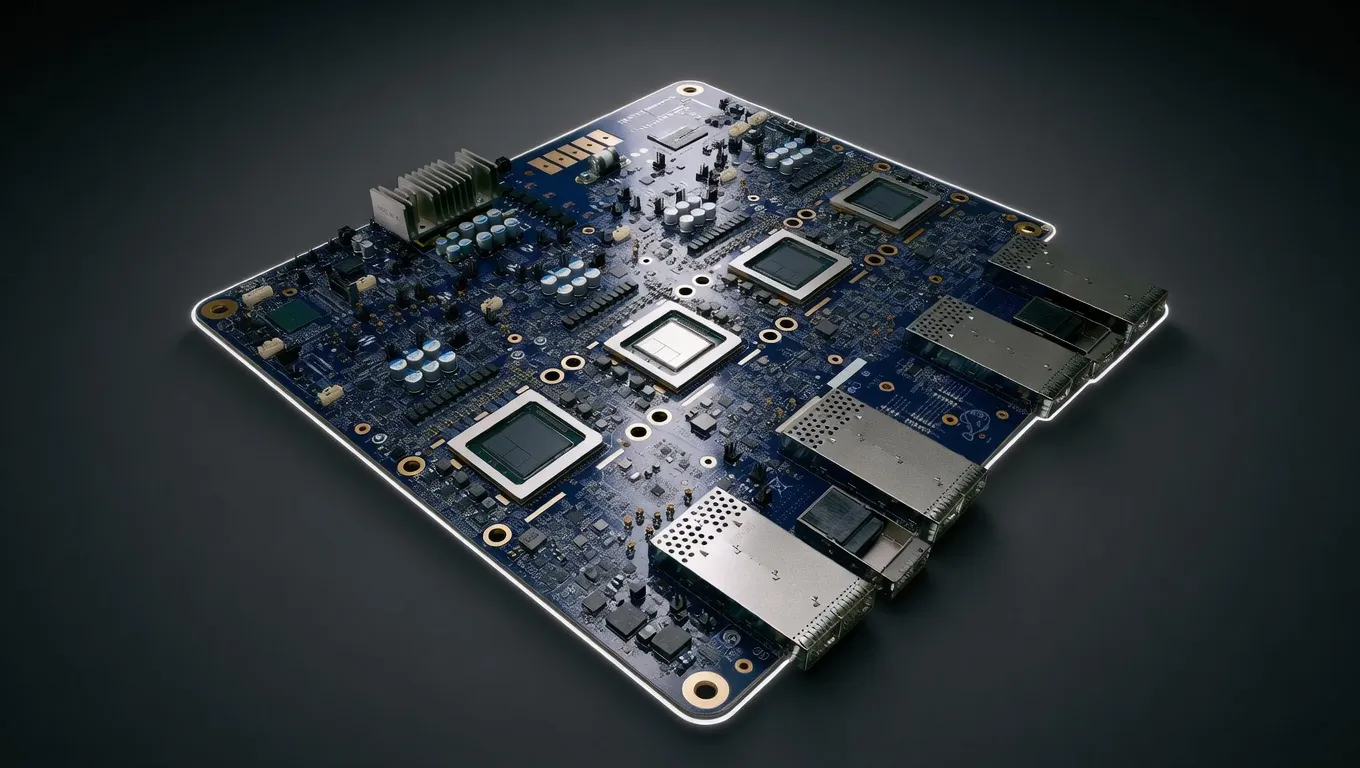
Google's seventh-generation Tensor Processing Unit, delivering 4,614 FP8 TFLOPS per chip with 192 GB HBM3e. Scales to 9,216-chip superpods producing 42.5 FP8 EFLOPS. Purpose-built for large-scale AI training and inference. Cloud-only via Google Cloud Platform.
Sized for production serving of 70B–200B class models at full or lightly-quantized precision. Overkill for a homelab; right call when the workload pays for itself in token volume. Notably efficient for its compute class — strong perf-per-watt makes it a natural pick for always-on inference.
Generated from this product’s spec sheet. Editor reviews refine it over time.
Google TPU v7 (Ironwood) is the seventh-generation Tensor Processing Unit, built exclusively for inference at data-center scale. Unlike earlier TPUs that split their focus between training and serving, Ironwood is architected for one job: turn a 70-billion-parameter model into a low-latency API endpoint. You can’t buy the chip, Google keeps every wafer in-house, but you can rent slices of 4 to 9,216 chips through Google Cloud Platform. In practice, that means 192 GB HBM3e and 4.6 FP8 PFLOPS per socket, liquid-cooled, wired into a 3-D torus that pushes 9.6 Tbps chip-to-chip. If your bottleneck is “how many concurrent users can hit Llama 3.1 70 B before the P99 latency explodes,” Ironwood is the closest thing to a turnkey answer.
The competitive set is thin: NVIDIA H100/H200/B100 for GPU-centric shops, AWS Inferentia2 for cost-at-all-costs, and AMD MI300X if you want 192 GB on a PCIe card. Ironwood’s pitch is simple, higher memory bandwidth (7.4 TB/s vs. 4.8 TB/s on H100 SXM) and 2× the perf/Watt of the prior-gen Trillium, so Google can offer lower per-token cost while keeping the QoS bar high.
Per-chip numbers that matter:
Pod-scale ceiling:
Quantisation impact: FP8 is native; BF16 and INT8 paths are one compiler flag away. Google’s XLA compiler automatically fuses MoE top-k routing into the sparse cores, so Mixtral-8×22B runs at the same per-token energy as a dense 7 B model.
VRAM rule of thumb: 1 byte/parameter in FP8, 0.5 bytes in 4-bit, 0.25 bytes in 2-bit. With 192 GB you get:
Sweet spot: 4-bit weight-only quant on 70 B class models keeps quality within 0.3% of BF16 on MMLU while doubling throughput. Long-context jobs (≥200 k) stay in HBM without paging, so latency variance drops to sub-millisecond.
You choose Ironwood when your daily bill is measured in billions of tokens, not dollars per hour.
Not for you if you need on-prem or edge: Ironwood never leaves Google’s liquid-cooled halls. If you want a 192 GB card in your own box, look at AMD MI300X or the upcoming NVIDIA B100.
NVIDIA H100 80 GB SXM
AWS Inferentia2 (Trn1)
Bottom line: Ironwood is the fastest path to serve the largest open-weight models today, provided you’re willing to live inside Google’s cloud.
The top models this device can run at 4-bit, ranked by fit and speed.
| Model | Grade | Speed | VRAM |
|---|---|---|---|
| Llama 3.1 70B InstructMeta | SS | 52.7 tok/s | 112.8 GB |
| Llama 3.3 70B InstructMeta | SS | 52.7 tok/s | 112.8 GB |
| Mixtral 8x22B InstructMistral AI | SS | 136.4 tok/s | 102.7 GB |
| minimax-m2.5MiniMax | SS | 261.7 tok/s | 150.3 GB |
| Qwen3.5-122B-A10BAlibaba | SS | 217.8 tok/s | 92.2 GB |
Among 4 similar devices, the Google TPU v7 (Ironwood) ranks #1 for memory and #1 for memory bandwidth.
Also in Our Store
Docks, fast storage, cables, and a UPS sized for a local AI machine.

Rent this class of GPU by the hour before you buy. Live prices from RunPod and Vast.ai.
Find the break-even between buying this hardware and paying for a cloud API.
Mac vs NVIDIA for local inference, if you are still choosing a platform.