- Services
Advertising disclosure: we earn commissions when you shop through the links below.
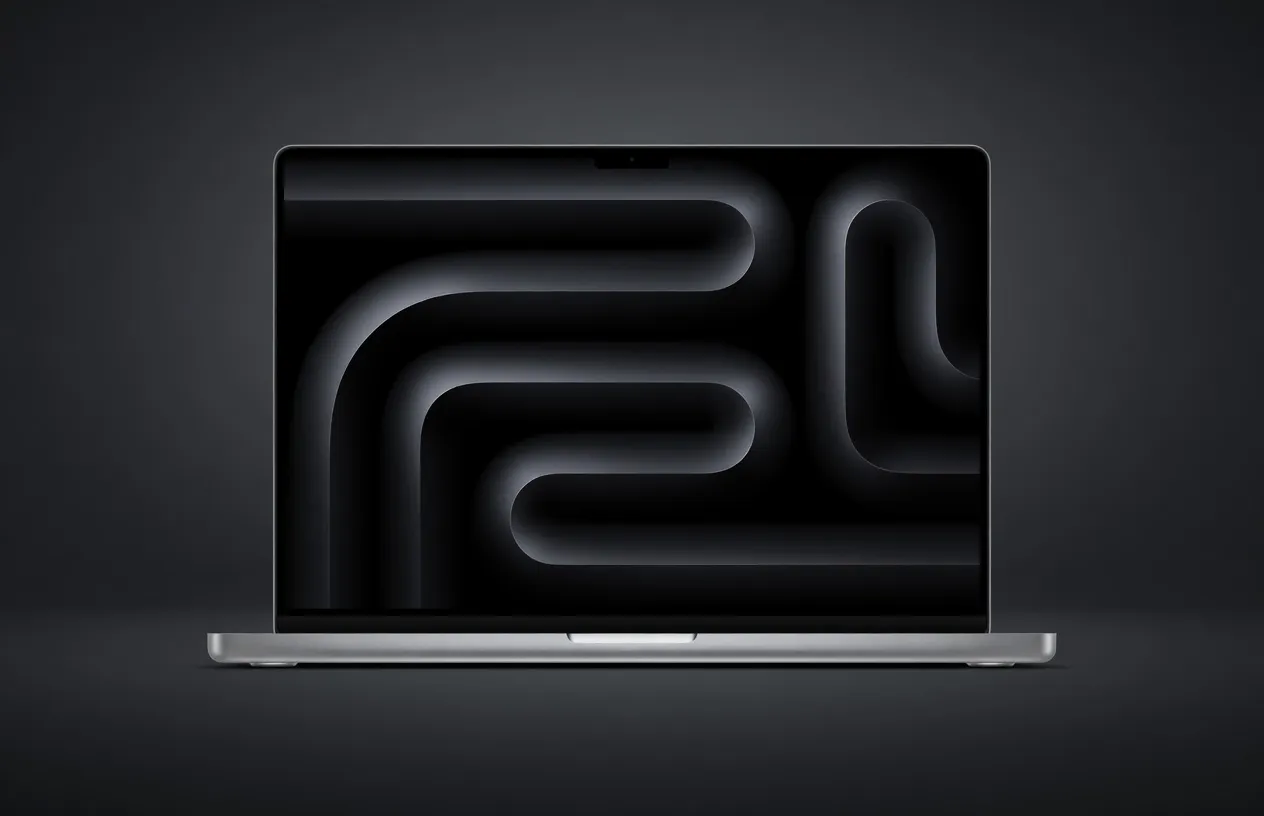
Latest 16-inch MacBook Pro with M5 Max Fusion Architecture, 40-core GPU with Neural Accelerators, up to 128GB at 614 GB/s. Delivers 4x AI performance vs M4 Max with 24-hour battery life.
Manufacturer's suggested retail price. Current prices can be higher or lower. This is not a live price.
Generated from this product’s spec sheet. Editor reviews refine it over time.
The MacBook Pro 16" M5 Max (2026) represents the pinnacle of mobile workstations for local AI development. While traditional laptops struggle with the memory demands of large language models, the M5 Max utilizes a dual-die Fusion Architecture to bridge the gap between consumer hardware and entry-level data center GPUs. By offering up to 128GB of unified memory, this machine allows AI engineers and researchers to run high-parameter models that were previously restricted to dedicated Linux towers or expensive cloud instances.
For practitioners building agentic workflows or fine-tuning models, the M5 Max is a Tier-1 prosumer device. It competes directly with high-end Windows workstations equipped with mobile NVIDIA RTX 50-series GPUs, but it holds a distinct advantage in VRAM capacity and power efficiency. While a typical laptop GPU might top out at 16GB or 12GB of dedicated VRAM, the M5 Max treats its entire 128GB pool as accessible for the GPU, making it one of the best AI PCs & laptops for running AI models locally without the thermal throttling common in thinner chassis.
The defining characteristic of the MacBook Pro 16" M5 Max (2026) for AI is its 614 GB/s memory bandwidth. In local LLM inference, the primary bottleneck is almost always memory bandwidth rather than raw compute. The M5 Max’s ability to move data at over 600 GB/s ensures that token generation remains fluid even when working with massive KV caches or long-context windows.
Compared to a desktop NVIDIA RTX 4090 (24GB VRAM), the M5 Max has lower raw TFLOPS but significantly higher memory capacity. This makes the MacBook Pro 16" M5 Max (2026) AI inference performance superior for "heavy" models that simply won't fit on consumer-grade dedicated GPUs.
The 128GB VRAM configuration changes the math for local deployment. This hardware is specifically designed for running ~200B+ parameter LLMs.
For a 70B parameter model at 4-bit quantization (Q4_K_M), practitioners can expect:
The 128GB pool is ideal for multimodal models like Llava or Qwen-VL. Furthermore, the massive VRAM allows for 128k+ context windows without OOM (Out of Memory) errors, which is essential for developers using local AI to analyze entire codebases or long legal documents.
The MacBook Pro 16" M5 Max (2026) is the best AI chip for local deployment in a mobile form factor. It targets three specific personas:
When evaluating the MacBook Pro 16" M5 Max (2026) vs competitors, the primary trade-off is software ecosystem vs. memory capacity.
For local LLM development in 2026, the MacBook Pro 16" M5 Max is the industry standard for "VRAM-heavy" workloads. It is the only mobile device capable of running 200B+ parameter models locally with acceptable latency, making it the definitive choice for the next generation of local AI agents.
The top models this device can run at 4-bit, ranked by fit and speed.
| Model | Grade | Speed | VRAM |
|---|---|---|---|
| Mixtral 8x7B InstructMistral AI | SS | 43.5 tok/s | 11.4 GB |
| AliceAI-Foundation-80B-A3B-Baseyandex | SS | 57.9 tok/s | 8.5 GB |
| Gemma 4 26B-A4B ITGoogle | SS | 44.9 tok/s | 11.0 GB |
| Xing4.0-29B-A4BChina Telecom AI | SS | 44.1 tok/s | 11.2 GB |
| DiffusionGemma 26B-A4BGoogle | SS | 47.1 tok/s | 10.5 GB |
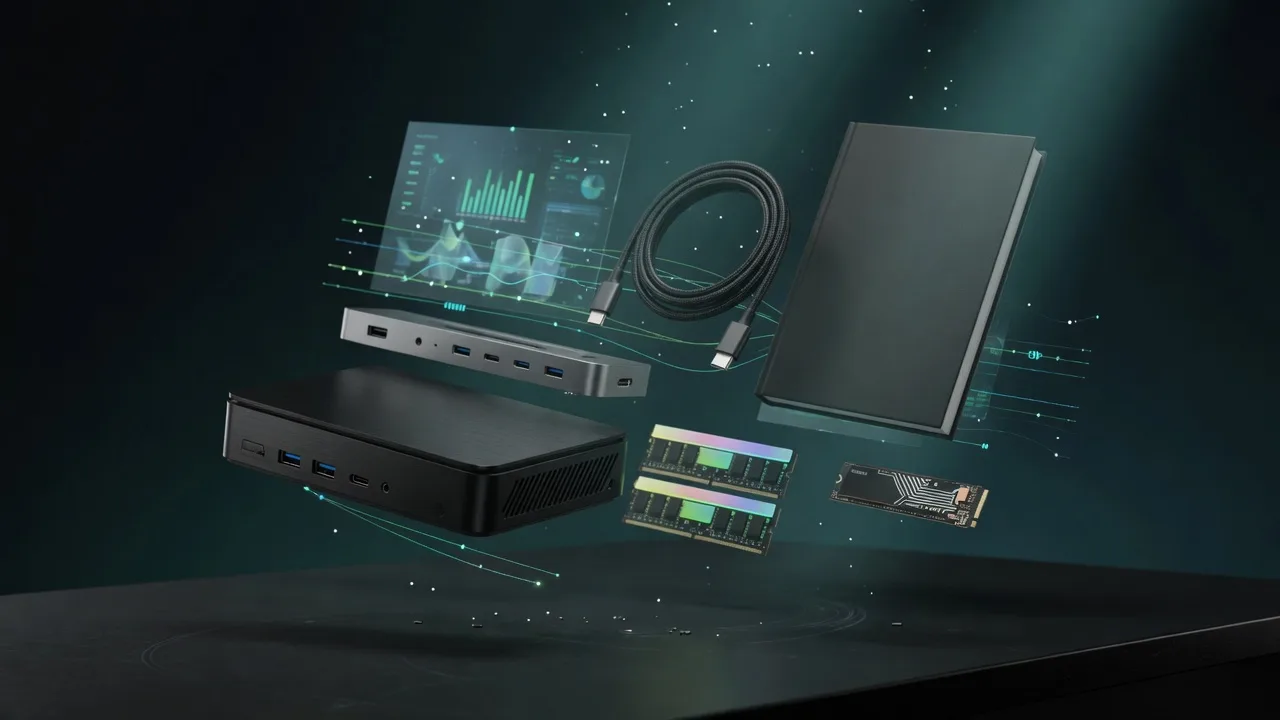
Also in Our Store
Docks, fast storage, cables, and a UPS sized for a local AI machine.

Rent this class of GPU by the hour before you buy. Live prices from RunPod and Vast.ai.
Find the break-even between buying this hardware and paying for a cloud API.
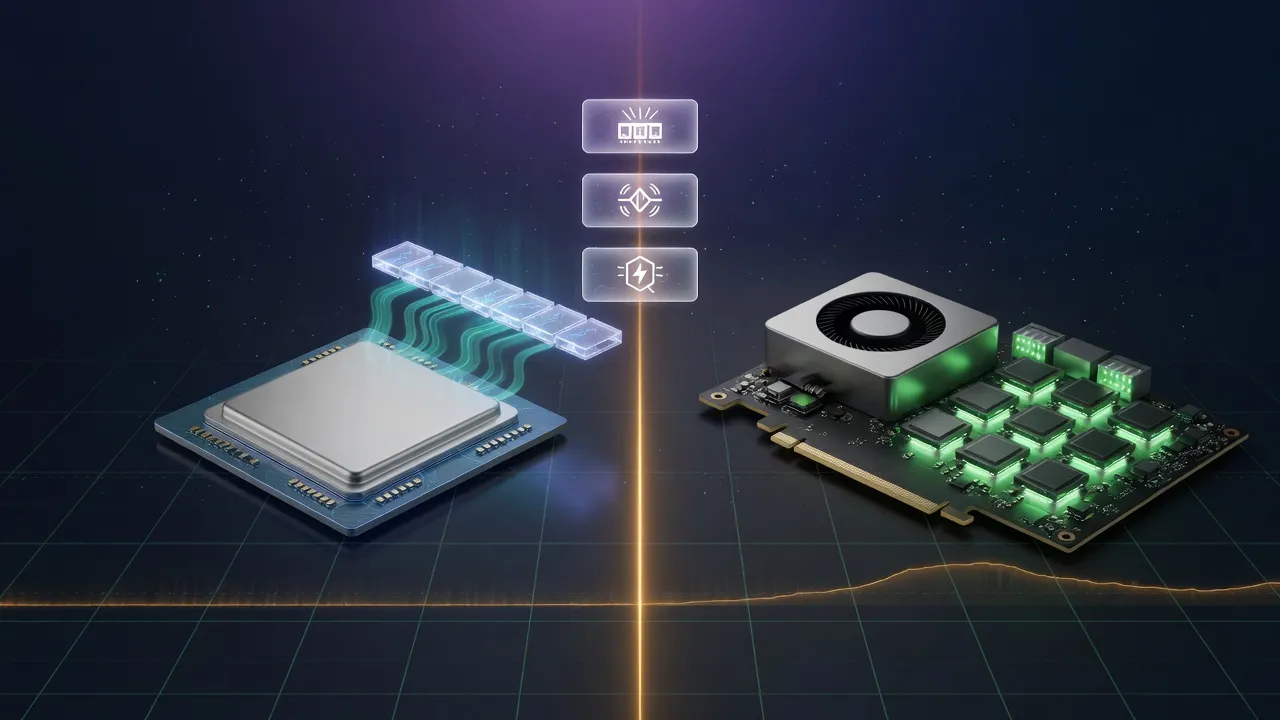
Mac vs NVIDIA for local inference, if you are still choosing a platform.