- Services
Advertising disclosure: we earn commissions when you shop through the links below.
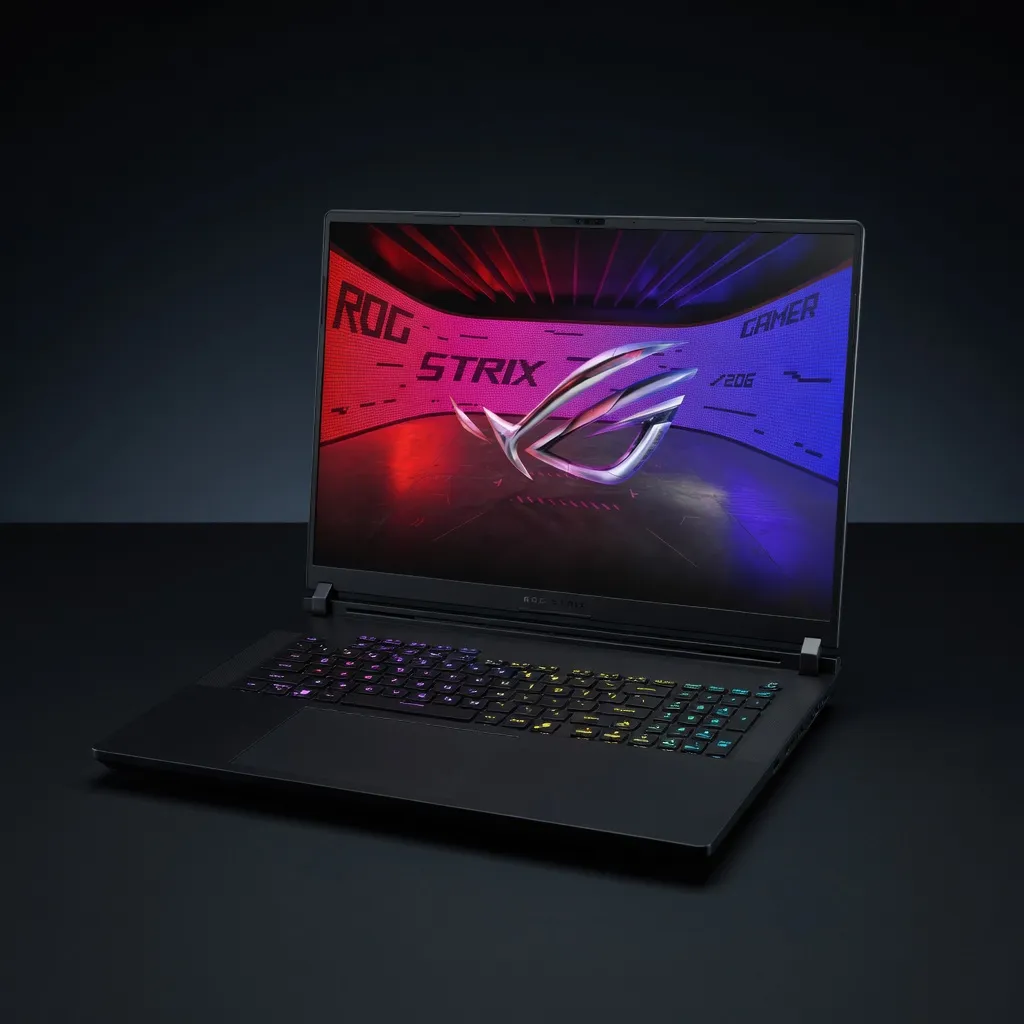
High-end gaming/AI laptop with Intel Core i9-14900HX and NVIDIA RTX 5090 Laptop GPU. 18-inch 240Hz display with up to 64GB DDR5 for serious AI workloads and gaming.
The 24 GB tier is where most local-LLM tooling assumes you live. Strong fit for code agents, RAG, and 30B-class reasoning models without exotic quants.
Generated from this product’s spec sheet. Editor reviews refine it over time.
GPU Rental Price Index
From $0.69 per GPU-hour, NVIDIA GeForce RTX 5090 on RunPod.
The ASUS ROG Strix SCAR 18 (2025) represents the current ceiling for mobile AI compute. By integrating the NVIDIA GeForce RTX 5090 Laptop GPU with 24GB of GDDR7 VRAM, this machine moves beyond "gaming laptop" territory and into the realm of a portable workstation for AI development and local inference. For engineers and researchers, the SCAR 18 is a high-end solution for running large language models (LLMs) and computer vision pipelines without being tethered to a desktop or a cloud provider.
In the 2025 market for best AI PCs & laptops for running AI models locally, the SCAR 18 sits in the premium prosumer tier. It competes directly with the Razer Blade 18 and the MSI Titan series, but distinguishes itself through an aggressive thermal design and the maximum TGP (Total Graphics Power) allocation for its GPU. For practitioners building agentic workflows or deploying local AI agents, this is one of the few mobile platforms that provides enough VRAM to avoid the heavy performance penalties of system RAM offloading.
The core of the ASUS ROG Strix SCAR 18 (2025) AI inference performance lies in its 24GB VRAM capacity. In the context of local AI, VRAM is the primary bottleneck. Most high-end laptops cap out at 16GB; by pushing to 24GB, the SCAR 18 allows for significantly larger KV (Key-Value) caches and the ability to load higher-parameter models at lower quantization levels.
The Intel Core i9-14900HX, with its 24 cores (8 P-cores, 16 E-cores), handles the preprocessing and orchestration of AI workloads. While the GPU does the heavy lifting for tensor operations, the CPU is vital for data tokenization, embedding generation, and managing the logic of multi-agent systems. The inclusion of up to 64GB of DDR5-5600 RAM ensures that if you do need to run models that exceed 24GB (via GGUF offloading), the system has the headroom to handle the overflow, albeit at reduced speeds.
The ASUS ROG Strix SCAR 18 (2025) VRAM for large language models changes the calculus for what is possible on a laptop. While 8GB or 16GB cards struggle with anything beyond 7B or 8B parameter models at high precision, the 24GB buffer opens the door to the "sweet spot" of open-weight models.
The hardware for running 13B at Q4 with 24GB laptop VRAM parameter models is exactly where this machine excels, but it actually goes much further:
For Computer Vision tasks, the 24GB VRAM allows for training small-scale LoRAs or running high-resolution Stable Diffusion XL (SDXL) and Flux.1 (Schenell) generations in seconds. It is also a top-tier choice for video-to-video AI tasks and real-time object detection using YOLOv10/v11.
The ASUS ROG Strix SCAR 18 (2025) is designed for specific professional and enthusiast profiles who require NVIDIA AI PCs & laptops for AI development without the constraints of a desktop.
When evaluating the ASUS ROG Strix SCAR 18 (2025) vs [competitor], the primary comparisons are the MacBook Pro M4 Max and the Razer Blade 18.
The MacBook Pro offers a higher total memory ceiling (up to 128GB), allowing it to run much larger models (like Llama 3 70B at FP16) that the SCAR 18 cannot. However, the SCAR 18's RTX 5090 has significantly higher raw compute throughput (TFLOPS) and better software compatibility via the CUDA ecosystem. For models that fit within 24GB, the SCAR 18 will generally deliver higher tokens per second.
Both laptops feature the RTX 5090. The choice here comes down to thermal management and sustained performance. The SCAR 18 uses a thicker chassis with a triple-fan cooling system and liquid metal, which allows the GPU to maintain its 175W TDP for longer periods without thermal throttling. The Razer is more portable but may downclock during intensive, multi-hour training or inference sessions.
For the practitioner, the ASUS ROG Strix SCAR 18 (2025) is currently the best hardware for local AI agents 2025 in a laptop form factor, provided your workflow prioritizes raw CUDA performance and the ability to run 13B-34B parameter models entirely on-device.
The top models this device can run at 4-bit, ranked by fit and speed.
Specs not available for scoring. This product is missing VRAM or memory bandwidth data.
Also in Our Store
Docks, fast storage, cables, and a UPS sized for a local AI machine.

Rent this class of GPU by the hour before you buy. Live prices from RunPod and Vast.ai.
Find the break-even between buying this hardware and paying for a cloud API.
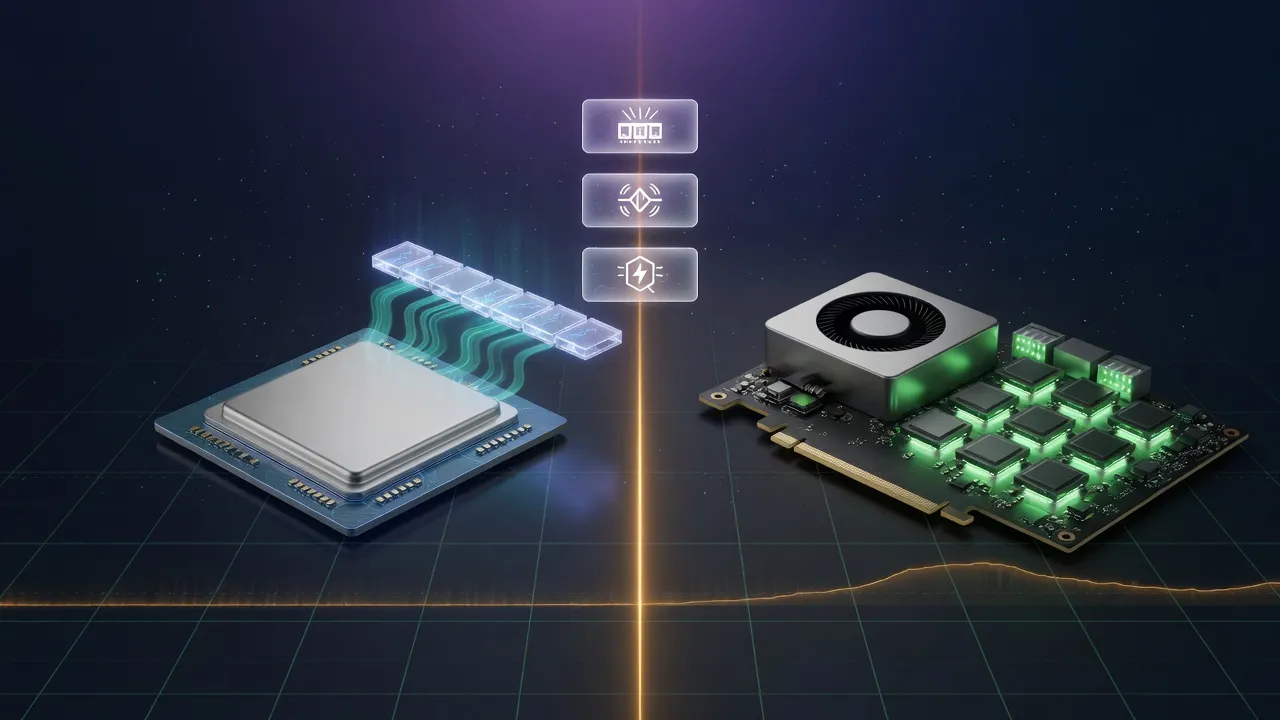
Mac vs NVIDIA for local inference, if you are still choosing a platform.