Advertising disclosure: we earn commissions when you shop through the links below.
Reatan
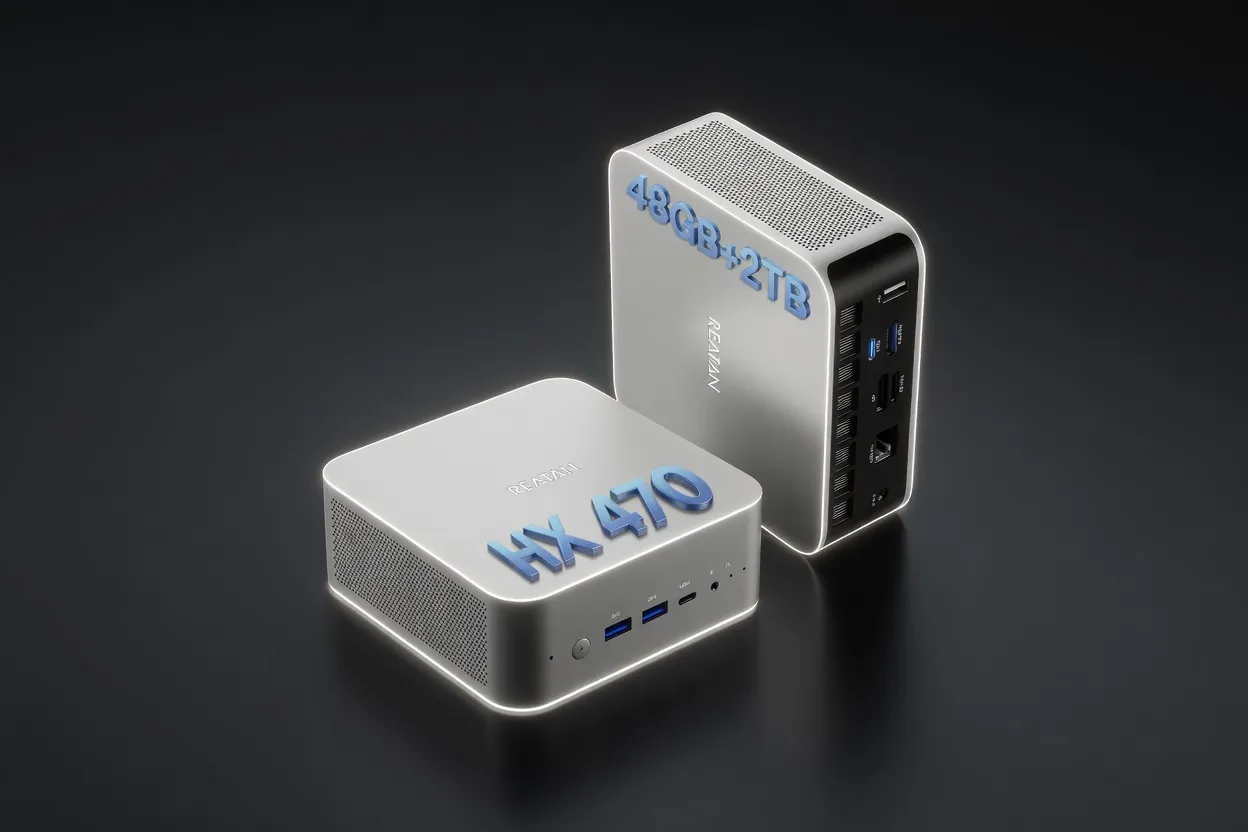
Reatan HTPC (Ryzen AI 9 HX 470 48GB)
Business and education HTPC variant of the Reatan Gorgon Point platform. 48GB DDR5-5600, 2TB M.2 2230 SSD, HDMI 2.1, and 8K USB4 in a fleet-friendly chassis without OCuLink.
AI PCs & LaptopsIn Stock
Edge AIEnterpriseProduction Ready
Quick Specs
VRAM16 GB
INT855 TOPS
TDP54 W
Memory BW90 GB/s
Max Params13B at Q4-Q5; 32B at Q3 with patience
Form FactorHTPC Mini Desktop
CPUAMD Ryzen AI 9 HX 470 Gorgon Point (12C/24T, up to 5.2 GHz)
GPUAMD Radeon 890M (RDNA 3.5, 16 CUs)
NPUXDNA 2 — 55 TOPS
Combined Platform AI86 TOPS
Memory48GB DDR5-5600 (dual-channel)
Storage2TB M.2 2230 NVMe SSD
Display OutputHDMI 2.1, 8K USB 4.0
ConnectivityWiFi 7, BT 5.4, 2.5Gbps Ethernet
PositioningBusiness, Education, Home HTPC
TDP28W base / 54W configurable
OSWindows 11
Our Take
Good balance for indie developers running local copilots and chat. 30B+ models are reachable but only with aggressive quantization and short context.
Pair this withMixtral 8x7B Instruct (46.7B)Largest popular open model that fits at Q4 — needs roughly 11.4 GB on this 16 GB card.
Generated from this product’s spec sheet. Editor reviews refine it over time.
Specifications
The Reatan HTPC (Ryzen AI 9 HX 470 48GB) is a compact mini-desktop that bridges the gap between a home theater PC and a capable edge AI workstation. Built on AMD’s Gorgon Point platform, this system is a fleet-friendly variant of the Reatan Gorgon Point line, targeting business, education, and home environments that need local AI inference without the power draw or footprint of a full tower.
At $899, it sits at the prosumer-to-enterprise boundary. It competes with other mini PCs like the Minisforum AI X1 Pro, but differentiates itself with 48GB of dual-channel DDR5-5600 memory and a deliberate omission of OCuLink (keeping the chassis slim and deployment-ready for IT-managed fleets). For AI practitioners, the key draw is the integrated AMD Radeon 890M GPU with 16 RDNA 3.5 compute units and the 55 TOPS XDNA 2 NPU, giving the system a combined platform AI performance of 86 TOPS. This makes it a viable option for running moderate-sized LLMs locally, especially in scenarios where low power consumption and a small physical footprint are non-negotiable.
The specs that matter for inference workloads are straightforward. The system uses unified memory architecture: the 48GB of DDR5-5600 is shared between CPU and GPU. The GPU can allocate up to 16GB of that as VRAM. This is important because it determines the maximum model size you can load without swapping to system memory.
| Spec | Value |
|---|---|
| VRAM (allocatable) | 16 GB |
| Memory Bandwidth | 90 GB/s (dual-channel DDR5-5600) |
| INT8 Performance (NPU) | 55 TOPS |
| INT8 Performance (GPU) | ~12-15 TOPS (estimated, RDNA 3.5) |
| Combined Platform AI | 86 TOPS |
| TDP | 54 W (configurable, 28W base) |
| CPU | AMD Ryzen AI 9 HX 470 (12C/24T, up to 5.2 GHz) |
| GPU | AMD Radeon 890M (16 CUs, RDNA 3.5) |
| NPU | XDNA 2 (55 TOPS) |
Memory bandwidth at 90 GB/s is the bottleneck for token generation on integrated GPUs. For comparison, a dedicated RTX 4060 laptop GPU offers ~256 GB/s, but costs more and draws 115W. The Reatan HTPC’s 54W TDP makes it extremely efficient for always-on inference servers or edge deployments where thermal and power constraints are tight.
The 55 TOPS NPU is a dedicated accelerator for lightweight AI tasks like speech-to-text, image classification, or small LLM inference (e.g., Phi-3, Gemma 2B). For larger models, you’ll rely on the Radeon 890M via ROCm or DirectML. Note that AMD’s ROCm support for integrated GPUs is still maturing; Windows users will primarily use DirectML or ONNX Runtime with the NPU fallback.
This is the practical question. With 16GB of allocatable VRAM, the Reatan HTPC can comfortably run 7B-13B parameter models at 4-bit or 5-bit quantization. At Q4, a 13B model uses roughly 7-8 GB, leaving headroom for context and system processes. At Q5, the same model uses ~9-10 GB. The sweet spot for quality-to-speed is Q4_K_M on a 13B model like Llama 3.1-8B or Qwen 2.5-7B.
Expected tokens/second (using llama.cpp with Vulkan or DirectML backend):
- Llama 3.1 8B Q4_K_M: ~15-20 tokens/s
- Mistral 7B Q4_K_M: ~20-25 tokens/s
- Qwen 2.5 7B Q4_K_M: ~18-22 tokens/s
- DeepSeek-R1-Distill-Qwen-7B Q4_K_M: ~16-20 tokens/s
- Llama 3.1 13B Q4_K_M: ~10-14 tokens/s
- Mixtral 8x7B (Q3_K_M): Not feasible — 16GB VRAM is insufficient for the full MoE model even at Q3. Stick to 7B-13B range.
Larger models with patience:
- 32B models (e.g., Qwen 2.5-32B, CodeLlama-34B): Can run at Q3 (3-bit) with heavy context pruning. Expect 3-5 tokens/s and high latency. Only practical for batch inference or non-interactive tasks.
- Multimodal models (LLaVA, Qwen-VL): 7B variants fit easily. 13B variants at Q4 may leave limited room for image embeddings; use with short context.
Long-context tasks: The 48GB system memory allows large context windows (e.g., 128K tokens) at 4-bit, but the GPU VRAM is the bottleneck. For long-context, you’ll need to offload layers to CPU, which tank throughput. This machine is better for interactive chat (2K-8K context) than document-level analysis.
NPU-accelerated models: The XDNA 2 NPU can handle small on-device models (e.g., Whisper base, Phi-3-mini) at low latency. It’s useful for always-on voice assistants or real-time transcription without GPU overhead.
This system is not for training. It’s for inference, and specifically for deployment scenarios where you need a small, low-power, always-on box that can run local LLMs, agents, or RAG pipelines.
Who should buy it:
- Developers building AI-powered applications that need local inference for privacy or offline use. The 48GB RAM allows running the application stack alongside a 7B-13B model.
- Teams running edge inference servers in retail, healthcare, or manufacturing. The HTPC form factor fits in a server rack or behind a display. 54W TDP means it can run 24/7 without active cooling concerns.
- Hobbyists running local chatbots (e.g., Ollama, LM Studio) who want a dedicated machine that’s quiet and compact. The 2TB SSD provides ample space for model storage.
- Business and education fleets that need a standardized, IT-manageable device capable of running AI assistants for customer support or tutoring. The lack of OCuLink simplifies deployment and reduces failure points.
Not for:
- Heavy batch inference or high-throughput API servers (need dedicated GPU with >200 GB/s bandwidth).
- Training even small models (use a cloud GPU or desktop with RTX 4090).
- Running 70B+ models (VRAM too limited).
vs. Minisforum AI X1 Pro (Ryzen AI 9 HX 470, 32GB)
The Minisforum AI X1 Pro is a direct competitor but comes with only 32GB of single-channel RAM in many configurations. The Reatan HTPC’s 48GB dual-channel setup gives it a significant memory bandwidth advantage (90 GB/s vs. ~45 GB/s if single-channel). For AI inference, dual-channel is critical — single-channel cuts token throughput by 30-50%. The Reatan also has a larger SSD (2TB vs. 1TB often). However, the Minisforum offers OCuLink for eGPU expansion, which the Reatan omits. If you need external GPU support, the Minisforum is the better pick. If you want a self-contained, out-of-the-box inference machine with more VRAM headroom, the Reatan wins.
vs. Apple Mac Mini M4 Pro (24GB unified memory)
The Mac Mini M4 Pro offers higher memory bandwidth (~200 GB/s) and better GPU compute for ML (Metal Performance Shaders). It can run 13B models at Q4 faster (~30-40 tokens/s). But it starts at $1,399 and maxes out at 48GB (which costs $1,899). The Reatan HTPC at $899 is half the price for comparable VRAM capacity. The tradeoff is slower inference and less mature software ecosystem (ROCm vs. Metal). If you’re already in the Apple ecosystem and need maximum performance per watt, the Mac Mini is superior. If you need Windows compatibility, lower cost, and fleet manageability, the Reatan is the pragmatic choice.
When to pick the Reatan HTPC:
- Budget-constrained but need 16GB VRAM for 13B models.
- Need a Windows-based edge device with IT-friendly form factor.
- Prioritize low power and small size over raw inference speed.
- Want a system that can also serve as an HTPC or general office PC without compromise.
Models That Run on This Device
The top models this device can run at 4-bit, ranked by fit and speed.
| Model | Grade | Speed | VRAM |
|---|---|---|---|
| LFM2.5-8B-A1BLiquid AI | AA | 24.9 tok/s | 2.9 GB |
| Qwen3-30B-A3BAlibaba | BB | 13.5 tok/s | 5.4 GB |
| North Mini CodeCohere | BB | 8.6 tok/s | 8.4 GB |
| Nemotron 3 Nano OmniNVIDIA | BB | 8.5 tok/s | 8.5 GB |
| Qwen3.6 35B-A3BAlibaba | BB | 8.5 tok/s | 8.5 GB |
Similar Products
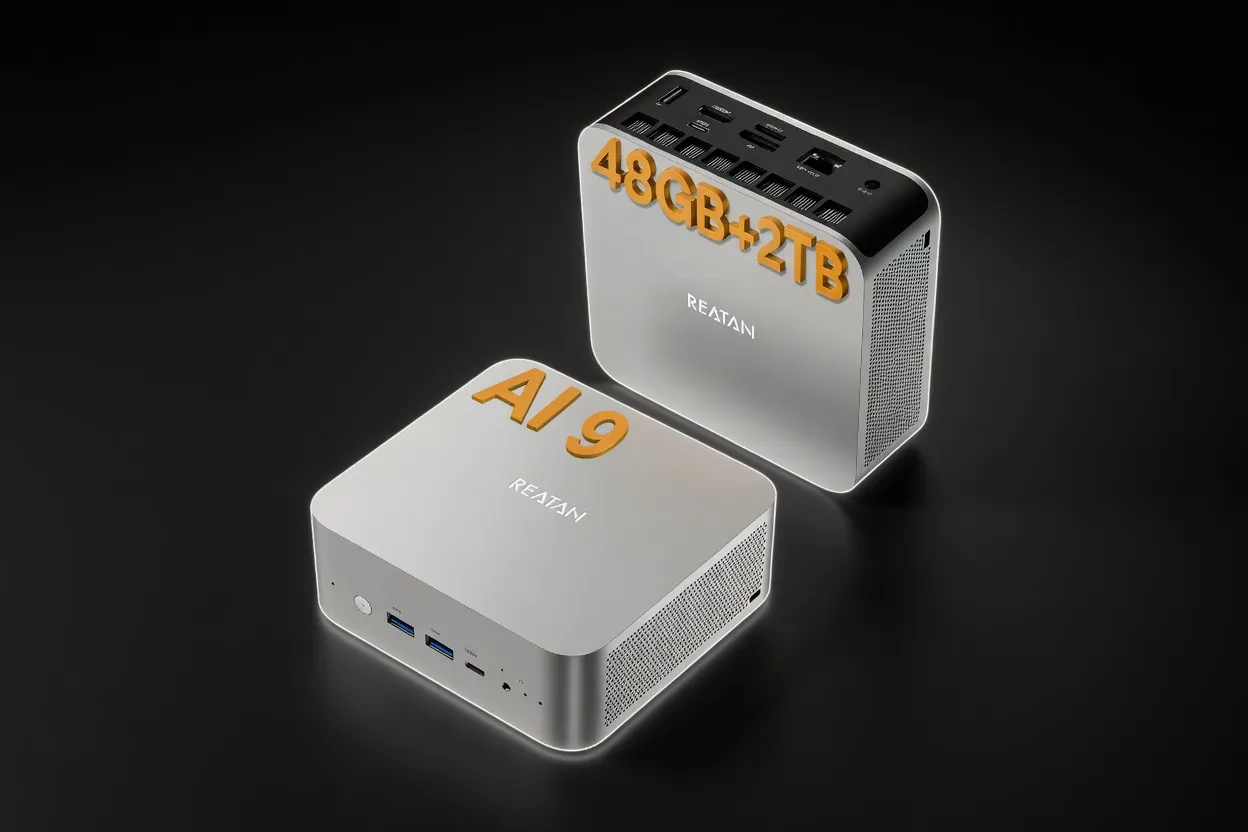
Reatan Mini Gaming PC (Ryzen AI 9 HX 470 with Speaker)
16 GB54 W
Edge AIMobile / On-DeviceEnergy Efficient
$999
Buy on Amazon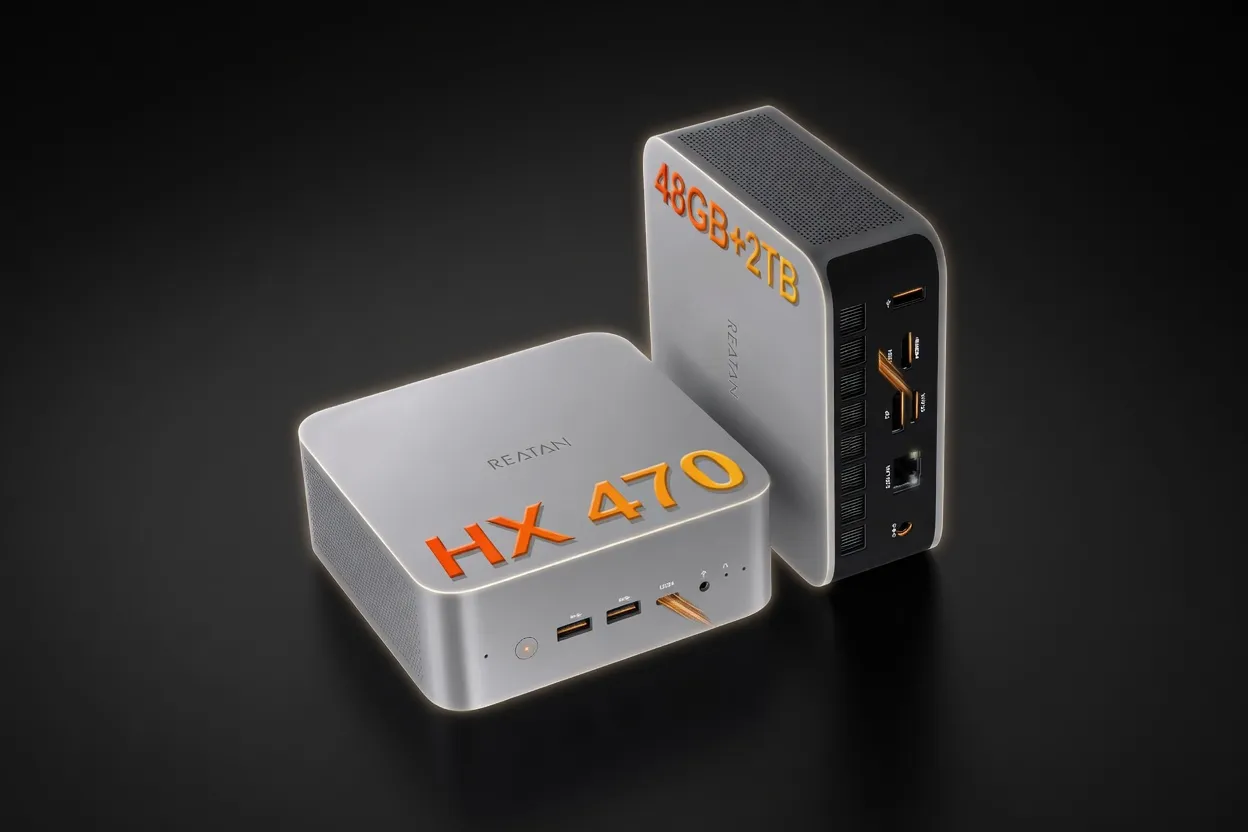
Reatan X8 (Ryzen AI 9 HX 470 48GB)
16 GB54 W
Edge AIMobile / On-DeviceEnergy Efficient
$999
Buy on Amazon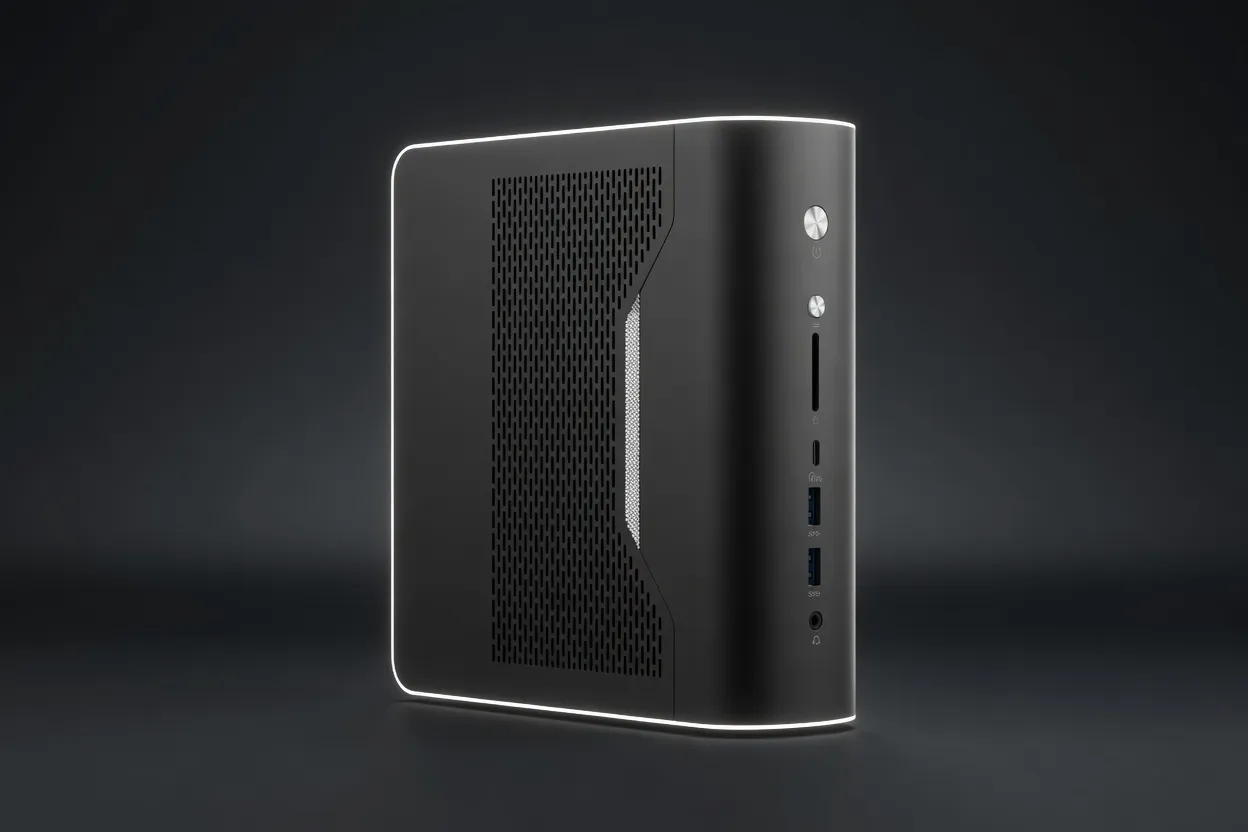
NIMO Mini PC (Ryzen AI Max+ 395 128GB)
96 GB120 W
Best for LLMsEdge AIEnergy Efficient
$2,299
Buy on Amazon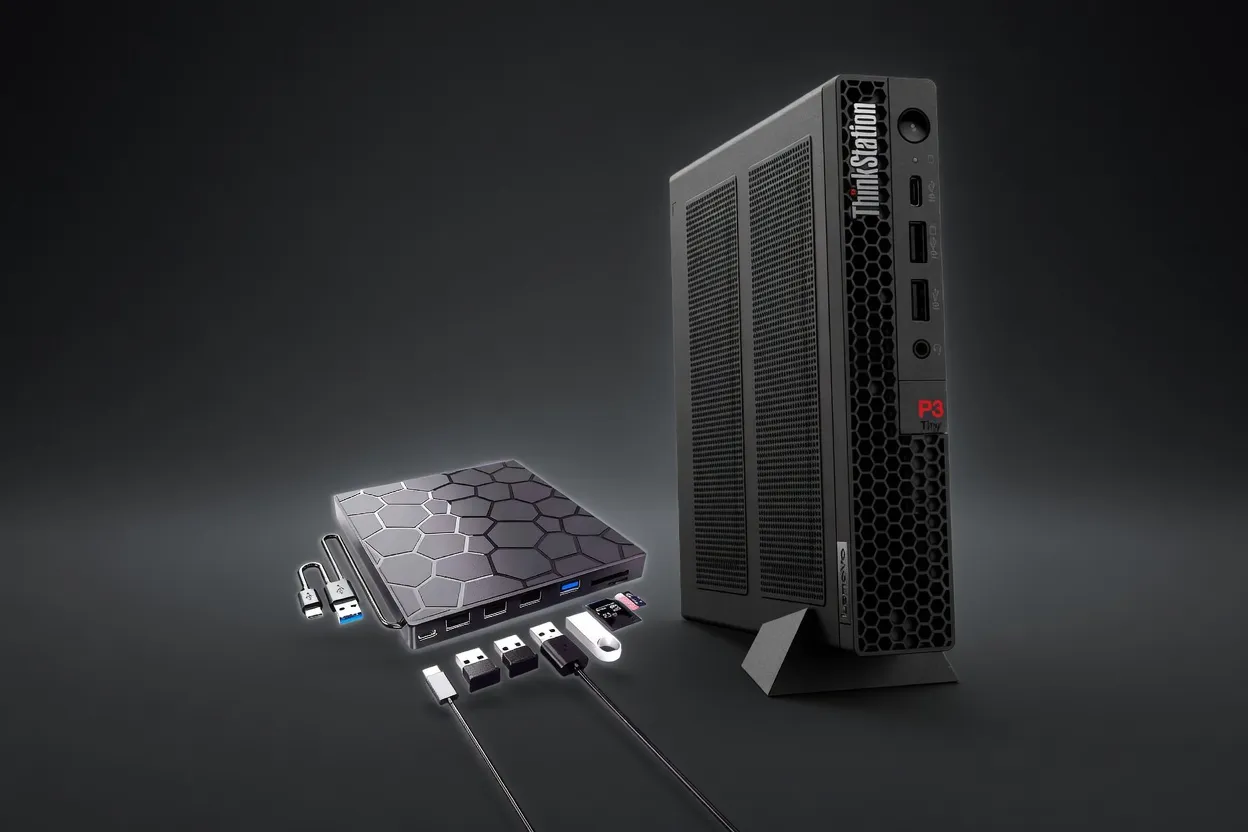
Lenovo ThinkCentre P3 Tiny Gen 2 (Ultra 5 235)
8 GB65 W
Edge AIEnterpriseProduction Ready
$1,299
Buy on Amazon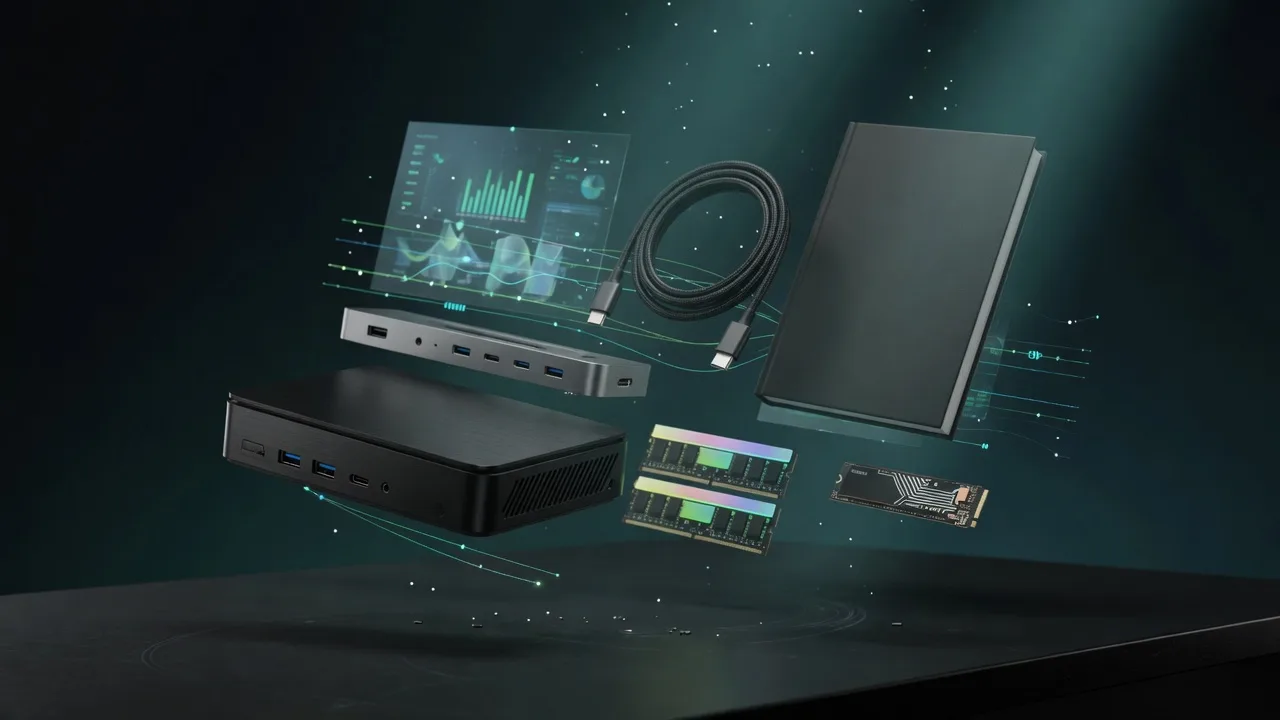
Also in Our Store
Finish the Build
Docks, fast storage, cables, and a UPS sized for a local AI machine.
Plan Your Setup
GPU Rental Price Index
Rent this class of GPU by the hour before you buy. Live prices from RunPod and Vast.ai.
AI Hardware ROI Calculator
Find the break-even between buying this hardware and paying for a cloud API.
AI Workstation Builder
Get a full budget-matched parts list for a local AI workstation.
Apple Silicon vs RTX
Mac vs NVIDIA for local inference, if you are still choosing a platform.