Advertising disclosure: we earn commissions when you shop through the links below.
Reatan
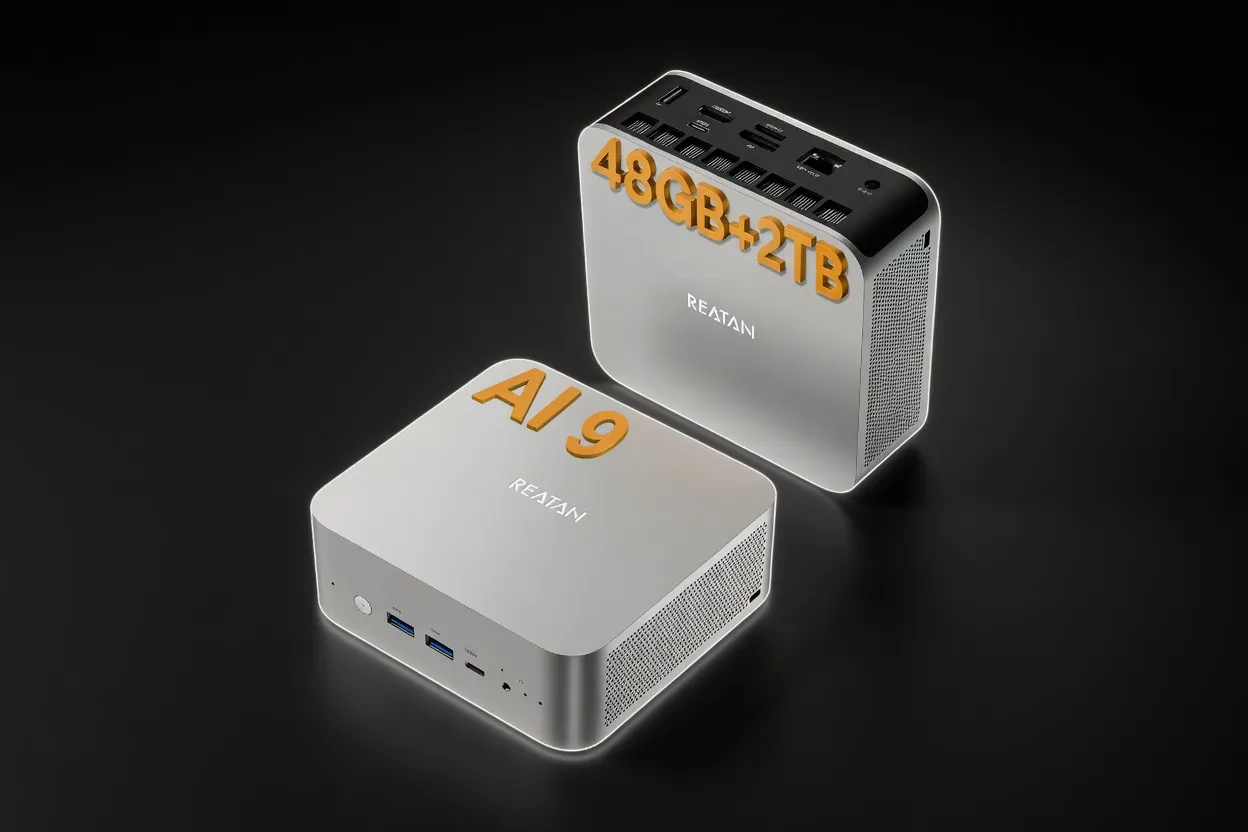
Reatan Mini Gaming PC (Ryzen AI 9 HX 470 with Speaker)
Reatan Gorgon Point creator variant with built-in speaker, dual-microphone array, and OCuLink in an all-metal chassis. 48GB DDR5-5600 + 2TB SSD for always-on AI sidekick workloads.
AI PCs & LaptopsIn Stock
Edge AIMobile / On-DeviceEnergy Efficient
Quick Specs
VRAM16 GB
INT855 TOPS
TDP54 W
Memory BW90 GB/s
Max Params13B at Q4-Q5; 32B at Q3 with eGPU via OCuLink
Form FactorMini PC (all-metal chassis)
CPUAMD Ryzen AI 9 HX 470 Gorgon Point (12C/24T, up to 5.2 GHz)
GPUAMD Radeon 890M (RDNA 3.5, 16 CUs)
NPUXDNA 2 — 55 TOPS
Combined Platform AI86 TOPS
Memory48GB DDR5-5600
Storage2TB NVMe SSD
ExpansionOCuLink for external GPU enclosure
Display Output8K Quad Display
AudioBuilt-in speaker + dual microphone array
ConnectivityWiFi 7, BT 5.4, 8K USB 4.0
TDP28W base / 54W configurable
OSWindows 11
Our Take
Good balance for indie developers running local copilots and chat. 30B+ models are reachable but only with aggressive quantization and short context.
Pair this withMixtral 8x7B Instruct (46.7B)Largest popular open model that fits at Q4 — needs roughly 11.4 GB on this 16 GB card.
Generated from this product’s spec sheet. Editor reviews refine it over time.
Specifications
The Reatan Mini Gaming PC (Ryzen AI 9 HX 470 with Speaker) is a compact edge AI workstation built around AMD’s latest Gorgon Point silicon. At $999, it targets the prosumer sweet spot—offering 55 TOPS of dedicated NPU performance, 16GB of unified VRAM, and a unique set of peripherals (built-in speaker, dual-mic array) that make it suitable for always-on, voice-interactive AI agents.
This is not a data center GPU server. It’s a self-contained mini PC designed for local inference workloads where power efficiency, form factor, and low latency matter more than raw throughput. The all-metal chassis houses a 12-core/24-thread CPU, Radeon 890M iGPU (RDNA 3.5), and XDNA 2 NPU delivering a combined 86 TOPS across the platform. For AI practitioners, the key differentiator is the OCuLink expansion port—allowing direct connection to an external GPU enclosure, bypassing USB/Thunderbolt bottlenecks.
Reatan positions this against the Minisforum AI X1 Pro and similar Ryzen AI 9 HX 470 mini PCs, but adds the integrated speaker and microphone array for voice-first interactions. This makes it a credible candidate for local AI sidekicks, voice-controlled agents, and edge deployments where a traditional desktop would be overkill.
The Reatan ships with 48GB DDR5-5600 in dual-channel configuration. This is critical: single-channel RAM (as seen in some competing HX 470 mini PCs) cuts memory bandwidth by roughly half, crippling iGPU-bound inference. The dual-channel setup here delivers 90 GB/s memory bandwidth—adequate for 13B parameter models at Q4-Q5 quantization.
VRAM: 16GB (shared system memory, allocated to the Radeon 890M iGPU)
This is your hard limit for model loading. The system can run:
- 13B models at Q4-Q5 (4-8GB VRAM usage)
- 7B models at Q4-Q8 (3.5-7GB VRAM usage)
- 32B models at Q3 only with eGPU via OCuLink
| Metric | Value |
|---|---|
| INT8 NPU TOPS | 55 |
| Combined Platform AI | 86 TOPS |
| GPU Compute Units | 16 (RDNA 3.5) |
| TDP (configurable) | 28W base / 54W peak |
| Memory Bandwidth | 90 GB/s |
The Radeon 890M delivers roughly 8-9 TFLOPS FP16, comparable to an RTX 3050 mobile. For transformer inference, the bottleneck is memory bandwidth, not compute. Expect 30-50 tokens/second on 7B models at Q4, and 15-25 tokens/second on 13B models at Q4.
At 54W peak, this is one of the most power-efficient AI inference platforms available. For comparison, a typical RTX 4060 desktop GPU draws 115W. Running a local LLM server 24/7 on the Reatan costs roughly $0.15/day at average electricity rates. This makes it viable for always-on agentic workloads that would be wasteful on a full desktop.
| Model | Quantization | VRAM Usage | Expected Tokens/sec |
|---|---|---|---|
| Llama 3.1 8B | Q4_K_M | ~5.5 GB | 35-45 |
| Mistral 7B v0.3 | Q8_0 | ~7 GB | 25-35 |
| Qwen 2.5 7B | Q4_K_M | ~5 GB | 35-45 |
| DeepSeek-Coder-V2 Lite | Q4_K_M | ~12 GB | 15-20 |
| Llama 3.1 13B | Q4_K_M | ~9 GB | 18-25 |
| Qwen 2.5 14B | Q4_K_M | ~10 GB | 15-22 |
| Phi-3 Medium 14B | Q4_K_M | ~9.5 GB | 18-25 |
Sweet spot: 7B-8B models at Q4_K_M. This gives you 4K-8K context windows with acceptable speed for interactive use. For 13B models at Q4, expect slower but usable throughput—fine for batch processing or non-real-time tasks.
Multimodal models: LLaVA 1.6 7B runs comfortably. LLaVA 13B is possible at Q4 but leaves little headroom for image embeddings. Long-context tasks (32K+ tokens) will overflow the 16GB VRAM for 13B+ models.
OCuLink provides PCIe 4.0 x4 bandwidth (~4 GB/s)—significantly faster than Thunderbolt 4 (~3 GB/s). This enables:
- 32B models at Q3 (e.g., Qwen 2.5 32B Q3_K_M, ~12 GB VRAM on eGPU)
- 70B models at Q2 with a high-VRAM eGPU (e.g., RTX 3090/4090)
- Mixtral 8x7B at Q4 (requires ~24 GB VRAM total)
Without eGPU, 32B models are not viable. The OCuLink port is the single most important expansion feature for AI workloads.
The built-in speaker and dual-microphone array make this the only mini PC in its class that works out of the box as a voice assistant. Deploy a local Whisper model for speech-to-text, run Llama 3.1 8B for reasoning, and use the speaker for TTS output. No external mic or speaker needed.
At 54W peak and a compact footprint, this fits into NUC-sized racks, kiosks, or automotive setups. The WiFi 7 and BT 5.4 support wireless connectivity, and quad 8K display output handles digital signage or monitoring dashboards.
Run a lightweight inference server (vLLM, llama.cpp, Ollama) accessible over the local network. The 48GB system memory allows hosting multiple model instances or serving multiple concurrent users for 7B-8B models. The 2TB NVMe SSD provides ample space for model storage and caching.
If you want to run local chatbots, code assistants, or RAG pipelines without cloud costs, this is a turnkey solution. The 16GB VRAM handles the most popular open-weight models, and the OCuLink port gives you an upgrade path to larger models without replacing the entire system.
This is not a training machine. 90 GB/s memory bandwidth and 16GB VRAM are insufficient for anything beyond fine-tuning 1B-3B parameter models with LoRA. For training, look at desktop GPUs with 24GB+ VRAM and higher memory bandwidth.
The Minisforum AI X1 Pro uses the same SoC but ships with 32GB single-channel RAM in its base configuration. The Reatan’s 48GB dual-channel setup provides 50% more memory bandwidth and 50% more system RAM. For AI inference, dual-channel is non-negotiable—single-channel cuts token throughput by 30-40% on memory-bound models.
Pick the Reatan if: You need dual-channel memory for inference performance, or you want the built-in speaker/mic for voice agents.
Pick the Minisforum if: You find it at a significantly lower price and plan to upgrade RAM yourself.
The Mac Mini M4 Pro offers higher memory bandwidth (~120 GB/s) and better single-core CPU performance, but costs $1,399+. The Reatan wins on: OCuLink eGPU expansion, Windows compatibility for CUDA-dependent tools (via eGPU), and the integrated audio peripherals.
Pick the Reatan if: You need Windows-native tooling, eGPU upgradability, or a voice-interactive form factor.
Pick the Mac Mini if: You prefer macOS, need higher memory bandwidth for larger models, or want the M4’s superior NPU for on-device ML workflows.
Models That Run on This Device
The top models this device can run at 4-bit, ranked by fit and speed.
| Model | Grade | Speed | VRAM |
|---|---|---|---|
| LFM2.5-8B-A1BLiquid AI | AA | 24.9 tok/s | 2.9 GB |
| Qwen3-30B-A3BAlibaba | BB | 13.5 tok/s | 5.4 GB |
| North Mini CodeCohere | BB | 8.6 tok/s | 8.4 GB |
| Nemotron 3 Nano OmniNVIDIA | BB | 8.5 tok/s | 8.5 GB |
| Qwen3.6 35B-A3BAlibaba | BB | 8.5 tok/s | 8.5 GB |
Similar Products
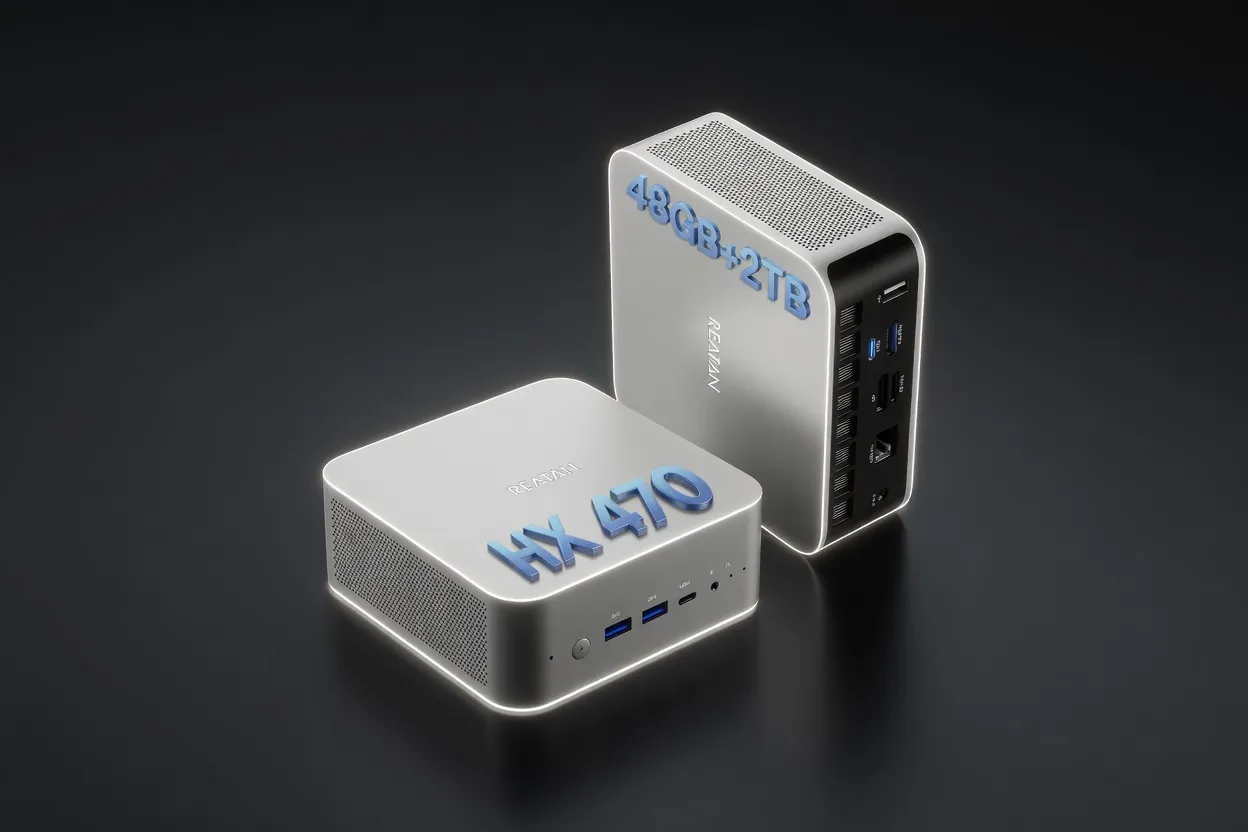
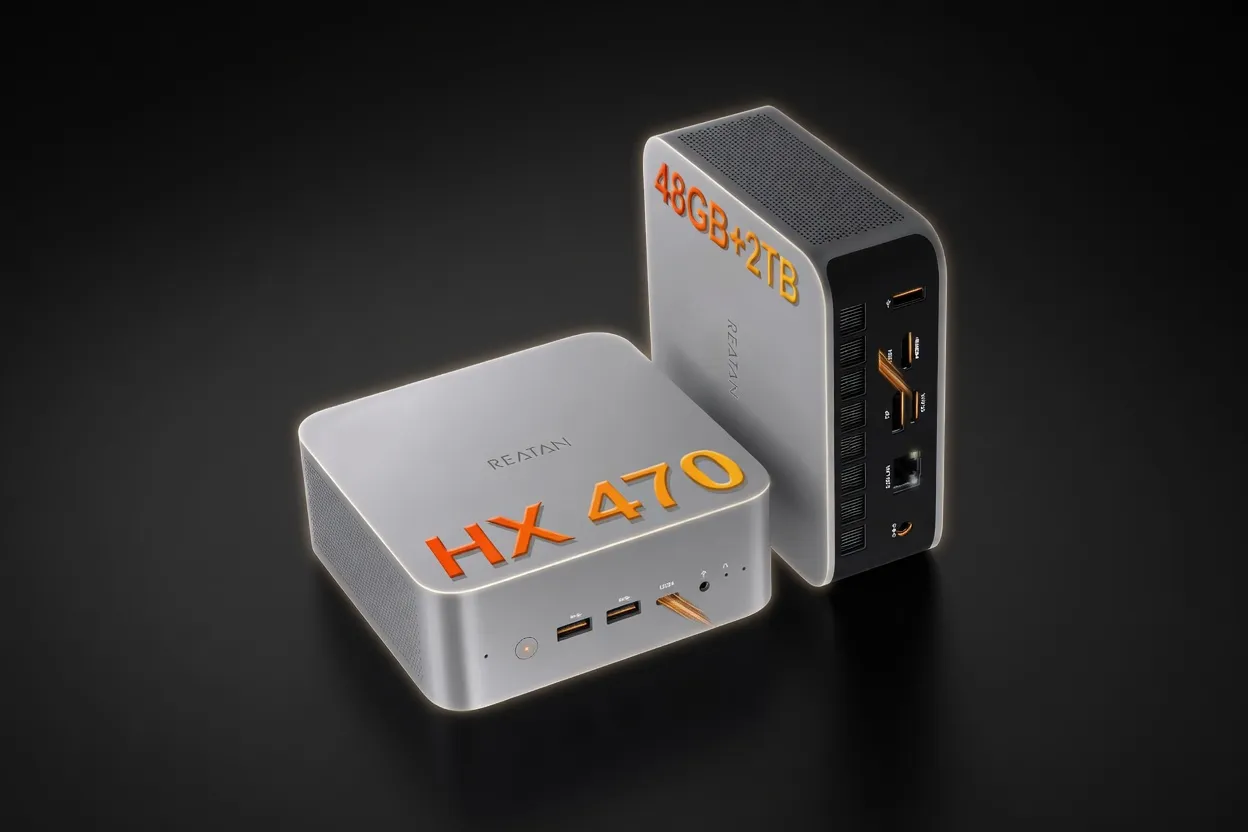
Reatan X8 (Ryzen AI 9 HX 470 48GB)
16 GB54 W
Edge AIMobile / On-DeviceEnergy Efficient
$999
Buy on Amazon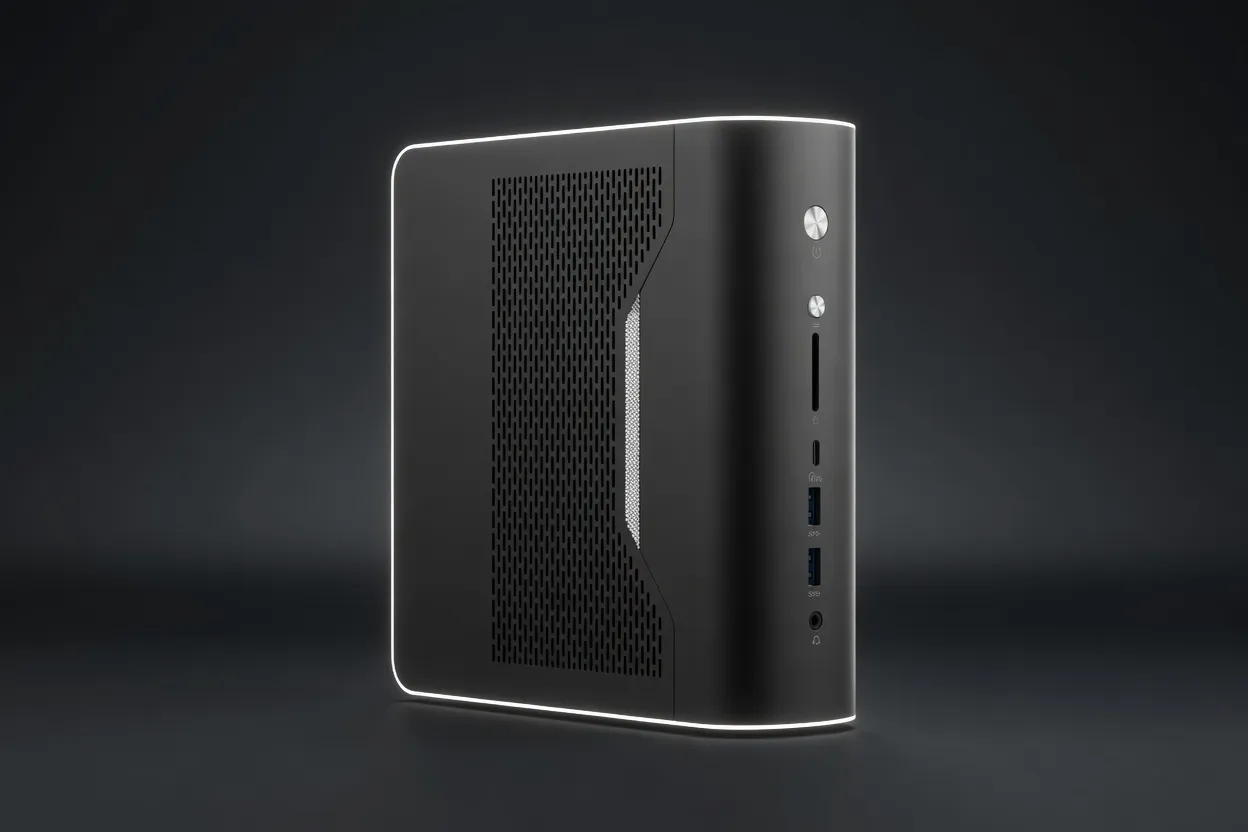
NIMO Mini PC (Ryzen AI Max+ 395 128GB)
96 GB120 W
Best for LLMsEdge AIEnergy Efficient
$2,299
Buy on Amazon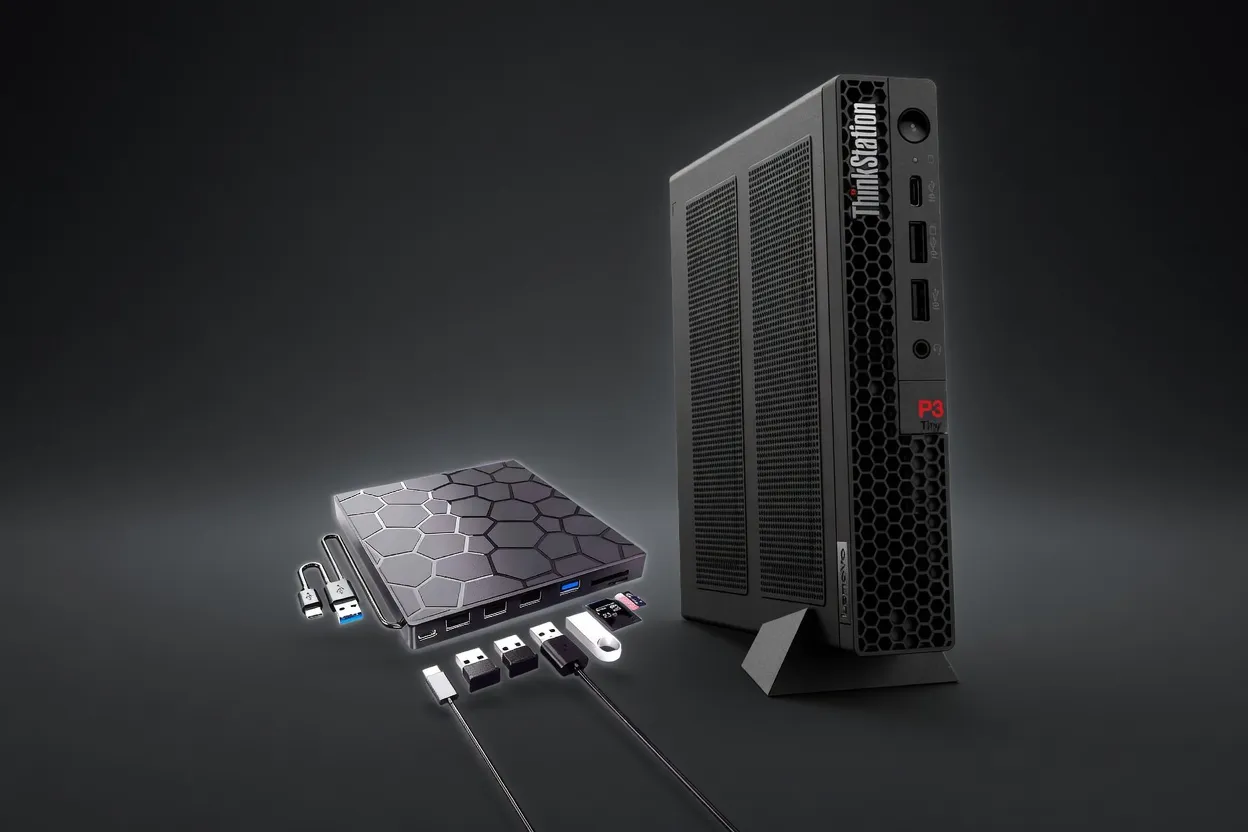
Lenovo ThinkCentre P3 Tiny Gen 2 (Ultra 5 235)
8 GB65 W
Edge AIEnterpriseProduction Ready
$1,299
Buy on Amazon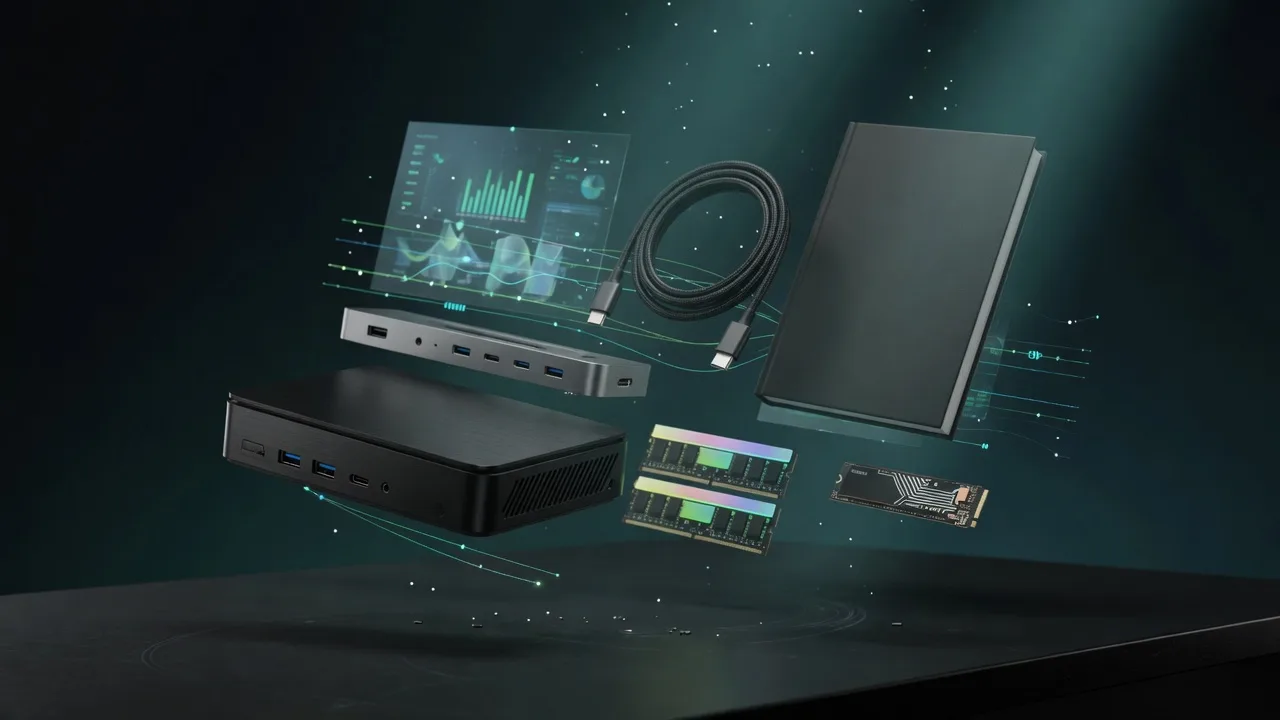
Also in Our Store
Finish the Build
Docks, fast storage, cables, and a UPS sized for a local AI machine.
Plan Your Setup
GPU Rental Price Index
Rent this class of GPU by the hour before you buy. Live prices from RunPod and Vast.ai.
AI Hardware ROI Calculator
Find the break-even between buying this hardware and paying for a cloud API.
AI Workstation Builder
Get a full budget-matched parts list for a local AI workstation.
Apple Silicon vs RTX
Mac vs NVIDIA for local inference, if you are still choosing a platform.