Advertising disclosure: we earn commissions when you shop through the links below.
Lenovo
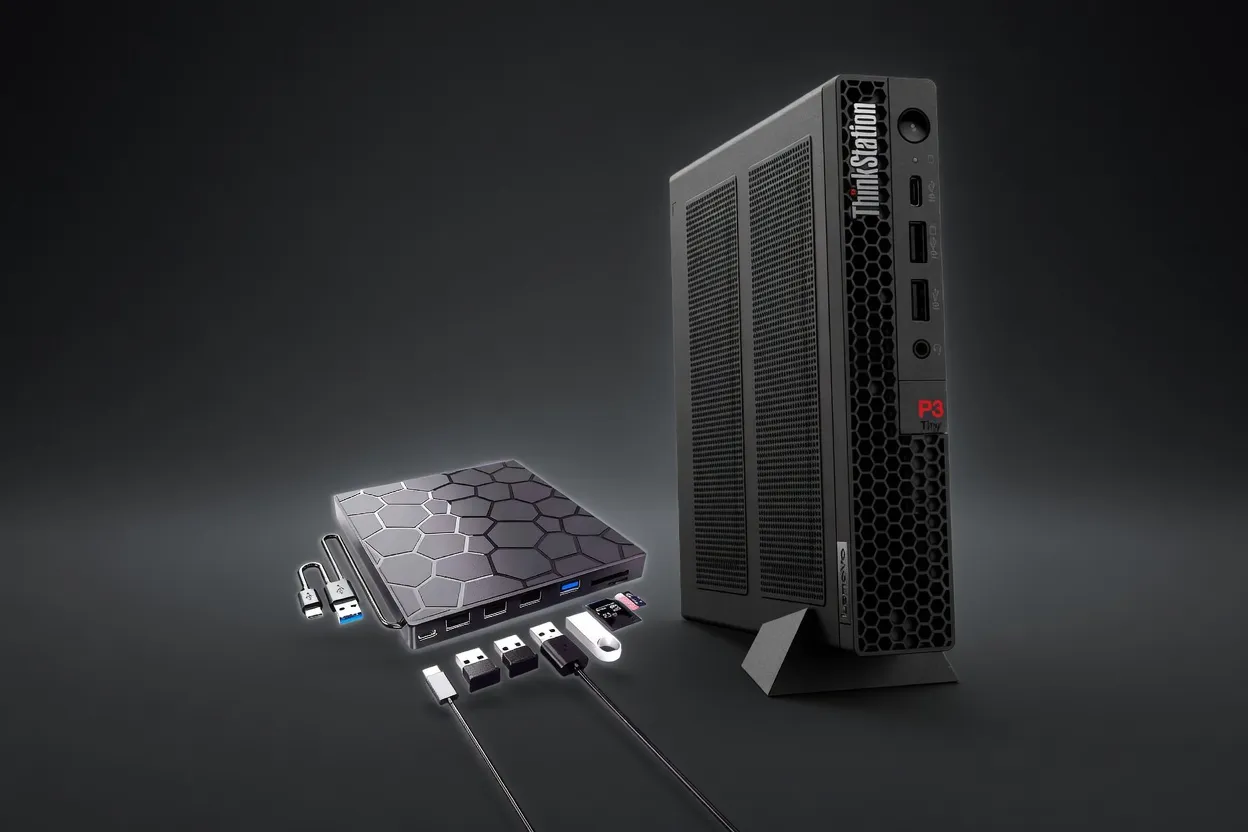
Lenovo ThinkCentre P3 Tiny Gen 2 (Ultra 5 235)
1L AI workstation with Intel Core Ultra 5 235 vPro (Arrow Lake), Intel Arc iGPU, 32GB DDR5, 1TB PCIe Gen5 NVMe. Built-in AI Boost NPU and enterprise vPro management. Fleet-friendly business AI desktop.
AI PCs & LaptopsIn Stock
Edge AIEnterpriseProduction Ready
Quick Specs
VRAM8 GB
INT813 TOPS
TDP65 W
Memory BW90 GB/s
Max Params8B at Q4; 13B at Q3 with patience
Form Factor1L Tiny Workstation
CPUIntel Core Ultra 5 235 vPro (14C/14T, 6P+8E Arrow Lake, up to 5.1 GHz)
GPUIntel Arc Graphics (integrated)
NPUIntel AI Boost (~13 TOPS)
Memory32GB DDR5-5600 (dual-channel, ~90 GB/s, shared with iGPU)
Storage1TB PCIe Gen5 NVMe SSD
Display OutputHDMI 2.1, DisplayPort, USB-C / Thunderbolt
ConnectivityWiFi 6, vPro security and management
TDP65W base
BundleIncludes Astrol External DVD Drive
OSWindows 11 Pro
Our Take
8 GB will run a 7B Q4 quant and most embedding models, but the KV cache budget is tight. Better as a stepping stone than a long-term home for AI work.
Pair this withLFM2.5-8B-A1B (8.3B)Largest popular open model that fits at Q4 — needs roughly 2.9 GB on this 8 GB card.
Generated from this product’s spec sheet. Editor reviews refine it over time.
Specifications
The Lenovo ThinkCentre P3 Tiny Gen 2 (Ultra 5 235) is a 1-liter AI workstation designed for practitioners who need to run local inference in space-constrained, fleet-managed environments. It’s not a gaming rig or a data-center GPU server—it’s a production-ready edge device that fits on a desk, behind a monitor, or inside a kiosk. Lenovo positions it as a business-class tiny desktop with enterprise manageability (vPro) and a built-in NPU for lightweight AI acceleration.
Priced at $1,299 MSRP, it competes directly with other compact AI-capable systems like the Apple Mac Mini M4 (base) and Intel NUC 13 Extreme, but with a distinct advantage: Lenovo’s ThinkShield security, vPro remote management, and a form factor that’s built for deployment at scale. For teams running agentic workflows, edge inference, or local LLM chatbots where physical footprint and IT control matter, this machine hits a sweet spot between performance and practicality.
The inclusion of an Intel Core Ultra 5 235 vPro (Arrow Lake) with an integrated Intel Arc iGPU and an AI Boost NPU (~13 TOPS) means you get three compute engines in one chassis. The NPU handles lightweight, continuous AI tasks (like voice wake-up or real-time transcription) without taxing the CPU or GPU, while the iGPU provides the VRAM and compute for larger models. This isn’t a high-end workstation for training—but for inference, it’s a capable, low-power workhorse.
The specs that matter for AI inference are straightforward on this machine. Here’s the breakdown:
- VRAM: 8 GB (shared system memory, accessible by the Intel Arc iGPU)
- INT8 Performance: 13 TOPS (iGPU + NPU combined; NPU alone ~13 TOPS, iGPU adds ~8-10 TOPS for matrix ops)
- Memory Bandwidth: 90 GB/s (dual-channel DDR5-5600, shared between CPU and iGPU)
- TDP: 65 W (base)
- Max Model Params: 8B at Q4; 13B at Q3 with patience
The 8 GB of unified memory (shared with the CPU) is the limiting factor. It’s not dedicated VRAM like an NVIDIA RTX card, but it’s sufficient for running quantized 8B parameter models comfortably. The 90 GB/s memory bandwidth is modest—roughly a third of a desktop RTX 4060 (272 GB/s) and half of an Apple M4 Pro’s 200 GB/s. This directly impacts token generation speed: expect 15–25 tokens per second for a 7B–8B Q4 model, depending on prompt length and batch size.
The Intel Arc iGPU supports INT8 and FP16 operations via XMX (Xe Matrix Extensions). For inference frameworks like llama.cpp, ONNX Runtime, or OpenVINO, you can leverage the iGPU for acceleration. The NPU (Intel AI Boost) is best suited for lightweight, always-on tasks—don’t expect it to run large language models. Combined, the system delivers about 20–25 TOPS of effective INT8 compute, which is competitive at the 65W power envelope.
Power efficiency is a standout. At idle, the P3 Tiny draws around 15–20W; under full AI load, it peaks near 65W. For always-on inference servers or edge deployments where electricity cost and heat dissipation matter, this is a significant advantage over a desktop with a discrete GPU.
This is where the P3 Tiny’s capability becomes concrete. Based on the 8 GB shared memory and 90 GB/s bandwidth, here’s the practical model compatibility:
- Llama 3.1 8B (Q4_K_M): Fits comfortably. Expect 15–20 tokens/s on the iGPU (via llama.cpp with Vulkan or OpenVINO backend). Good for conversational agents, summarization, and RAG.
- Mistral 7B (Q4_K_M): Runs easily. Slightly faster than Llama 8B due to smaller size—around 18–22 tokens/s.
- Qwen 2.5 7B (Q4): Similar performance. Works well for multilingual tasks.
- DeepSeek-R1-Distill-Qwen 7B (Q4): Fits. Reasoning-style models are viable, though long-context generation (over 8K tokens) will slow due to memory bandwidth limits.
- Llama 3.1 13B (Q3_K_M): Tight fit. You’ll need to use a Q3 quantization (e.g., Q3_K_M) and keep context under 4K tokens. Expect 8–12 tokens/s. “With patience” is the accurate description—usable for batch inference or offline processing, not real-time chat.
- Phi-3-mini 3.8B (Q4): Overkill. Runs at 30+ tokens/s, but you’re wasting compute.
- Multimodal models (LLaVA, Qwen-VL): Possible if you keep image resolution low and use Q4 quantization. The shared memory means the model and image embeddings compete for the same 8 GB. Practical for single-image QA, not video.
- Long-context tasks (32K tokens): Not recommended. Memory bandwidth bottleneck becomes severe. Stick to 4K–8K context for acceptable speed.
Sweet spot: 7B–8B models at Q4_K_M quantization. That gives the best quality-to-speed tradeoff on this hardware. For developers running local chatbots, RAG pipelines, or small agentic workflows, this is the configuration to target.
The Lenovo ThinkCentre P3 Tiny Gen 2 is not for everyone. Here’s who should consider it:
- Enterprise teams deploying AI agents at scale: The vPro management, TPM 2.0, and ThinkShield security make it IT-friendly. You can remotely provision, update, and monitor hundreds of these units running local inference for customer-facing chatbots or internal knowledge assistants.
- Edge AI practitioners: The 1L form factor, low power draw, and wide operating temperature range (0–40°C) make it suitable for factory floors, retail kiosks, or medical devices. Mount it behind a display with the VESA bracket.
- Hobbyists running local LLMs on a budget: $1,299 for a silent, always-on inference machine is competitive. You won’t train models, but you can run Llama 3.1 8B all day at 20 tokens/s with negligible electricity cost.
- Developers building AI-powered applications: Need a local test server that mimics a cloud inference endpoint? The P3 Tiny can run vLLM or llama.cpp server with an OpenAI-compatible API. Great for CI/CD pipelines where you want to avoid GPU cloud costs.
- Not for training: Zero. The integrated GPU has no tensor cores for training. Use this exclusively for inference.
Inference vs. training: This is a pure inference device. If you need to fine-tune even a 7B model, look elsewhere (RTX 4090 or cloud GPU). But for running pre-trained models, the P3 Tiny delivers reliable, low-latency performance.
Two realistic alternatives at a similar price/performance tier:
Apple Mac Mini M4 (16GB unified memory, $599 base)
- Pros: Faster memory bandwidth (120 GB/s), better GPU compute (M4 GPU ~3.4 TFLOPS FP16), lower idle power, macOS ecosystem (MLX, Core ML). Can run 13B models at Q4 (16GB).
- Cons: No vPro management, no Windows-native enterprise tooling, limited to macOS-only frameworks. Harder to deploy in Windows-centric enterprise environments.
- Pick the Mac Mini if: You need higher memory bandwidth for larger models, prefer macOS, and don’t need fleet management.
Intel NUC 13 Extreme (Core i7-13700K + optional RTX 4060, ~$1,500)
- Pros: Discrete GPU (8 GB VRAM, 272 GB/s bandwidth) enables 13B Q4 models at 30+ tokens/s. More CPU cores for non-AI workloads.
- Cons: Larger footprint (3L+), higher power draw (300W peak), no vPro, less IT-friendly.
- Pick the NUC if: You need discrete GPU performance and don’t care about enterprise manageability or power efficiency.
Where the P3 Tiny wins: Enterprise manageability, silent operation, 65W TDP, and a form factor that can be mounted anywhere. For teams that need to deploy 50+ inference nodes with centralized IT control, the Lenovo is the clear choice. For raw token-per-second performance, the Mac Mini or NUC will beat it—but they lack the fleet-friendly features that make the P3 Tiny a production-ready AI PC for business.
Models That Run on This Device
The top models this device can run at 4-bit, ranked by fit and speed.
| Model | Grade | Speed | VRAM |
|---|---|---|---|
| LFM2.5-8B-A1BLiquid AI | AA | 24.9 tok/s | 2.9 GB |
| Qwen3-30B-A3BAlibaba | AA | 13.5 tok/s | 5.4 GB |
| Llama 3 8B InstructMeta | BB | 12.8 tok/s | 5.7 GB |
| Carnice-9b for Hermes agentkai-os | BB | 12.0 tok/s | 6.0 GB |
| PersonaPlex 7BNVIDIA | BB | 15.1 tok/s | 4.8 GB |
Similar Products
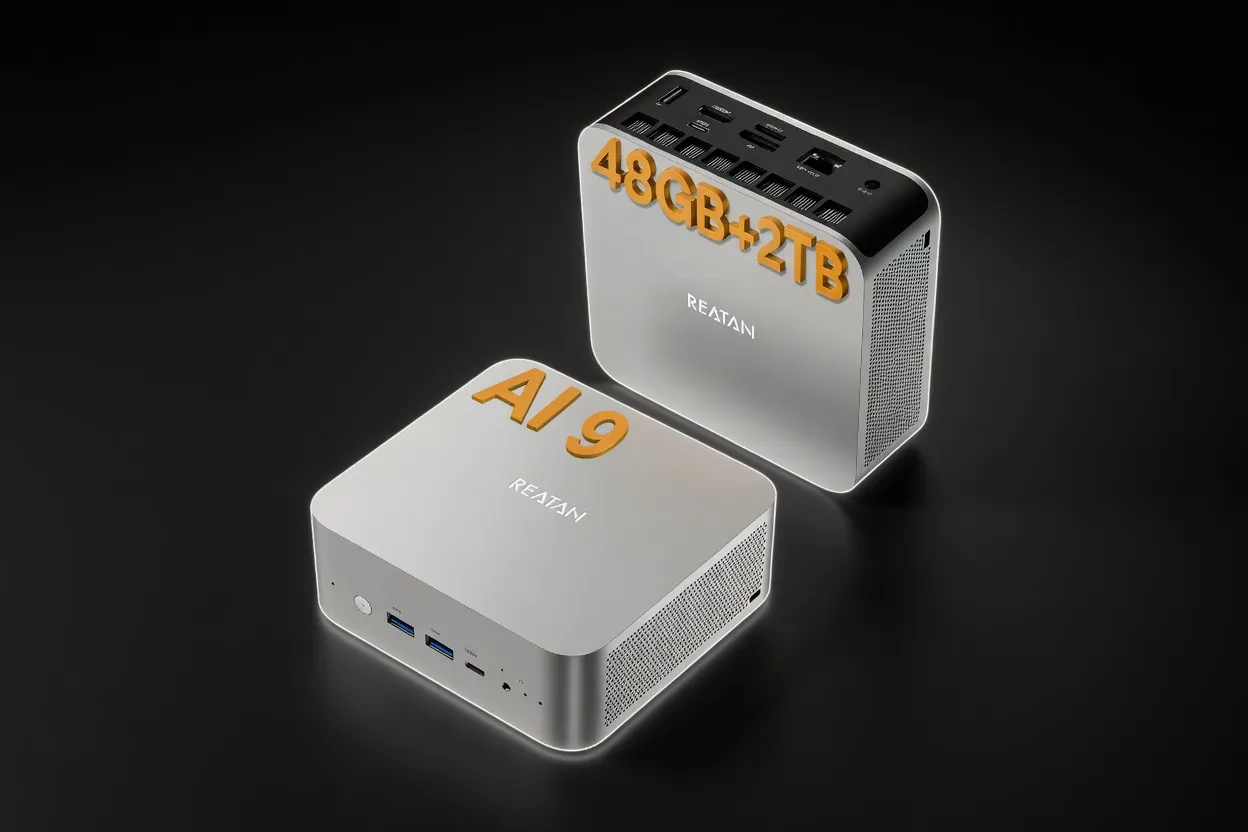
Reatan Mini Gaming PC (Ryzen AI 9 HX 470 with Speaker)
16 GB54 W
Edge AIMobile / On-DeviceEnergy Efficient
$999
Buy on Amazon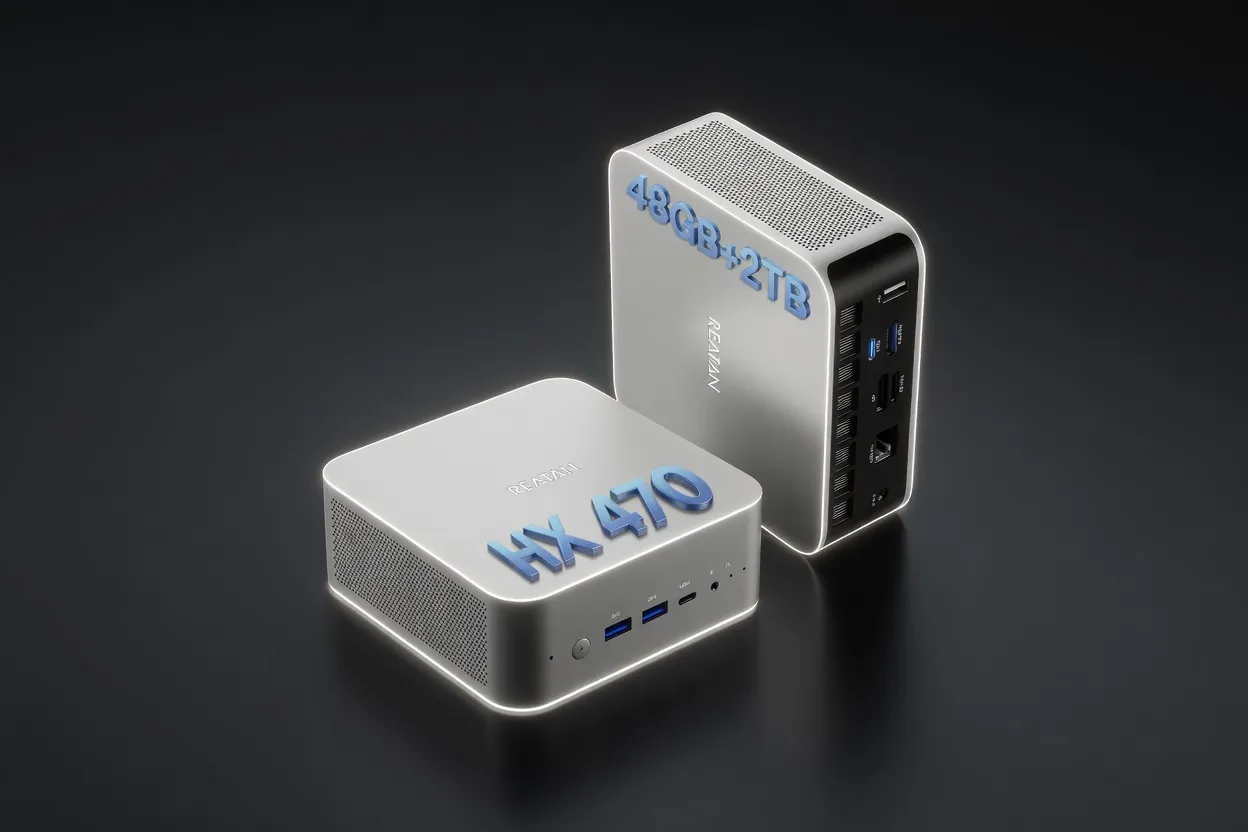
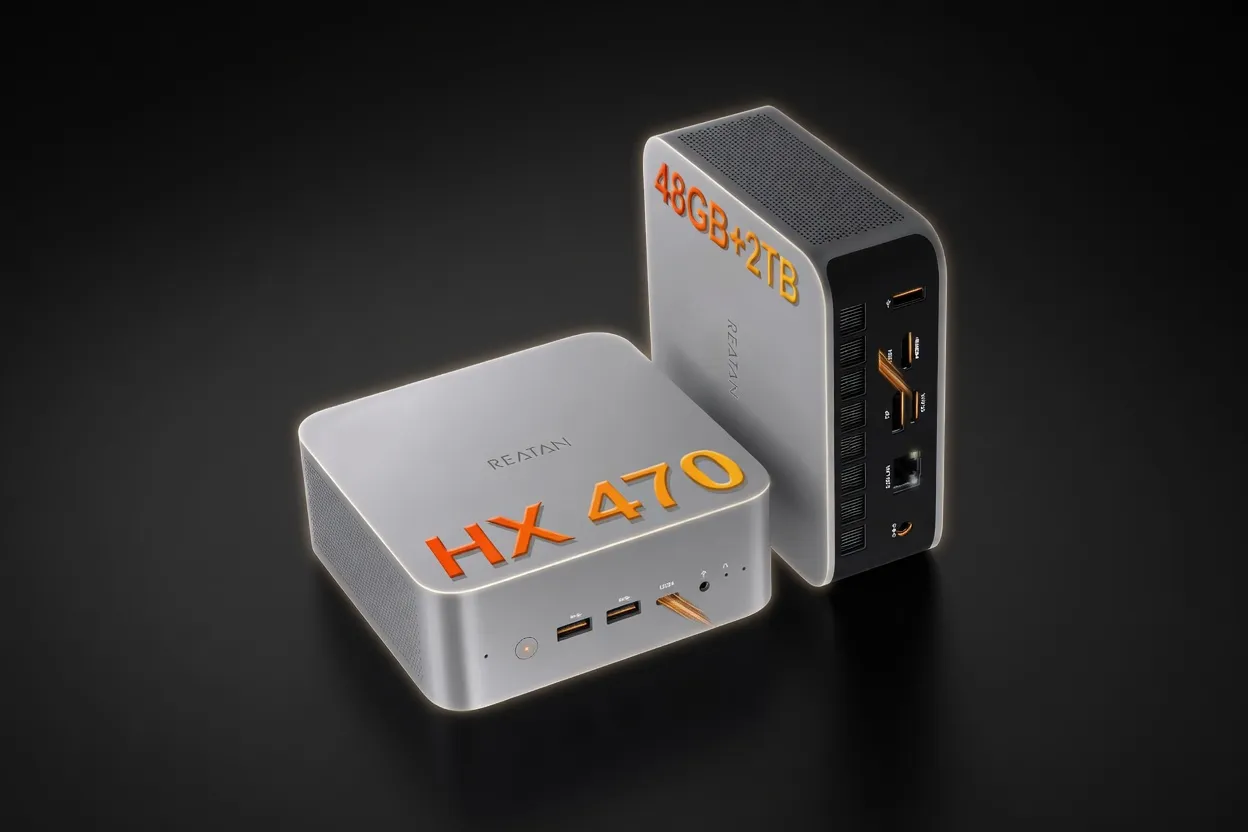
Reatan X8 (Ryzen AI 9 HX 470 48GB)
16 GB54 W
Edge AIMobile / On-DeviceEnergy Efficient
$999
Buy on Amazon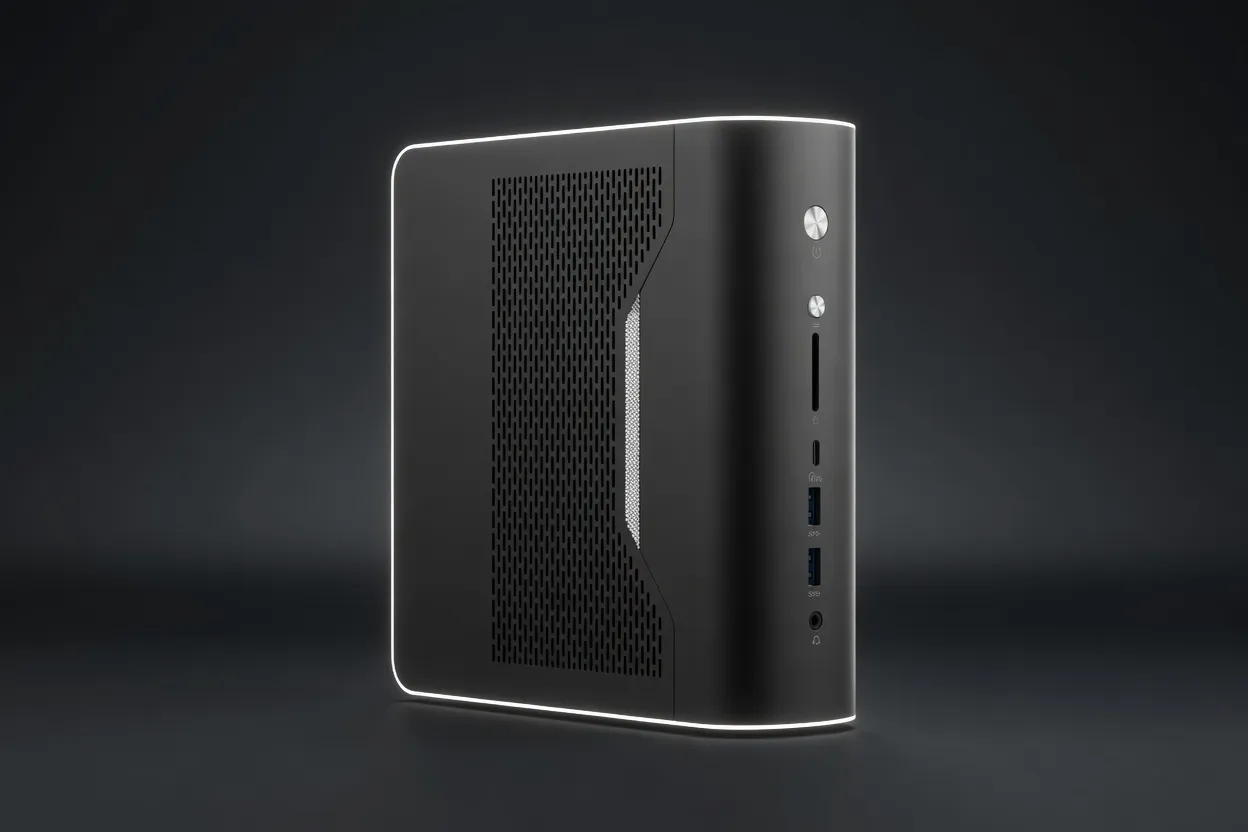
NIMO Mini PC (Ryzen AI Max+ 395 128GB)
96 GB120 W
Best for LLMsEdge AIEnergy Efficient
$2,299
Buy on Amazon
Also in Our Store
Finish the Build
Docks, fast storage, cables, and a UPS sized for a local AI machine.
Plan Your Setup
GPU Rental Price Index
Rent this class of GPU by the hour before you buy. Live prices from RunPod and Vast.ai.
AI Hardware ROI Calculator
Find the break-even between buying this hardware and paying for a cloud API.
AI Workstation Builder
Get a full budget-matched parts list for a local AI workstation.
Apple Silicon vs RTX
Mac vs NVIDIA for local inference, if you are still choosing a platform.