Advertising disclosure: we earn commissions when you shop through the links below.
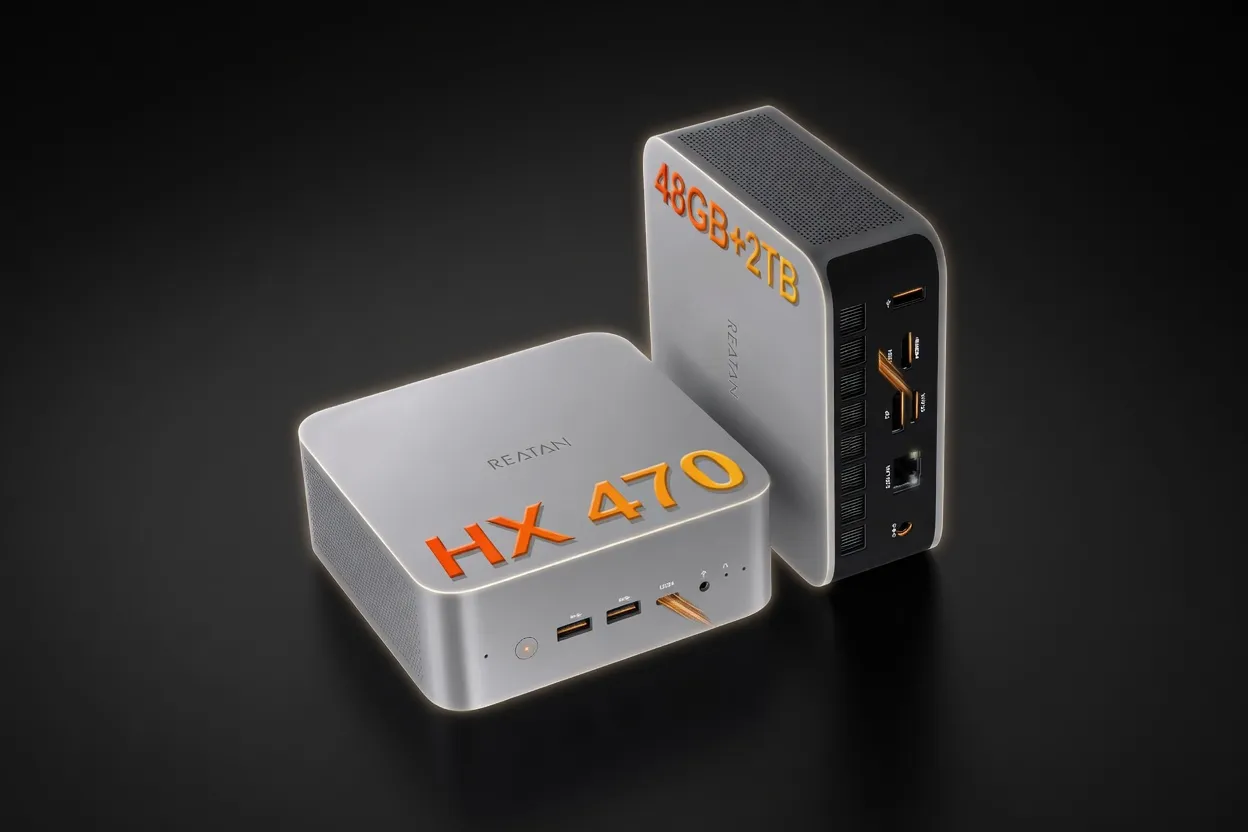
Reatan
Reatan X8 (Ryzen AI 9 HX 470 48GB)
Tiny 12.8cm Gorgon Point mini PC with 86 platform TOPS, 48GB DDR5-5600, 2TB PCIe 4.0 SSD, and OCuLink for eGPU expansion. Near-silent (under 36 dB) cooling.
AI PCs & LaptopsIn Stock
Edge AIMobile / On-DeviceEnergy Efficient
Quick Specs
VRAM16 GB
INT855 TOPS
TDP54 W
Memory BW90 GB/s
Max Params13B at Q4-Q5; 32B at Q3 with eGPU via OCuLink
Form FactorMini PC (12.8 × 12.6 × 5.3 cm)
CPUAMD Ryzen AI 9 HX 470 Gorgon Point (12C/24T, 4 Zen 5 + 8 Zen 5c, up to 5.2 GHz)
GPUAMD Radeon 890M (RDNA 3.5, 16 CUs @ 3.1 GHz)
NPUXDNA 2 — 55 TOPS
Combined Platform AI86 TOPS
Memory48GB DDR5-5600 (1x48GB, dual SO-DIMM slots, max 128GB)
Storage2TB PCIe 4.0 NVMe SSD (dual M.2 slots, max 8TB)
ExpansionOCuLink for external GPU enclosure
Display OutputQuad 8K via 2x USB4/DP, HDMI 2.1, DP 2.0
ConnectivityWiFi 7, BT 5.4, 2.5GbE LAN
CoolingSuper Cold Storm 2.0 (dual side metal grilles, <36 dB)
TDP28W base / 54W configurable
OSWindows 11
Our Take
Good balance for indie developers running local copilots and chat. 30B+ models are reachable but only with aggressive quantization and short context.
Pair this withMixtral 8x7B Instruct (46.7B)Largest popular open model that fits at Q4 — needs roughly 11.4 GB on this 16 GB card.
Generated from this product’s spec sheet. Editor reviews refine it over time.
Specifications
The Reatan X8 (Ryzen AI 9 HX 470 48GB) is a purpose-built mini PC for local AI inference, edge deployment, and on-device agentic workloads. At $999 MSRP, it sits in the prosumer tier—priced like a mid-range laptop but packing 86 platform TOPS, 48 GB of unified memory, and a Radeon 890M iGPU capable of running 13B parameter models at Q4-Q5 quantization entirely on-chip. Manufactured by Reatan, this tiny 12.8 cm chassis competes directly with other high-TOPS mini PCs like the Beelink SER10 Max and entry-level NVIDIA Jetson modules, but offers a critical advantage: OCuLink expansion for an external GPU when you need to scale beyond integrated graphics.
For practitioners, the X8 matters because it eliminates the trade-off between portability and AI performance. You can run local LLMs, RAG pipelines, and multimodal agents at the edge without a noisy desktop tower or a cloud subscription. The near-silent cooling (under 36 dB) means it’s suitable for 24/7 inference servers in an office or lab environment.
The X8 ships with 48 GB of DDR5-5600 in a single SO-DIMM module, with a second slot available for expansion up to 128 GB. For AI workloads, this unified memory pool serves as both system RAM and VRAM for the integrated Radeon 890M. While the iGPU can address up to 16 GB as dedicated VRAM (configurable in BIOS), the full 48 GB is available for model loading via CPU-side inference or shared memory.
- VRAM for GPU inference: Up to 16 GB
- Memory bandwidth: 90 GB/s (dual-channel DDR5-5600)
- Max model parameters on integrated GPU: 13B at Q4-Q5; 32B at Q3 with eGPU via OCuLink
| Metric | Value |
|---|---|
| CPU | AMD Ryzen AI 9 HX 470 (12C/24T, 4 Zen 5 + 8 Zen 5c, up to 5.2 GHz) |
| iGPU | AMD Radeon 890M – 16 CUs @ 3.1 GHz (RDNA 3.5) |
| NPU | XDNA 2 – 55 TOPS (INT8) |
| Platform AI TOPS | 86 TOPS (combined CPU + GPU + NPU) |
| INT8 (GPU) | ~55 TOPS |
| TDP | 28W base / 54W configurable |
The Radeon 890M delivers roughly 8.9 TFLOPS (FP16) and 17.8 TFLOPS (INT8) for matrix operations—sufficient for real-time text generation with 7B–13B models. The XDNA 2 NPU adds 55 TOPS specifically for low-power, always-on inference tasks like keyword spotting or lightweight classification, but most practitioners will offload heavy LLM inference to the GPU.
At 54W TDP, the X8 achieves an efficiency of ~1.02 TOPS per watt (platform-level). This makes it one of the most energy-efficient options for running local LLMs at the edge. Compare with a desktop RTX 4090 (450W, ~330 TOPS INT8) which yields ~0.73 TOPS/W—the X8 is ~40% more efficient per watt. For always-on or battery-backed edge deployments, that difference matters.
The X8’s sweet spot is 7B–13B parameter models at Q4_K_M or Q5_K_M quantization. With 16 GB VRAM accessible to the GPU, you can comfortably load:
- Llama 3.1 8B (Q4_K_M) – ~5.5 GB VRAM, ~35–45 tokens/sec
- Mistral 7B (Q4_K_M) – ~4.5 GB VRAM, ~40–50 tokens/sec
- Qwen 2.5 7B (Q4_K_M) – ~5 GB VRAM, ~38–48 tokens/sec
- DeepSeek-Coder-V2-Lite 16B (Q4_K_M) – ~9 GB VRAM, ~18–22 tokens/sec
- Phi-3.5-mini 3.8B (Q4_K_M) – ~2.5 GB VRAM, ~70–80 tokens/sec
For multimodal models, the 16 GB VRAM is tight but workable for LLaVA-1.6 7B (Q4_K_M) or Qwen-VL 7B (Q4_K_M). Expect ~20–30 tokens/sec with image inputs.
Connect an external GPU enclosure (e.g., with an RTX 4060 or RTX 4070) over OCuLink, and the X8 becomes capable of running 32B parameter models at Q3_K_M or 13B models at FP16. The OCuLink interface provides ~32 GB/s bandwidth (PCIe 4.0 x4), which is sufficient for inference workloads and avoids the latency overhead of Thunderbolt.
- Llama 3.1 70B (Q3_K_M) – requires ~24 GB VRAM; possible with an RTX 4090 eGPU
- DeepSeek-R1 32B (Q4_K_M) – ~18 GB VRAM; runs on RTX 4070 eGPU at ~15–20 tokens/sec
- Mixtral 8x22B (Q3_K_M) – ~26 GB VRAM; requires RTX 4090 or dual eGPU
With 48 GB system RAM, you can run 7B–13B models at Q8_0 via llama.cpp on CPU at ~8–12 tokens/sec, or 32B models at Q4_K_M at ~3–5 tokens/sec. This is useful for batch processing or when the GPU is occupied.
- Hobbyists running local chatbots – The X8 is a drop-in replacement for a desktop PC. Silent, compact, and powerful enough to run a private ChatGPT-like assistant 24/7.
- Developers building AI-powered applications – Need a local inference server for prototyping RAG pipelines or agentic workflows? The X8 fits on a shelf and costs less than a single cloud GPU month.
- Edge deployment teams – Deploying models in retail, manufacturing, or medical settings where network latency, privacy, or bandwidth constraints rule out cloud inference. The 54W TDP and small footprint make it ideal for kiosks or lab benches.
- Academic researchers – Running small-scale experiments on open-source LLMs without competing for shared GPU clusters.
This is an inference-first device. The Radeon 890M lacks the VRAM and tensor core density for training anything larger than a 1B parameter model from scratch. Fine-tuning with LoRA on 7B models is possible (using ~12 GB VRAM), but expect slow iteration times (2–3 hours per epoch). For training, pair the X8 with an eGPU.
The SER10 Max is the closest competitor, sharing the same CPU and iGPU. Key differences:
- RAM: SER10 Max offers up to 64 GB (2x32 GB) vs. X8’s 48 GB (1x48 GB). The X8’s single-module configuration leaves a free slot for upgrade to 128 GB.
- Storage: Both support dual M.2 slots. X8 ships with 2 TB PCIe 4.0; SER10 Max with 2 TB as well.
- Cooling: X8 claims <36 dB; SER10 Max is rated at ~38 dB.
- Price: X8 at $999 vs. SER10 Max at ~$1,146 (32 GB) or $1,540 (64 GB). The X8 offers better value for 48 GB configuration.
- Expansion: Both have OCuLink, but X8’s form factor is slightly smaller (12.8 cm vs. 13.4 cm).
Pick the X8 if you want a lower starting price, quieter operation, and the ability to upgrade to 128 GB later. Pick the SER10 Max if you need 64 GB out of the box.
The M4 Pro delivers competitive AI inference (especially with MLX), but:
- VRAM: 24 GB (max) vs. X8’s 48 GB. The X8 can run 13B models at Q4 while the M4 Pro is limited to 7B–8B.
- TOPS: M4 Pro Neural Engine ~38 TOPS; X8 platform 86 TOPS.
- Expansion: No OCuLink or eGPU support on Mac Mini.
- Ecosystem: X8 runs Windows/Linux with full CUDA-like support via ROCm or DirectML; Mac Mini requires MLX or CoreML.
Pick the X8 if you need more VRAM, eGPU expandability, or prefer x86 software compatibility. Pick the Mac Mini if you’re already in the Apple ecosystem and value macOS-specific optimizations.
Models That Run on This Device
The top models this device can run at 4-bit, ranked by fit and speed.
| Model | Grade | Speed | VRAM |
|---|---|---|---|
| LFM2.5-8B-A1BLiquid AI | AA | 24.9 tok/s | 2.9 GB |
| Qwen3-30B-A3BAlibaba | BB | 13.5 tok/s | 5.4 GB |
| North Mini CodeCohere | BB | 8.6 tok/s | 8.4 GB |
| Nemotron 3 Nano OmniNVIDIA | BB | 8.5 tok/s | 8.5 GB |
| Qwen3.6 35B-A3BAlibaba | BB | 8.5 tok/s | 8.5 GB |
Similar Products
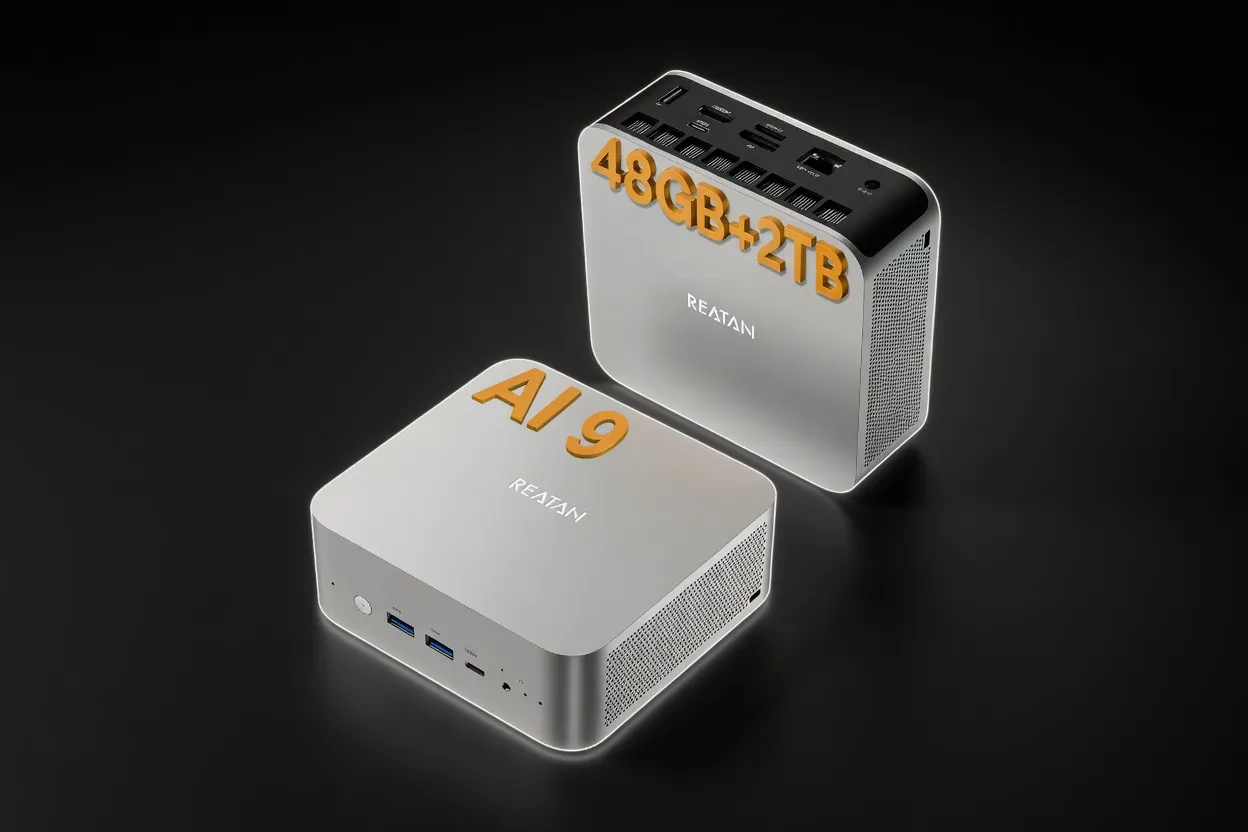
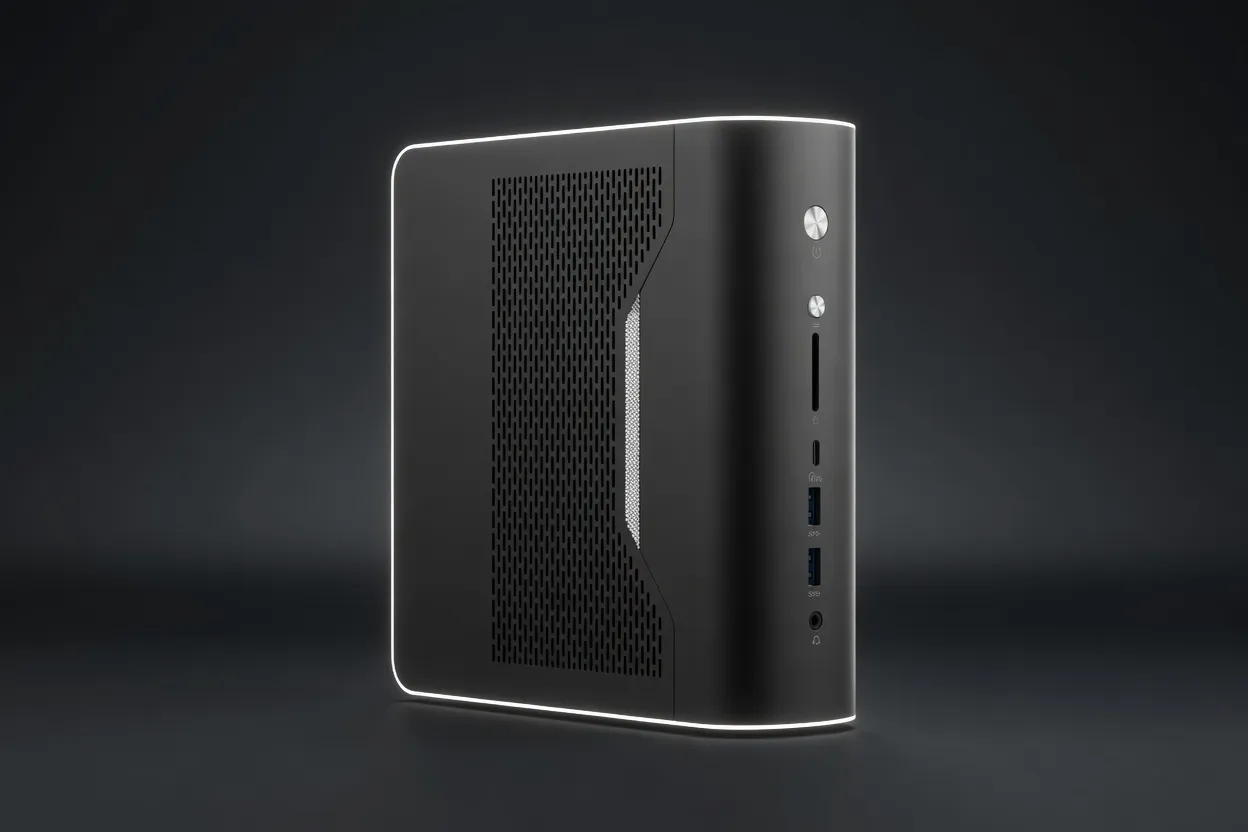
Reatan Mini Gaming PC (Ryzen AI 9 HX 470 with Speaker)
16 GB54 W
Edge AIMobile / On-DeviceEnergy Efficient
$999
Buy on Amazon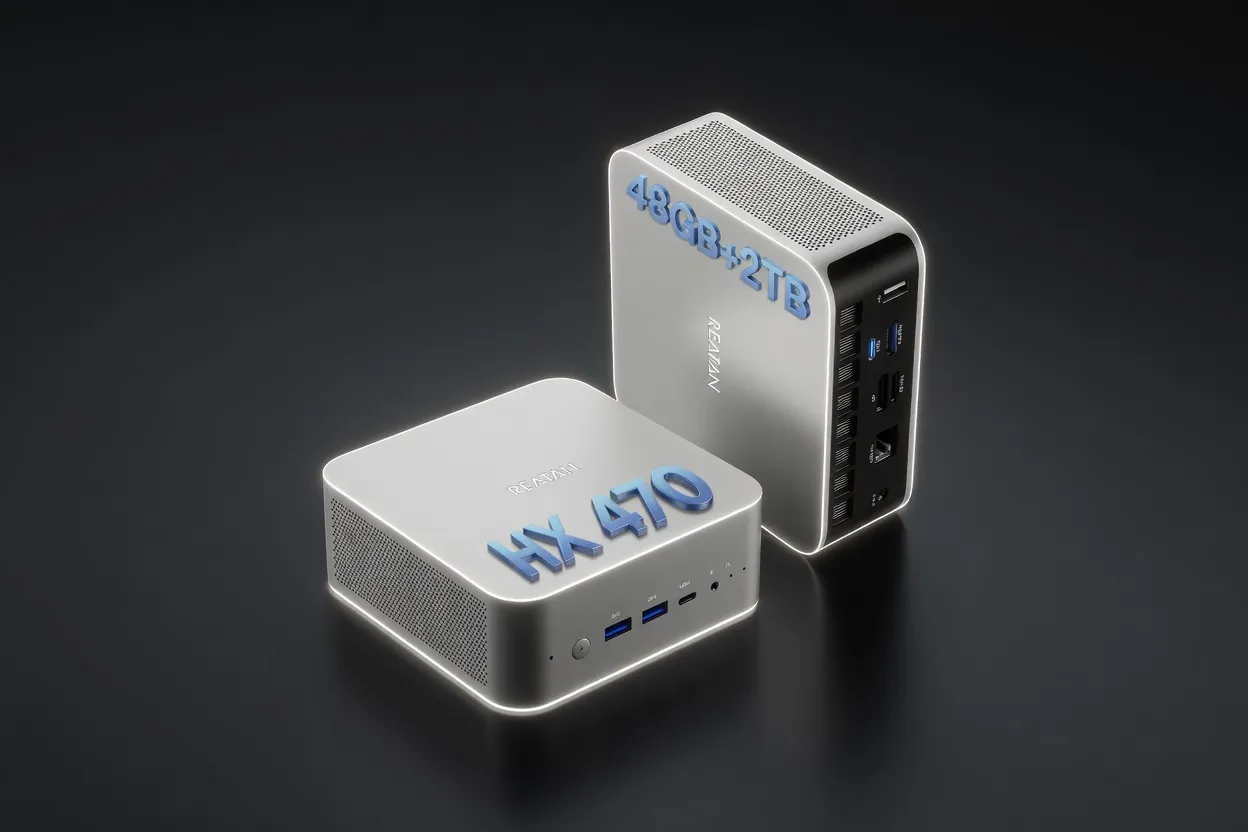
NIMO Mini PC (Ryzen AI Max+ 395 128GB)
96 GB120 W
Best for LLMsEdge AIEnergy Efficient
$2,299
Buy on Amazon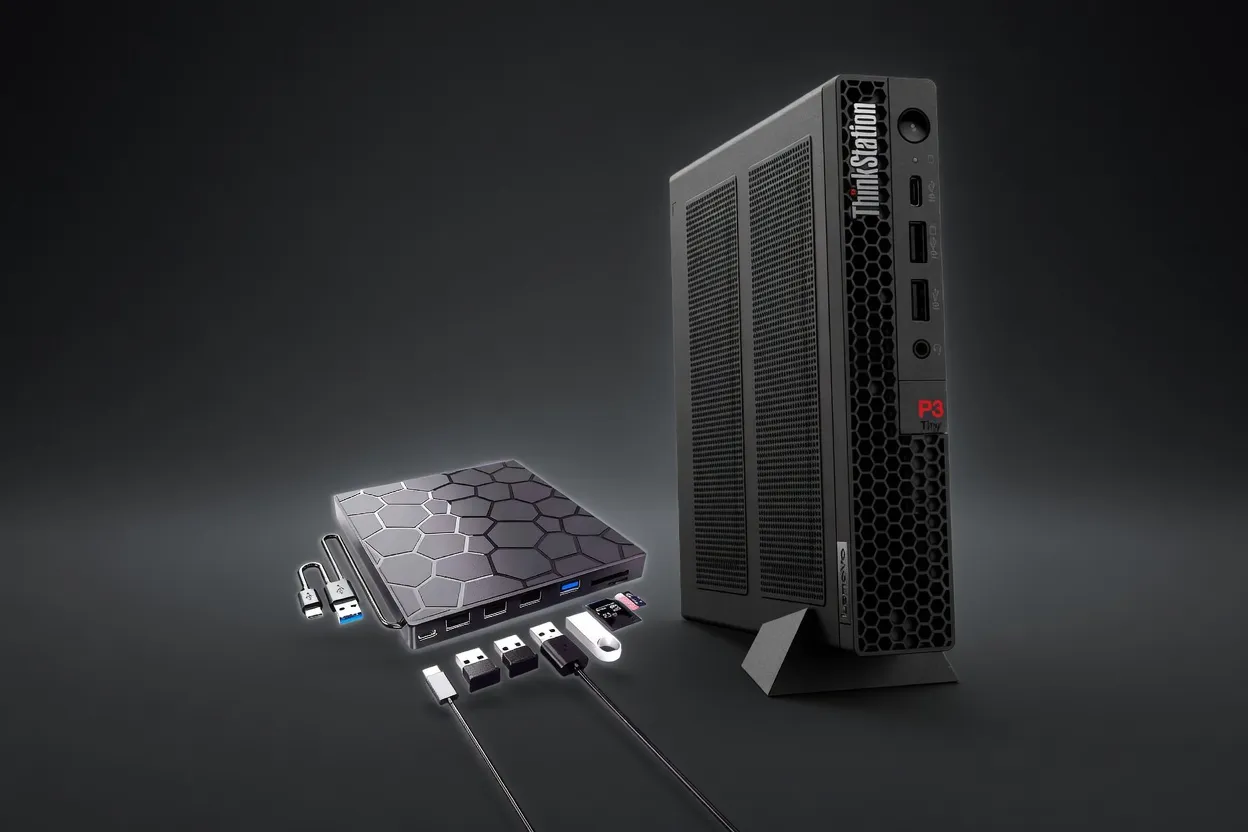
Lenovo ThinkCentre P3 Tiny Gen 2 (Ultra 5 235)
8 GB65 W
Edge AIEnterpriseProduction Ready
$1,299
Buy on Amazon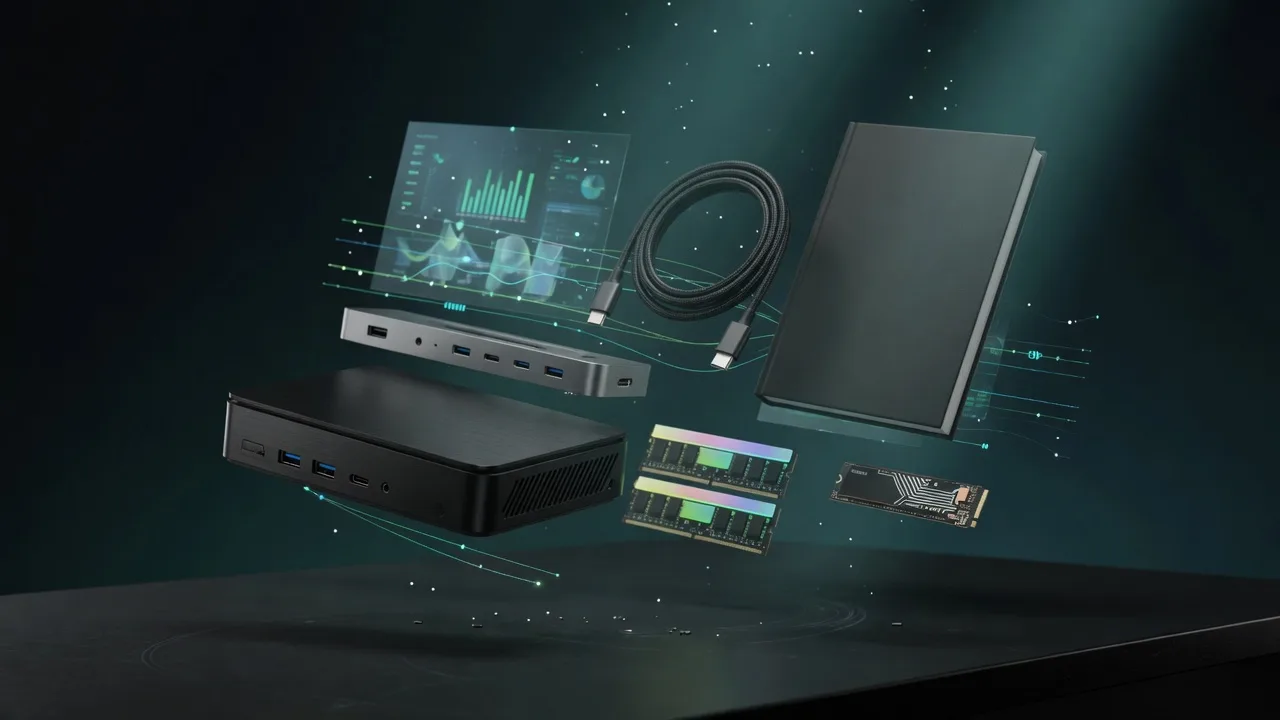
Also in Our Store
Finish the Build
Docks, fast storage, cables, and a UPS sized for a local AI machine.
Plan Your Setup
GPU Rental Price Index
Rent this class of GPU by the hour before you buy. Live prices from RunPod and Vast.ai.
AI Hardware ROI Calculator
Find the break-even between buying this hardware and paying for a cloud API.
AI Workstation Builder
Get a full budget-matched parts list for a local AI workstation.
Apple Silicon vs RTX
Mac vs NVIDIA for local inference, if you are still choosing a platform.