- Services
Advertising disclosure: we earn commissions when you shop through the links below.
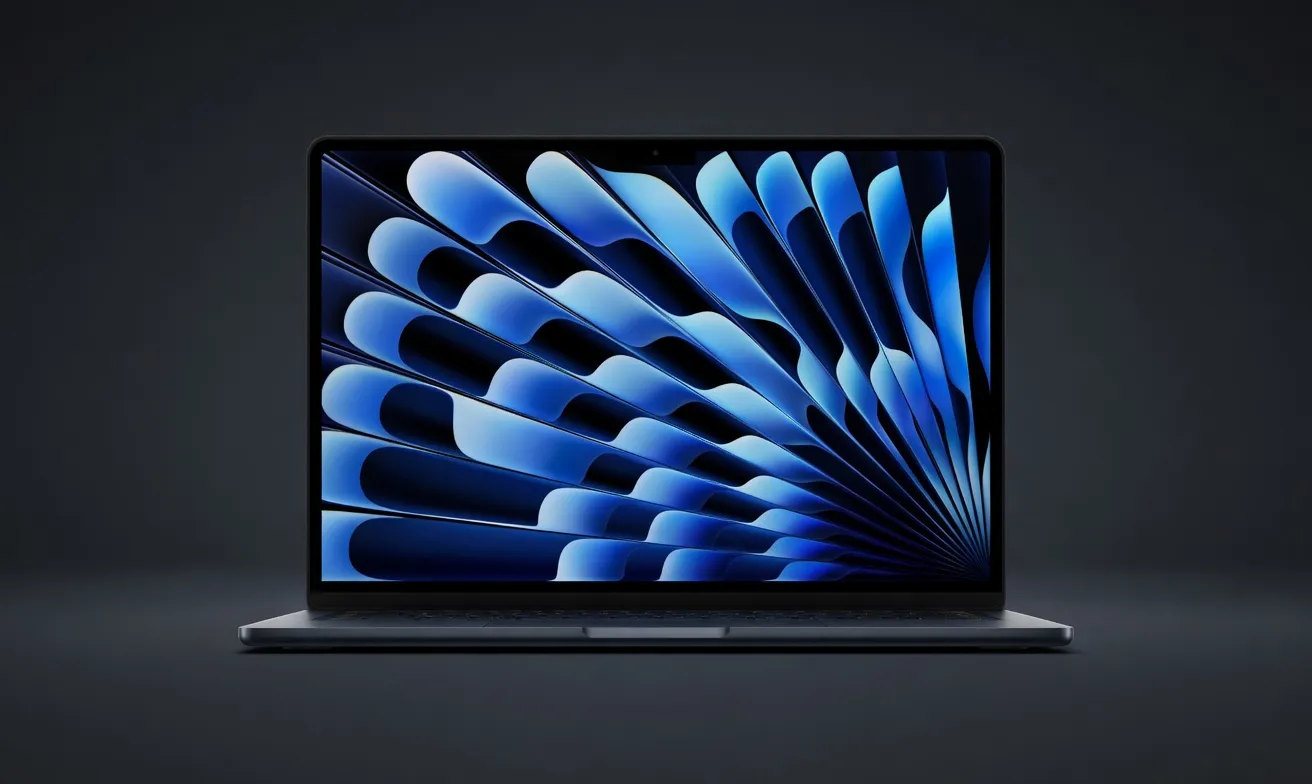
Apple's most popular laptop updated with M5 chip featuring Neural Accelerators in every GPU core. 4x AI compute vs M4, up to 32GB unified memory, and 18 hours battery life starting at $1,099.
A 70B Q4 quant fits with usable context budget left over. Sweet spot if you want a single card that handles every open model worth running locally today.
Generated from this product’s spec sheet. Editor reviews refine it over time.
The MacBook Air 13-inch M5 (2026) represents a significant pivot in Apple’s silicon strategy, transitioning the Air from a general-purpose ultraportable into a highly capable edge-inference machine. While the "Air" moniker traditionally suggests entry-level performance, the M5 chip architecture introduces dedicated Neural Accelerators within every GPU core. This architectural shift results in a 4x increase in AI compute compared to the M4, making the MacBook Air 13-inch M5 (2026) for AI development a viable entry point for practitioners who prioritize portability and energy efficiency.
Built by Apple on a 2nm-class process, the M5 MacBook Air competes directly with specialized NPU-equipped Windows laptops like the Dell XPS 13 (Snapdragon X Elite) and the ASUS Zenbook S 16. However, its primary advantage remains the unified memory architecture, which allows the GPU to access up to 32GB of VRAM, a critical threshold for running modern Large Language Models (LLMs) locally. For developers building agentic workflows or researchers needing a "silent" (fanless) machine for code generation and local RAG (Retrieval-Augmented Generation), this device sits at the top of the best ai pcs & laptops for running AI models locally in the sub-$1,500 price bracket.
The core of the MacBook Air 13-inch M5 (2026) AI inference performance lies in its 10-core GPU. Unlike previous generations where the Neural Engine handled all AI tasks, the M5 distributes the workload. By embedding Neural Accelerators into each GPU core, Apple has effectively blurred the line between general-purpose graphics and tensor processing.
Compared to the previous M4 generation, the M5 offers a massive leap in TFLOPS for matrix multiplication. This makes the MacBook Air 13-inch M5 (2026) local LLM experience feel less like a compromise and more like a production-ready environment for on-device agents.
When evaluating hardware for running 7B at Q4 with 32GB unified memory parameter models, the MacBook Air M5 13-inch is the "sweet spot" device. Because macOS requires roughly 4-6GB of overhead, a 32GB configuration leaves approximately 26GB available for model weights and KV cache.
For the best quality-to-speed tradeoff, we recommend running 7B to 14B parameter models at Q4_K_M or Q6_K quantization. This ensures the model fits entirely within the high-speed unified memory while maintaining a generation speed that feels instantaneous.
The MacBook Air M5 is not a training rig; it is an Apple ai pcs & laptops for AI development and local deployment tool.
When choosing the best hardware for local AI agents 2025, the MacBook Air 13-inch M5 (2026) is often weighed against the MacBook Pro and Windows-based AI PCs.
The Pro model offers active cooling and higher memory bandwidth (~270 GB/s+). If your workload involves sustained inference (e.g., a local server running 24/7) or processing 30B+ models, the Pro is required. However, for 7B-14B models, the Air M5 offers nearly identical "first-token latency" at a much lower price and weight.
While Windows AI PCs are catching up in NPU TOPS (Trillion Operations Per Second), they often struggle with software stack compatibility for local LLMs. The Apple Silicon ecosystem (MLX, Llama.cpp with Metal support) is currently more mature and optimized. Furthermore, finding a Windows laptop with 32GB of RAM at the $1,099 - $1,299 price point that matches the M5’s energy efficiency is difficult.
The MacBook Air 13-inch M5 (2026) is the best AI chip for local deployment in a mobile form factor if your requirements are 7B-14B parameter models and silent, all-day operation. It effectively democratizes high-performance local AI, moving it out of the data center and into the backpack of every developer.
The top models this device can run at 4-bit, ranked by fit and speed.
| Model | Grade | Speed | VRAM |
|---|---|---|---|
| Holo4-35B-A3BHcompany | SS | 52.9 tok/s | 2.3 GB |
| LFM2.5-8B-A1BLiquid AI | AA | 42.5 tok/s | 2.9 GB |
| Qwen3-30B-A3BAlibaba | AA | 23.0 tok/s | 5.4 GB |
| Gemma 4 E2B ITGoogle | AA | 33.3 tok/s | 3.7 GB |
| Apertus 8BEPFL, ETH Zurich, CSCS | BB | 22.9 tok/s | 5.4 GB |
Also in Our Store
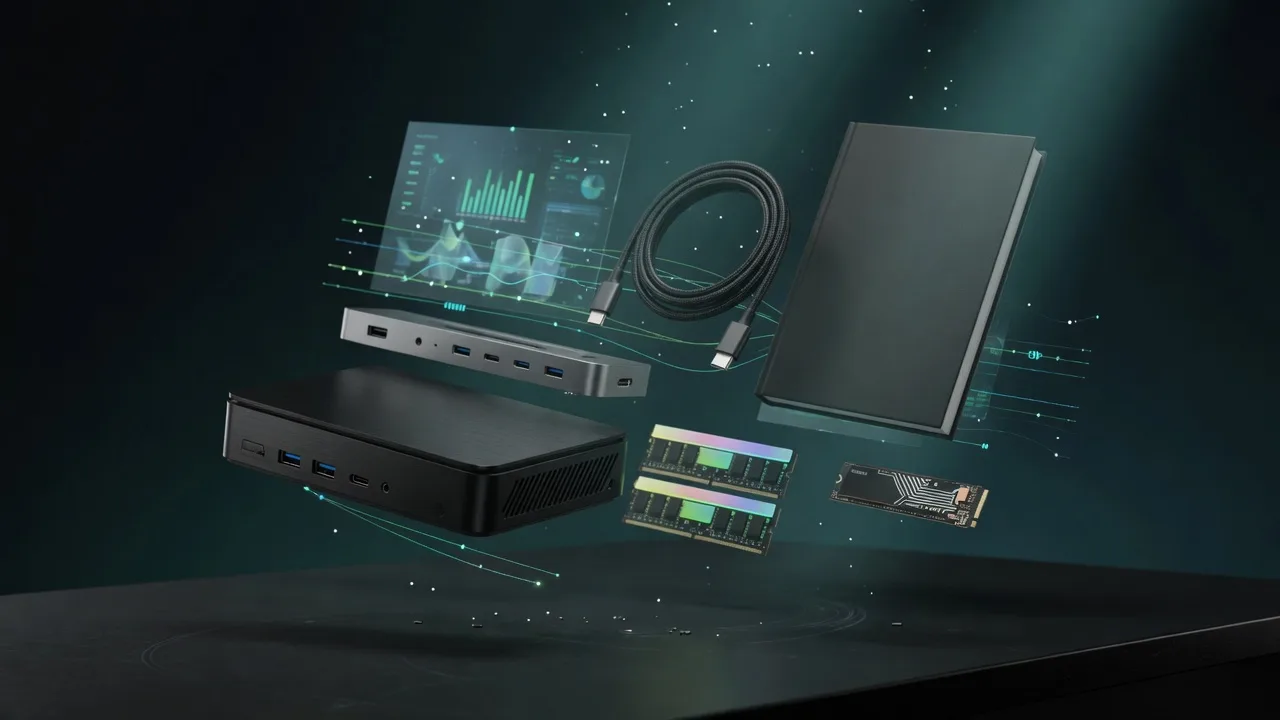
Docks, fast storage, cables, and a UPS sized for a local AI machine.

Rent this class of GPU by the hour before you buy. Live prices from RunPod and Vast.ai.
Find the break-even between buying this hardware and paying for a cloud API.
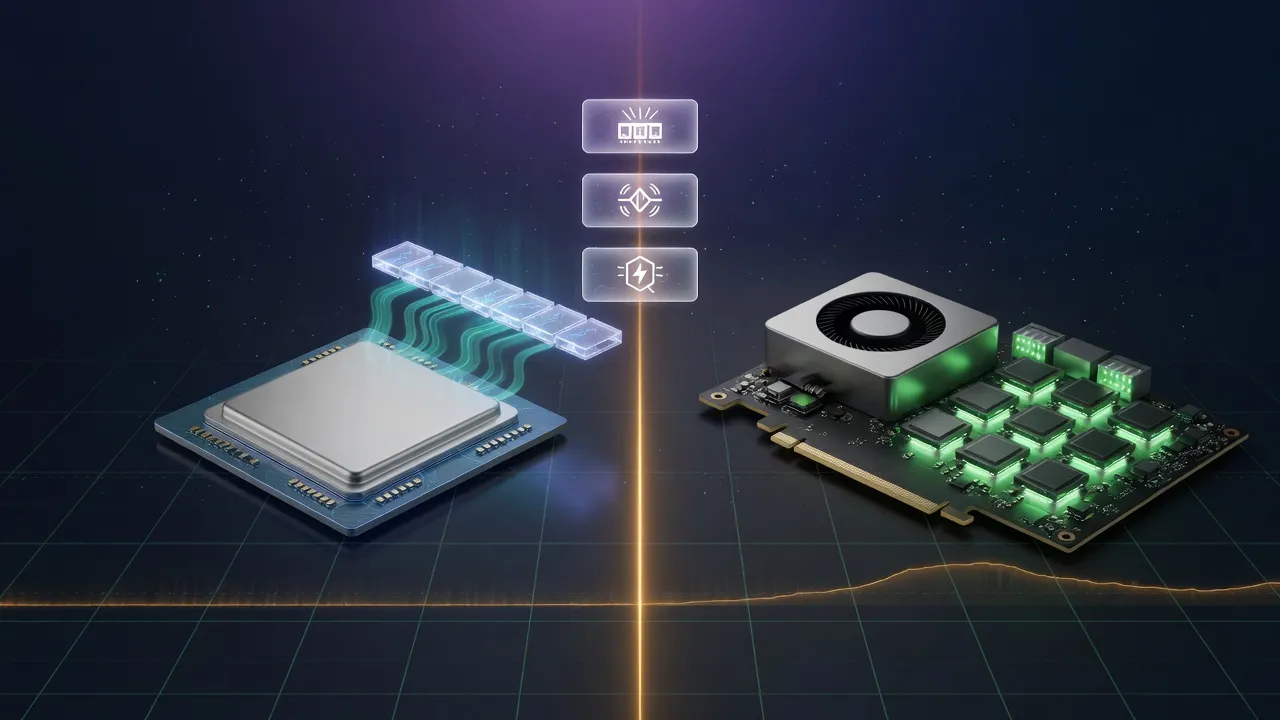
Mac vs NVIDIA for local inference, if you are still choosing a platform.