- Services
Advertising disclosure: we earn commissions when you shop through the links below.
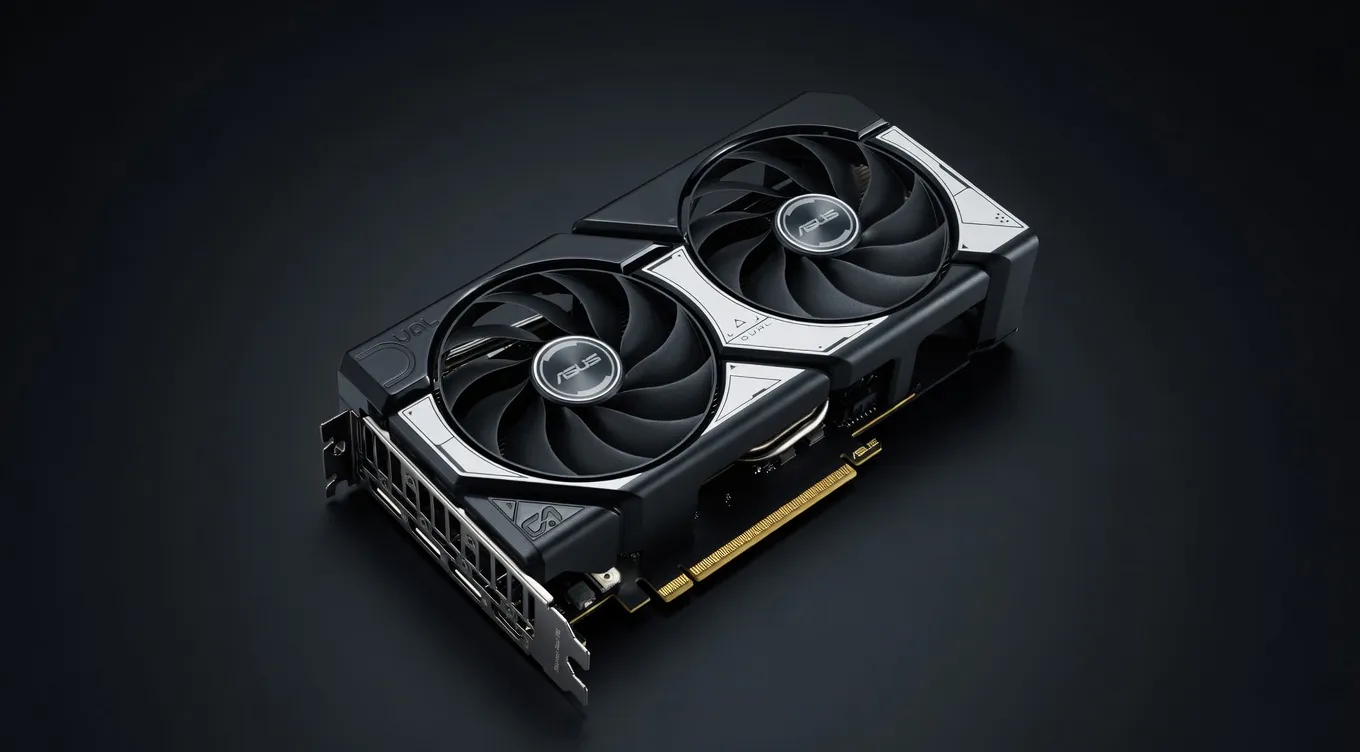
Budget Blackwell GPU starting at $299 with GDDR7 memory and DLSS 4 support. The entry point to NVIDIA's RTX 50-series for 1080p gamers and casual creators.
Manufacturer's suggested retail price. Current prices can be higher or lower. This is not a live price.
8 GB will run a 7B Q4 quant and most embedding models, but the KV cache budget is tight. Better as a stepping stone than a long-term home for AI work.
Generated from this product’s spec sheet. Editor reviews refine it over time.
GPU Rental Price Index
From $0.14 per GPU-hour, NVIDIA GeForce RTX 5060 on Vast.ai.
The NVIDIA GeForce RTX 5060 represents the entry point into the Blackwell architecture (GB206), designed specifically to bring next-generation tensor core performance to the budget-conscious segment. While positioned primarily as a 1080p gaming card, its utility for AI development and local inference is defined by its transition to GDDR7 memory and the efficiency gains of the TSMC 4N process node. At an MSRP of $299, it is currently one of the most accessible NVIDIA GPUs for AI development, offering a low-barrier entry for engineers testing agentic workflows or deploying edge inference nodes.
For practitioners, the RTX 5060 functions as a specialized tool for lightweight local LLM execution and prototyping. It competes directly with the outgoing RTX 4060 and AMD’s Radeon RX 7600 XT. However, the inclusion of Blackwell’s architectural improvements gives it a distinct advantage in NVIDIA GeForce RTX 5060 AI inference performance, particularly when utilizing DLSS 4 and the latest FP8/FP4 precision formats which are becoming standard in modern quantization stacks. If you are looking for the best hardware for local AI agents in 2025 on a strict budget, this card provides the necessary CUDA ecosystem support that AMD still struggles to match in terms of library compatibility (TensorRT, bitsandbytes).
Evaluating the NVIDIA GeForce RTX 5060 for AI requires looking past clock speeds and focusing on the memory subsystem and compute density. The card features 3,840 CUDA Cores and utilizes a 128-bit memory bus. While the bus width is narrow, the move to GDDR7 memory provides a significant uplift in effective bandwidth compared to the GDDR6 found in previous generations. In AI inference, memory bandwidth is almost always the primary bottleneck for token generation speed (tokens per second).
The 8GB GPU for AI category is increasingly crowded, but the RTX 5060 stands out due to its 150W TDP. This makes it an ideal candidate for small form factor (SFF) builds or "homelab" clusters where power density and heat management are critical. While it lacks the massive VRAM pools found in the RTX 5090, its support for PCIe 5.0 ensures that data transfer between the CPU and GPU remains as fluid as possible, reducing latency during model loading and KV cache offloading.
The primary constraint of the NVIDIA GeForce RTX 5060 VRAM for large language models is the 8GB ceiling. In the current landscape of LLMs, this limits the card to "Small Language Models" (SLMs) and highly quantized versions of mid-sized models.
The NVIDIA GeForce RTX 5060 local LLM experience is optimized for the 7B to 8B parameter class.
Beyond text, the RTX 5060 is a capable performer for:
The RTX 5060 is not a "training" card in the traditional sense; it is an inference and development card.
For users who want a private, local alternative to ChatGPT, the RTX 5060 provides a "plug-and-play" experience. It is arguably the best AI chip for local deployment if your goal is to run a personal assistant like Llama 3 via Ollama or LM Studio without breaking the bank.
If you are building an agentic system where multiple small models (e.g., a "Manager" agent and a "Worker" agent) need to communicate, the RTX 5060 can host two or three 1B-3B parameter models simultaneously. This makes it a cost-effective choice for testing multi-agent orchestration before deploying to the cloud.
Because of the energy-efficient 150W TDP and the budget-friendly price point, the RTX 5060 is a prime candidate for edge AI. This includes local NVR (Network Video Recorder) systems with AI object detection or on-site retail analytics where a 300W+ card would be overkill and too expensive to operate.
When choosing the best nvidia gpus for running AI models locally, the RTX 5060 sits in a precarious but valuable spot.
The 4060 Ti 16GB is the 5060's biggest internal rival. While the 5060 has the faster Blackwell architecture and GDDR7 memory, the 4060 Ti has double the VRAM.
The AMD RX 7600 XT offers 16GB of VRAM for a similar price. However, for NVIDIA nvidia gpus for AI development, the software moat is the deciding factor. Most practitioners prefer the RTX 5060 because of CUDA. Libraries like bitsandbytes, AutoGPTQ, and TensorRT-LLM are built NVIDIA-first. While ROCm (AMD's stack) is improving, the RTX 5060 offers a "it just works" experience for the majority of GitHub repositories and AI frameworks.
In summary, the RTX 5060 is the definitive choice for a budget-friendly, energy-efficient entry into the Blackwell ecosystem. It excels at high-speed inference for 7B-8B models and provides the necessary architectural foundations for developers entering the world of local AI agents in 2025.
The top models this device can run at 4-bit, ranked by fit and speed.
Specs not available for scoring. This product is missing VRAM or memory bandwidth data.
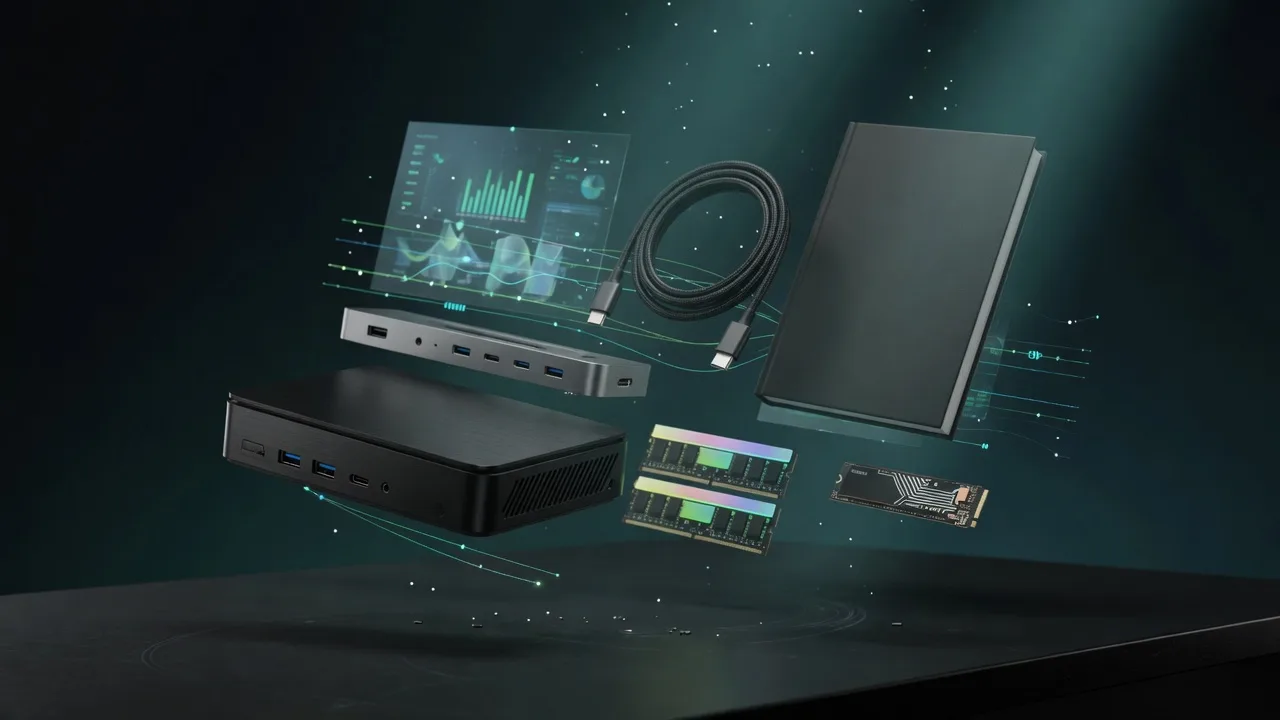
Also in Our Store
Docks, fast storage, cables, and a UPS sized for a local AI machine.

Rent this class of GPU by the hour before you buy. Live prices from RunPod and Vast.ai.
Find the break-even between buying this hardware and paying for a cloud API.
Mac vs NVIDIA for local inference, if you are still choosing a platform.