How to Build Free Tools With Claude Code for Backlinks (My Full Playbook)
My full playbook for building free interactive tools with Claude Code that earn backlinks, lift time on page, and feed a monetization flywheel.
Last updated: Aug 30, 202612 mins read
Table of Contents
📝 Audio Version
Build free tools with Claude Code
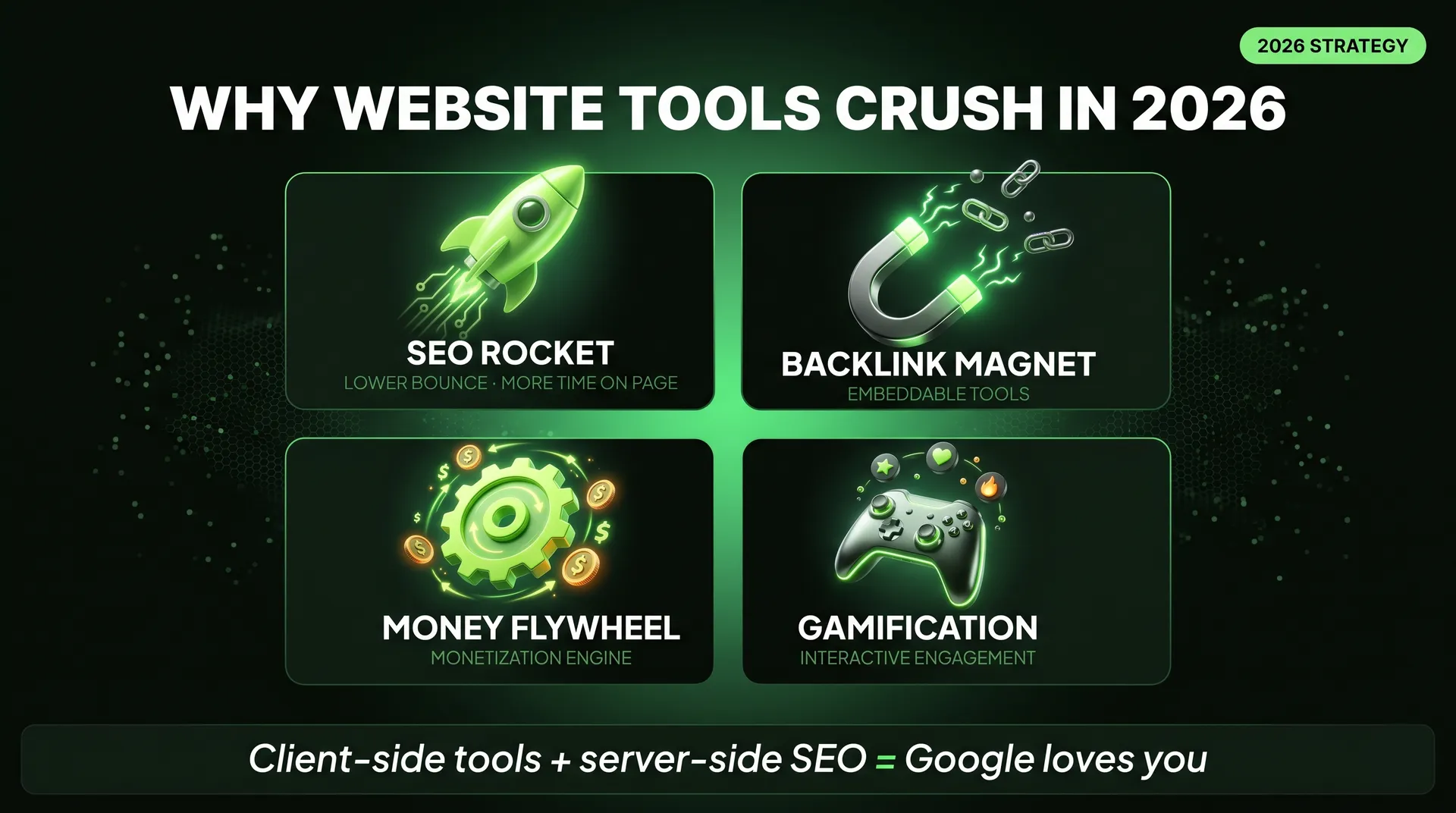
Free interactive tools are the most underrated SEO move on the internet right now. They drop your bounce rate, push time on page past five minutes, earn you backlinks while you sleep, and feed a monetization flywheel you can keep stacking. I just shipped another one on madebyagents.com using Claude Code, and the process is repeatable enough that I want to hand it to you in full.
This post walks through how to build free tools with Claude Code for backlinks, step by step. You will get the planning prompt, the MVP build prompt, the data seeding template, the SEO and GEO optimization pass, the embed code logic, and the monetization flywheel I use to turn a single tool into compounding traffic and revenue. No fluff, just the exact prompts and the order I run them in.
Blog posts decay. Tools compound. That is the entire thesis.
A well-built free tool keeps a visitor on your page while they input data, read the output, share it, and sometimes embed it on their own site. A blog post asks for none of that. The dwell-time, share, and embed signals are exactly what Google and the new AI search surfaces (AI Overviews, ChatGPT search, Perplexity) reward.
Yes, and the gap between tools and content is huge. Ahrefs' Free Backlink Checker has earned over 1 million backlinks on its own 1. HubSpot's Website Grader pulled in 40,000+ organic backlinks purely from users sharing their scores 2. One Wise currency case study went from 14K to 200K monthly organic visits after the tool got SEO love 3. Original studies and free tools attract 5 to 10 times more backlinks than the equivalent blog post.
Average bounce rate sits around 41 to 51 percent depending on industry 4, and most blog visitors leave within 60 seconds. A calculator or interactive widget forces the user to stop, type something, look at the output, and often share or copy it. Three to five minutes on page is normal. GA4 even replaced "bounce rate" with "engagement rate" because interaction is the metric that actually matters now 5.
Start with one free tool. It earns backlinks, drives organic traffic, captures emails, and points to a paid offer. The next tool you ship inherits the domain authority and email list of the first one, so it ranks faster. HubSpot, Ahrefs, and Moz did not stumble into this. They treat tool-building as a permanent line item.
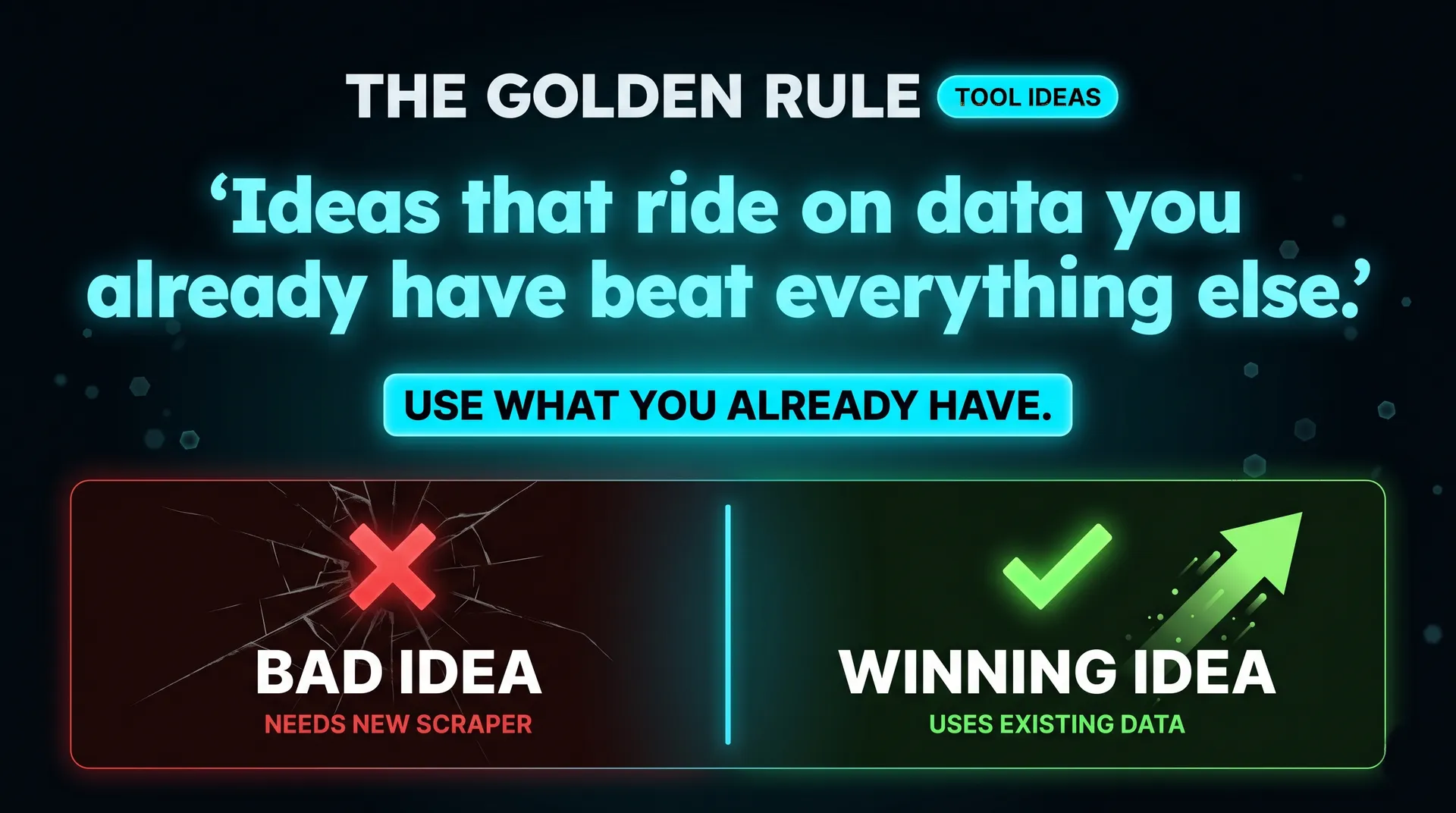
This is the single most important decision in the whole process. Pick tools that wrap data you own or can pull cheaply. Ideas that ride on data you already have beat everything else.
On madebyagents.com I had hardware specs, AI model specs, benchmark scores, and download numbers. That existing data is what made the ROI calculator, the GPU compatibility checker, and the new Hugging Face downloads tree map possible in a weekend each. If I had tried to build SEO grader tools instead, I would have had nothing.
This rule is also your defense against Google's site reputation abuse policy. The November 2024 update started penalizing parasite-SEO subdirectories where third-party tools get bolted on to game host rankings, even when the host editorially signs off 6. A tool you built and maintain on data you own is fine. A white-labeled third-party tool farming your domain authority is not.
Before you write a single prompt, answer two questions:
- Does the tool perfectly fit the niche of your existing site? If you sell cosmetics, do not ship an SEO optimizer. Ship a "find your skin tone match" quiz.
- What data do you already have, or can you ingest cheaply? Blog post database, product specs, public APIs, your own analytics. List it before you brainstorm.
Open Claude Code in your existing project root, not in a fresh folder. You want it to read your tech stack, your data schema, and your existing components so the new tool slots in cleanly. Then switch to plan mode and run this:
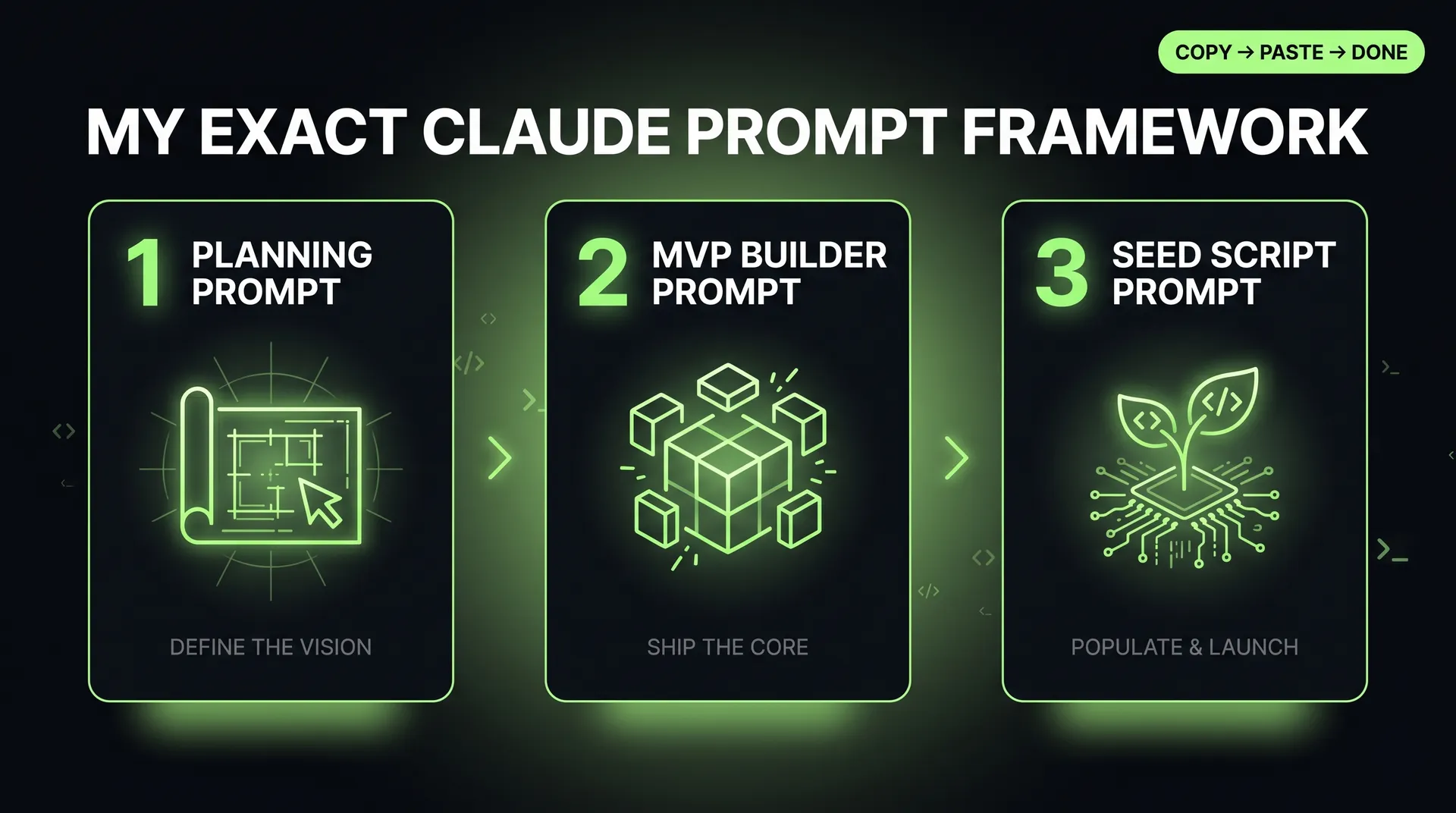
1You are a world-class product strategist specializing in interactive website tools that drive SEO, backlinks, and monetization.23My website niche is: [INSERT YOUR NICHE HERE, e.g. "SEO and blogging tools"].4Existing data I already have: [LIST YOUR DATA, e.g. "blog post database, keyword list, user email opt-ins, backlink tracker"].56Follow this exact principle: Ideas that ride on data I already have beat everything else. No new scrapers or heavy infrastructure.78Brainstorm 5 tool ideas that:9- Perfectly fit my website and audience10- Can become part of an overall "Tool Hub"11- Maximize SEO (time-on-page, lower bounce rate, embed potential)12- Are buildable as fast MVP (mostly client-side)13- Have clear monetization paths (email capture, affiliate, paid add-ons)1415For each idea output in this format:16Tool Name:17One-sentence description:18Data used:19Why it rides on existing data:20SEO & backlink potential:21Monetization ideas:22Tech difficulty (1-10):
Plan mode is built into Claude Code and forces a structured plan before any file edits, which is exactly what you want here. Run it, read the five ideas, and pick one. The trick is that running this on top of your real codebase gives you ideas that already match your stack, instead of generic advice that ignores what you actually built.
Once you have an idea, switch to a build prompt. This one is shaped to give you a single self-contained MVP with all the SEO and shareability pieces wired in from minute one:
1You are a senior full-stack developer and UI/UX expert. Build a complete, production-ready interactive website tool as a single clean unit.23Project: [INSERT TOOL NAME, e.g. "Backlink Farming Embed Tool"]4Goal: Create an interactive tool that [INSERT EXACT GOAL, e.g. "helps users generate embeddable backlink badges that drive traffic back to my site"].56Tech stack must match my existing website: [INSERT YOUR STACK, e.g. "HTML + Tailwind CSS + vanilla JS or Alpine.js. No React unless I say so. Keep it separate module"].78Requirements:9- Build FULLY WORKING MVP in one self-contained HTML file (or clear folder structure)10- Make it beautiful, modern, mobile-first, accessible11- Add smart share buttons (Twitter, LinkedIn, etc.) with pre-filled messages12- Include embed code generator so other sites can embed it (for backlinks)13- Add subtle CTA to my main products/services14- Include basic analytics event tracking comments (Google Analytics)15- Security: Sanitize all inputs, no sensitive data storage16- Comment every section clearly so I can integrate it easily1718Output ONLY the complete code + a 3-sentence integration guide at the bottom.
Run this in plan mode first. Claude Code will ask clarifying questions (layout options, click-through behavior, how the data should be sourced). Answer them, then let it execute the plan.
Expect two to four iteration rounds. My new tree map was ugly on the first pass: duplicate share buttons, broken layout, no labels, no color scale. I fed Claude Code a screenshot of how a stock-market tree map looks, told it to copy the layout and color encoding, and ran the build again. Then I asked it to fix the missing labels and seed in older download stats so I could verify the color gradient actually works. By round four, it looked like a real product.
If you want one-shot perfection, you are using AI coding agents wrong. Iteration is the loop.
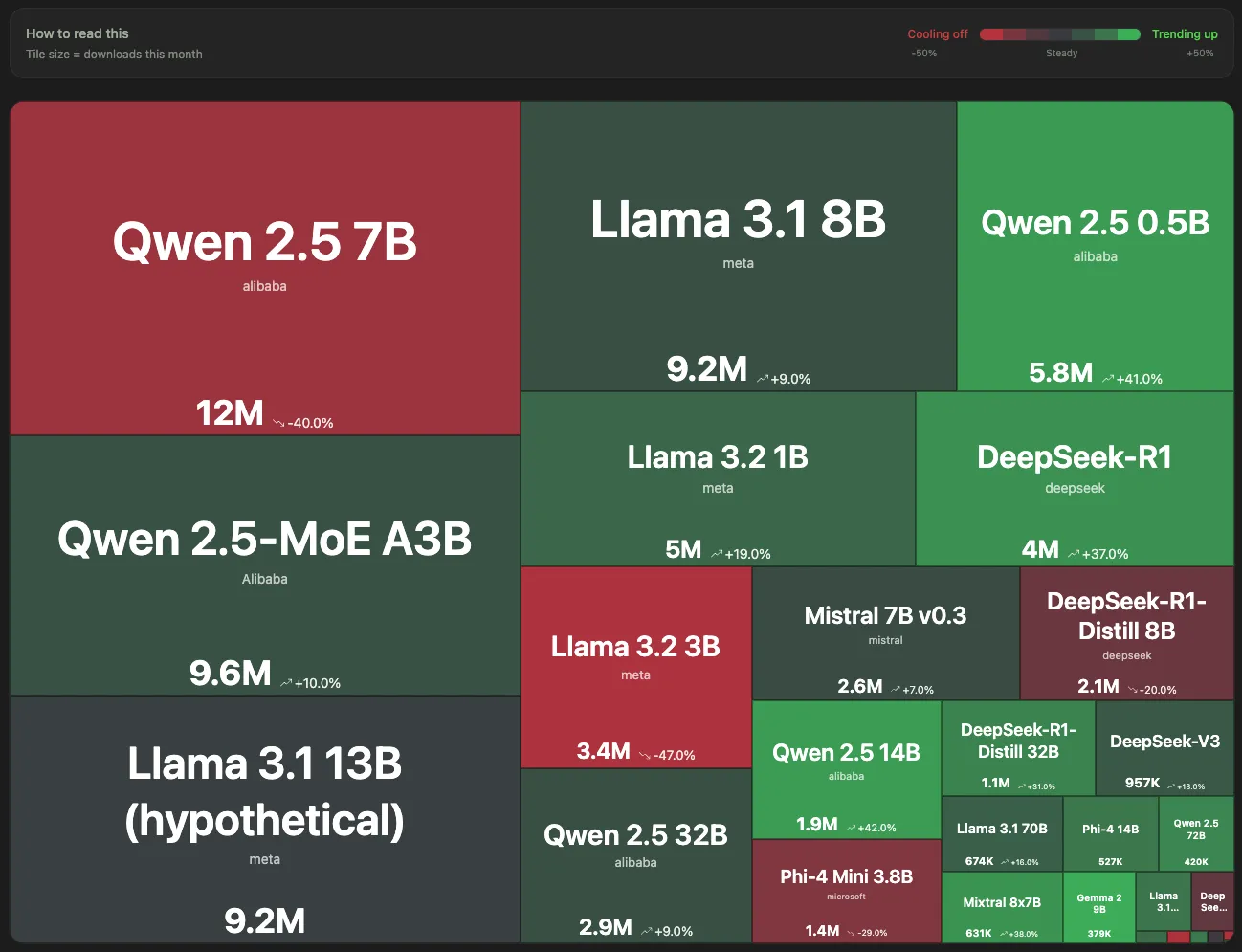
My open-source LLM treemap which visualizes the monthly downloads on HuggingFace
Most tools need data to demo well. The fastest way to seed your dev database is another short prompt:
1You are an expert backend and database engineer.23I need a complete seed script for my new tool: [INSERT TOOL NAME].45My database is: [INSERT YOUR DB, e.g. "Supabase / MySQL / SQLite"].67Create a ready-to-run seed script that:8- Populates realistic dummy data (at least 20–50 records)9- Uses data that matches my existing website content10- Includes sample categories, examples, and edge cases11- Has comments explaining each part12- Can be run in dev environment first1314Also output the exact database schema / table structure if needed.1516Make it copy-paste ready for my dev environment.
For production data, run a deep-research pass first (Claude with web search, or Exa, or DataForSEO MCP), then hand the verified facts back to Claude Code with the same seed prompt. This is the fastest path I know from "empty database" to "demo-ready tool" without writing a scraper.
A purely client-side tool is not "uncrawlable," but it is weak. Google does render JavaScript, but rendering is queued and lags. The reliable pattern is server-side rendering for the shell (H1, headings, FAQ, schema, default state) plus a client-side island for the interactivity (sliders, buttons, calculations) 7.
In Next.js App Router that means a server component for the page shell with metadata, schema, and explanatory copy, then a 'use client' component for the interactive piece. Wise built 260,000+ currency converter pages this way and pulls 46 to 60 million monthly organic visits because the converted output sits in the HTML, not behind a useState 8.
1You are an expert SEO copywriter and frontend optimizer.23I just built this tool: [PASTE TOOL DESCRIPTION OR CODE SUMMARY].45Create:61. Strong meta title and description using main keyword "[INSERT MAIN KEYWORD]"72. Full on-page explanatory text (300–500 words) with the keyword naturally83. Detailed schema markup for the tool page94. Exact prompt I can give to Midjourney / Flux / Claude for a killer OG image (social card) that includes the tool name and "Free Interactive Tool"105. Server-side wrapper code (if using Next.js, Nuxt, etc.) so the page is crawlable and has proper HTML1112Focus on: lower bounce rate, higher time-on-page, and GEO relevance if possible.
A few specific notes from research that the YouTube version did not get into:
- Use `SoftwareApplication` schema with
applicationCategory,operatingSystem: "Web",offers: { price: "0" }. Layer `FAQPage` on the FAQ block. SkipHowTofor now: Google deprecated HowTo desktop rich results in 2023, so it only helps for AEO, not visual snippets 9. - Lead each FAQ answer with a self-contained 2 to 3 sentence paragraph. That is the unit AI Overviews and Perplexity extract when they cite a tool page. Brands cited in AI Overviews see 35 percent higher organic CTR on the same query 10.
- Skill-based help. I run the claude-seo plugin in Claude Code. After installing it via
claude plugins, you can call/seoskills to get an SEO plan or to optimize an existing page in one pass. Pair it with the prompt above for the deepest sweep.
Generate the OG image with whatever AI generator you like (I use Imagine from Grok at 16:9 quality). Then check it on opengraph.xyz to see how the preview renders on X, LinkedIn, WhatsApp, Discord, Facebook before you ship.
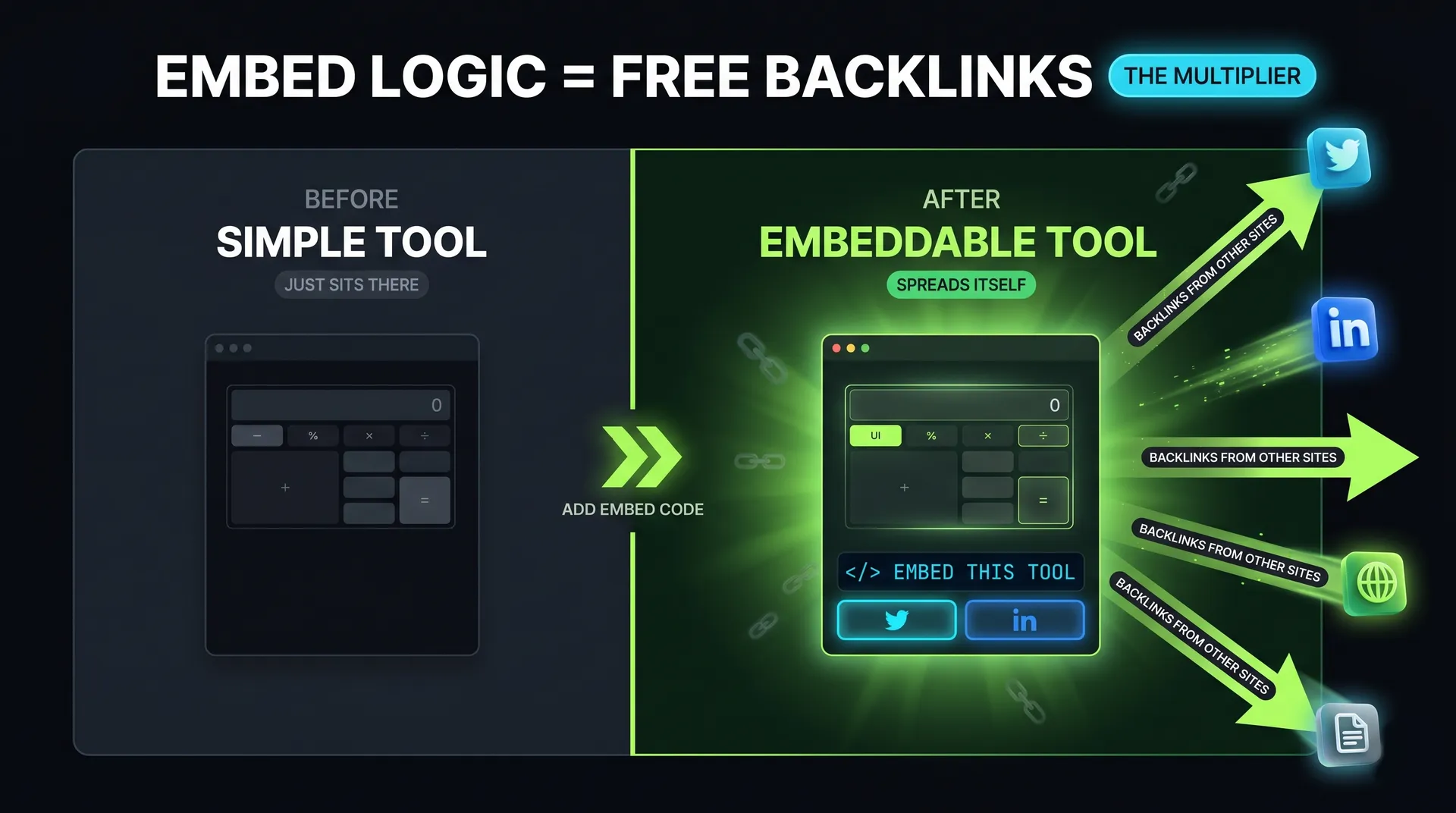
Every tool I ship gets an embed code generator: a one-line iframe other people paste into their blog posts. The iframe loads a stripped-down version of the tool with a small footer link back to the canonical page on madebyagents.com. Done well, this is a real distribution channel.
Here is the part the YouTube version glossed over: Google has had an explicit "widget links" policy since 2016 and still enforces it 11. Keyword-rich, hidden, or auto-distributed widget anchors violate Search Essentials. Google's own remediation is to add rel="nofollow" (or rel="ugc") to the embed link.
So "autopilot backlinks" is not quite right. The actual value of an embed program is:
- Referral traffic from people who click the footer link
- Brand visibility to a new audience
- AI Overview and ChatGPT citations when those engines crawl the embedding page and see your tool referenced
- Some PageRank, but only if your anchor is branded (your domain or product name) rather than spammy keyword bait
Use a plain branded anchor. Do not stuff the anchor with "best AI ROI calculator." Optionally wrap with rel="nofollow" if you are auto-distributing via plugins. Then lean on referral traffic and brand searches as the real return.
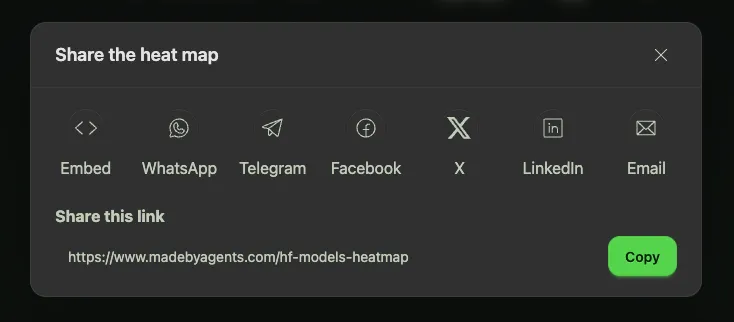
The share dialog to embed or share the free treemap tool
Here is the embed prompt I use to generate this part:
1You are a growth engineer specializing in viral embeds.23For this tool [TOOL NAME], generate:4- Beautiful, one-line embed code (iframe or script tag) that other websites can copy-paste5- The embed should look native and branded6- Pre-written Twitter/LinkedIn share text that encourages backlinks ("I just used this free tool on [yourdomain.com] → try it!")7- Analytics pixel / event firing when someone embeds or shares it89Output the exact code blocks I can add to my tool page.
Wire the analytics pixel in Google Analytics (GA4, custom events for embed_copied and share_clicked) and you can finally see which tool is actually driving distribution.
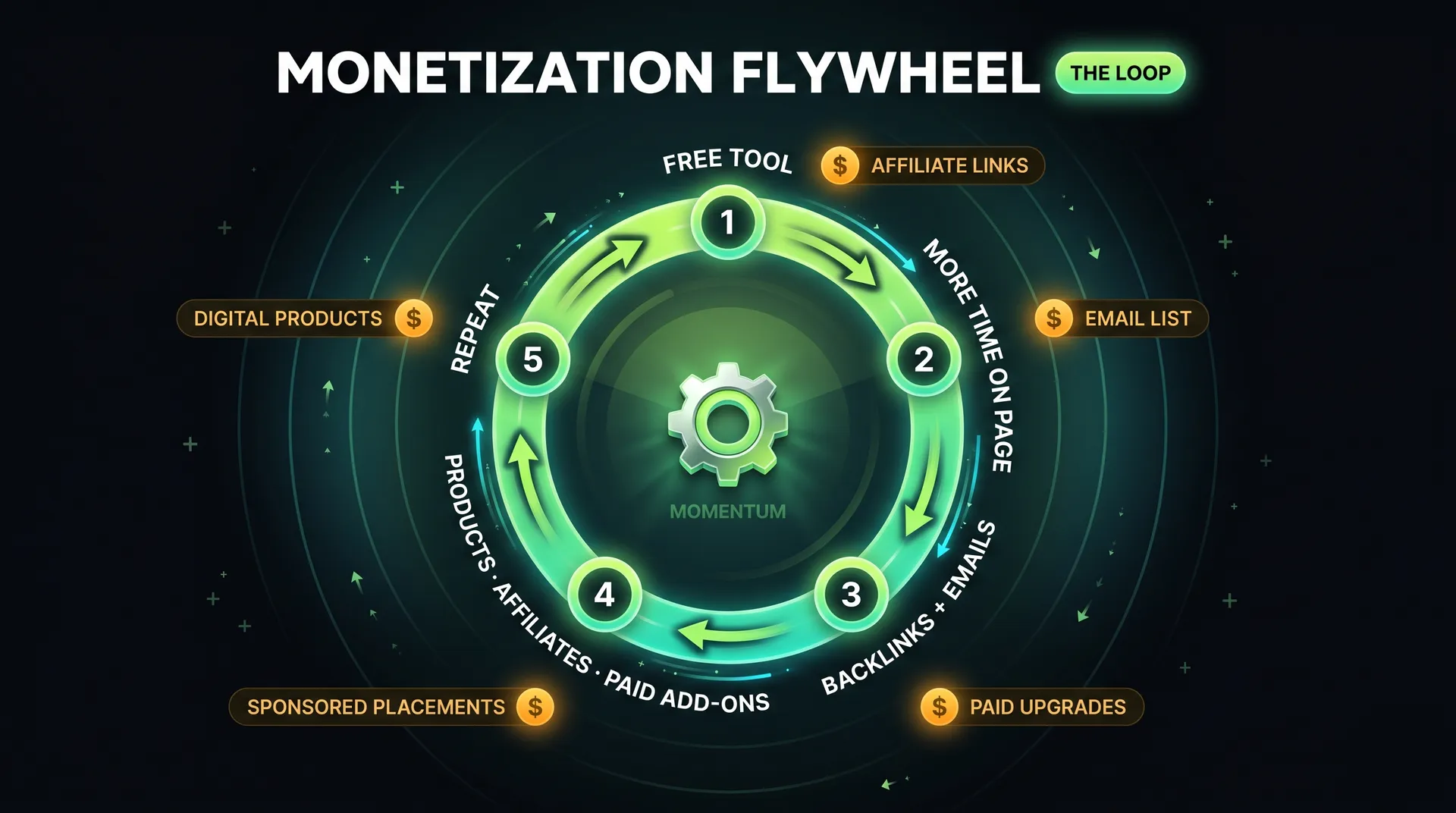
The flywheel only works if you stack the layers in the right order:
- Free tool ranks organically and earns backlinks
- Email capture on the result screen ("get the weekly update")
- Affiliate or product CTAs tied to the tool's output
- Paid upgrade (advanced features, saved scenarios, exports)
- Sponsored placements or digital products once traffic supports them
- Repeat with the next tool, which inherits the audience of all previous tools
Two numbers worth knowing. SEO leads convert MQL to SQL at 51 percent, versus PPC at 26 percent 12, so tool-driven organic visitors are higher quality than they look. And SaaS free-trial-to-paid sits at 14 to 18 percent on average, with anything above 25 percent considered strong 13, which is the same activation curve to plan for in a "free tool to paid product" funnel.
The order matters. Slap an affiliate link on a tool with no email capture and you cap your upside at the visit-level conversion rate. Add the email layer first and you compound forever.
- Building tools with no data moat. A generic Lorem Ipsum generator was already done in 2008. A "what local AI model fits on my GPU" tool only works because you have GPU specs and model VRAM data. Pick the moat first.
- Client-side-only with no SSR shell. The page has nothing to crawl, the schema is missing, and AI engines have nothing to cite. Add a server component shell with H1, intro, FAQ, and schema.
- Spammy embed anchors. You will get a manual action. Use branded anchors and consider
rel="nofollow". - Gating too early. Let people use the tool fully before asking for an email. The email capture goes on the result screen, not the input screen.
- No share or embed path. No flywheel. Add both before you launch.
Realistic timeline: 2 to 8 weeks for the first long-tail keywords if you have decent domain authority and the tool has unique data and a proper SSR shell. Some Ahrefs free tools have ranked #1 inside the first month 3, but that is with DR 90+ and aggressive distribution. For a newer site, expect a slow ramp accelerated by every new tool you ship and every embed that goes live.
Not really, but it helps for the iteration loop. Claude Code can scaffold the whole tool from a description in plain English. The places where you still need judgment are: deciding which iteration round is "good enough," reading the diff before merging, and recognizing when the agent is going in circles instead of converging. If you cannot read the code at all, pair Claude Code with someone technical for the first three tools.
Here is the whole loop in one paragraph: open Claude Code in your existing project, run the planning prompt in plan mode, pick one tool from the five ideas, run the MVP build prompt, iterate two to four rounds with screenshots and feedback, seed the data, run the SEO/GEO prompt to add the SSR shell + schema + FAQ + OG image, generate the embed code with the embed prompt, wire Google Analytics events, then layer the monetization flywheel from email up to paid product. Repeat with the next tool. Each tool you ship makes the next one rank faster.
The cheapest part of this stack is the building. The expensive part is picking the right idea. Spend 80 percent of your thinking on data moat and niche fit, and the rest is mostly typing the prompts above.
Open Claude Code right now and plan your first tool. The hardest day is day one.
- "The Best Linkable Assets to Earn Quality Backlinks". SEO PROFY. 2026.
- "HubSpot Website Grader SEO Win: Free Tools Marketing". Startup Spells. 2024.
- "How Wise (TransferWise) Got 200K Monthly Visits". Ahrefs Blog. 2024.
- "Average Website Bounce Rate by Industry". Listmint Resources. 2025.
- "What GA4 Metrics to Track in 2025". AnchorzUp. 2025.
- "Google Strengthens Site Reputation Abuse Policy". Google Search Central Blog. November 19, 2024.
- "Rendering Strategies in Next.js". Next.js Learn. 2025.
- "Wise SEO Case Study: From 0 to 60M Monthly Visits". Omnius. 2024.
- "SoftwareApplication Schema Guide". Aubrey Yung. 2024.
- "AI Citation Report". Surfer SEO. 2025.
- "A Reminder About Widget Links". Google Search Central Blog. September 2016 (still in force).
- "Lead Generation Conversion Rate Benchmarks". Prospeo. 2026.
- "SaaS Free Trial Conversion Rate Benchmarks". First Page Sage. 2025.
About the author

Tobias Wupperfeld
Tobias is an independent AI engineer and operator who has shipped AI systems inside startups and scale-ups across fintech, procurement, engineering, and more. He runs Made By Agents focused on agentic coding and consults for companies, where he leads AI integration across processes and product lines.
Keep Reading
More Guides From the Blog
We write about coding agents, multi-agent systems, AI pair programming, and the engineering practices we use with clients. Hands-on lessons from real projects, not high-level theory.
Browse All Articles