Advertising disclosure: we earn commissions when you shop through the links below.
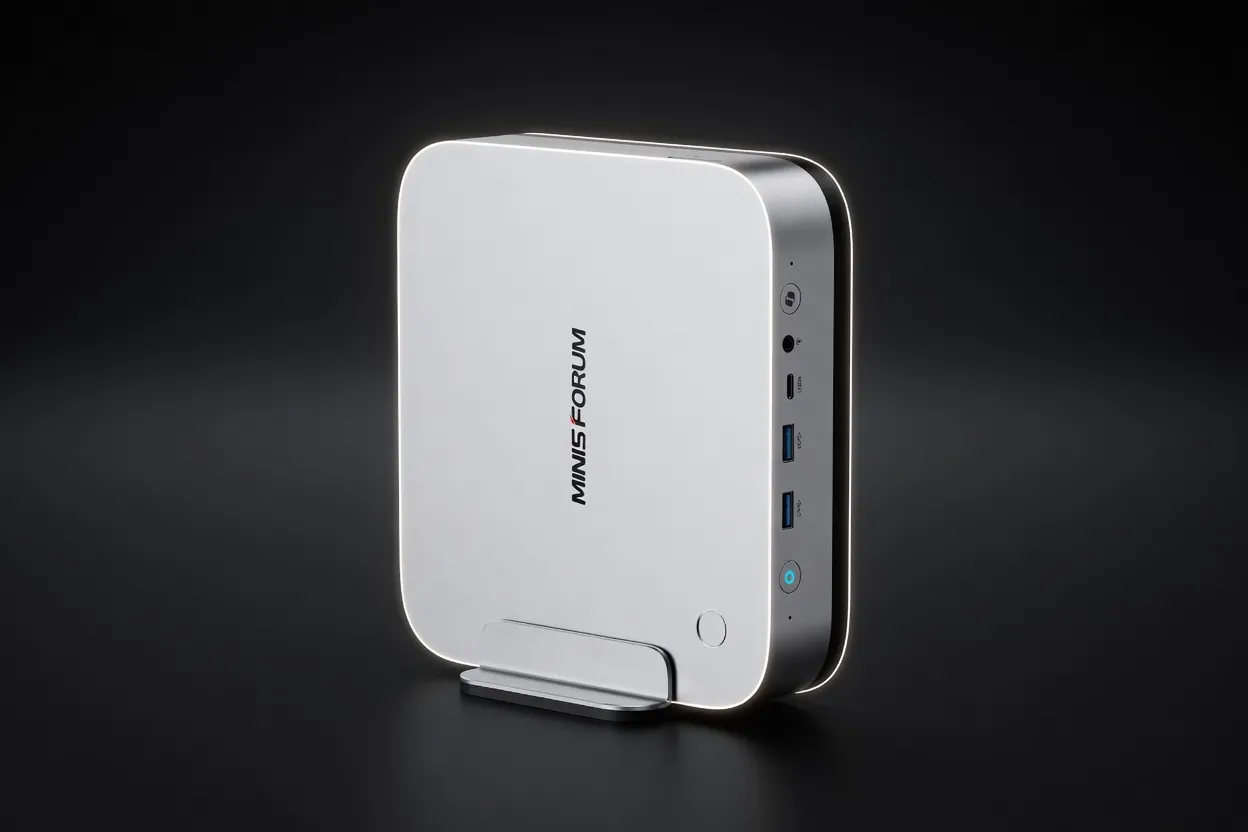
MINISFORUM
MINISFORUM AI X1 Pro-370
Copilot+ AI PC mini desktop with AMD Ryzen AI 9 HX 370 (Strix Point), Radeon 890M iGPU, and a 50 TOPS XDNA 2 NPU. 32GB DDR5, 1TB SSD, OCuLink for eGPU expansion. Always-on local AI sidekick.
AI PCs & LaptopsIn Stock
Edge AIMobile / On-DeviceEnergy Efficient
Quick Specs
VRAM16 GB
INT850 TOPS
TDP54 W
Memory BW90 GB/s
Max Params13B at Q4; 32B at Q3 with eGPU via OCuLink
Form FactorMini Desktop
CPUAMD Ryzen AI 9 HX 370 (12C/24T, 4 Zen 5 + 8 Zen 5c, up to 5.1 GHz)
GPUAMD Radeon 890M iGPU (RDNA 3.5)
NPUXDNA 2 — 50 TOPS
Combined Platform AI80 TOPS
Microsoft Copilot+Certified
Memory32GB DDR5-5600 (dual-channel, ~90 GB/s, shared with iGPU)
Storage1TB PCIe 4.0 NVMe SSD (3x M.2 slots total)
ExpansionOCuLink for external GPU enclosure
Connectivity2x USB4, dual 2.5GbE, WiFi 7, BT 5.4, 8K quad display
Power Supply135W external adapter
TDP28W base / 54W configurable
OSWindows 11 Pro
Our Take
Good balance for indie developers running local copilots and chat. 30B+ models are reachable but only with aggressive quantization and short context.
Pair this withMixtral 8x7B Instruct (46.7B)Largest popular open model that fits at Q4 — needs roughly 11.4 GB on this 16 GB card.
Generated from this product’s spec sheet. Editor reviews refine it over time.
Specifications
The MINISFORUM AI X1 Pro-370 is a Copilot+ certified mini desktop that delivers 50 TOPS from its AMD XDNA 2 NPU, backed by a Ryzen AI 9 HX 370 processor and Radeon 890M iGPU. At $1,099 (32GB/1TB), it occupies the prosumer sweet spot—more capable than a typical office mini PC, but at a fraction of the cost and power draw of a workstation-class machine. For AI engineers and local-inference practitioners, the X1 Pro-370 offers a balance of on-device AI acceleration, expandability via OCuLink, and a form factor that fits on a desk or in a rack.
MINISFORUM positions this as the value leader in its X1 Pro lineup, trading the marginal NPU boost of the 470 model (86 vs 80 combined TOPS) for a lower price without sacrificing core AI capability. It competes directly with other Strix Point mini PCs like the ASUS NUC 14 Pro+ and the Geekom A8, but stands out by including an OCuLink port for external GPU expansion—critical for AI workloads that exceed the iGPU’s shared memory budget.
---
The HX 370’s 12-core CPU (4 Zen 5 + 8 Zen 5c) provides ample headroom for pre-processing and orchestration, but the AI story lives in the iGPU and NPU. The Radeon 890M (RDNA 3.5, 16 CUs) delivers roughly 30 TOPS of FP16/INT8 compute, and the XDNA 2 NPU adds another 50 dedicated TOPS for sustained inference. Combined platform AI throughput is 80 TOPS, enough to run Copilot+ features and small-to-medium LLMs entirely on-device.
The critical constraint is memory. The system ships with 32GB DDR5-5600 in dual-channel, delivering ~90 GB/s bandwidth. That bandwidth is shared between CPU and iGPU—there is no dedicated VRAM. For inference, the iGPU can address up to 16GB (configurable in BIOS), but that allocation comes from system memory. This limits model size and token generation speed relative to a dedicated GPU with high-bandwidth memory.
| Metric | Value | Impact on AI |
|---|---|---|
| VRAM (iGPU allocatable) | 16 GB | Fits 13B at Q4, 8B at Q4 with room for context |
| Memory bandwidth | 90 GB/s | ~20-30 tok/s for 7B Llama 3.1 at Q4; ~10-15 tok/s for 13B |
| INT8 TOPS (NPU) | 50 | Efficient for small models (<3B), vision transformers |
| TDP | 28W base / 54W configurable | Excellent energy efficiency for always-on agents |
| Expansion | OCuLink | Enables 32B at Q3 via eGPU (e.g., RTX 4060 or A-series) |
At 54W peak (135W adapter), the X1 Pro-370 sips power compared to a desktop GPU solution. For always-on local agents or edge deployment scenarios, this is a key advantage—noise is low, heat is minimal, and electricity costs are negligible. The integrated power supply (brick adapter) and compact chassis make it suitable for co-location or remote sites.
---
The X1 Pro-370 is a capable local inference machine for models up to about 13B parameters, with a clear trade-off between quality and speed. Here’s what you can expect for popular open-weight LLMs.
- Llama 3.1 8B (Q4_K_M): ~20-30 tokens/second. Comfortably fits in 6GB, leaving headroom for 8K-16K context.
- Mistral 7B (Q4_K_M): ~25-35 tok/s. Excellent for real-time chat and code generation.
- Qwen 2.5 7B (Q4_K_M): ~20-30 tok/s. Multilingual and long-context variants fit with moderate context (<8K).
- DeepSeek-R1 7B (Q4_K_M): ~20-28 tok/s. Reasoning-heavy tasks work well.
- Llama 3.1 13B (Q4_K_M): ~10-15 tok/s. Fits with ~4GB leftover for 4K context. Usable but not interactive for long generations.
- DeepSeek-V2 Lite 16B (Q3_K_M): ~8-12 tok/s. Tight fit—requires careful context management. Better suited via OCuLink.
Plug in an external GPU (e.g., RTX 4060 with 12GB VRAM, or an RTX 3090 with 24GB). This unlocks:
- Llama 3.1 32B (Q3_K_M): ~8-12 tok/s on a 12GB eGPU. The PCIe 4.0 x4 OCuLink connection adds ~1-2ms latency per token, acceptable for batch inference.
- Mixtral 8x7B (Q4_K_M): ~10-15 tok/s on a 12GB eGPU.
- Llama 3.1 70B (Q4_K_M): requires 24GB+ eGPU, achievable with a used RTX 3090.
The Radeon 890M can run LLaVA-NeXT 7B (Q4) at ~15 tok/s and smaller vision transformers (e.g., CLIP, SigLIP) efficiently via the NPU. Stable Diffusion XL 1.0 base runs at ~1-2 it/s on the iGPU—usable for single-image generation but slow for batch work. OCuLink dramatically improves this.
For daily driver local LLM inference, target 7B-8B models at Q4_K_M. They fit comfortably, deliver interactive speeds, and the 32GB system RAM allows multiple model swaps or large context windows (up to 32K tokens). If you need higher quality from a 13B or MoE model, use the OCuLink eGPU path—or accept slower single-stream output.
---
The X1 Pro-370 is ideal for developers prototyping agentic workflows, local RAG pipelines, or testing model quantization. The NPU offloads small inference tasks (classification, embedding, function calling) while the CPU/GPU handles heavier loads. The upgradeable SO-DIMM RAM (up to 128GB) and three M.2 slots mean you can expand storage and memory without replacing the unit.
At 54W, this machine is a solid candidate for edge inference boxes, kiosks, or always-on local AI assistants. Dual 2.5GbE and WiFi 7 provide robust networking for multi-node setups. The OCuLink port offers a future path to higher compute without replacing the base unit.
If you need a low-power, quiet server for serving small models to a few concurrent users, the X1 Pro-370 works well with llama.cpp, Ollama, or vLLM. Within a homelab or small office, it can handle 2-3 concurrent 7B Q4 streams at 15-20 tok/s each.
The shared memory and modest iGPU make fine-tuning impractical beyond lightweight LoRA adapters with batch size 1. For training, look to a dedicated GPU workstation or cloud instance.
---
The NUC 14 Pro+ offers 34 TOPS NPU (Intel AI Boost) and up to 96GB RAM, but no OCuLink. Its iGPU (Arc Xe-LPG) lags behind the Radeon 890M for LLM inference. The X1 Pro-370 wins on raw NPU TOPS and the expansion path for eGPU. Choose the NUC if you need more CPU memory bandwidth (LP-DDR5x-7467) for CPU-based inference.
The Geekom A8 uses the previous-gen Zen 4 architecture with a 16 TOPS NPU and Radeon 780M iGPU. While cheaper (~$799), it lacks both the dedicated NPU throughput and OCuLink for future upgrades. For AI workloads, the X1 Pro-370 is the clear step-up—more than double the NPU performance and real expandability.
When to pick the MINISFORUM AI X1 Pro-370: You need local AI inference today, want the flexibility of eGPU expansion without committing to a full desktop build, and value energy efficiency and a compact footprint. For under $1,100, it delivers the best combination of on-device AI and upgrade path in a mini desktop form factor.
Models That Run on This Device
The top models this device can run at 4-bit, ranked by fit and speed.
| Model | Grade | Speed | VRAM |
|---|---|---|---|
| LFM2.5-8B-A1BLiquid AI | AA | 24.9 tok/s | 2.9 GB |
| Qwen3-30B-A3BAlibaba | BB | 13.5 tok/s | 5.4 GB |
| North Mini CodeCohere | BB | 8.6 tok/s | 8.4 GB |
| Nemotron 3 Nano OmniNVIDIA | BB | 8.5 tok/s | 8.5 GB |
| Qwen3.6 35B-A3BAlibaba | BB | 8.5 tok/s | 8.5 GB |
Similar Products
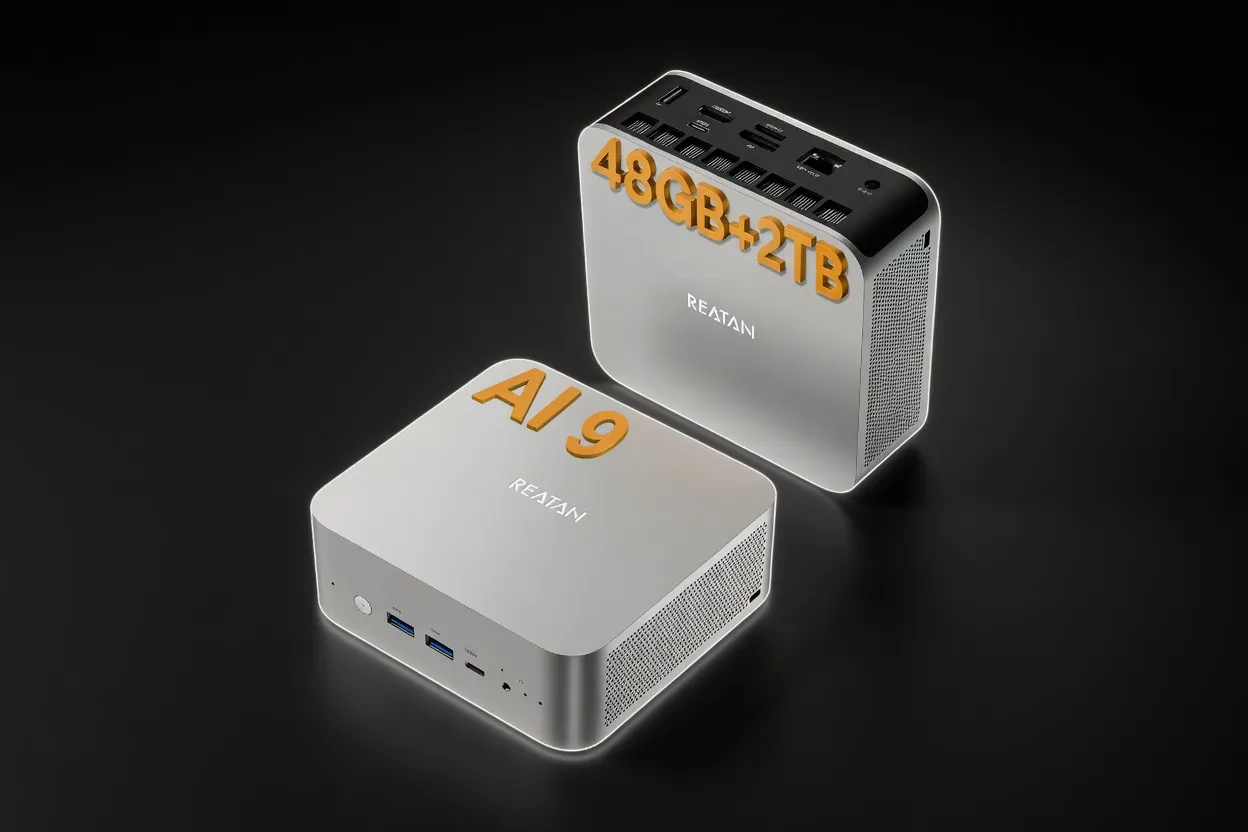
Reatan Mini Gaming PC (Ryzen AI 9 HX 470 with Speaker)
16 GB54 W
Edge AIMobile / On-DeviceEnergy Efficient
$999
Buy on Amazon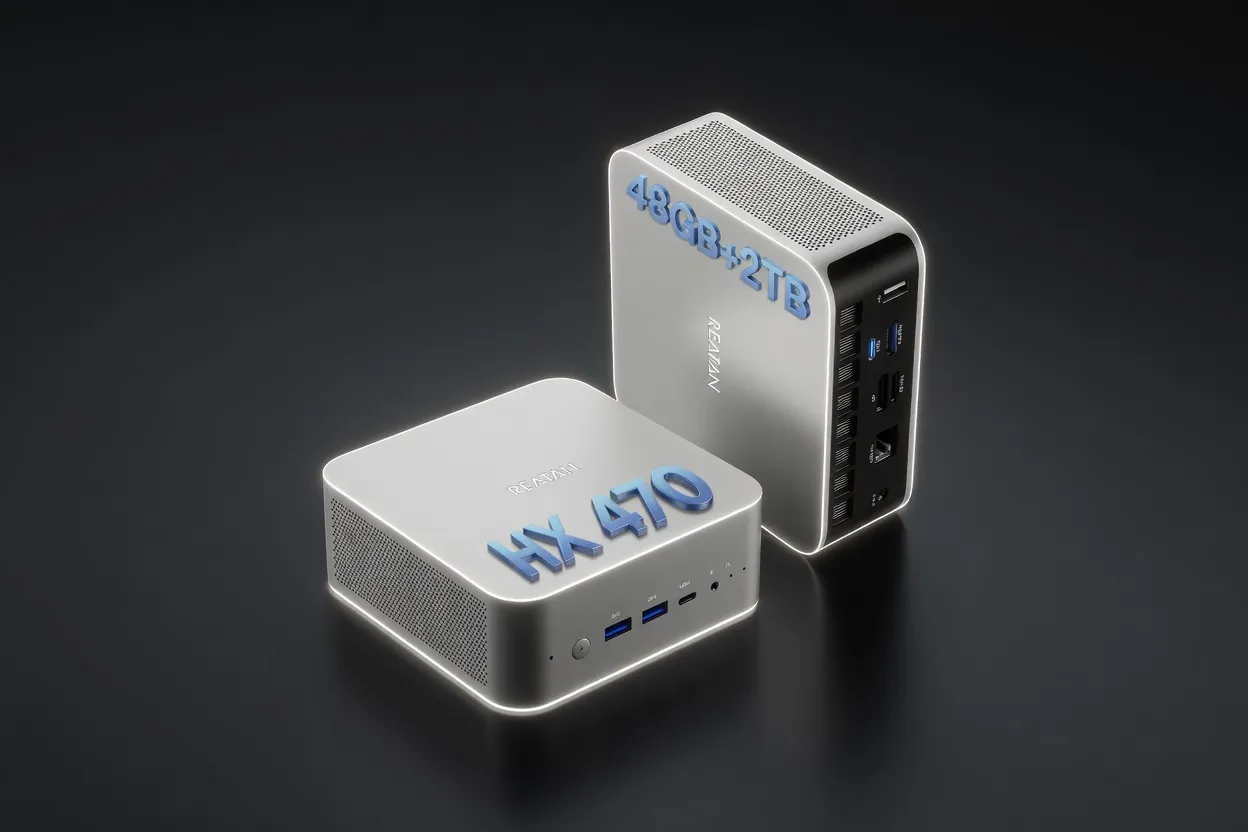
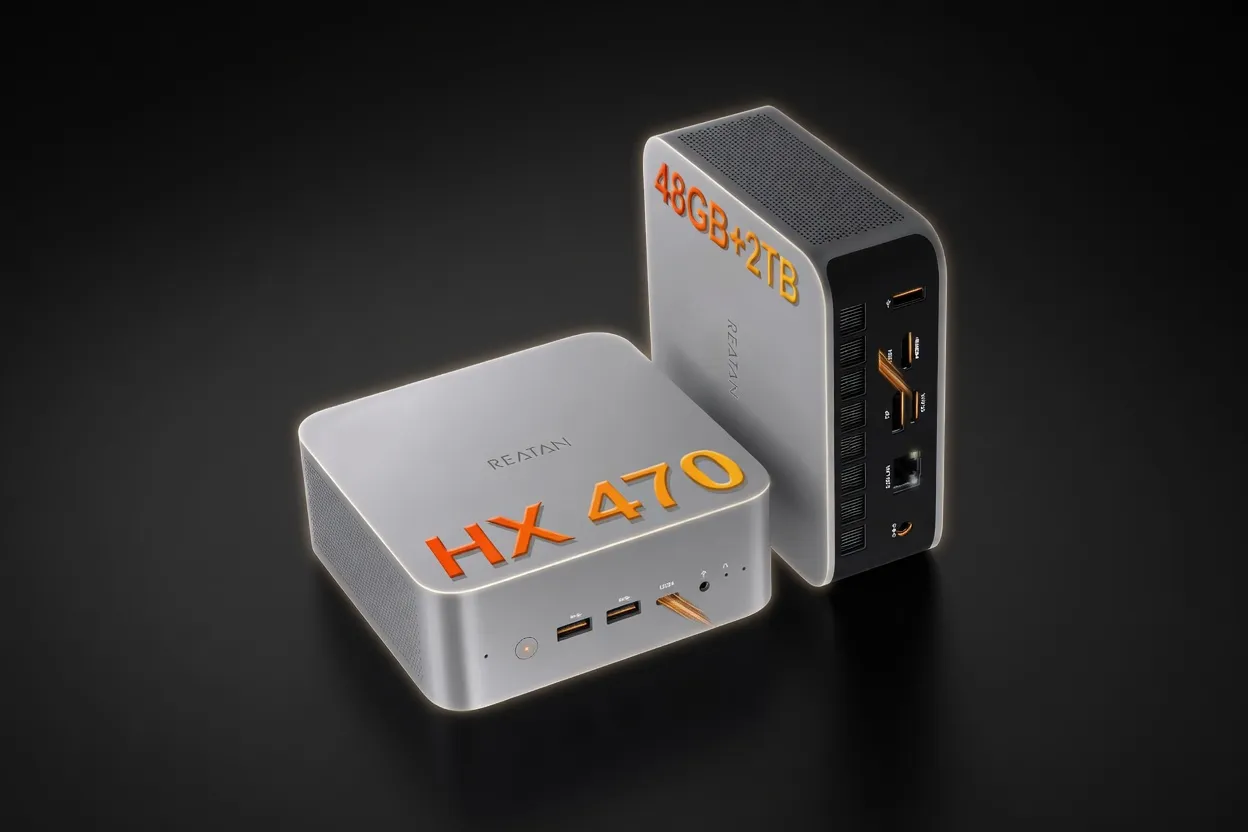
Reatan X8 (Ryzen AI 9 HX 470 48GB)
16 GB54 W
Edge AIMobile / On-DeviceEnergy Efficient
$999
Buy on Amazon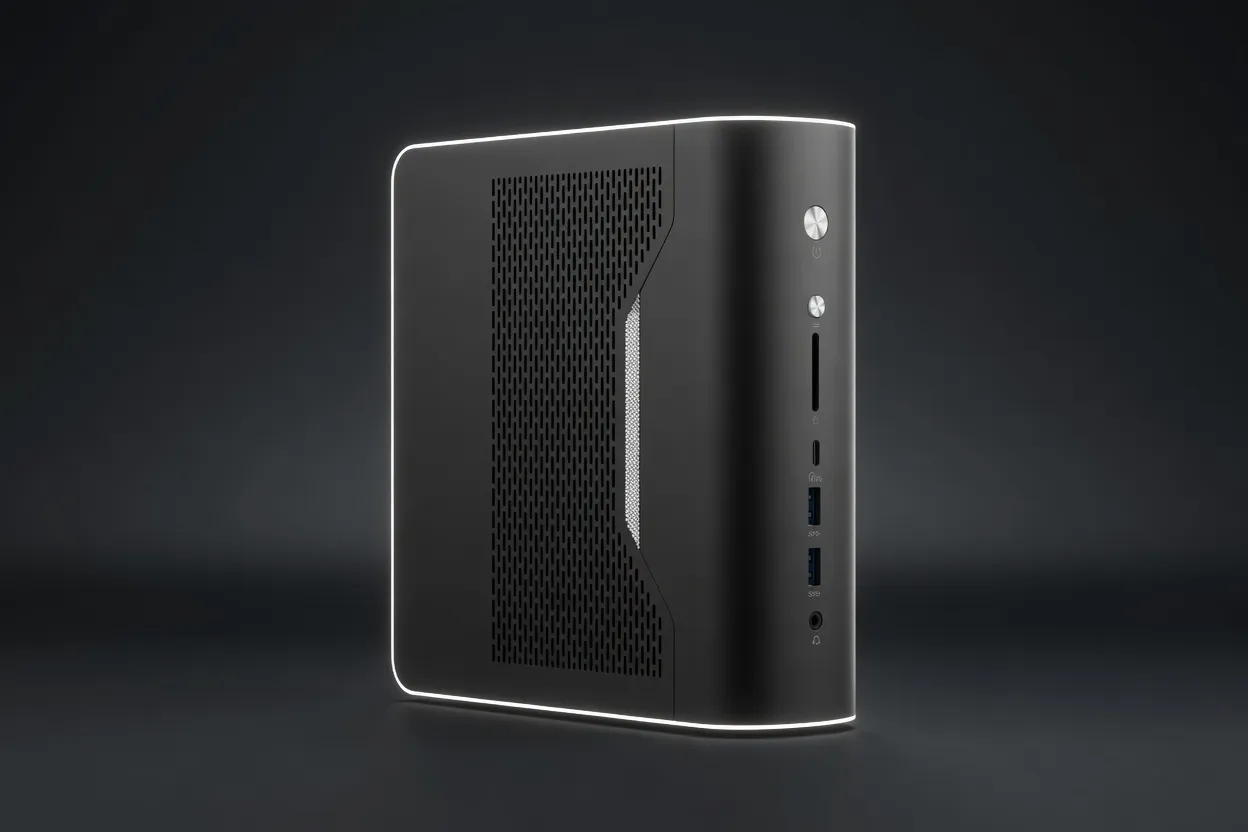
NIMO Mini PC (Ryzen AI Max+ 395 128GB)
96 GB120 W
Best for LLMsEdge AIEnergy Efficient
$2,299
Buy on Amazon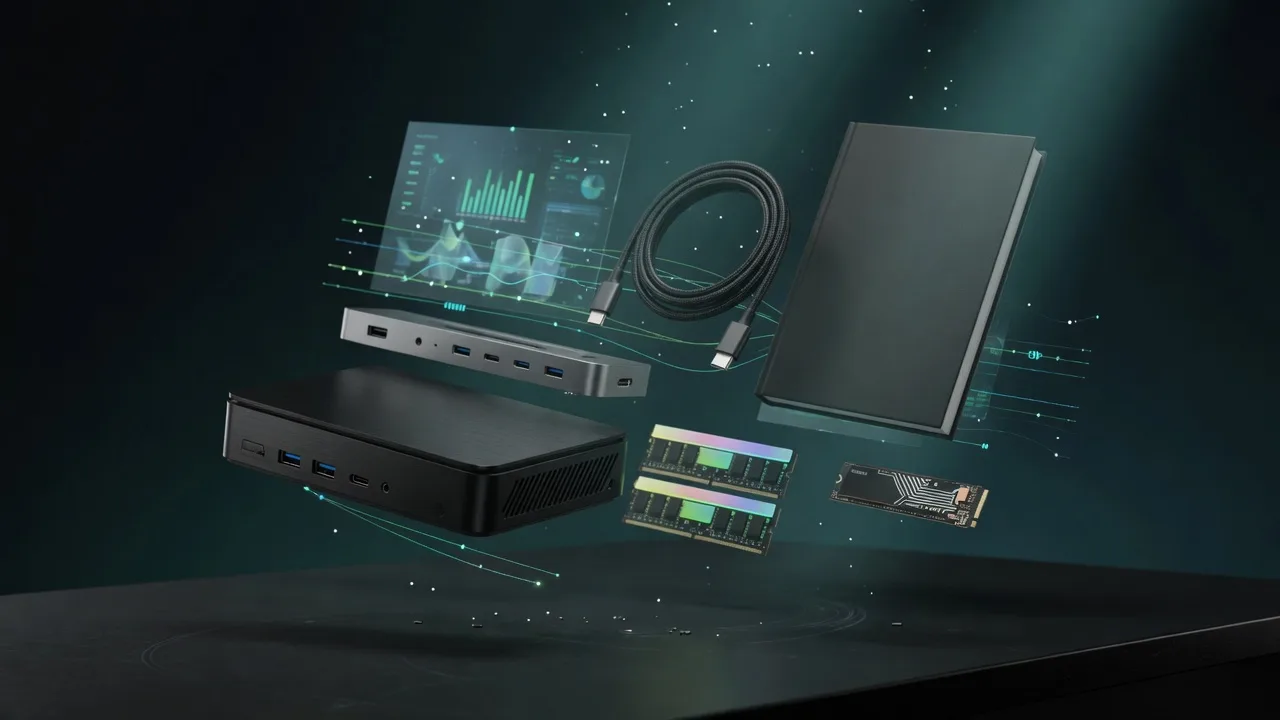
Also in Our Store
Finish the Build
Docks, fast storage, cables, and a UPS sized for a local AI machine.
Plan Your Setup
GPU Rental Price Index
Rent this class of GPU by the hour before you buy. Live prices from RunPod and Vast.ai.
AI Hardware ROI Calculator
Find the break-even between buying this hardware and paying for a cloud API.
AI Workstation Builder
Get a full budget-matched parts list for a local AI workstation.
Apple Silicon vs RTX
Mac vs NVIDIA for local inference, if you are still choosing a platform.