- Services
Advertising disclosure: we earn commissions when you shop through the links below.
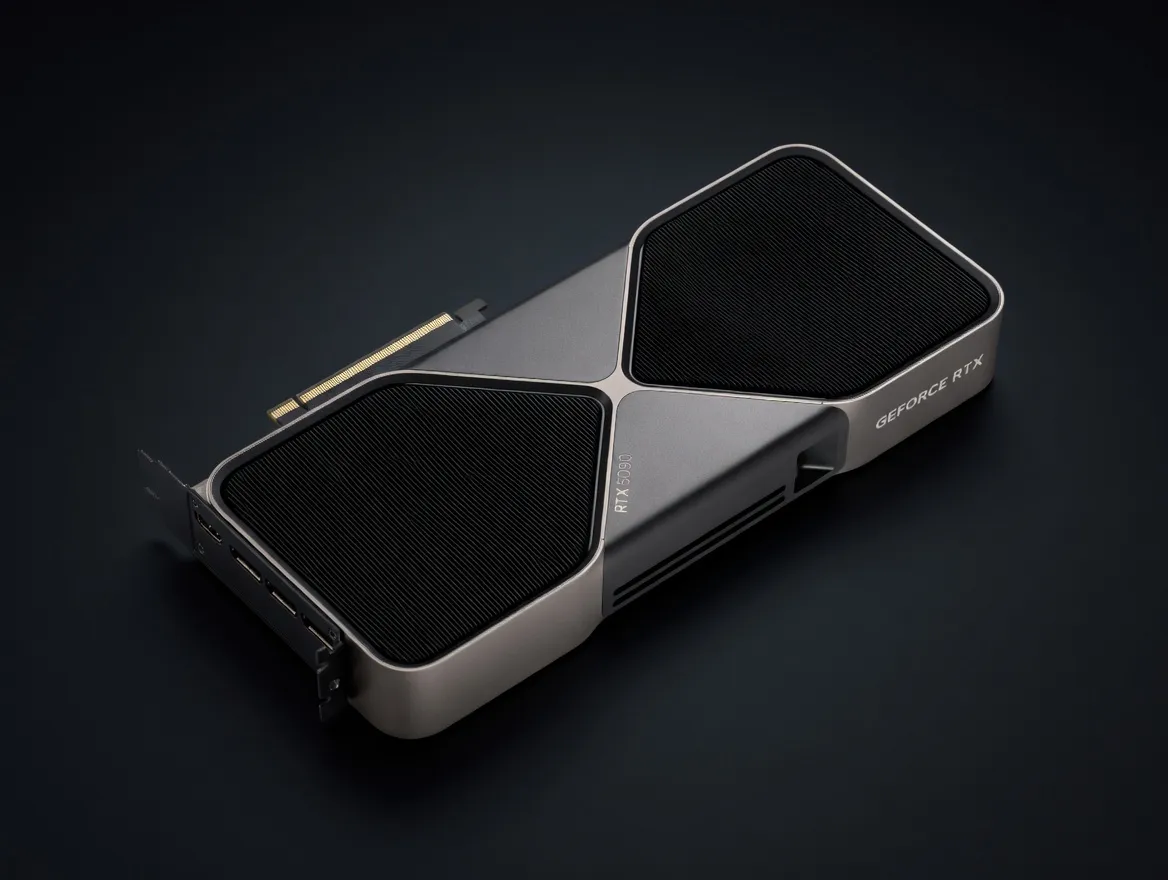
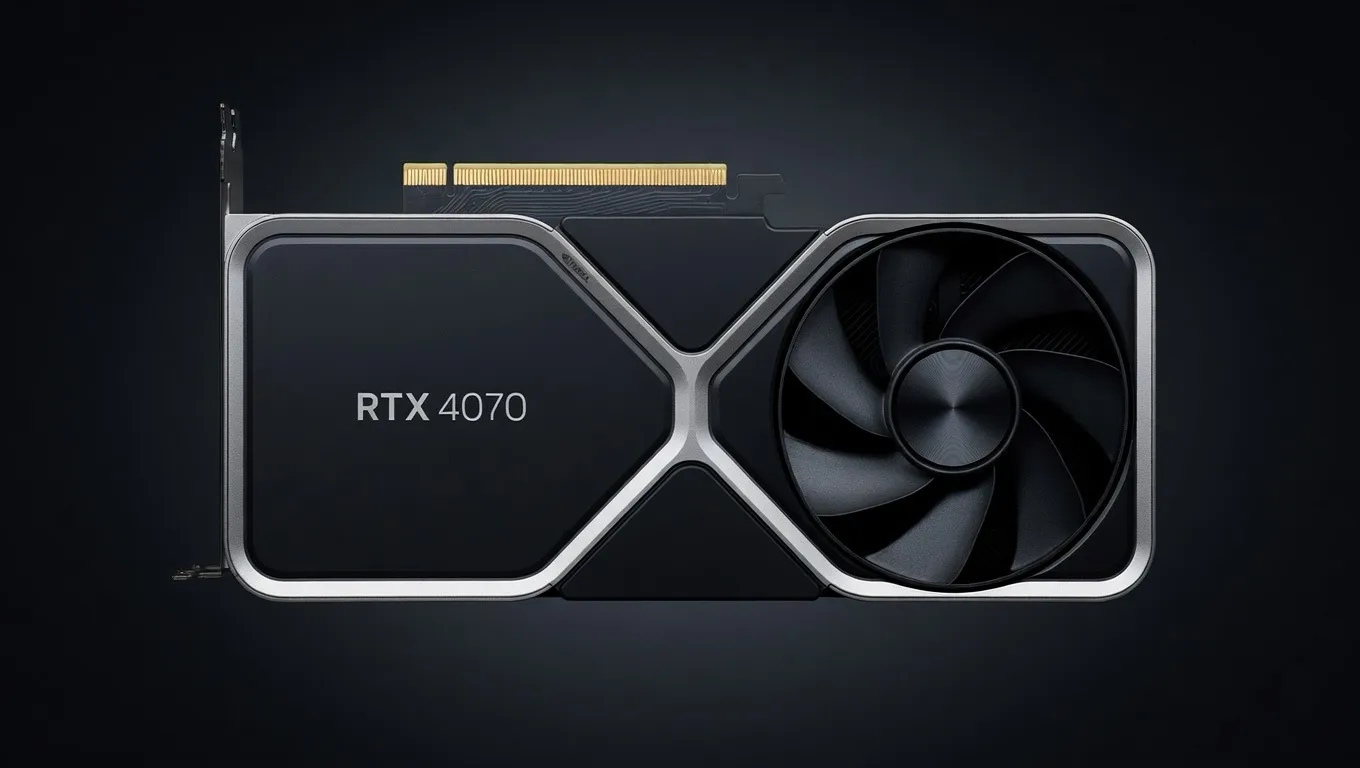
High-end Blackwell GPU with 16GB GDDR7 and 10,752 CUDA cores, delivering strong 4K gaming and AI performance at a lower power draw than the RTX 5090.
Manufacturer's suggested retail price. Current prices can be higher or lower. This is not a live price.
Good balance for indie developers running local copilots and chat. 30B+ models are reachable but only with aggressive quantization and short context. Pricing puts it well above average on raw compute-per-dollar, which matters more than peak FLOPS for steady inference loads.
Generated from this product’s spec sheet. Editor reviews refine it over time.
GPU Rental Price Index
From $0.26 per GPU-hour, NVIDIA GeForce RTX 5080 on Vast.ai.
The NVIDIA GeForce RTX 5080 Founders Edition represents the high-end tier of the Blackwell architecture (GB203), positioned specifically for practitioners who require massive compute throughput without the extreme power requirements or the $2,000 price tag of the flagship RTX 5090. As a prosumer-grade GPU, it serves as the primary gateway for developers and researchers moving beyond entry-level hardware into serious local AI development and high-throughput inference.
Built on the TSMC 4N process node, the RTX 5080 Founders Edition for AI workloads introduces significant architectural improvements over the previous Ada Lovelace generation. It is designed to bridge the gap between consumer gaming hardware and professional workstation cards. While its 16GB VRAM capacity remains a limiting factor for massive dense models, the shift to GDDR7 memory and the inclusion of 5th Generation Tensor Cores make it one of the best NVIDIA GPUs for running AI models locally in the sub-$1,000 price bracket.
In the current market, the RTX 5080 competes directly with the outgoing RTX 4090 in terms of raw inference speed, while offering a more efficient 360W TDP and a smaller dual-slot footprint in the Founders Edition shroud. For those evaluating NVIDIA vs AMD for AI inference, the RTX 5080 remains the superior choice for most practitioners due to the maturity of the CUDA ecosystem and native support for libraries like TensorRT-LLM and vLLM.
When evaluating the NVIDIA GeForce RTX 5080 Founders Edition AI inference performance, three metrics dictate its utility: VRAM bandwidth, INT8 compute, and the transition to PCIe 5.0.
The RTX 5080 features 10,752 CUDA cores and 336 5th Gen Tensor Cores. The headline figure for inference is the 1801 TOPS of INT8 performance. For practitioners running quantized models (INT8 or INT4), this represents a massive leap in throughput, allowing for high-concurrency agentic workflows where multiple prompts must be processed simultaneously. The FP16 performance sits at 112.1 TFLOPS, providing ample headroom for fine-tuning smaller models or running high-precision computer vision tasks.
The move to GDDR7 memory is the most critical update for LLM performance. LLM inference is almost always memory-bandwidth bound rather than compute-bound. With a memory bandwidth of 960 GB/s, the RTX 5080 significantly outperforms the RTX 4080 Super (736 GB/s). This 30% increase in bandwidth translates directly into higher tokens per second (TPS) for any model that fits within the 16GB VRAM buffer.
The 360W TDP is high but manageable for most mid-tower builds. Importantly, the PCIe 5.0 x16 interface ensures that data transfer between the CPU and GPU (critical for RAG pipelines and loading large model weights into VRAM) is no longer a bottleneck, provided your motherboard supports the standard.
The 16GB GPU for AI category is a "sweet spot" for modern open-source models, but it requires an understanding of quantization to maximize utility. The RTX 5080 is optimized for hardware for running 13B at Q4 and 7B at FP16 parameter models.
The RTX 5080 is a powerhouse for Stable Diffusion XL and Flux.1 (Dev/Schnell). With 16GB of VRAM, you can run Flux.1 at FP8 precision without OOM (Out of Memory) errors, achieving image generation times significantly faster than the previous generation. For computer vision, it handles YOLOv10/v11 real-time inference across multiple 4K streams with ease.
For the NVIDIA GeForce RTX 5080 Founders Edition VRAM for large language models, the "sweet spot" is Q6_K or Q8_0 quantization. At these levels, the loss in perplexity is negligible compared to FP16, but the performance gains from the Blackwell Tensor Cores are fully realized.
The RTX 5080 is arguably the best hardware for local AI agents 2025 for developers who need to run an orchestration layer (like LangChain or CrewAI) alongside a local LLM. The 16GB VRAM allows you to host a 7B or 8B model as the "brain" while leaving enough overhead for vector databases (ChromaDB/Pinecone) and embedding models (BGE-M3) to run on the same card.
For researchers, the 5080 is an excellent tool for LoRA (Low-Rank Adaptation) fine-tuning. While you cannot fine-tune a 70B model on a single 5080, you can efficiently fine-tune 7B and 8B models using Unsloth or Hugging Face PEFT libraries. It is the best AI GPU for agent training in a desktop environment.
Small teams can use the RTX 5080 to power internal API servers. Because of its high TOPS rating, it can handle multiple concurrent requests for smaller models, making it a cost-effective alternative to renting A100/H100 instances for simple internal tasks like text summarization or sentiment analysis.
The RTX 5090 offers 24GB or potentially 32GB of VRAM, which is the gold standard for running 30B-70B models. However, the RTX 5080 provides a much better price-to-performance ratio for those who primarily work with 8B-14B models. If your workflow doesn't require the extra VRAM for massive KV caches or huge models, the 5080's 16GB is sufficient and draws significantly less power.
The RTX 4090 remains a formidable competitor due to its 24GB VRAM. If your primary goal is running the largest model possible, a used or discounted 4090 might be preferable. However, the RTX 5080 Founders Edition for AI development offers the newer Blackwell architecture, faster GDDR7 memory bandwidth, and better efficiency. For real-time applications where token latency (Time to First Token) is the priority, the 5080's architecture often edges out the older flagship.
The 7900 XTX offers 24GB of VRAM at a similar price point, which is attractive for local LLM enthusiasts. However, for professional AI development, NVIDIA's software stack remains the deciding factor. The RTX 5080 supports FlashAttention-2, BitsAndBytes, and AutoGPTQ natively, whereas AMD's ROCm support, while improving, still requires more troubleshooting and lacks the same level of optimization for many agentic frameworks.
The top models this device can run at 4-bit, ranked by fit and speed.
| Model | Grade | Speed | VRAM |
|---|---|---|---|
| Mixtral 8x7B InstructMistral AI | SS | 68.0 tok/s | 11.4 GB |
| AliceAI-Foundation-80B-A3B-Baseyandex | SS | 90.6 tok/s | 8.5 GB |
| DiffusionGemma 26B-A4BGoogle | SS | 73.7 tok/s | 10.5 GB |
| Gemma 4 26B-A4B ITGoogle | SS | 70.2 tok/s | 11.0 GB |
| Xing4.0-29B-A4BChina Telecom AI | SS | 68.9 tok/s | 11.2 GB |
Also in Our Store
Docks, fast storage, cables, and a UPS sized for a local AI machine.
Rent this class of GPU by the hour before you buy. Live prices from RunPod and Vast.ai.
Find the break-even between buying this hardware and paying for a cloud API.
Mac vs NVIDIA for local inference, if you are still choosing a platform.