- Services
Advertising disclosure: we earn commissions when you shop through the links below.
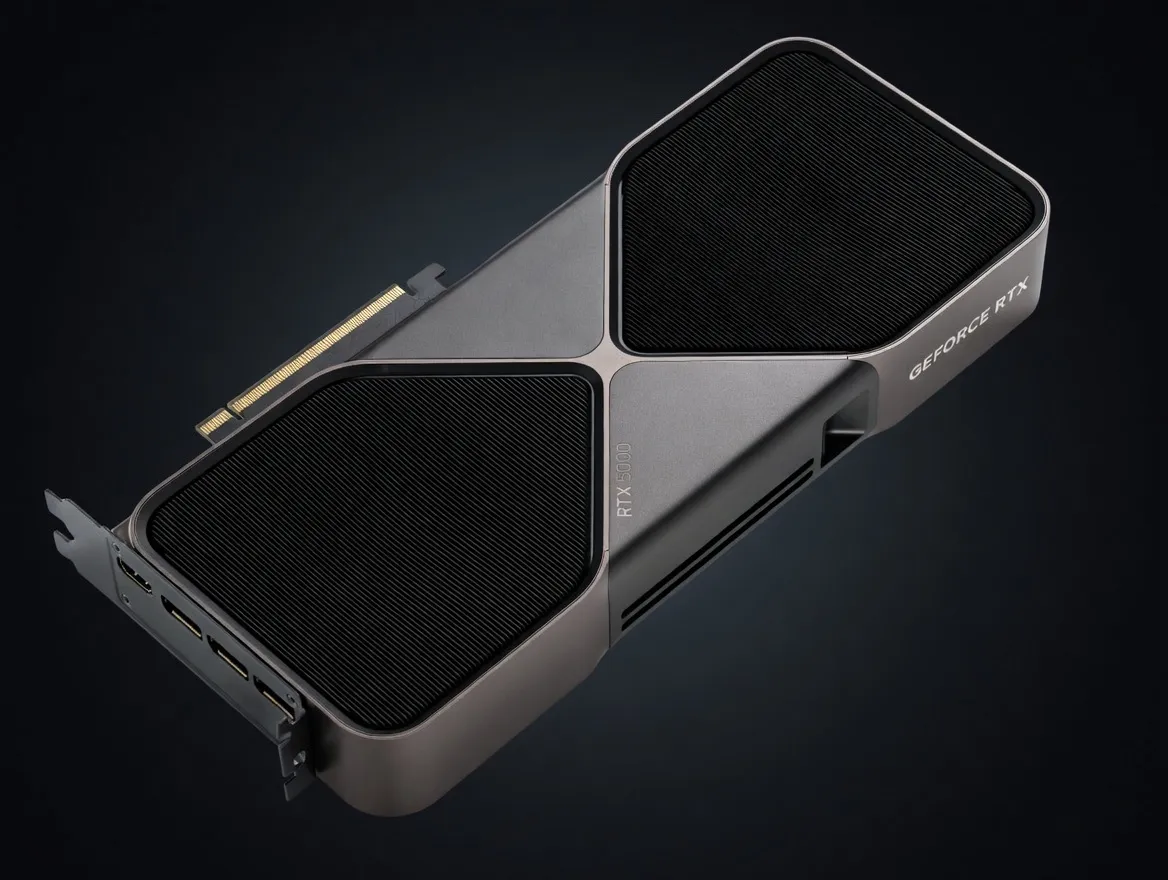
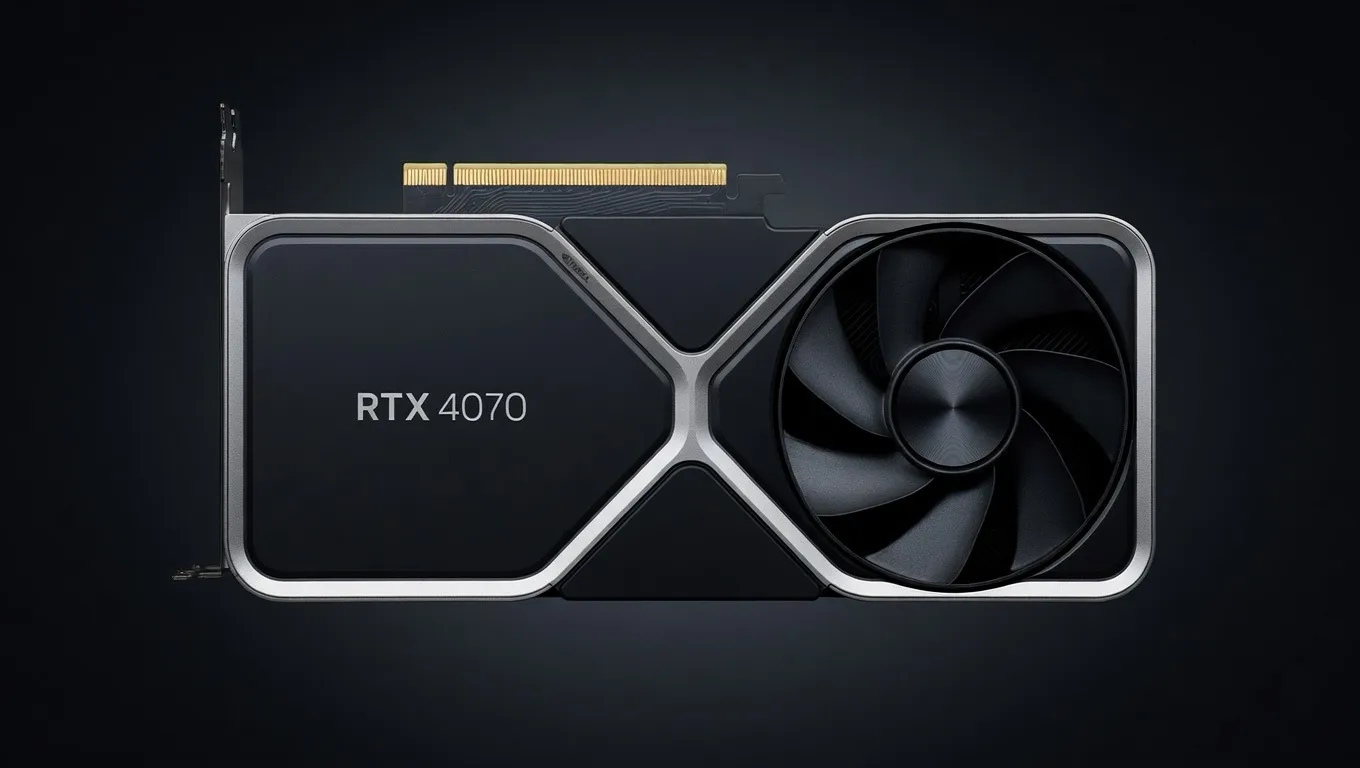
NVIDIA's flagship Blackwell consumer GPU with 32GB GDDR7, 21,760 CUDA cores, and 1,792 GB/s bandwidth — the most powerful consumer GPU available for AI and gaming workloads.
Manufacturer's suggested retail price. Current prices can be higher or lower. This is not a live price.
A 70B Q4 quant fits with usable context budget left over. Sweet spot if you want a single card that handles every open model worth running locally today. Pricing puts it well above average on raw compute-per-dollar, which matters more than peak FLOPS for steady inference loads.
Generated from this product’s spec sheet. Editor reviews refine it over time.
GPU Rental Price Index
From $0.45 per GPU-hour, NVIDIA GeForce RTX 5090 on Vast.ai.
The NVIDIA GeForce RTX 5090 Founders Edition represents the pinnacle of consumer-grade hardware for AI development and local inference. Built on the Blackwell (GB202) architecture, this GPU is not merely an incremental update over the Ada Lovelace generation; it is a fundamental shift in local compute capability. For AI engineers and researchers, the 5090 FE serves as the primary bridge between consumer hardware and enterprise-grade H100/B200 clusters, offering 32GB of high-speed GDDR7 VRAM and a massive 512-bit memory bus.
As the flagship of the Blackwell consumer lineup, the RTX 5090 Founders Edition for AI workloads is positioned as the definitive choice for practitioners who require maximum throughput without the five-figure price tag of an H100. It effectively competes with the RTX 6000 Ada in terms of raw compute, though with a smaller VRAM buffer, making it the most powerful consumer GPU available for AI agents, local LLM serving, and computer vision tasks.
When evaluating the NVIDIA GeForce RTX 5090 Founders Edition AI inference performance, the most critical metric is memory bandwidth. At 1,792 GB/s, the 5090 nearly doubles the bandwidth of its predecessor. Since LLM inference is almost always memory-bandwidth bound, this translates directly into significantly higher tokens per second (TPS) for autoregressive generation.
The inclusion of 5th-generation Tensor Cores specifically accelerates FP8 and INT8 precision formats, which are increasingly the standard for optimized local inference. With 3352 TOPS, this card provides the compute headroom necessary for high-throughput batching, allowing developers to run multiple concurrent agentic workflows or high-resolution diffusion models without stalling the system.
The shift to 32GB of GDDR7 is the most significant upgrade for the AI community. This 33% increase in VRAM over the previous 24GB standard allows for larger model weights to reside entirely on-chip. The 512-bit memory bus ensures that the data path to these 32GB is never the bottleneck. However, practitioners must account for the 575W TDP. This is a high-density thermal load that requires a minimum 1000W PSU and a chassis capable of exhausting significant heat, especially in multi-GPU configurations common in AI development.
The RTX 5090 Founders Edition VRAM for large language models changes the math for local deployment. It moves the "sweet spot" of local inference from 7B-14B models up to the 30B-35B parameter range.
The 32GB buffer allows for the following configurations:
While actual performance depends on the backend (llama.cpp, vLLM, TensorRT-LLM), the NVIDIA GeForce RTX 5090 Founders Edition tokens per second on Llama 3.1 8B (FP16) can exceed 150-200 TPS. On larger 30B models at Q4, users can expect a highly fluid 40-60 TPS, making it ideal for real-time agentic interactions.
The 32GB VRAM is a game-changer for Flux.1, Stable Diffusion 3.5, and video generation models like Sora-scale local clones. It allows for high-resolution image generation and fine-tuning (LoRA) without the "Out of Memory" (OOM) errors common on 16GB or 24GB cards.
The RTX 5090 FE is the best AI chip for local deployment in 2025 for specific professional profiles:
When selecting the best hardware for local AI agents in 2025, the 5090 FE is often compared against its predecessor and the professional lineup.
The 4090 was the previous gold standard with 24GB VRAM. The 5090 offers 8GB more VRAM and nearly double the memory bandwidth. If your models were hitting the 24GB ceiling (common with Llama 3.1 70B or high-res Flux generation), the 5090 is a mandatory upgrade. For 8B models, the 4090 remains capable, but the 5090 provides a higher ceiling for future-proofing.
While the AMD RX 7900 XTX offers 24GB of VRAM at a much lower price point, NVIDIA remains the superior choice for NVIDIA gpus for AI development due to the maturity of the CUDA ecosystem. Most cutting-edge libraries (FlashAttention-2, AutoGPTQ, BitsAndBytes) are optimized for CUDA first. The 5090’s 32GB GDDR7 also outclasses the 7900 XTX’s 24GB GDDR6 in both capacity and speed, making the 5090 the clear winner for professional AI workloads.
The RTX 6000 Ada offers 48GB of VRAM, which is necessary for unquantized 70B models or large-batch training. However, the 5090 FE features the newer Blackwell architecture and much higher memory bandwidth at a fraction of the $6,800+ MSRP of the 6000 Ada. For practitioners who can work within a 32GB limit using quantization, the 5090 FE offers significantly better price-to-performance.
The top models this device can run at 4-bit, ranked by fit and speed.
| Model | Grade | Speed | VRAM |
|---|---|---|---|
| minimax-m2.5MiniMax | SS | 63.5 tok/s | 22.7 GB |
| Holo4-27BHcompany | SS | 84.6 tok/s | 17.0 GB |
| K2-Horizon-MoVA-36B-A4BInstitute of Foundation Models | SS | 73.6 tok/s | 19.6 GB |
| Mixtral 8x7B InstructMistral AI | SS | 126.9 tok/s | 11.4 GB |
| Falcon 40B InstructTechnology Innovation Institute | SS | 59.2 tok/s | 24.4 GB |
Also in Our Store
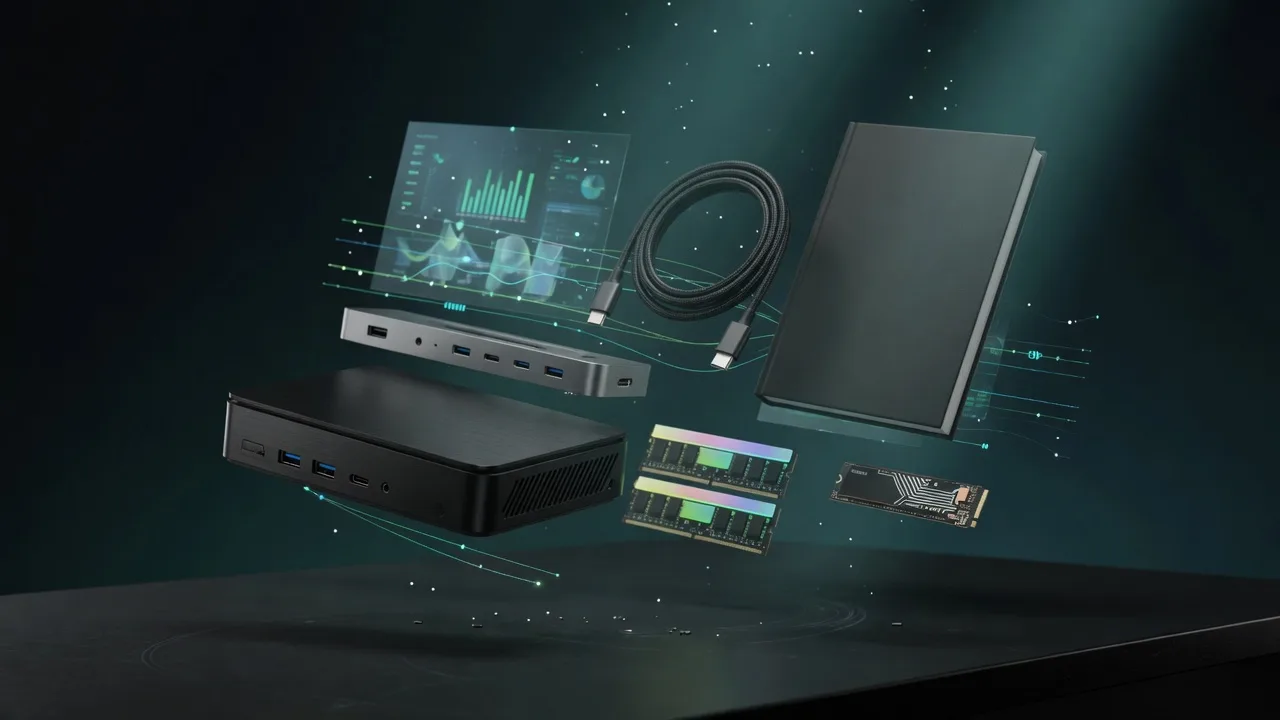
Docks, fast storage, cables, and a UPS sized for a local AI machine.
Rent this class of GPU by the hour before you buy. Live prices from RunPod and Vast.ai.
Find the break-even between buying this hardware and paying for a cloud API.
Mac vs NVIDIA for local inference, if you are still choosing a platform.