- Services
Advertising disclosure: we earn commissions when you shop through the links below.
HP's ZBook Ultra G3a 16 is a thin-and-light 16-inch mobile workstation announced September 15, 2026 and available globally from October 1, 2026. It runs on up to an AMD Ryzen AI Max+ PRO 495 with up to 192 GB unified memory, of which up to 160 GB can be assigned as VRAM, and HP says it can run local LLMs up to 300 billion parameters. Perplexity Computer comes preloaded with supported Autodesk Revit integration. Pricing starts at $3,899 for a 64 GB configuration, with 128 GB and 192 GB models listed at $5,999 and $7,449.
Manufacturer's suggested retail price. Current prices can be higher or lower. This is not a live price.
Sized for production serving of 70B–200B class models at full or lightly-quantized precision. Overkill for a homelab; right call when the workload pays for itself in token volume.
Generated from this product’s spec sheet. Editor reviews refine it over time.
The HP ZBook Ultra G3a 16 is a 16-inch mobile workstation designed specifically to address the biggest bottleneck in local machine learning: addressable GPU memory. Built around AMD's Strix Halo architecture, the system pairs a Zen 5 processor with a unified memory architecture capable of allocating up to 160 GB of high-speed system memory directly to its integrated graphics pipeline. For developers evaluating the HP ZBook Ultra G3a 16 for AI, this machine shifts the boundaries of what can run on a battery-powered form factor without an active cloud uplink.
In the mobile computing space, memory capacity has traditionally forced a hard compromise. Dedicated mobile GPUs from NVIDIA top out at 16 GB of VRAM on laptop chassis, which restricts local execution to smaller 8B or heavily compressed 14B models unless offloaded across system RAM at painful latency penalties. By integrating the CPU, NPU, and GPU onto a single processor package with unified LPDDR5X, the ZBook Ultra G3a 16 bypasses traditional PCIe bus transfers entirely. It stands as a rare class of x86 hardware, serving as a direct competitor to high-tier Apple Silicon laptops while maintaining full native support for x86-64 toolchains, Windows environments, and enterprise applications.
Positioned firmly in the prosumer and professional mobile workstation tier, the device starts at $3,899 for a 64 GB configuration, scaling up to $5,999 for 128 GB and $7,449 for the fully loaded 192 GB edition. For practitioners tracking Unknown hardware for AI development, the G3a 16 provides an autonomous, enterprise-grade deployment target where data sovereignty, field mobility, and raw model parameter scale intersect.
The computational engine driving the ZBook Ultra G3a 16 is the AMD Ryzen AI Max+ PRO 495, featuring 16 Zen 5 cores, 32 threads, and boost clocks up to 5.2 GHz with 80 MB of combined cache. AI acceleration is distributed across three processing domains: the Zen 5 CPU cores for general scalar work, a dedicated XDNA 2 NPU delivering up to 55 TOPS for background continuous workloads, and a 40-compute-unit Radeon 8065S integrated GPU clocked up to 3.0 GHz. Across all compute blocks, the platform delivers up to 131 total processing TOPS.
The defining specification of the laptop is its memory subsystem. Configured with up to 192 GB of soldered LPDDR5X memory running at speeds between 8,000 MT/s and 8,533 MT/s, the system lets engineers designate up to 160 GB directly as dedicated VRAM through the BIOS or HP system utilities. Because this functions as a 160GB GPU for AI workflows, the typical memory wall encountered when loading large parameter weights on mobile hardware is practically eliminated.
Thermal execution directly governs sustained token generation. Unlike its predecessor, the 14-inch G1a which operated within a 55 W thermal envelope, the G3a 16 scales the cooling solution to sustain a 100 W TDP. Power is delivered via an included 180 W adapter over Thunderbolt 4, charging an onboard 96 Wh battery. The extra thermal headroom allows both the CPU and the 40 CU Radeon graphics processor to avoid the aggressive thermal throttling common to compact laptops during lengthy matrix multiplications and prefill operations.
Key hardware specifications:
HP ZBook Ultra G3a 16 VRAM for large language models offers an unprecedented footprint for a portable system. With up to 160 GB of usable VRAM, the hardware eliminates the strict parameter limits typical of mobile setups.
HP ZBook Ultra G3a 16 AI inference performance varies based on weight size and compute bandwidth. Unified LPDDR5X memory does not match the terabyte-per-second bandwidth of server-grade HBM3 or discrete desktop GDDR6X arrays, meaning generation speeds are optimized for interactive analysis and batch background tasks rather than high-concurrency multi-user serving.
The operational sweet spot on this system is running 70B parameter models quantized at Q4_K_M or Q5_K_M. At this balance, users retain near-lossless mathematical reasoning and code generation capabilities while sustaining interactive read-rates of roughly 10 to 12 tokens per second. Multimodal tasks, such as pairing an 8B vision encoder with Whisper large-v3 for local audio ingestion alongside a 70B reasoning model, execute simultaneously without context thrashing.
The ZBook Ultra G3a 16 is optimized for scenarios demanding autonomy from cloud infrastructure:
Evaluating the system requires looking at the main alternatives across Apple Silicon and discrete x86 workstations.
The 16-inch MacBook Pro has long held the top spot for portable large-model inference due to its unified memory architecture, which scales up to 128 GB on the M3 Max. The ZBook Ultra G3a 16 holds a definitive memory capacity edge, offering up to 192 GB total system memory with 160 GB dedicated to the GPU, exceeding Apple's 128 GB threshold by 32 GB of usable VRAM.
Apple Silicon maintains an advantage in raw memory bandwidth (up to 400 GB/s on high-end configurations), leading to higher token generation speeds for 70B models. However, the ZBook Ultra G3a 16 operates in native Windows and Linux x86 ecosystems. For developers tied to proprietary CAD software, CUDA-to-HIP migration pipelines, or enterprise toolsets that do not run cleanly through macOS virtualization layers, the ZBook provides an open, highly capable platform.
When compared against mobile workstations running discrete graphics (such as an NVIDIA RTX 4090 Laptop or RTX 5000 Ada Generation), the architectural differences become stark. Discrete mobile workstation GPUs offer higher raw compute density (CUDA cores and Tensor cores), delivering faster batch inference on small 8B models.
Their fatal limitation is the 16 GB VRAM ceiling. An RTX 5000 Ada cannot run an unquantized 70B model, an 8x22B MoE, or an extended 128k context window without CPU offloading, which drops token throughput below 1 token per second over the PCIe bus. For raw parameter capacity and local model flexibility, the ZBook Ultra G3a 16 operates in a category that discrete-GPU laptops cannot match.
The top models this device can run at 4-bit, ranked by fit and speed.
Specs not available for scoring. This product is missing VRAM or memory bandwidth data.
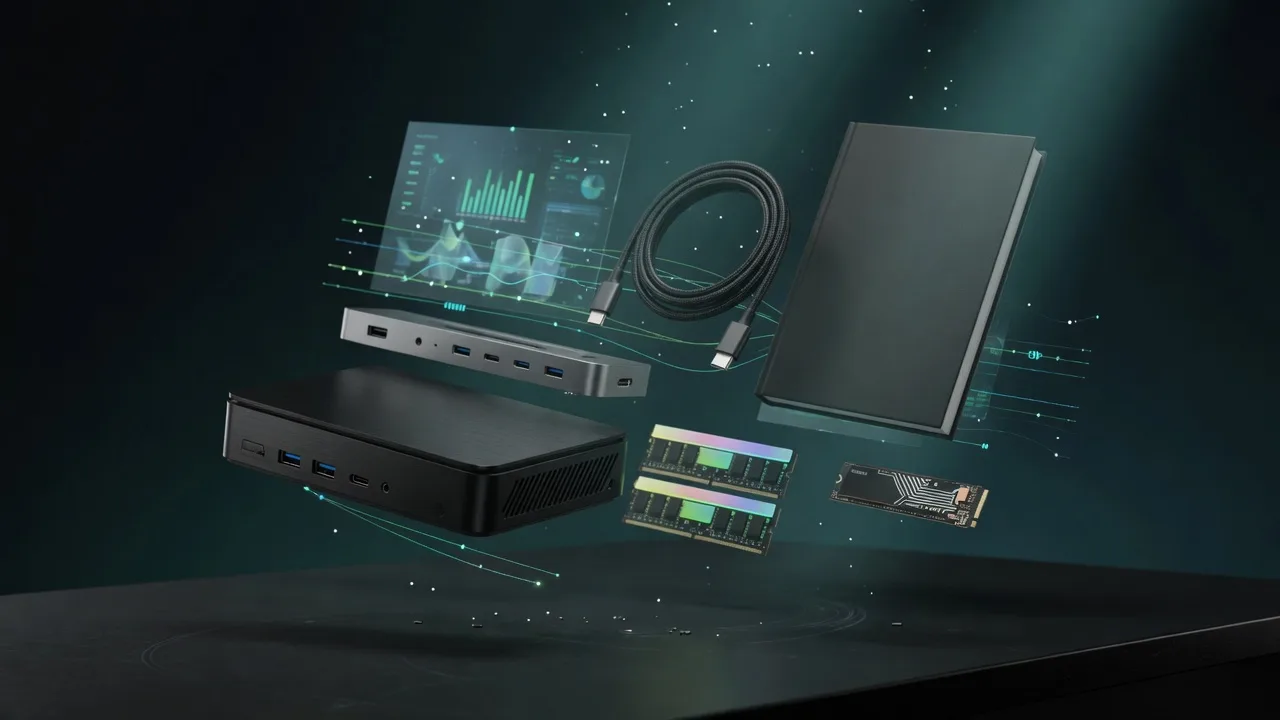
Also in Our Store
Docks, fast storage, cables, and a UPS sized for a local AI machine.

Rent this class of GPU by the hour before you buy. Live prices from RunPod and Vast.ai.
Find the break-even between buying this hardware and paying for a cloud API.
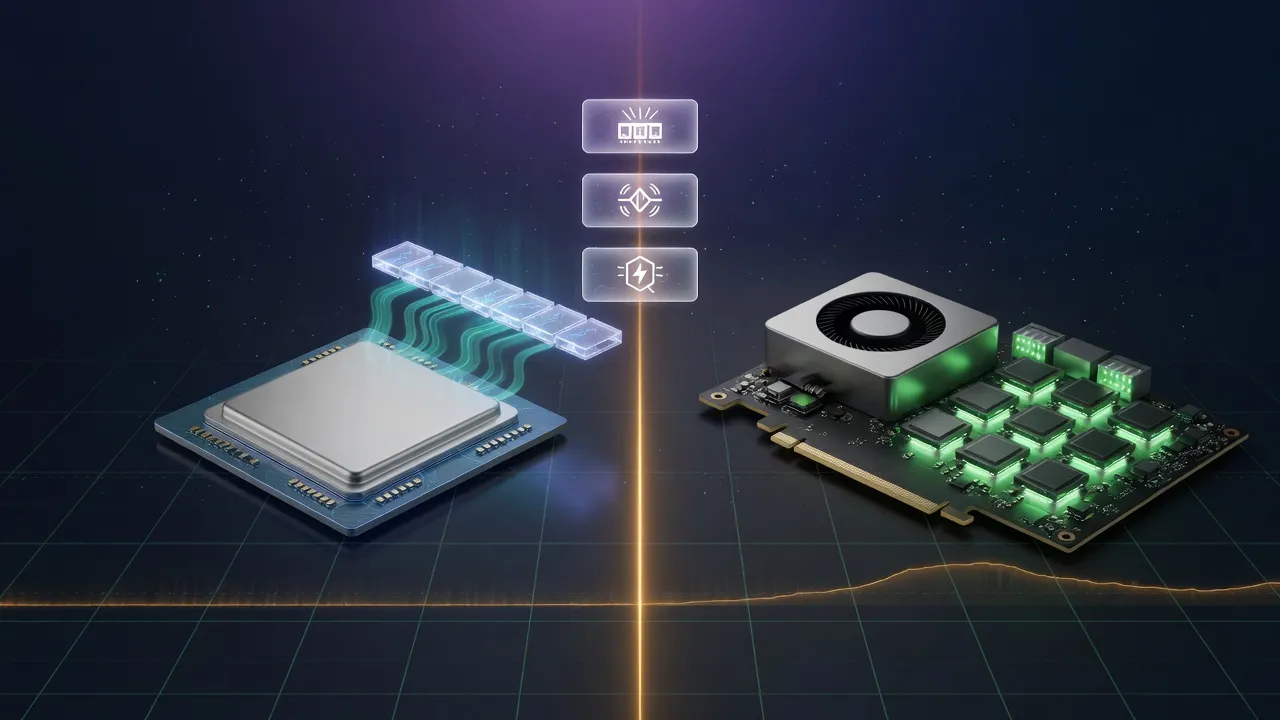
Mac vs NVIDIA for local inference, if you are still choosing a platform.