- Services
Advertising disclosure: we earn commissions when you shop through the links below.
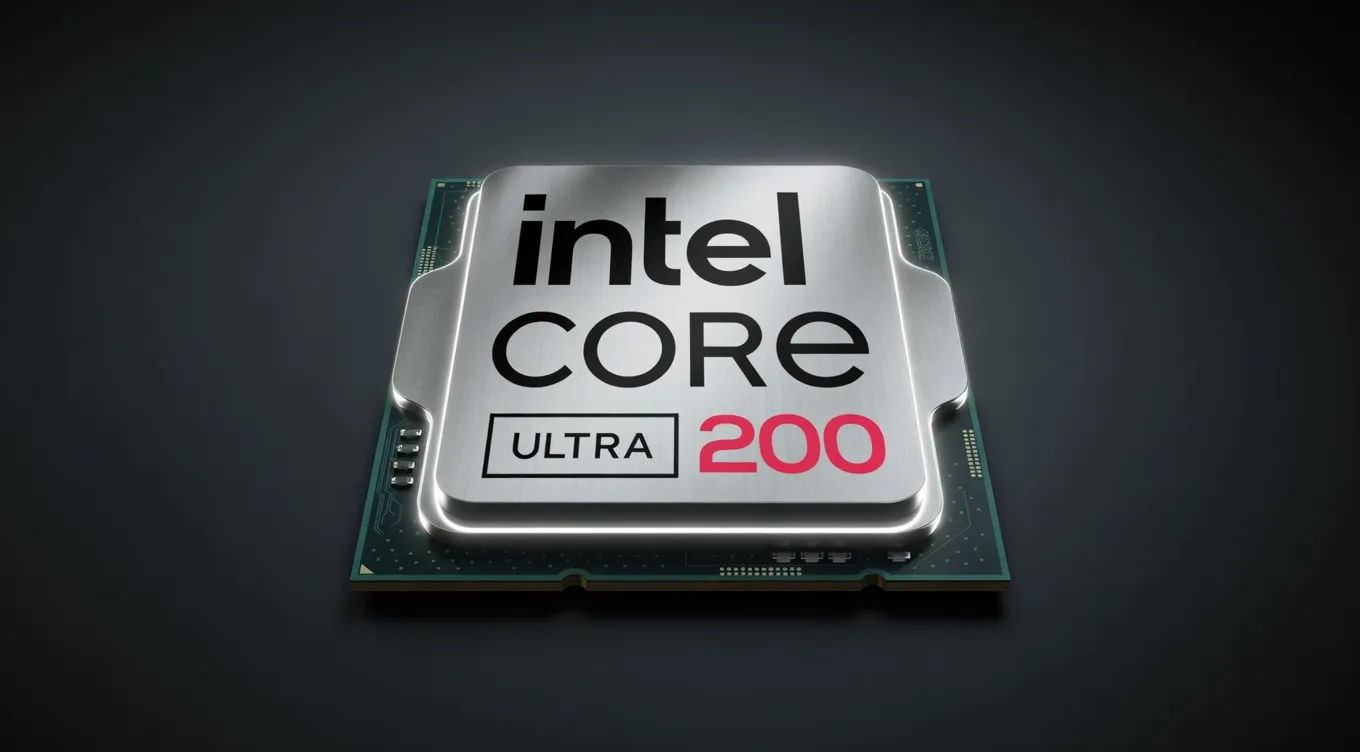
Intel's mainstream laptop processor series with up to 24 cores and integrated Arc GPU. Features AI Boost NPU for Copilot+ PC certification, targeting performance laptops and mobile workstations.
The Intel Core Ultra 200H (Arrow Lake-H) represents Intel’s strategic shift toward heterogeneous AI compute in the mobile performance segment. Designed for performance laptops and mobile workstations, this series is a cornerstone of the Copilot+ PC ecosystem. It balances high-thread-count CPU performance with a dedicated Neural Processing Unit (NPU) and integrated Arc graphics, making it a primary candidate for developers and engineers building on-device AI applications.
As a mainstream-to-prosumer mobile platform, the Arrow Lake-H architecture competes directly with the AMD Ryzen AI 300 series and Apple’s M-series silicon. For practitioners, the value proposition of the Intel Core Ultra 200H (Arrow Lake-H) for AI lies in its support for the OpenVINO toolkit, which allows for efficient execution of inference tasks across the CPU, GPU, and NPU. This chip is built for "Production Ready" local deployment, targeting users who need to run agentic workflows, local LLMs, and RAG (Retrieval-Augmented Generation) pipelines without relying on cloud APIs.
When evaluating the Intel Core Ultra 200H (Arrow Lake-H) AI inference performance, the hardware must be viewed as a three-pillar system: the CPU for logic and low-latency tasks, the integrated Arc GPU for high-throughput parallel processing, and the AI Boost NPU for persistent, low-power background tasks.
The dedicated Intel AI Boost NPU delivers 13 TOPS of INT8 performance. While this is lower than some dedicated desktop GPUs, it is optimized for high-efficiency background tasks like noise suppression, background blur, and lightweight embedding models. For heavier workloads, the integrated Arc GPU provides significantly higher TFLOPS, making it the preferred engine for local LLM inference.
For AI practitioners, memory is the primary bottleneck. The Core Ultra 200H supports LPDDR5X-7467 and DDR5-5600. In mobile AI workloads, the choice of LPDDR5X is critical; the higher 7467 MT/s speed provides the necessary bandwidth to prevent the "starving" of the GPU during token generation.
Unlike dedicated GPUs with fixed VRAM, the integrated Arc GPU uses system memory. The Intel Core Ultra 200H (Arrow Lake-H) VRAM for large language models is essentially a portion of your total RAM (typically up to 50% or more depending on BIOS/OS allocation). This allows for running larger models than a typical 8GB mobile dGPU, provided the laptop is configured with 32GB or 64GB of RAM.
With a Base TDP of 45W, the Arrow Lake-H is tuned for sustained performance. In mobile workstations, this allows for longer inference sessions without the aggressive thermal throttling found in ultra-thin laptops. This makes it one of the best intel hardware for running AI models locally in a mobile form factor.
The Intel Core Ultra 200H (Arrow Lake-H) local LLM capabilities are determined by the quantization level and the engine used (e.g., llama.cpp with OpenVINO or IPEX-LLM).
The 24-core CPU (8P + 16E) excels at handling long-context window processing (pre-fill stage) where CPU-bound logic is often required. Multimodal models like Llava 1.5 or Segment Anything (SAM) run efficiently on the integrated Arc GPU, making this platform suitable for local computer vision applications.
For developers building the best hardware for local AI agents 2025, the Core Ultra 200H provides the necessary multi-threading to handle the "orchestration" layer of an agentic workflow on the E-cores while the P-cores and GPU handle the LLM inference.
ML researchers and engineers can use this hardware for Intel hardware for AI development by running local coding assistants (like Continue or Tabby) using StarCoder or DeepSeek-Coder models. The 5.5 GHz boost clock ensures that IDE performance remains fluid even while an LLM is running in the background.
This is the best AI chip for local deployment in scenarios where a dedicated NVIDIA GPU is not feasible due to weight or battery constraints. It is ideal for field engineers needing to run local RAG pipelines on technical documentation in environments without reliable internet.
AMD’s Strix Point currently offers a higher-rated NPU (up to 50 TOPS), which gives it an edge in Copilot+ branding. However, Intel’s Arrow Lake-H often maintains an advantage in developer ecosystem maturity. The OpenVINO toolkit is generally more robust and easier to implement for cross-hardware acceleration (CPU+GPU+NPU) than AMD’s ROCm/Ryzen AI software stack on Windows.
Apple’s Unified Memory Architecture provides higher memory bandwidth, often resulting in faster tokens per second for large models. However, the Core Ultra 200H is the preferred Intel hardware for running AI models locally for those committed to the Windows/Linux ecosystem or those who require x86 compatibility for specific legacy simulation or engineering tools alongside their AI workflows.
The top models this device can run at 4-bit, ranked by fit and speed.
Specs not available for scoring. This product is missing VRAM or memory bandwidth data.
Also in Our Store
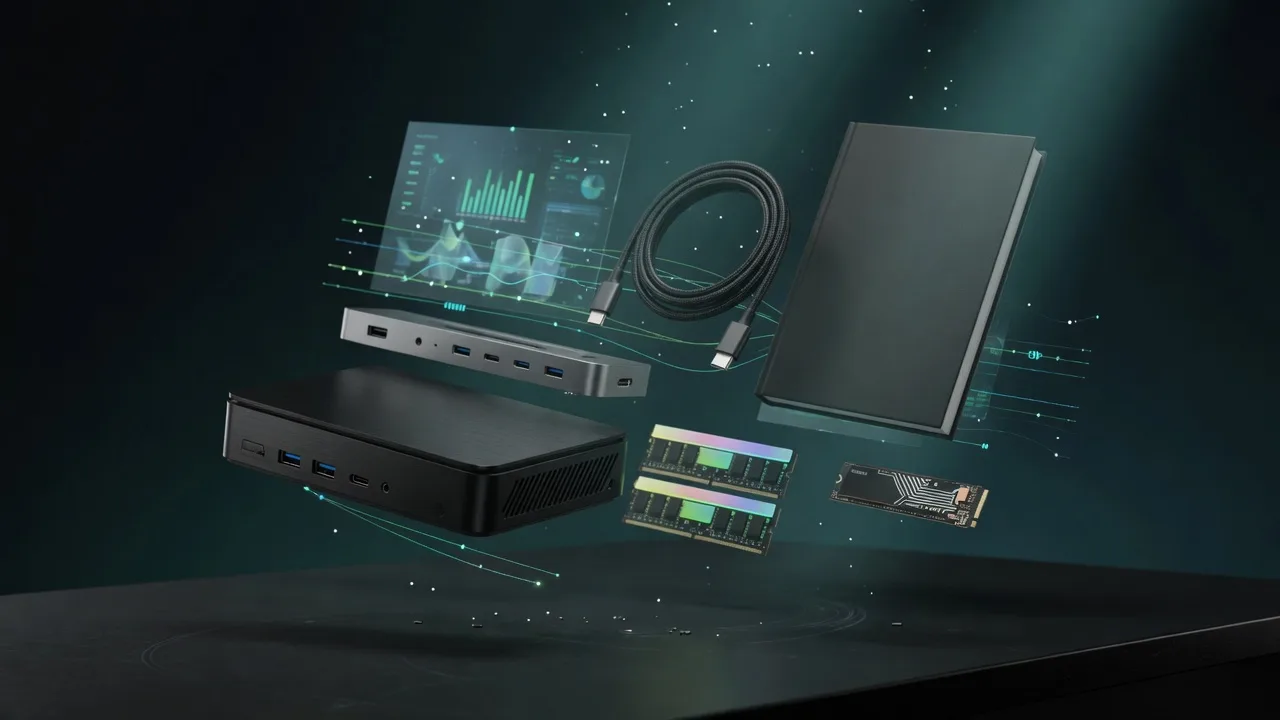
Docks, fast storage, cables, and a UPS sized for a local AI machine.

Rent this class of GPU by the hour before you buy. Live prices from RunPod and Vast.ai.

Find the break-even between buying this hardware and paying for a cloud API.
Mac vs NVIDIA for local inference, if you are still choosing a platform.