- Services
Advertising disclosure: we earn commissions when you shop through the links below.
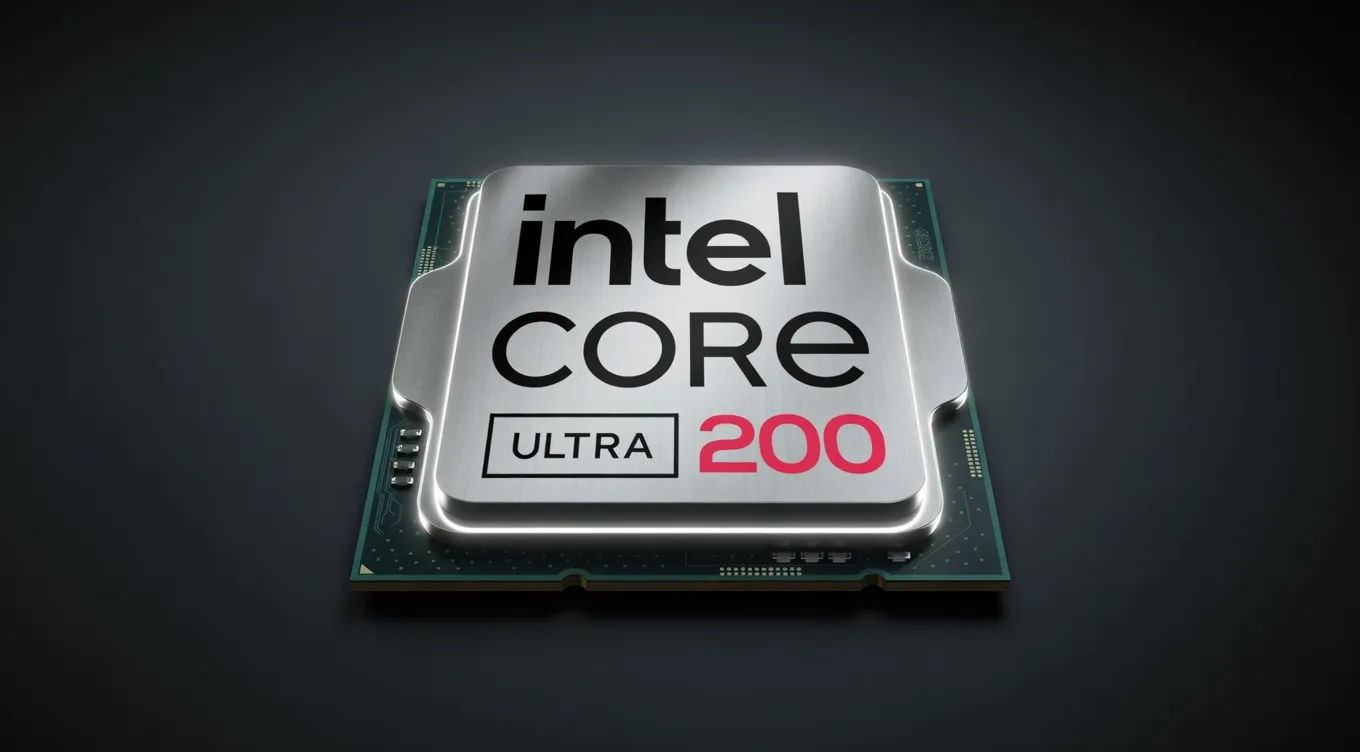
Intel's flagship ultra-mobile processor with Arc GPU and dedicated NPU delivering 48 TOPS. Built on Intel 4 process for Copilot+ PCs, optimized for thin-and-light designs with excellent power efficiency.
The Intel Core Ultra 9 288V, the flagship of the Lunar Lake architecture, represents a fundamental shift in how Intel approaches on-device AI. Moving away from the high-wattage, multi-chiplet designs of previous generations, the 288V is an ultra-mobile SoC designed specifically for the Copilot+ PC era. It integrates compute, graphics, and memory into a single package, aiming to maximize efficiency for local inference without the thermal throttling common in thin-and-light laptops.
For AI engineers and developers, the Core Ultra 9 288V is a significant entry in the 2025 local AI hardware landscape. It competes directly with the Apple M3/M4 series and Qualcomm’s Snapdragon X Elite. While it is a consumer-tier chip, its 48 TOPS NPU and 136 GB/s memory bandwidth make it a viable platform for developing and testing agentic workflows, local LLMs, and RAG (Retrieval-Augmented Generation) applications on the move.
The defining characteristic of the Intel Core Ultra 9 288V for AI workloads is its heterogeneous compute architecture. AI tasks can be distributed across the CPU, the integrated Arc 140V GPU, and the dedicated "AI Boost" NPU.
The 4th-generation NPU in the 288V provides 48 TOPS of INT8 performance. This meets the hardware requirements for Microsoft’s Copilot+ features, but more importantly for developers, it offers a dedicated low-power lane for persistent background tasks. If you are building local AI agents that need to monitor telemetry or provide always-on assistance, offloading these to the NPU preserves the GPU for more intensive generation tasks.
A critical bottleneck for local LLM inference is memory bandwidth. The 288V features 32GB of LPDDR5X-8533 memory integrated directly onto the processor package. This design reduces latency and allows for a maximum memory bandwidth of 136 GB/s. While this is lower than a dedicated desktop GPU like an RTX 4090, it is exceptionally high for a 30W mobile chip, facilitating faster token generation than previous-generation Intel mobile chips.
The integrated Arc 140V GPU features 8 Xe2-cores. In the context of AI development, this GPU is optimized for FP16 and INT8 operations through Intel’s XMX (Xe Matrix Extensions) engines. When running frameworks like OpenVINO, the GPU often outperforms the NPU for raw throughput in image generation (Stable Diffusion) or large batch processing.
The 32GB of on-package memory is shared across the system. For AI practitioners, this means the Intel Core Ultra 9 288V VRAM for large language models is effectively capped at roughly 20-24GB, depending on OS overhead. This capacity dictates which models can run locally without spilling over into much slower system swap space.
The Intel Core Ultra 9 288V (Lunar Lake) AI inference performance is best suited for models in the 3B to 14B parameter range.
While exact throughput depends on the optimization backend (e.g., llama.cpp vs. Intel OpenVINO), the Intel Core Ultra 9 288V tokens per second typically range from:
The 288V is capable of running multimodal models like Whisper (for speech-to-text) and Stable Diffusion XL. Image generation via SDXL Turbo can produce 1024x1024 images in a few seconds when utilizing the Arc 140V GPU's XMX engines.
The Core Ultra 9 288V is not a training chip; it is an inference and development tool. It is designed for practitioners who need a "lab in a backpack."
If you are building software that integrates AI agents, the 288V is an ideal testbed. It allows you to verify how your application handles local NPU offloading via the Intel AI PC SDK or OpenVINO. This is essential for ensuring your software runs efficiently on the next generation of consumer hardware.
For engineers deploying AI at the edge, such as in industrial monitoring or localized retail analytics, the 30W TDP of the 288V offers a compelling performance-per-watt ratio. It can handle computer vision tasks (YOLOv10) and natural language processing simultaneously without requiring active industrial cooling solutions.
Hobbyists looking for the best AI chip for local deployment in a portable format will find the 288V superior to previous x86 mobile chips. It provides enough RAM to run capable 8B models entirely offline, ensuring data privacy for personal assistants or sensitive document analysis.
When evaluating the Intel Core Ultra 9 288V (Lunar Lake) vs [competitor], the primary rivals are the Apple M3/M4 and the Qualcomm Snapdragon X Elite.
For practitioners looking for the best intel hardware for running AI models locally in a mobile form factor, the Core Ultra 9 288V is the current gold standard. It balances the high memory bandwidth required for LLMs with a power-efficient NPU, making it a premier choice for local AI development in 2025.
The top models this device can run at 4-bit, ranked by fit and speed.
Specs not available for scoring. This product is missing VRAM or memory bandwidth data.
Also in Our Store
Docks, fast storage, cables, and a UPS sized for a local AI machine.

Rent this class of GPU by the hour before you buy. Live prices from RunPod and Vast.ai.

Find the break-even between buying this hardware and paying for a cloud API.
Mac vs NVIDIA for local inference, if you are still choosing a platform.