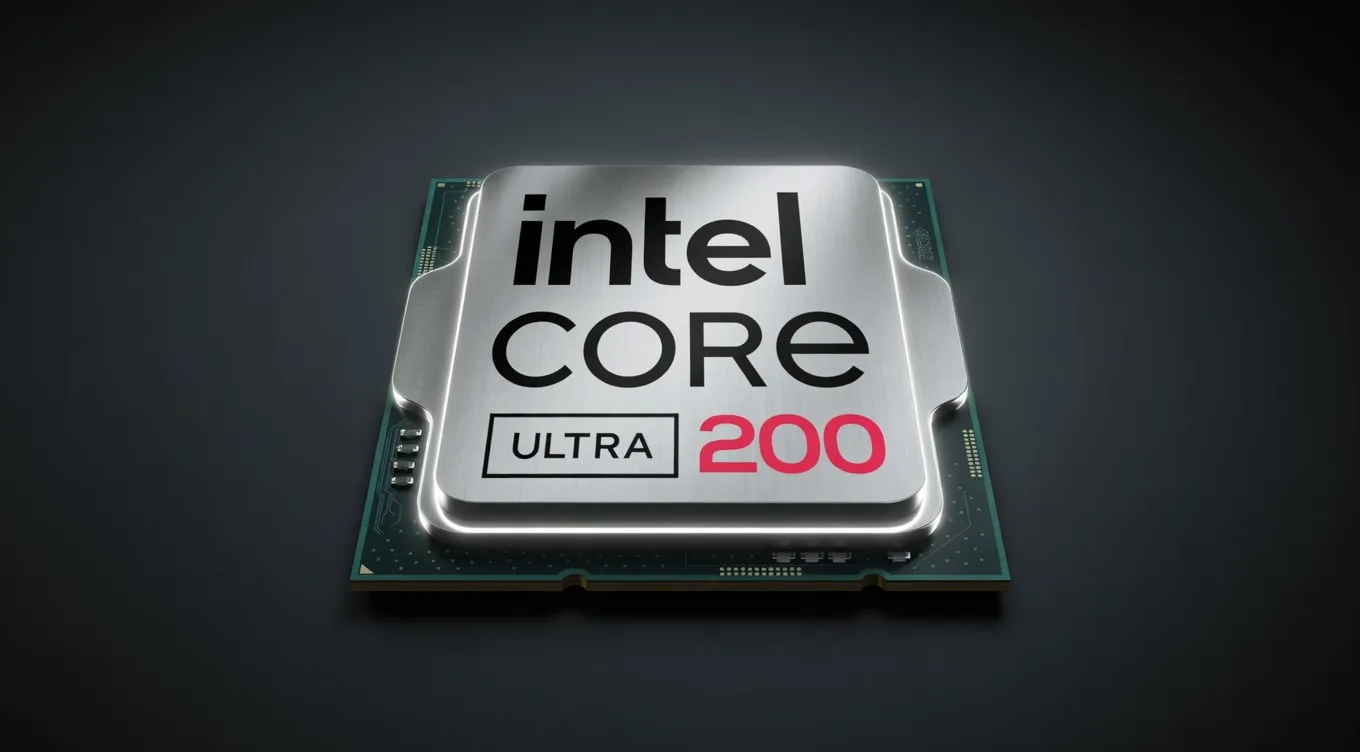
Intel's most power-efficient mobile processor with integrated NPU delivering 48 TOPS for AI workloads. Ultra-low-power design targeting thin-and-light AI PCs with exceptional battery life.
The Intel Core Ultra 200V, codenamed "Lunar Lake," represents a fundamental shift in Intel’s mobile architecture, prioritizing power efficiency and dedicated silicon for AI inference. Unlike previous generations that focused on high-wattage peak performance, the 200V is engineered for the "AI PC" era, specifically targeting thin-and-light laptops. It is a consumer-tier SoC (System on Chip) designed to compete directly with the Apple M3/M4 and Qualcomm Snapdragon X Elite in the emerging market for local AI agents and on-device intelligence.
For AI engineers and developers, the Core Ultra 200V is significant because it is Intel’s first architecture to meet the 40+ NPU TOPS requirement for Microsoft’s Copilot+ PC program. By moving the memory (up to 32GB of LPDDR5x) directly onto the processor package, Intel has reduced data latency and power consumption, making it a highly capable platform for persistent, low-power background AI tasks. While it is not a workstation replacement for training, it is one of the best Intel hardware options for AI development and local deployment of small language models (SLMs) in mobile environments.
When evaluating the Intel Core Ultra 200V (Lunar Lake) for AI, the headline figure is the 120+ total platform TOPS. However, practitioners must look at how this compute is distributed across the silicon:
The most critical factor for Intel Core Ultra 200V (Lunar Lake) VRAM for large language models is the on-package LPDDR5x memory. Because the RAM is integrated into the chip package, it offers higher efficiency but limits maximum capacity to 32GB. This is shared between the CPU, GPU, and NPU. In practice, this means the "VRAM" available for local LLMs is a subset of the total system RAM, typically allowing for models that fit within a 16GB–24GB footprint while leaving room for the OS.
With a base TDP of just 17W, the Intel Core Ultra 200V (Lunar Lake) AI inference performance per watt is the highest Intel has achieved to date. This makes it a primary candidate for "always-on" AI agents that need to process context without depleting the battery in two hours.
The Lunar Lake architecture is optimized for small on-device models. Practitioners looking to run 70B+ parameter models should look toward desktop or workstation hardware, but for the current generation of SLMs, the 200V is highly capable.
Using OpenVINO (Intel’s optimized inference toolkit), the 200V can efficiently run:
While exact Intel Core Ultra 200V (Lunar Lake) tokens per second vary by optimization, early benchmarks using OpenVINO on the Xe2 GPU show:
For the best quality-to-speed tradeoff, we recommend using 4-bit quantization (weight compression). The Xe2 GPU architecture features native hardware acceleration for these formats, significantly boosting throughput over FP16.
The Intel Core Ultra 200V is not designed for the data center; it is designed for the edge and the individual developer's workstation.
Note: This hardware is strictly for inference. While you can perform "fine-tuning" on very small models (LoRA) using the GPU, it is not a viable platform for training models from scratch.
The Snapdragon X Elite offers slightly higher NPU TOPS (45 vs 48, effectively a wash), but the Intel 200V has a significant advantage in software compatibility. For AI engineers, the ability to run x86-64 native binaries without emulation and the mature OpenVINO ecosystem makes the 200V a more predictable target for deployment. However, Qualcomm's multi-core CPU performance is generally higher for non-AI tasks.
Apple’s Unified Memory Architecture (UMA) still leads in raw bandwidth, which can result in higher tokens per second for larger models. However, the Core Ultra 200V is the first Intel chip to realistically close the "efficiency gap." If your workflow requires Windows-specific tools or you are developing for the vast install base of Windows enterprise users, the 200V is the superior choice for local AI development.
The jump from the previous generation (100 series) to the 200V is massive for AI. The NPU performance has quadrupled (from ~11 TOPS to 48 TOPS), and the move to on-package memory significantly reduces the power bottleneck. For any practitioner choosing between the two, the 200V is the clear winner for AI-heavy workloads.
The top models this device can run at 4-bit, ranked by fit and speed.
Specs not available for scoring. This product is missing VRAM or memory bandwidth data.

Rent this class of GPU by the hour before you buy. Live prices from RunPod and Vast.ai.

Find the break-even between buying this hardware and paying for a cloud API.
Get a full budget-matched parts list for a local AI workstation.
Mac vs NVIDIA for local inference, if you are still choosing a platform.