- Services
Advertising disclosure: we earn commissions when you shop through the links below.
Microsoft announced the Surface Laptop 13-inch, a Copilot+ PC laptop powered by the Qualcomm Snapdragon X2 Plus processor with an 80 TOPS NPU. It ships on October 13, 2026 starting at $1,149. The 13-inch model is the lightest Surface Laptop at 2.7 lb and Microsoft rates battery life at up to 23 hours of video playback. It runs Windows 11 and is aimed at on-device AI features in a portable laptop.
The Microsoft Surface Laptop 13-inch is a Copilot+ PC built around the Qualcomm Snapdragon X2 Plus processor and an 80 TOPS NPU. It ships October 13, 2026, starts at $1,149, and is available for pre-order now. At 2.7 lb (1.22 kg), it is the lightest Surface Laptop to date, and Microsoft rates battery life at up to 23 hours of video playback. It runs Windows 11.
For AI workloads, this is a consumer and prosumer machine, not a workstation or an inference server. Its pitch is portability plus on-device acceleration: an Arm laptop that can run Copilot+ features and small-to-mid local models without a discrete GPU. The 80 TOPS NPU is the number that matters here. It clears Microsoft's 40 TOPS Copilot+ floor with headroom and lands in the same tier as Snapdragon X2-class machines, Intel Lunar Lake, and AMD Strix Point on NPU throughput.
What it is not is a machine with dedicated VRAM. Like every Snapdragon X-series laptop, it uses a unified memory architecture where the CPU, the Adreno GPU, and the NPU share one LPDDR5x pool. That single architectural fact drives every realistic expectation about local LLM performance on this hardware, and it is the first thing to understand before you compare it to a discrete-GPU laptop or a Mac.
The 80 TOPS figure is INT8 throughput, and that is the relevant metric for quantized LLM inference. Compute is not the bottleneck on this class of chip, though. Token generation in a decoder-only transformer is memory-bandwidth-bound: every generated token requires streaming the model weights once. LPDDR5x unified memory in this segment typically delivers bandwidth in the 100-140 GB/s range, and that ceiling, not the NPU's TOPS rating, sets your practical tokens per second.
The upside of unified memory is that the model pool is not capped at a fixed VRAM allotment. The tradeoff is that the same pool feeds Windows, your apps, and the Adreno GPU. On a 16GB configuration you should assume roughly 8-10GB is realistically available for a model; on a 32GB machine, closer to 20-24GB. Confirm the memory tier of the specific SKU you order, because it changes which models fit more than the NPU does.
Power efficiency is where Arm laptops still lead. Sustained inference at 15-25W keeps the machine cool, quiet, and usable on battery for hours, which is a real advantage over x86 laptops that throttle under GPU load.
Sizing assumes unified memory available for inference, not total system RAM. Figures below are for the shared pool.
7B-9B class (Llama 3.1 8B, Mistral 7B, Qwen 2.5 7B, Gemma 2 9B)
13B-14B class (Qwen 2.5 14B, Phi-4 14B)
30B-32B class (Qwen 2.5 32B, Gemma 2 27B, Mixtral 8x7B at low quant)
70B class (Llama 3.1 70B, Qwen 2.5 72B)
The sweet spot is 7B-14B at Q4_K_M or Q5_K_M. That range fits comfortably, runs fast enough for interactive chat, and holds most of the quality of the full-precision weights. If you have a 32GB machine and want more capability, Qwen 2.5 32B at Q4 is the best quality-to-speed tradeoff available.
Multimodal models are feasible at small sizes: Phi-3.5-vision, Qwen 2.5-VL 7B, and similar. Long-context work is memory-bound, and KV cache grows with context length, so a 32K-token context on a 14B model will eat several gigabytes on top of the weights. Plan for it.
Runtime support matters as much as the silicon. llama.cpp via the Adreno GPU and ONNX Runtime with the QNN execution provider (targeting the NPU) are the two paths you will use. NPU offload through QNN is where the 80 TOPS actually gets exercised; CPU-only fallback works but is dramatically slower.
Versus the MacBook Air M4 (13-inch): Apple's machine has higher effective memory bandwidth in its unified pool and a more mature ML stack with MLX and Metal. For pure local LLM throughput, the MacBook Air generally wins, and it can be configured with more unified memory. The Surface counters with a touchscreen, a 3:2 display, native Windows tooling, and Windows 11 compatibility for x86-era workflows. If you are Apple-agnostic and your priority is tokens per second, the MacBook Air is the safer pick. If you need Windows and on-device Copilot+ features, this is the better fit.
Versus a Snapdragon X Elite laptop: older X Elite machines offer similar or higher CPU performance and comparable NPU tiers at often lower prices now that they are a generation back. The X2 Plus here buys you a newer NPU and a lighter chassis. If you find a discounted X Elite with more RAM, it can be the better value for local inference.
Pick the Surface Laptop 13-inch when portability, battery life, and Windows-native AI features matter more than raw inference speed. Skip it if you need to run 70B models, fine-tune, or chase maximum tokens per second, because a discrete-GPU laptop or a high-memory Mac will serve those workloads better.
The top models this device can run at 4-bit, ranked by fit and speed.
Specs not available for scoring. This product is missing VRAM or memory bandwidth data.
Also in Our Store
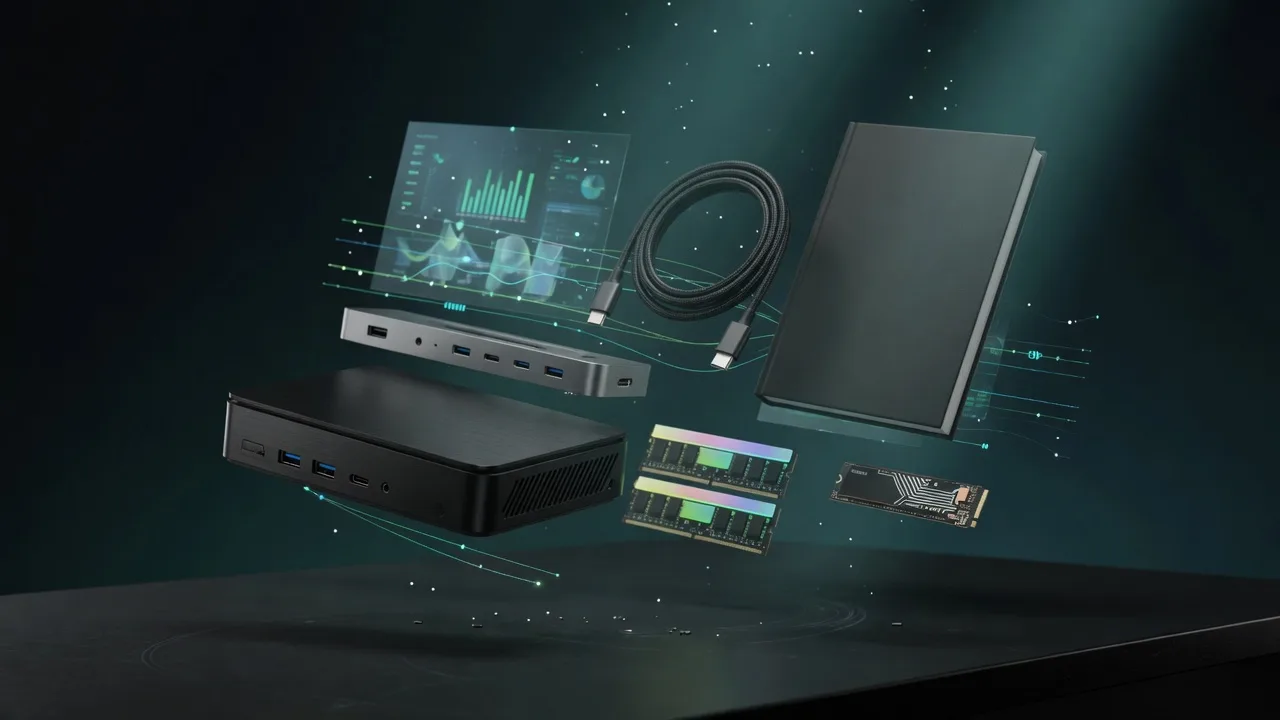
Docks, fast storage, cables, and a UPS sized for a local AI machine.

Rent this class of GPU by the hour before you buy. Live prices from RunPod and Vast.ai.
Find the break-even between buying this hardware and paying for a cloud API.
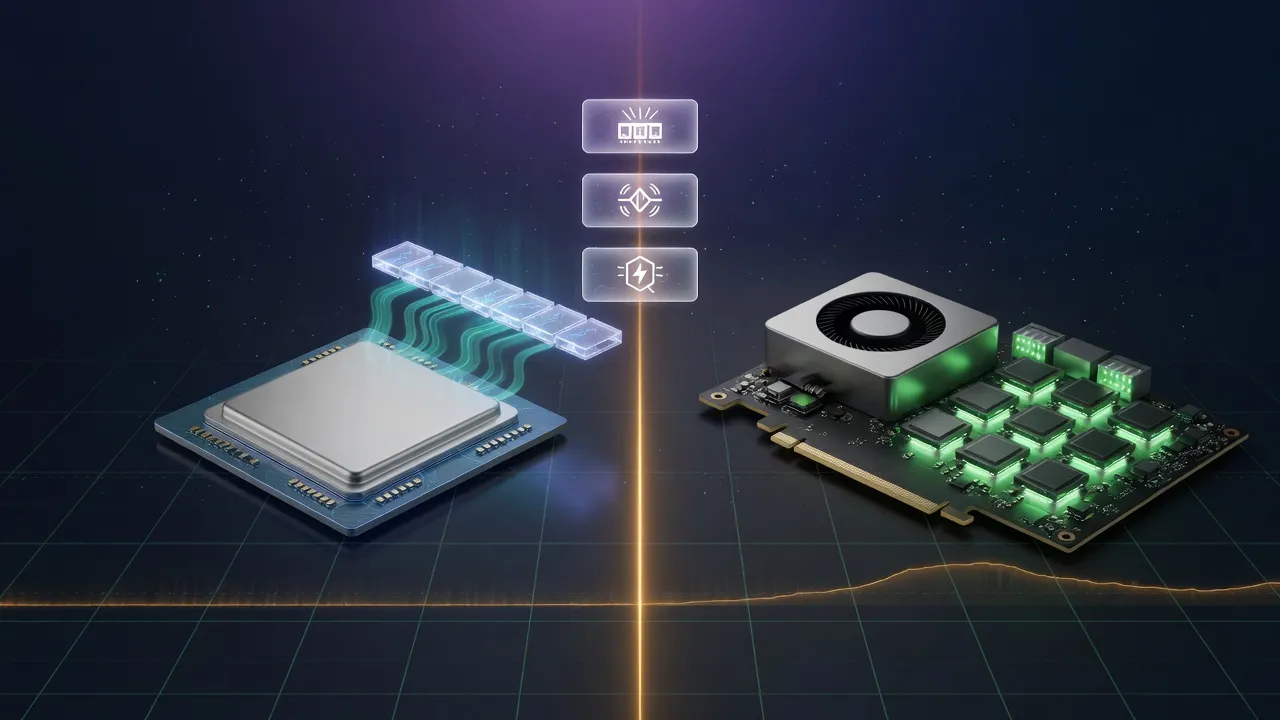
Mac vs NVIDIA for local inference, if you are still choosing a platform.