
- Services
Advertising disclosure: we earn commissions when you shop through the links below.
NVIDIA RTX PRO 6000 Blackwell Max-Q Workstation Edition is a professional desktop GPU built on the Blackwell architecture. It carries 96 GB of GDDR7 memory at 1.8 TB/s and can scale from one to four GPUs in a single workstation. NVIDIA rates it at 3511 TOPS of AI performance (FP4 with sparsity), 333 TFLOPS of ray tracing and 110 TFLOPS single precision. It is aimed at local LLM fine-tuning, agentic AI, data science and rendering work.
Sized for production serving of 70B–200B class models at full or lightly-quantized precision. Overkill for a homelab; right call when the workload pays for itself in token volume.
Generated from this product’s spec sheet. Editor reviews refine it over time.
The NVIDIA RTX PRO 6000 Blackwell Max-Q Workstation Edition represents a fundamental shift in professional local compute. Built on NVIDIA's Blackwell architecture, this professional desktop GPU packs 96 GB of GDDR7 memory operating at 1.8 TB/s into a density-optimized, dual-slot blower form factor. While consumer flagships remain constrained by memory capacities suitable primarily for gaming and lightweight inference, this board is engineered specifically for practitioners who need enterprise-grade capacity directly under their desks without requiring dedicated datacenter racks or complex liquid cooling loops.
Positioned firmly in the top tier of professional workstation hardware, the card solves the physical density problem of modern AI infrastructure. The Max-Q designation here denotes a power-optimized 300W thermal envelope, half the power draw of the 600W full-power workstation variant. This efficiency allows engineers to run dense multi-GPU configurations, scaling up to four GPUs and 384 GB of aggregate VRAM within a single standard desktop chassis. For machine learning researchers, systems architects, and engineering teams evaluating the best hardware for running AI models locally, this card bridges the gap between desktop workstations and dedicated enterprise server nodes.
When considering Unknown hardware for AI development on madebyagents.com, this workstation card stands out by prioritizing memory capacity, thermal predictability, and architecture-level AI acceleration over raw, unconstrained power consumption. Whether running massive context windows locally or building low-latency agentic loops, the hardware directly addresses the bottlenecks that stall local AI workflows.
Evaluating the NVIDIA RTX PRO 6000 Blackwell Max-Q Workstation Edition for AI requires looking past traditional graphics metrics and focusing on memory subsystems and low-precision compute throughput. Large language models and diffusion systems are predominantly memory-bandwidth bound during the auto-regressive token generation phase and compute-bound during prompt prefill.
1NVIDIA RTX PRO 6000 Blackwell Max-Q Workstation Edition2- VRAM: 96 GB GDDR73- Memory Bandwidth: 1.8 TB/s (1800 GB/s)4- AI Compute: 3511 TOPS (FP4 with sparsity)5- Single-Precision (FP32): 110 TFLOPS6- Ray Tracing (RT): 333 TFLOPS7- Host Interface: PCIe Gen 58- Multi-GPU Scaling: Up to 4 GPUs per system9- Display: 4x DisplayPort 2.1b10- Media Engines: 9th Gen NVENC, 6th Gen NVDEC with 4:2:2 support11- Virtualization: Multi-Instance GPU (MIG) support12- Form Factor & TDP: Density-optimized blower, 300W TDP
With 96 GB of GDDR7 memory on a 512-bit bus, the card delivers 1800 GB/s of bandwidth. Memory bandwidth dictates autoregressive generation speed: each token generated requires transferring the active weights from VRAM to the compute cores. At 1.8 TB/s, this board offers nearly double the throughput of previous-generation Ada Lovelace workstation cards (960 GB/s), translating directly into faster prompt evaluation and higher generation velocity.
The NVIDIA RTX PRO 6000 Blackwell Max-Q Workstation Edition VRAM for large language models eliminates the memory limits that prevent single-GPU setups from running high-parameter weights. Having 96 GB on a single card allows models that previously required dual-GPU tensor parallelism to execute on a single physical PCIe slot.
The Blackwell architecture introduces fifth-generation Tensor Cores with native support for micro-tensor FP4 execution. Rated at 3511 TOPS of AI performance (FP4 with sparsity) and 110 TFLOPS of FP32 single-precision compute, the card accelerates both training and inference. Native FP4 quantization cuts memory footprint and bandwidth pressure by 50% compared to FP8 without the steep perplexity penalties traditionally associated with low-bit integer quantization.
For multi-tenant development, native Multi-Instance GPU (MIG) support allows developers to partition the 96 GB frame buffer and Blackwell compute engines into isolated hardware instances. A single card can be split across multiple team members or partitioned into dedicated inference services for individual local agents.
Choosing a 96GB GPU for AI completely changes local deployment thresholds. The massive VRAM ceiling accommodates models that fail to load on 24 GB or 32 GB consumer cards, while leaving extensive headroom for long-context KV caching.
This GPU is premier hardware for running 70B parameter models. Architectures like Meta Llama 3.3 70B and Qwen 2.5 72B run with complete ease:
Mixture-of-Experts (MoE) architectures benefit heavily from the 96 GB capacity:
Real-world NVIDIA RTX PRO 6000 Blackwell Max-Q Workstation Edition tokens per second will depend on context length and runtime framework (such as TensorRT-LLM, vLLM, or llama.cpp):
A core bottleneck for local agents is the KV cache footprint. In multi-turn tool-calling workflows, context grows rapidly. With 96 GB of VRAM, running a 32B model like Qwen 2.5 at FP8 uses only ~34 GB for weights, leaving over 60 GB for the KV cache. This enables uninterrupted 128k context processing without offloading to system RAM or causing out-of-memory crashes. Vision-language models (VLMs) such as Qwen2-VL or Llama 3.2 Vision run natively with high-resolution image inputs and zero tiling slowdowns.
The NVIDIA RTX PRO 6000 Blackwell Max-Q Workstation Edition targets engineering teams where privacy, data compliance, and uptime make cloud APIs non-viable.
Understanding where this board fits requires comparing it directly with both consumer hardware and its predecessor.
The previous-generation RTX 6000 Ada featured 48 GB of GDDR6 memory with 960 GB/s bandwidth and a 300W envelope. The Blackwell Max-Q variant:
Teams running 70B models on Ada often had to deploy dual-GPU configurations to run at FP8 with usable context. A single Blackwell Max-Q matches that capacity on its own.
The GeForce RTX 5090 offers high compute performance at a lower hardware cost, but it carries 32 GB of VRAM and a bulky 3-slot to 4-slot axial cooling design with high power draw (around 600W).
For practitioners looking for the best AI chip for local deployment where density, memory volume, and professional driver reliability dictate project success, the NVIDIA RTX PRO 6000 Blackwell Max-Q Workstation Edition delivers an unmatched operational balance.
The top models this device can run at 4-bit, ranked by fit and speed.
| Model | Grade | Speed | VRAM |
|---|---|---|---|
| KolibriAleph Alpha | SS | 55.2 tok/s | 69.7 GB |
| AliceAI-Foundation-80B-A3B-Baseyandex | SS | 169.8 tok/s | 53.9 GB |
| Nemotron 3.5 Bolt 74B-A9B 24GBNVIDIA | SS | 240.9 tok/s | 43.7 GB |
| NVIDIA Nemotron 3.5 Bolt 74B-A9B 24GBNVIDIA | SS | 240.9 tok/s | 43.7 GB |
| Comet 60BMultiverse Computing | SS | 173.7 tok/s | 36.4 GB |
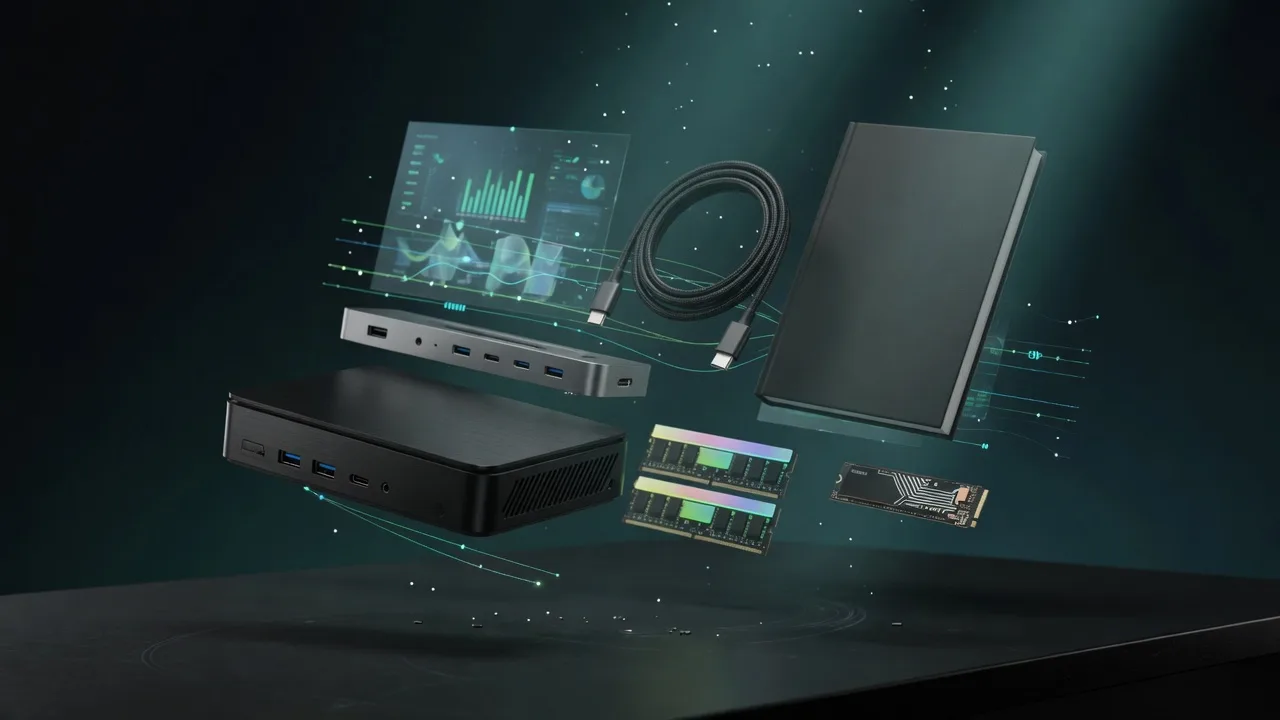
Also in Our Store
Docks, fast storage, cables, and a UPS sized for a local AI machine.
Rent this class of GPU by the hour before you buy. Live prices from RunPod and Vast.ai.
Find the break-even between buying this hardware and paying for a cloud API.
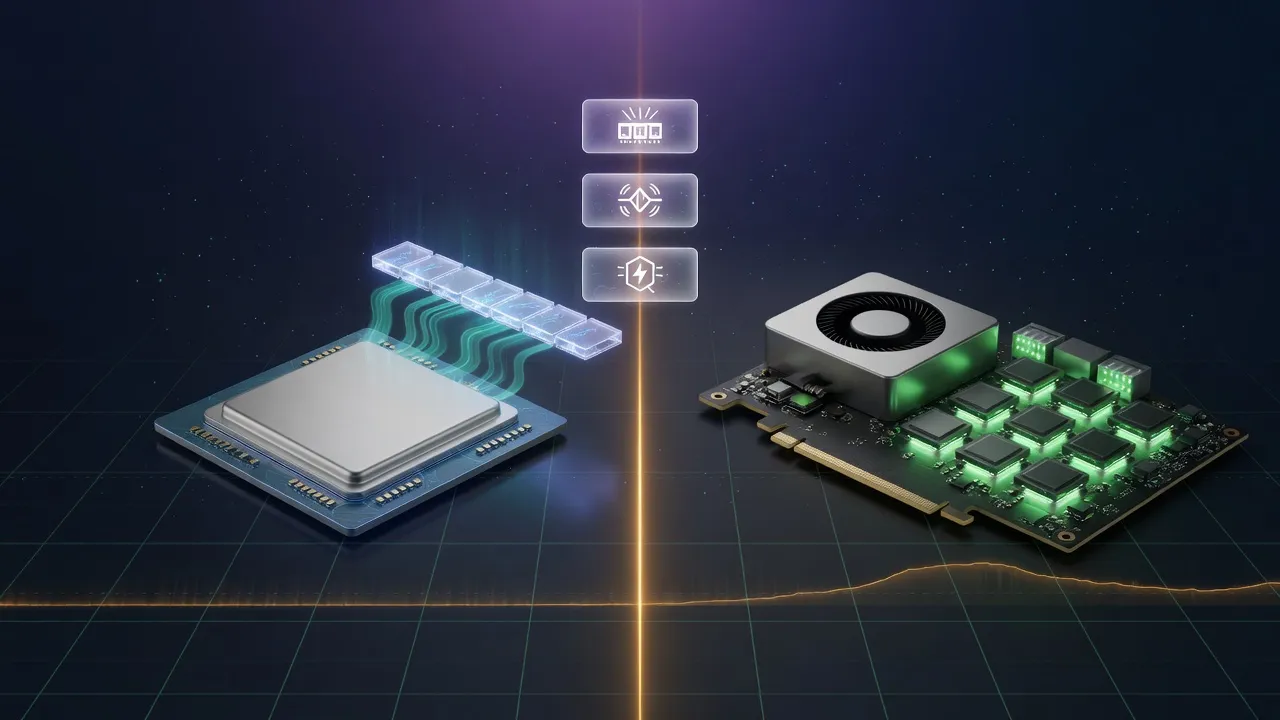
Mac vs NVIDIA for local inference, if you are still choosing a platform.
