- Services
Advertising disclosure: we earn commissions when you shop through the links below.
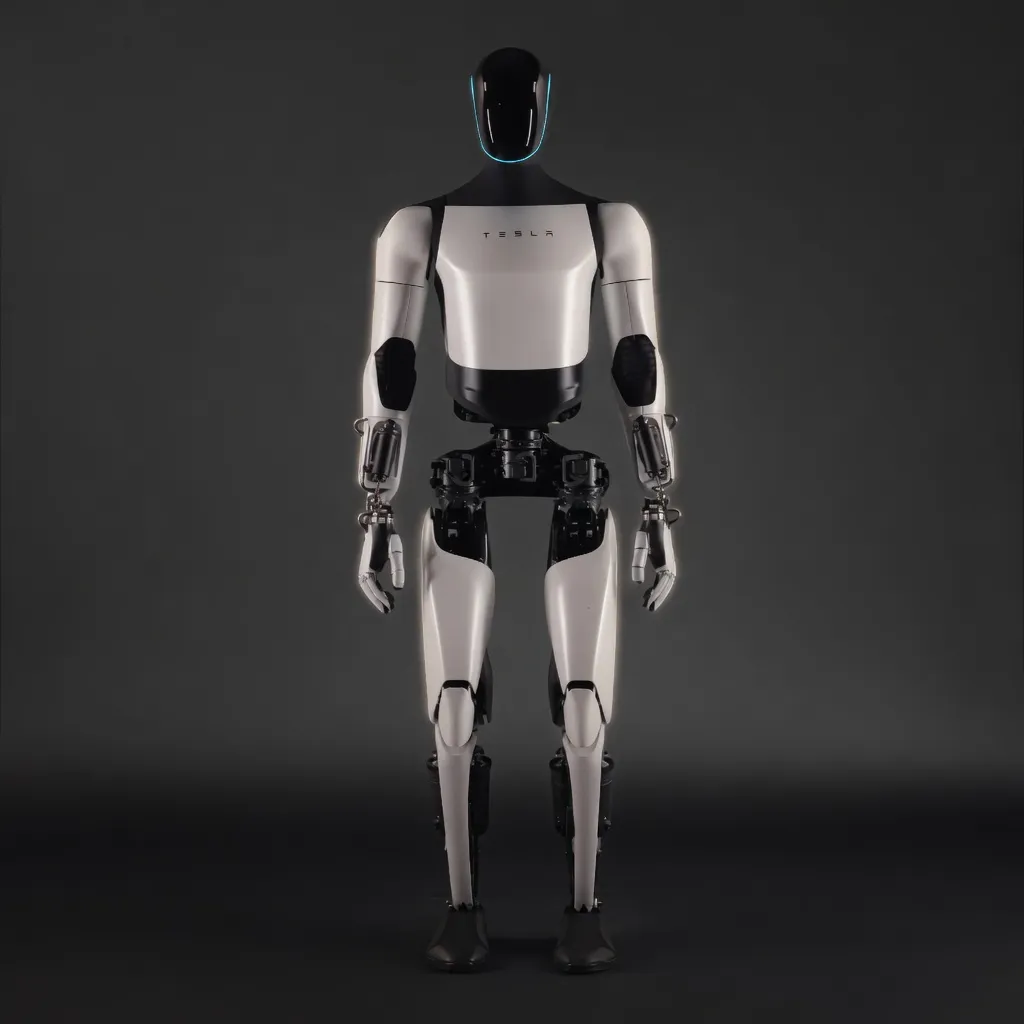
Tesla's humanoid robot prototype featuring Tesla-designed actuators, FSD-derived AI vision, and Grok LLM integration. Currently in internal R&D deployment only with no public sales date.
The Tesla Optimus Gen 2 represents Tesla’s pivot from automotive manufacturing to general-purpose robotics, utilizing the same underlying compute architecture that powers their Full Self-Driving (FSD) software. Positioned as an enterprise-grade humanoid platform, Optimus Gen 2 is designed to bridge the gap between digital AI agents and physical world interaction. While currently in an internal R&D deployment phase at Tesla’s Gigafactories, the platform is being built to serve as the ultimate mobile edge-inference node.
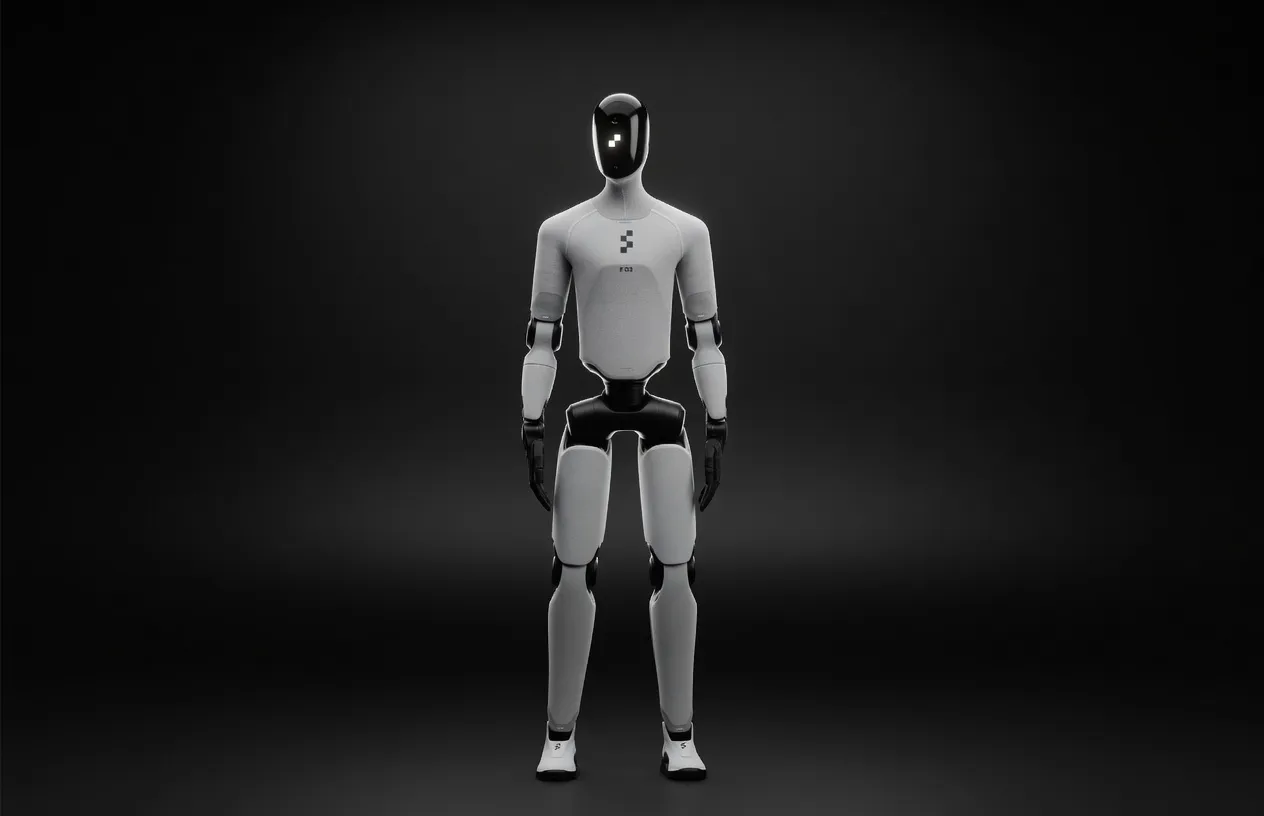
For AI engineers and practitioners, the Optimus Gen 2 is significant because it integrates high-torque actuators with an onboard inference engine capable of running multimodal models. It competes directly with specialized humanoid platforms like Figure 02 and Boston Dynamics’ Electric Atlas. However, where Tesla differentiates is the vertical integration of its AI stack. By leveraging the Tesla Optimus Gen 2 for AI development, engineers are essentially working with a mobile version of the FSD computer, optimized for low-latency spatial reasoning and real-time sensor fusion.
The core of the Optimus Gen 2's utility for AI practitioners lies in its onboard compute and sensor array. Unlike stationary robots, the Optimus Gen 2 must balance TFLOPS with power efficiency to maintain its estimated 2.3 kWh battery life.
The robot utilizes a custom Tesla SoC (System on Chip) derived from the FSD Hardware 4.0 suite. This architecture is purpose-built for high-throughput neural network inference.
While Tesla has not publicly disclosed the exact Tesla Optimus Gen 2 VRAM for large language models, the architecture is designed to handle the heavy weights of FSD neural nets alongside a local LLM (Grok). Given the requirements for simultaneous spatial processing and natural language interaction, the system likely utilizes high-bandwidth memory (HBM) to ensure that Tesla Optimus Gen 2 tokens per second remain high enough for fluid human-robot interaction. For developers, this means the hardware is optimized for "streaming" inference where vision data and text data are processed in parallel.
The Tesla Optimus Gen 2 is not just a mechanical shell; it is a mobile inference server. The integration of Grok LLM suggests a significant focus on Tesla Optimus Gen 2 local LLM execution.
Based on the compute profile of Tesla's FSD hardware, the Optimus Gen 2 is optimized for quantized models that balance parameter count with inference speed:
The Gen 2 excels at running vision-language-action (VLA) models. Because it uses 8 cameras, it can run multimodal models like Llama 3.2 Vision or Prismatic VLMs to describe its environment or identify specific tools. This makes it one of the best humanoid robots for running AI models locally in dynamic environments where cloud latency would be a safety risk.
Tesla Optimus Gen 2 is currently targeted at enterprise R&D teams and internal Tesla logistics, but its architecture defines the future of Tesla humanoid robots for AI development.
The primary use case is autonomous material handling. With a 20 kg payload and refined 22 DOF hands, the robot is designed to perform "useful" work, picking up parts, organizing bins, and navigating factory floors. AI teams can use the platform to train imitation learning models where the robot learns from human demonstration via VR teleoperation.
For teams building the best hardware for local AI agents 2025, Optimus represents the "physical agent." Instead of an agent that just writes code, the Optimus Gen 2 is an agent that can interact with the physical world. Developers can deploy agentic frameworks (like LangChain or AutoGPT) that trigger physical actions based on LLM reasoning.
Researchers focused on best AI chip for local deployment will find the Optimus architecture a gold standard for power-to-inference ratios. It serves as a testbed for how large models can be compressed and deployed on mobile hardware without losing the "reasoning" capabilities required for complex manipulation.
When evaluating the Tesla Optimus Gen 2 vs Figure 02, the distinction lies in the ecosystem.
For practitioners looking for the Tesla Optimus Gen 2 AI inference performance, the platform is designed to be the most capable mobile edge device on the market. While public availability remains restricted to internal testing, its specs set the benchmark for what local AI hardware must achieve to move from a screen into the physical world.
The top models this device can run at 4-bit, ranked by fit and speed.
Specs not available for scoring. This product is missing VRAM or memory bandwidth data.
Also in Our Store
Docks, fast storage, cables, and a UPS sized for a local AI machine.