- Services
Advertising disclosure: we earn commissions when you shop through the links below.
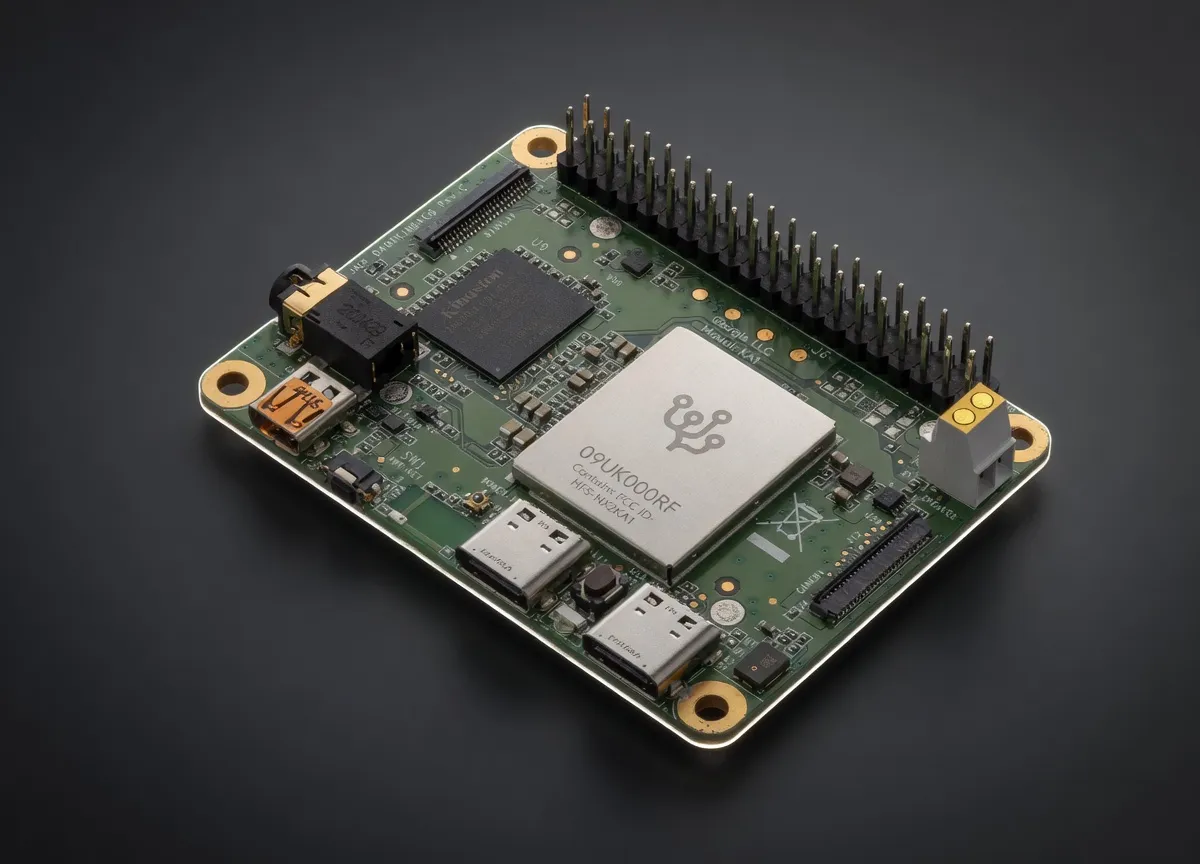
NXP Semiconductors makes the Ara240, a discrete neural processing unit for edge AI. It is a second-generation accelerator for generative AI, large language models, vision-language models and CNN vision workloads on embedded and industrial systems. NXP states up to 40 eTOPS, up to 16 GB of LPDDR4 memory, a 4-lane PCIe Gen 4 and USB 3.2 Gen 1 host interface, and typical power of 6.5 W. It supports TensorFlow, PyTorch and ONNX and runs Linux, with Mouser now stocking the part.
Good balance for indie developers running local copilots and chat. 30B+ models are reachable but only with aggressive quantization and short context.
Generated from this product’s spec sheet. Editor reviews refine it over time.
The Ara240 is a second-generation discrete neural processing unit (DNPU) developed by NXP Semiconductors, designed specifically to bring generative AI, vision-language models (VLMs), and convolutional neural networks directly to embedded and industrial edge systems. Operating at a typical power envelope of just 6.5 W, the processor tackles the thermal and energy bottlenecks that frequently block advanced AI deployment outside of refrigerated data centers. By combining up to 40 eTOPS (equivalent TOPS) of neural compute with up to 16 GB of dedicated LPDDR4 memory, the chip establishes a high-efficiency middle tier between low-power micro-NPUs and power-hungry edge GPUs.
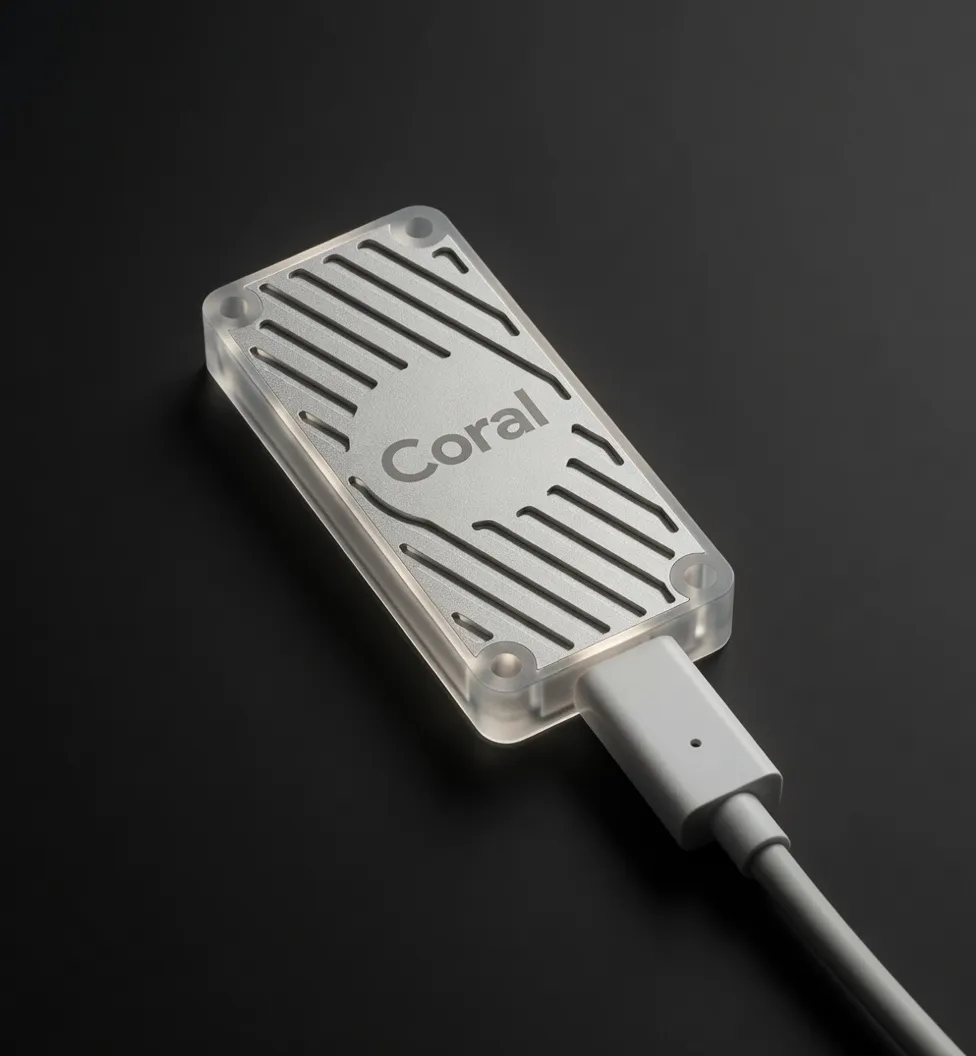
For engineers seeking the best hardware for running AI models locally within constrained environments, the Ara240 delivers a specialized architecture. Available in a compact 17 mm x 17 mm EHS-FCBGA package as well as standardized M.2 M-key and USB modules, it serves as a co-processor alongside Linux-based application processors. Whether integrated via PCIe Gen 4 or USB 3.2, it enables host systems to offload compute-heavy inference tasks without incurring thermal throttling or high standby power draw.
In a market dominated by monolithic systems-on-chip, the Ara240 provides modular edge intelligence. While listed under Unknown hardware for AI development on multi-vendor distributor shelves such as Mouser, the underlying silicon represents an enterprise-grade platform engineered for industrial automation, robotics, smart retail, and in-cabin vision systems requiring deterministic, low-latency execution.
Evaluating Ara240 AI inference performance requires looking closely at how its internal silicon manages dataflow. Unlike traditional graphics processors that rely on massive parallel vector engines requiring active cooling, the Ara240 divides execution between dedicated matrix and vector domains to maintain peak efficiency:
The standout specification for this power class is the Ara240 VRAM for large language models. Allocating 16 GB of memory to an edge accelerator operating below 10 W is uncommon. While a standard 16GB GPU for AI in desktop environments draws between 70 W and 150 W, the Ara240 accesses its 16 GB LPDDR4 pool at an operating draw lower than an average LED light bulb. The memory subsystem feeds the 8 NNP cores directly, minimizing off-chip memory penalties when swapping layer weights during autoregressive token generation.
Deploying an Ara240 local LLM requires an understanding of memory footprint, quantization targets, and memory bandwidth constraints. While edge devices cannot match desktop GPUs in sheer raw throughput, the Ara240 produces practical, real-time responses across small language and vision models.
1Model Category Representative Model Format/Quant Memory Required Throughput2Vision / CNN ResNet-34 INT8 < 100 MB 660 IPS3Vision / Detection YOLOv8n INT8 < 50 MB 313 IPS4Small LLM Qwen 2.5 3B INT4 ~2.2 GB 20-25 tok/s5Standard Edge LLM Llama 2 7B / 3.1 8B INT4 ~4.5 - 5.5 GB 14 tok/s6Compact VLM SmolVLM / PaliGemma INT4 / INT8 ~3.0 - 5.0 GB 8-12 tok/s
For generative text tasks, NXP states a model throughput of 14 output tokens per second on Llama 2 7B. Modern architectures like Llama 3.1 8B, Mistral 7B, and Qwen 2.5 7B fit comfortably into the 16 GB pool when compiled via the Ara SDK using 4-bit integer (INT4) weight quantization. At roughly 5.5 GB for the model weights, the system retains more than 10 GB of addressable headroom for the KV cache, context expansion, and secondary models running simultaneously. The Ara240 tokens per second rate of 14 tok/s sits right at reading speed, making it suitable for localized conversational agents and edge telemetry summarization.
Where the Ara240 excels is concurrent edge perception. It benchmarks at 660 images per second (IPS) on ResNet-34 and 313 IPS on YOLOv8n. Its 16 GB memory pool allows developers to load a multi-stage pipeline: a continuous YOLO detector running against camera frames, routing trigger events to an on-device Vision-Language Model (VLM) such as SmolVLM or PaliGemma, all residing in memory without context swapping penalties.
Practitioners must note that the Ara240 is not viable hardware for running 70B parameter models. A 70B model requires at least 40 GB of VRAM even at aggressive 4-bit quantization, vastly exceeding the Ara240's physical 16 GB ceiling. The device is purpose-built for the sub-10B parameter domain.
The Ara240 is not a training chip. It is an inference engine engineered for deterministic edge workloads where passive cooling, system reliability, and long product lifecycles are required.
When selecting Ara240 for AI workloads, engineers typically weigh it against dedicated edge inference modules like the Hailo-10 or the NVIDIA Jetson Orin Nano.
The Jetson Orin Nano provides up to 40 dense TOPS and has the backing of the CUDA software ecosystem. However, the Orin Nano shares its 8 GB unified LPDDR5 memory between the operating system, display, host tasks, and AI models. This limits the size of local LLMs you can fit, often capping models at 3B parameters or forcing extreme quantization. The Ara240 provides a full 16 GB of memory dedicated exclusively to the NPU, running alongside an external host. The Ara240 also maintains a lower typical power footprint (6.5 W versus the Orin Nano's 7 W to 15 W operational modes). However, CUDA offers simpler deployment paths than NXP's Ara compiler workflow.
Hailo-10 targets a similar design philosophy, delivering up to 40 TOPS at edge power envelopes with a focus on local generative models. The Ara240 distinguishes itself through its host connectivity flexibility, offering native PCIe Gen 4 x4 (providing up to 64 Gbps aggregate theoretical bandwidth across 4 lanes) as well as direct USB 3.2 endpoints. For teams designing carrier boards, the Ara240's dual-bus support simplifies integration across both high-throughput compute platforms and standalone embedded controllers.
If your priority is deploying 7B-parameter models, vision transformers, and fast CNN pipelines inside a sealed, fanless enclosure drawing under 10 W, the Ara240 stands as one of the best AI chip for local deployment options on the market.
The top models this device can run at 4-bit, ranked by fit and speed.
Specs not available for scoring. This product is missing VRAM or memory bandwidth data.
Also in Our Store
Docks, fast storage, cables, and a UPS sized for a local AI machine.

Rent this class of GPU by the hour before you buy. Live prices from RunPod and Vast.ai.

Find the break-even between buying this hardware and paying for a cloud API.
Mac vs NVIDIA for local inference, if you are still choosing a platform.