
- Services
Advertising disclosure: we earn commissions when you shop through the links below.
Framework Desktop is Framework's first desktop PC, a 4.5-liter Mini-ITX workstation built around AMD's Ryzen AI Max+ PRO 495 with 16 Zen 5 cores and Radeon 8065S graphics. It carries up to 192 GB of soldered LPDDR5X-8533 unified memory on a 256-bit bus, which lets it run large local AI models, and its NPU is rated at up to 55 TOPS. The 192 GB DIY configuration starts at $6,799 and the prebuilt at $7,449, with shipping in November. It uses standard Mini-ITX and Flex ATX parts, two M.2 slots, Wi-Fi 7 and 5 Gbit Ethernet.
Manufacturer's suggested retail price. Current prices can be higher or lower. This is not a live price.
Sized for production serving of 70B–200B class models at full or lightly-quantized precision. Overkill for a homelab; right call when the workload pays for itself in token volume.
Generated from this product’s spec sheet. Editor reviews refine it over time.
The Framework Desktop Ryzen AI Max+ PRO 495 192GB is a compact 4.5-liter workstation purpose-built to eliminate the primary bottleneck in local machine learning: memory capacity. Built around AMD's Ryzen AI Max+ PRO 495 processor (codenamed Gorgon Halo), the system combines 16 Zen 5 CPU cores, a 40-compute-unit Radeon 8065S integrated GPU, and an unprecedented 192 GB of unified LPDDR5X-8533 memory over a 256-bit bus. By dedicating this unified pool directly to AI workloads, the machine provides developers with the capacity to load and query frontier-class open-weight models that previously required distributed nodes or enterprise server racks.
Priced at $6,799 for the DIY configuration and $7,449 for the prebuilt system, this workstation targets AI engineers, ML researchers, and teams running local agentic workflows. In the broader landscape, it bridges the gap between consumer workstations constrained by 24 GB to 32 GB of VRAM and high-end enterprise systems that cost tens of thousands of dollars. Whether teams are sizing up known platforms or evaluating unknown hardware for AI development, the Framework Desktop stands out by prioritizing memory allocation and repairability in an ultra-compact Mini-ITX form factor.
Using the Framework Desktop Ryzen AI Max+ PRO 495 192GB for AI development eliminates the need to rely on hosted APIs for sensitive codebases and high-throughput agent loops. With an energy envelope of just 120W sustained power draw, it is engineered as a persistent, low-noise workstation capable of serving continuous local inference without demanding dedicated circuits or industrial cooling.
Inference speed and model capacity depend directly on memory bandwidth, addressable memory capacity, and compute density. The Framework Desktop Ryzen AI Max+ PRO 495 192GB AI inference performance is driven primarily by its unified memory architecture, which allows the Radeon 8065S graphics compute units to treat the system memory as a massive 192GB GPU for AI workloads.
While discrete graphics cards like the NVIDIA GeForce RTX 4090 offer over 1,000 GB/s of bandwidth, they are limited to 24 GB of VRAM. The 273 GB/s bandwidth on the Ryzen AI Max+ PRO 495 is tailored for capacity-bound workloads. For autoregressive generation, memory bandwidth defines the token generation speed, while raw capacity dictates whether a model can load at all. By offering 192 GB of addressable space, Framework Desktop Ryzen AI Max+ PRO 495 192GB VRAM for large language models unlocks weights that simply fail to allocate on standard desktop hardware.
The 192 GB unified memory pool radically alters model compatibility on a single machine. Instead of offloading layers to system RAM or quantization schemes that compromise reasoning capability, practitioners can keep massive weights resident on the accelerator.
Evaluating Framework Desktop Ryzen AI Max+ PRO 495 192GB tokens per second comes down to bandwidth-limited token generation:
The sweet spot for daily engineering tasks on this hardware is Q4_K_M and Q5_K_M. These formats retain close to 99% of original FP16 perplexity while cutting memory bus reads in half, yielding the most usable balance of speed and reasoning quality.
The Framework Desktop Ryzen AI Max+ PRO 495 192GB local LLM capabilities make it one of the best hardware options for local AI agents in 2026. Specific operational use cases include:
When choosing the best hardware for running AI models locally, the Framework Desktop competes directly against Apple Silicon workstations and custom multi-GPU x86 rigs.
The Mac Studio has long been the default unified-memory workstation. Apple Silicon provides higher memory bandwidth (up to 800 GB/s on Ultra configurations), leading to faster raw tokens per second on large models. However, the Framework Desktop offers crucial infrastructure advantages:
Achieving 192 GB of VRAM using traditional discrete GPUs requires either eight NVIDIA RTX 3090/4090 24 GB graphics cards or two NVIDIA RTX 6000 Ada (48 GB each) workstations.
For developers seeking an open, repairable, and energy-efficient platform to host massive open-weight models, the Framework Desktop Ryzen AI Max+ PRO 495 192GB stands as a premier pick for local AI deployment.
The top models this device can run at 4-bit, ranked by fit and speed.
Specs not available for scoring. This product is missing VRAM or memory bandwidth data.
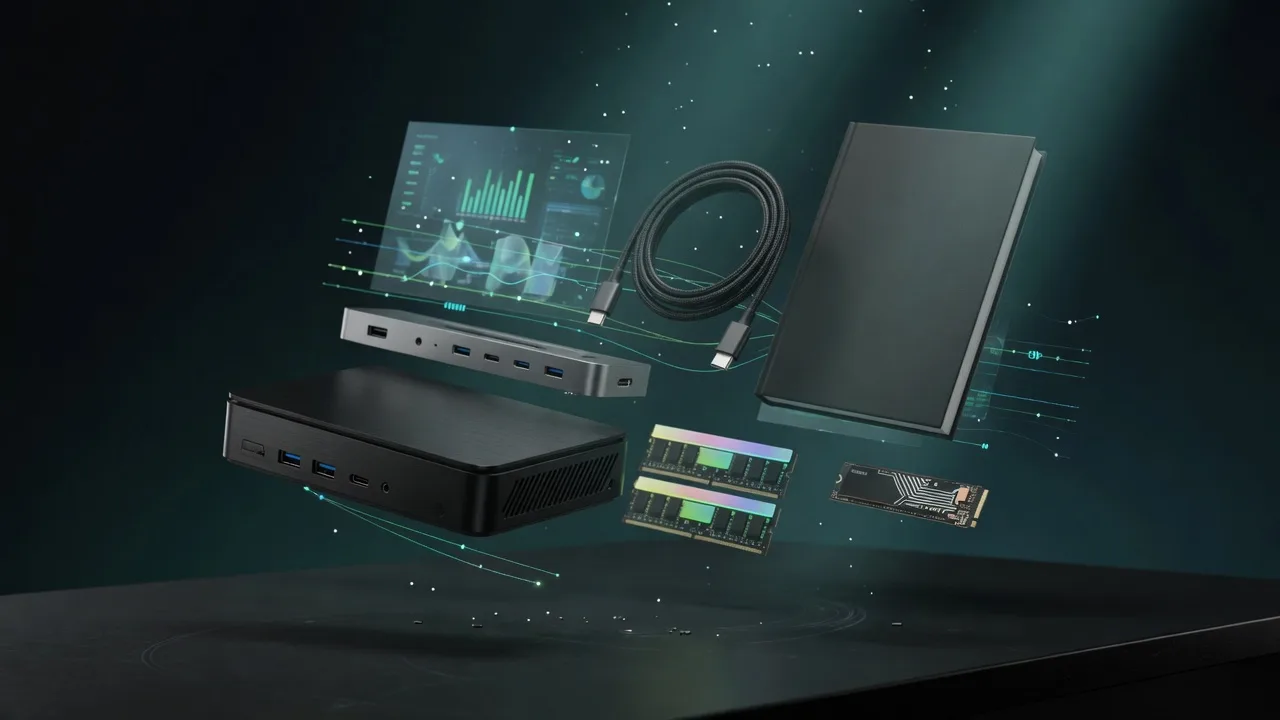
Also in Our Store
Docks, fast storage, cables, and a UPS sized for a local AI machine.

Rent this class of GPU by the hour before you buy. Live prices from RunPod and Vast.ai.

Find the break-even between buying this hardware and paying for a cloud API.
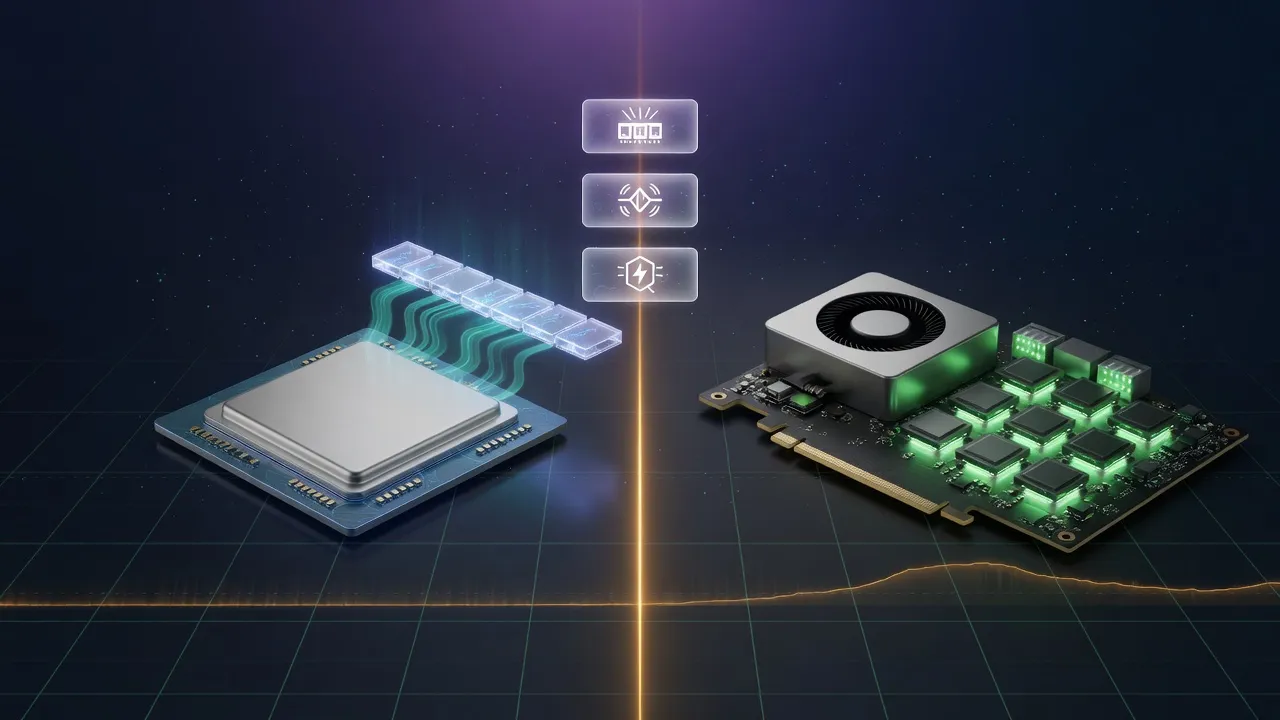
Mac vs NVIDIA for local inference, if you are still choosing a platform.
