
- Services
Advertising disclosure: we earn commissions when you shop through the links below.
GIGABYTE's AI TOP ATOM ATAGB10-9003 is an on-premise AI system built on the NVIDIA GB10 Grace Blackwell Superchip with a 20-core Arm CPU and 128GB of unified LPDDR5x memory. It reaches up to 1 petaFLOP of FP4 AI performance and supports models up to 200 billion parameters. Storage is a 2TB M.2 NVMe SSD, and an NVIDIA ConnectX-7 NIC lets up to four units be clustered for a larger memory pool. It runs NVIDIA DGX OS and Ubuntu Linux with GIGABYTE's AI TOP Utility for fine-tuning, inference and deployment, at an expected price of around 1,330,000 yen.
Sized for production serving of 70B–200B class models at full or lightly-quantized precision. Overkill for a homelab; right call when the workload pays for itself in token volume.
Generated from this product’s spec sheet. Editor reviews refine it over time.
The AI TOP ATOM ATAGB10-9003 is a compact, workstation-class on-premise AI accelerator built around NVIDIA's GB10 Grace Blackwell Superchip. Encased in a miniature 1-liter chassis weighing just 1.2 kg, this system bridges the gap between power-hungry dual-socket enterprise servers and consumer desktop workstations. Designed for researchers, AI engineers, and development teams requiring local model execution without cloud dependencies, the machine delivers up to 1 petaFLOP of FP4 compute while operating off a standard 240W external power adapter.
At the center of the platform is an integrated heterogeneous architecture pairing a 20-core Arm CPU (10 Cortex-X925 performance cores and 10 Cortex-A725 efficiency cores) with an NVIDIA Blackwell GPU. Crucially, the system utilizes 128GB of unified LPDDR5x memory operating on a 256-bit bus, giving the GPU direct, zero-copy access to the entire memory pool. With dual 200 Gbps QSFP ConnectX-7 network ports integrated on board, up to four units can be clustered together to expand the unified memory footprint across multiple nodes.
For teams searching for the best hardware for running AI models locally, the AI TOP ATOM ATAGB10-9003 targets the growing demand for private, high-capacity inference engines. With a launch price expected around 1,330,000 yen, this system targets organizations deploying sensitive proprietary weights, hosting low-latency agent loops, or fine-tuning models up to 200 billion parameters directly on developer desks.
When evaluating the AI TOP ATOM ATAGB10-9003 for AI workloads, the hardware architecture departs from traditional discrete PCIe GPUs. The unified memory architecture eliminates host-to-device PCIe transfer bottlenecks, treating CPU and GPU memory as one coherent space.
The 128GB VRAM pool is the defining specification of this platform. It allows single-device execution of models that previously required two to four discrete RTX 4090 GPUs. However, practitioners must evaluate the trade-off between memory capacity and memory bandwidth. At 273 GB/s, the LPDDR5x interface does not match the 1,000+ GB/s found on discrete HBM or GDDR6X workstation cards like the RTX 6000 Ada.
Because autoregressive LLM inference is strictly memory-bandwidth bound during the token-generation phase, single-stream generation speeds will be lower than on discrete cards with narrower capacities. Conversely, the high compute density (1 petaFLOP FP4) and unified address space shine during high-batch inference, multi-agent parallel processing, and prefill / prompt processing where matrix multiplication saturates Blackwell Tensor Cores.
Having a 128GB GPU for AI in a 1-liter desktop opens up extensive flexibility for local deployment. Quantized weights, large context caches, and multi-model agent pipelines fit comfortably without offloading penalties to system RAM.
1+------------------------------------+------------------+---------------------+-------------------------------+2| Model | Quantization | VRAM Footprint (GB) | Est. Tokens/sec (Generation) |3+------------------------------------+------------------+---------------------+-------------------------------+4| Llama 3.1 8B | FP16 / BF16 | ~18 GB | 28 - 35 tok/s |5| Qwen 2.5 32B | Q8_0 | ~36 GB | 7 - 9 tok/s |6| Llama 3.1 70B | Q4_K_M | ~43 GB | 5 - 6 tok/s |7| Llama 3.1 70B | Q8_0 | ~75 GB | 3 - 4 tok/s |8| Mixtral 8x22B (39B active) | Q4_K_M | ~80 GB | 5 - 7 tok/s |9| Qwen 2.5 72B | Q4_K_M | ~45 GB | 5 - 6 tok/s |10| DeepSeek-R1 (Distill 70B) | Q4_K_M | ~44 GB | 5 - 6 tok/s |11| Dense 120B - 140B Parameter Models | FP4 / INT4 | ~70 - 85 GB | 2 - 3 tok/s |12| Dual-Unit Cluster: 200B Models | FP4 / INT4 | ~130 - 150 GB | 3 - 5 tok/s (interconnected) |13+------------------------------------+------------------+---------------------+-------------------------------+
For single-unit deployments, 4-bit and 8-bit formats represent the most practical configurations:
The AI TOP ATOM ATAGB10-9003 addresses specific operational bottlenecks that standard desktop workstations cannot handle.
Teams deploying multi-agent architectures (AutoGPT, CrewAI, LangGraph) benefit directly from the unified 128GB footprint. Instead of managing multiple discrete GPUs, developers can host a 70B routing model alongside multiple smaller utility models (embeddings, rerankers, code assistants) on a single physical node without context paging thrash. It is among the best hardware for local AI agents 2026 demands.
Organizations handling medical data, legal discovery, or proprietary source code cannot utilize third-party API endpoints. The combination of NVIDIA DGX OS, GIGABYTE AI TOP Utility, and 2TB NVMe storage provides a secure, fully auditable platform for on-premise execution that easily mounts into existing IT infrastructure.
For environments needing to step beyond single-box memory limits, the dual 200 Gbps ConnectX-7 interfaces provide RDMA-assisted scaling. Connecting two to four units via QSFP cabling creates an aggregated memory pool of up to 512GB, enabling native execution of massive dense models up to 200 billion parameters without high-latency PCIe routing.
Understanding where the ATAGB10-9003 fits requires comparing it with both unified memory alternatives and multi-GPU workstation builds.
The Mac Studio has long been the default unified-memory desktop for local LLMs, offering 192GB memory at 800 GB/s bandwidth. While the Mac Studio provides faster per-token generation on single-stream inference due to its wider memory bus, the ATAGB10-9003 holds critical advantages for production developers:
A dual RTX 4090 system delivers much higher memory bandwidth (1,008 GB/s per card) and fast generation speeds for models under 48GB. However:
For engineers evaluating Unknown hardware for AI development or turnkey Grace Blackwell platforms, the AI TOP ATOM ATAGB10-9003 delivers unmatched VRAM density per liter and per watt, serving as a powerful desktop deployment platform for large-scale local AI.
The top models this device can run at 4-bit, ranked by fit and speed.
| Model | Grade | Speed | VRAM |
|---|---|---|---|
| Nemotron 3.5 Bolt 74B-A9B 24GBNVIDIA | SS | 36.5 tok/s | 43.7 GB |
| NVIDIA Nemotron 3.5 Bolt 74B-A9B 24GBNVIDIA | SS | 36.5 tok/s | 43.7 GB |
| Qwen3-30B-A3BAlibaba | SS | 40.8 tok/s | 21.0 GB |
| Holo4-35B-A3BHcompany | SS | 94.0 tok/s | 20.9 GB |
| Nemotron 3.5 LightningNvidia | SS | 94.0 tok/s | 18.0 GB |
Also in Our Store
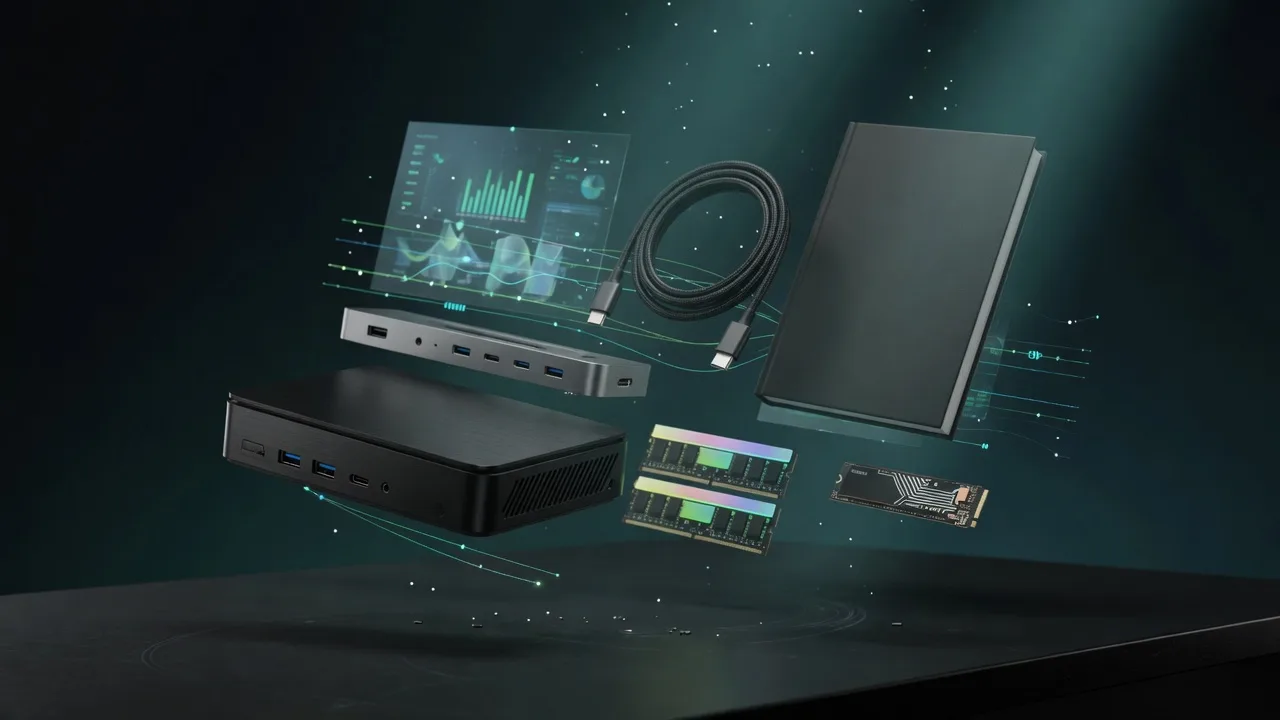
Docks, fast storage, cables, and a UPS sized for a local AI machine.

Rent this class of GPU by the hour before you buy. Live prices from RunPod and Vast.ai.
Find the break-even between buying this hardware and paying for a cloud API.
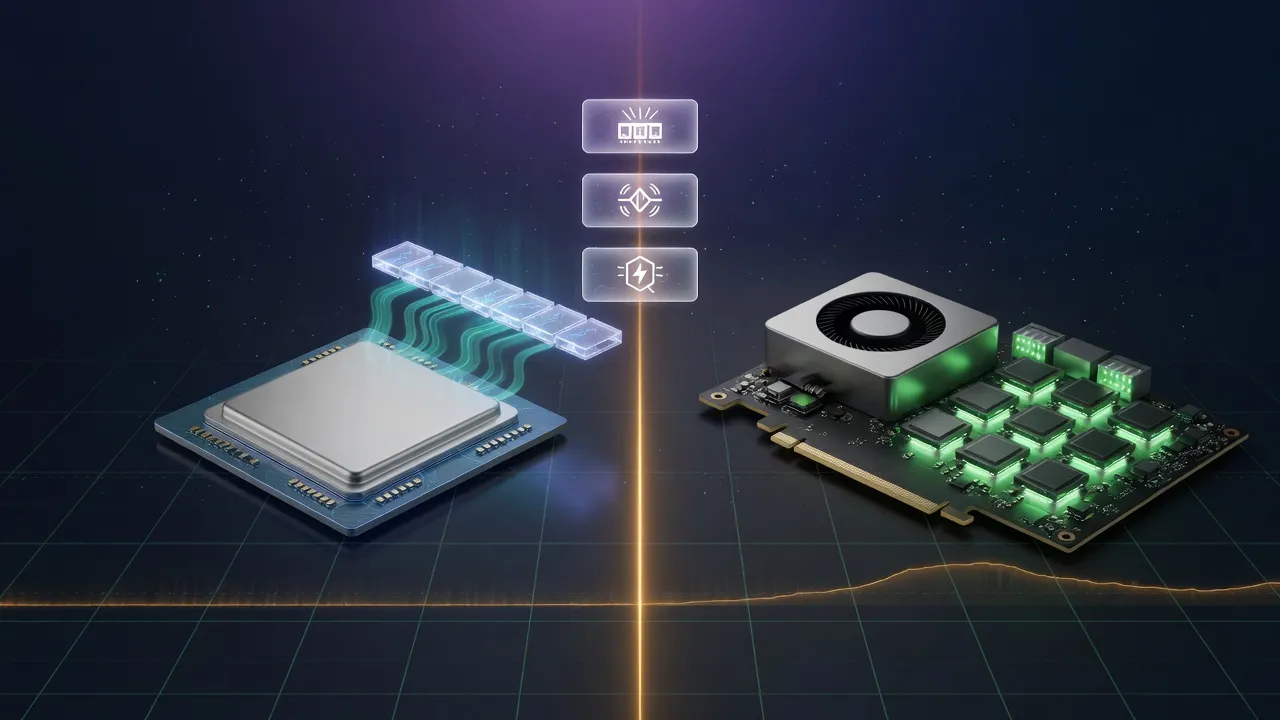
Mac vs NVIDIA for local inference, if you are still choosing a platform.
