
- Services
Advertising disclosure: we earn commissions when you shop through the links below.
NVIDIA's RTX Spark N1X is a Windows PC superchip that pairs a Blackwell RTX GPU with a 20-core Grace CPU on one die, sharing silicon with GB10. It is offered in laptop and desktop versions with up to 128GB of unified LPDDR5X memory and up to 1 petaflop of FP4 AI compute, aimed at running large language models and local AI agents on Windows 11. Laptops launched on October 16, 2026 from ASUS, Dell, HP, Lenovo, Microsoft and MSI. Pricing was not announced.
Sized for production serving of 70B–200B class models at full or lightly-quantized precision. Overkill for a homelab; right call when the workload pays for itself in token volume.
Generated from this product’s spec sheet. Editor reviews refine it over time.
The RTX Spark N1X is an Arm-based Windows PC superchip engineered specifically to run local AI workloads without the power draw or footprint of a dedicated multi-GPU rack. Architecturally sharing silicon with the enterprise GB10 design, the N1X integrates a Blackwell-generation RTX GPU and an Arm-based 20-core NVIDIA Grace CPU onto a single package via an ultra-high-speed NVLink-C2C interconnect. With system configurations offering up to 128GB of unified LPDDR5X memory, it provides practitioners with an unprecedented amount of shared memory pool inside Windows 11 portable and compact desktop systems.
This silicon sits squarely in the high-end workstation and prosumer tier. Historically, running large open-weights models required either tethering to cloud APIs, building high-draw multi-card desktop rigs, or moving to Apple Silicon to access high-capacity unified memory. By bringing a unified memory architecture directly to the native CUDA runtime, the N1X challenges conventional desktop constraints. OEM laptop designs from ASUS, Dell, HP, Lenovo, Microsoft, and MSI bring this architecture to mobile workstations, while 140W desktop implementations target compact deskside inference nodes.
For practitioners searching for Unknown hardware for AI development, the RTX Spark N1X represents a distinct architectural shift: bringing full CUDA 12.1 compatibility, fifth-generation Tensor Cores, and FP4 quantization support into a single low-power SoC. Deploying the RTX Spark N1X for AI eliminates the conventional PCIe bottleneck between CPU and system RAM, treating the entire memory pool as addressable VRAM for generative models and autonomous agents.
The compute engine of the flagship N1X package pairs a 6144-core Blackwell RTX GPU with a 20-core Grace CPU, delivering up to 1 petaflop of FP4 AI compute. A lower-tier laptop configuration steps down to a 5120-core GPU and an 18-core Grace CPU, outputting 827 teraflops of FP4 compute. Mobile implementations also feature a dedicated NPU to offload background operating system tasks, preserving primary GPU compute for inference passes.
The decisive specification for RTX Spark N1X AI inference performance is its memory architecture. While standard desktop discrete GPUs cap out at 24GB or 32GB of GDDR memory, the N1X routes the GPU directly to the unified LPDDR5X pool. A 128GB GPU for AI in a mobile chassis allows developers to allocate over 100GB strictly to weights and KV caching. Because memory is shared via NVLink-C2C, prompt ingestion and prefill operations benefit from coherent access between the 20 Grace CPU cores and the Blackwell Tensor Cores, keeping power usage between 45W and 80W on mobile platforms.
Having access to massive RTX Spark N1X VRAM for large language models radically shifts the boundary of what can run locally on a portable system. Memory capacity determines model fit, while memory bandwidth dictates token generation throughput.
The N1X functions as dedicated, portable hardware for running 70B parameter models.
The sweet spot for RTX Spark N1X local LLM deployment is 4-bit (INT4/FP4) execution for 70B models and FP8 execution for 32B models, maximizing throughput while preserving baseline precision.
The RTX Spark N1X is designed for specific professional and enthusiast workflows:
Evaluating the RTX Spark N1X requires comparing it against the two dominant local AI paradigms: Apple Silicon unified systems and traditional discrete multi-GPU x86 desktops.
The most direct competitor to the N1X mobile workstation is Apple's M4 Max configured with 128GB of unified memory. Apple Silicon relies on the Metal framework and MLX for local execution, offering exceptionally high memory bandwidth. However, the N1X holds a crucial software advantage: native CUDA 12.1 support and TensorRT-LLM integration. Most open-source AI libraries, agent frameworks, and cutting-edge research repositories prioritize the NVIDIA software stack. For engineers whose pipelines rely strictly on CUDA kernels, vLLM, or TensorRT-LLM, the N1X avoids the translation layers and compatibility gaps often encountered outside the CUDA ecosystem.
To achieve comparable VRAM on a traditional x86 desktop, builders must install dual 24GB GPUs (yielding 48GB total via pipeline parallelism) or look to costly enterprise-grade workstation cards. A dual-GPU rig easily pulls 600W to 900W from the wall and requires specialized cooling, large power supplies, and bulky enclosures. In contrast, the N1X desktop variant draws just 140W while offering 128GB of contiguous memory, eliminating the complexities of splitting model layers across PCIe slots. While high-end discrete GPUs offer higher peak memory bandwidth across dedicated GDDR memory buses, the N1X wins decisively on power efficiency, system footprint, and total unified addressable space.
For practitioners looking for the best hardware for running AI models locally within a self-contained, power-efficient form factor, the RTX Spark N1X serves as a uniquely capable choice, standing out as the best AI chip for local deployment on Windows.
The top models this device can run at 4-bit, ranked by fit and speed.
Specs not available for scoring. This product is missing VRAM or memory bandwidth data.
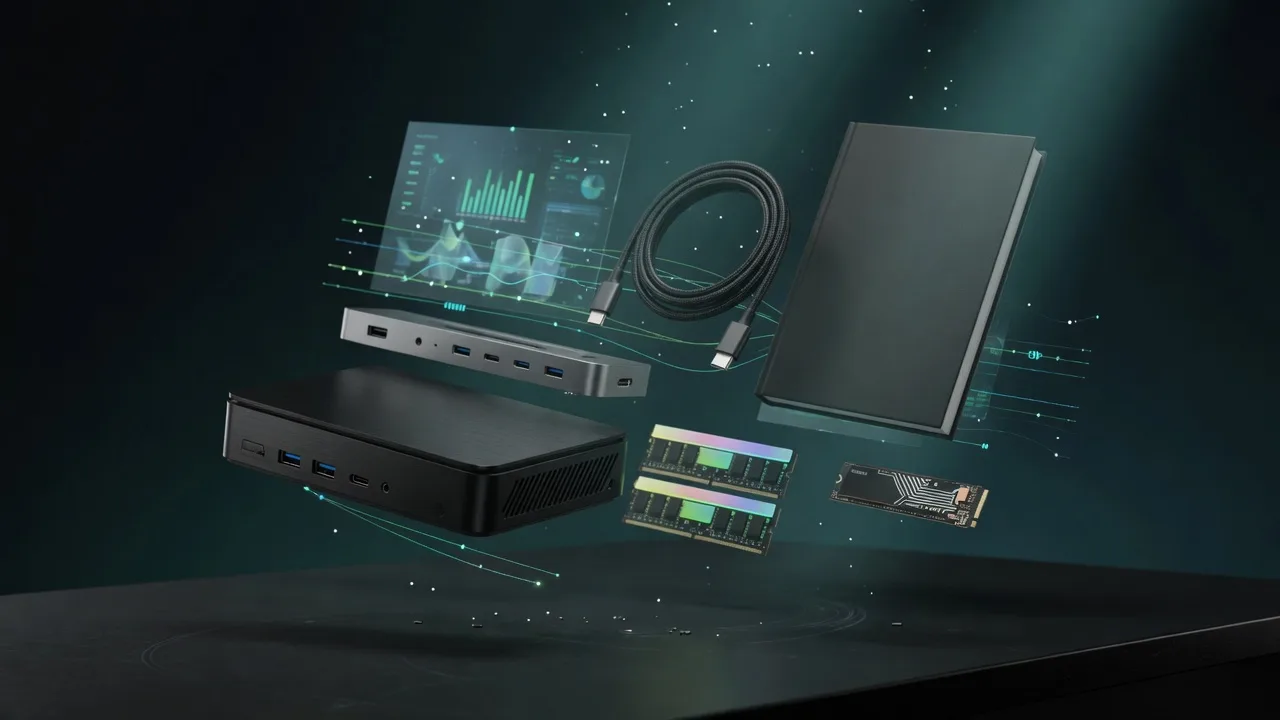
Also in Our Store
Docks, fast storage, cables, and a UPS sized for a local AI machine.

Rent this class of GPU by the hour before you buy. Live prices from RunPod and Vast.ai.

Find the break-even between buying this hardware and paying for a cloud API.
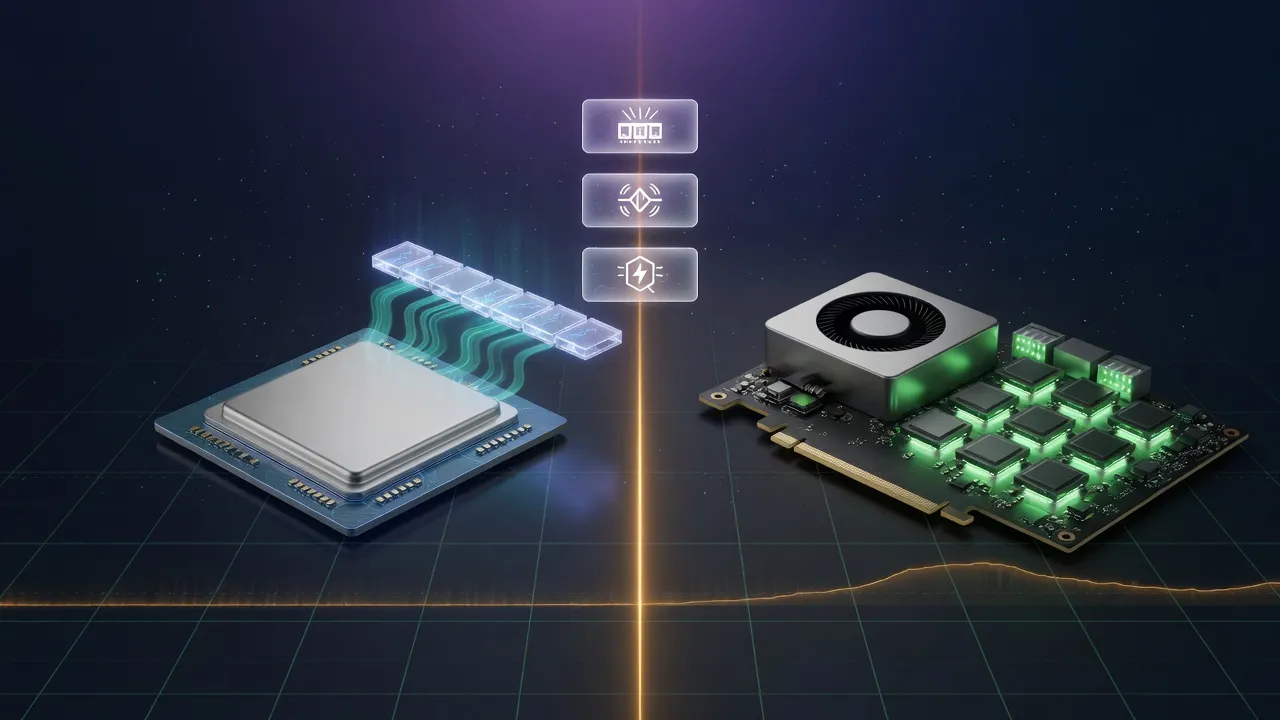
Mac vs NVIDIA for local inference, if you are still choosing a platform.
