- Services
Advertising disclosure: we earn commissions when you shop through the links below.
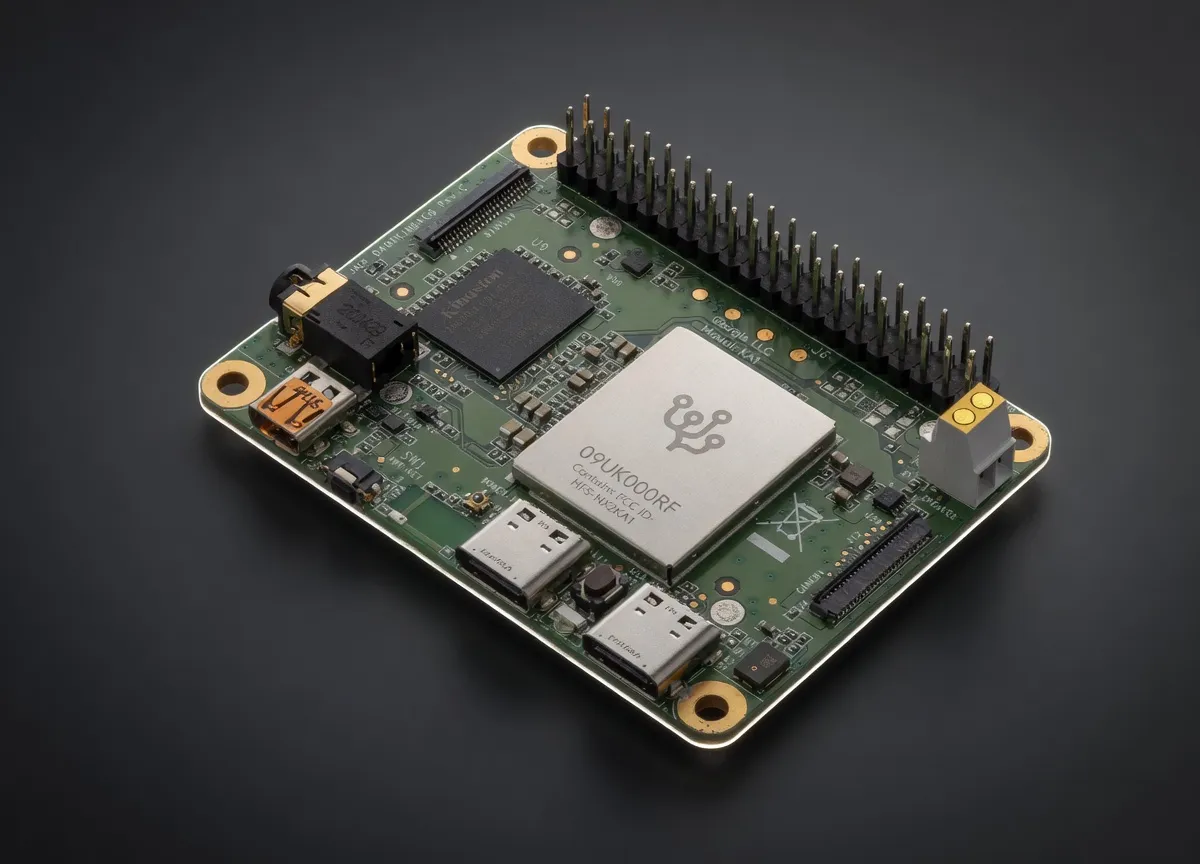
Raspberry Pi-sized single-board computer with NXP i.MX 8M SoC and on-board Edge TPU. Full development platform for prototyping edge ML products with camera, display, and wireless connectivity.
Below 8 GB the practical model menu is small (sub-3B distilled models, classic CV/ASR). Useful in robotics or low-power edge contexts, not for general LLM work.
Generated from this product’s spec sheet. Editor reviews refine it over time.
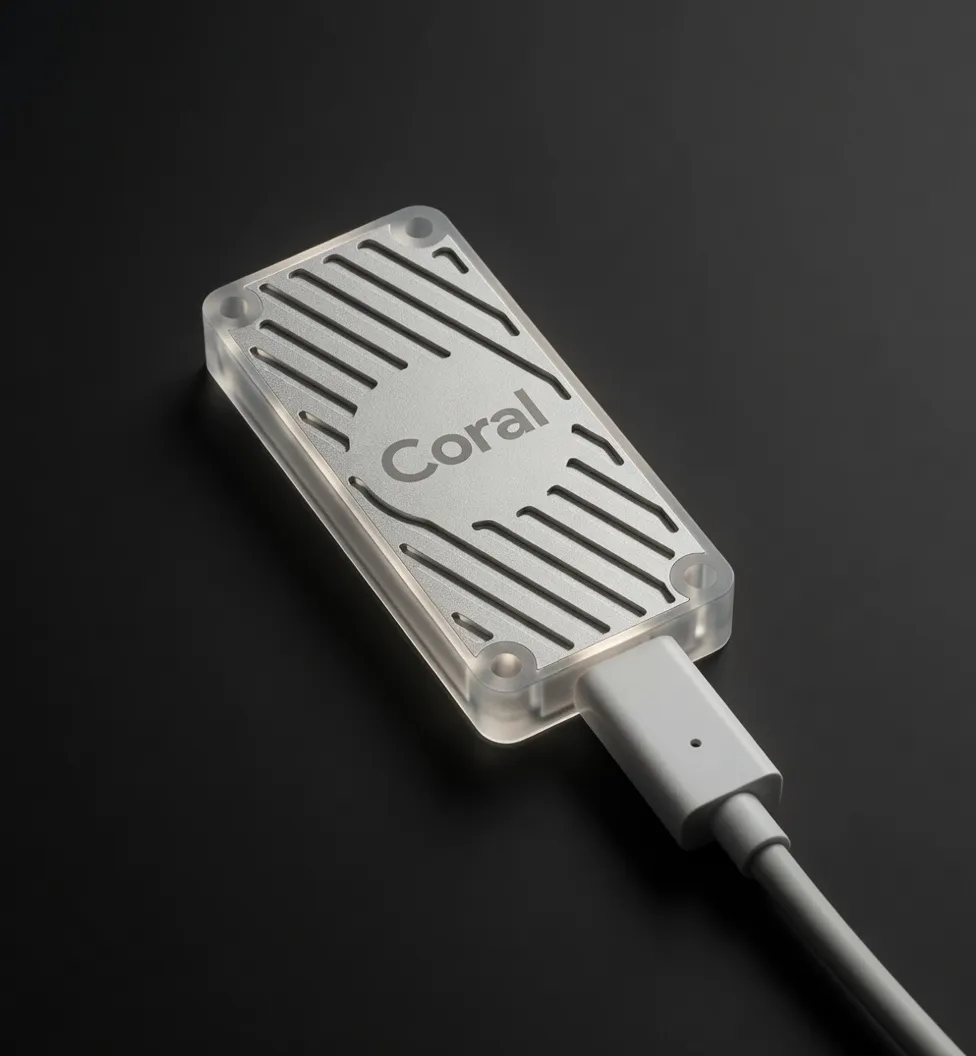
The Google Coral Dev Board is a purpose-built single-board computer (SBC) designed specifically for high-speed machine learning inference in power-constrained environments. Manufactured by Google, it serves as a complete development platform for the Edge TPU (Tensor Processing Unit), a small ASIC designed to provide high-performance ML inference with a low power footprint. In the landscape of Google edge devices for AI development, the Dev Board stands as the flagship evaluation kit, offering a more integrated experience than the USB Accelerator by providing a dedicated NXP i.MX 8M SoC alongside the TPU.
Positioned in the budget-friendly edge tier, the Coral Dev Board competes directly with the Raspberry Pi 5 (when paired with an AI kit) and the NVIDIA Jetson Orin Nano. However, while NVIDIA focuses on general-purpose GPU compute, Google has optimized this board for a very specific workload: INT8 quantized vision models. For practitioners building autonomous workflows or real-time computer vision pipelines, the Coral Dev Board offers a unique balance of 4 TOPS (Trillions of Operations Per Second) performance at a mere 5W TDP, making it one of the best edge devices for running AI models locally where thermal overhead and energy efficiency are primary constraints.
The core of the Google Coral Dev Board's value proposition is the integrated Edge TPU. While the NXP i.MX 8M handles the system tasks and OS (Mendel Linux), the TPU offloads the heavy lifting of tensor math.
The Google Coral Dev Board AI inference performance is rated at 4 TOPS for INT8 operations. Unlike general-purpose GPUs that handle FP16 or FP32 calculations, the Edge TPU is strictly an INT8 accelerator. This requires models to be quantized before deployment. When running optimized models, the throughput is exceptional for its class; for example, it can execute MobileNet v2 at over 100 FPS.
The board features 1GB LPDDR4 VRAM. For developers used to desktop GPUs, this may seem limiting, but it is important to understand the architecture. The Edge TPU uses local SRAM to cache model parameters during execution. The 1GB system memory is shared, meaning it must house the OS, the application logic, and the model tensors. Because the TPU is designed for "streaming" inference of smaller, quantized models, the memory bandwidth is sufficient for vision tasks but serves as a hard ceiling for larger architectures.
At a 5W TDP, the Coral Dev Board is significantly more efficient than a Jetson Orin Nano (which scales from 7W to 15W). This makes it the best AI chip for local deployment in battery-powered or solar-powered remote sensing equipment.
| Feature | Specification |
|---|---|
| AI Accelerator | Google Edge TPU (4 TOPS INT8) |
| SoC | NXP i.MX 8M (Quad Cortex-A53) |
| Total VRAM | 1 GB LPDDR4 |
| Storage | 8GB eMMC (expandable via MicroSD) |
| TDP | 5 Watts |
| Framework | TensorFlow Lite |
When evaluating the Google Coral Dev Board for AI, it is critical to distinguish between vision-based "Edge AI" and the recent trend of Large Language Models (LLMs).
The Dev Board is optimized for hardware for running MobileNet/Inception-class vision models. It excels at:
These models typically have parameter counts ranging from 2M to 25M. On the Coral Dev Board, these models run with sub-10ms latency, enabling real-time processing of the MIPI CSI-2 camera feed.
A common question for best hardware for local AI agents 2025 is whether this board can run LLMs like Llama 3.1 or Qwen 2.5. The short answer is: No, not effectively.
The Google Coral Dev Board VRAM for large language models is insufficient. With only 1GB of total system memory and an accelerator that does not support the floating-point operations required by most LLM kernels, you cannot run a 7B parameter model. Even a highly compressed 1B parameter model would struggle due to the INT8 requirement and the lack of specialized ops in the Cape compiler for transformer architectures. If your goal is Google Coral Dev Board tokens per second for a chatbot, you will be disappointed; this device is designed for pixels, not tokens.
For autonomous workflows, the Dev Board acts as the "eyes." It can run a vision model locally to detect an event (e.g., a specific tool being picked up in a factory) and then trigger a call to a more powerful central LLM. This "Edge-to-Cloud" or "Edge-to-Local-Server" architecture is the standard for professional agentic deployments.
The Coral Dev Board is the go-to for engineers moving from a prototype to a pilot. Its ability to handle high-resolution video streams via the MIPI-CSI interface and output results via GPIO or USB 3.0 makes it ideal for:
For teams building AI-powered products, the Dev Board provides a "production-ready" environment. Because the SOM (System on Module) is removable, developers can prototype on the Dev Board and then transition to a custom carrier board using the same SOM for mass production.
This is an inference-only device. You do not train models on the Coral Dev Board. The workflow involves training a model in TensorFlow on a workstation or cloud instance, quantizing it to INT8, and compiling it specifically for the Edge TPU using the Coral compiler.
The Jetson Orin Nano (8GB) is significantly more powerful and flexible. It supports FP16, allows for running LLMs like Llama 3 (at ~10-15 tps), and supports the full CUDA stack. However, it costs nearly $500 for the developer kit. The Coral Dev Board at $130 is a budget-friendly alternative for users who only need vision inference and want to minimize power draw. Pick the Coral if your model is already a MobileNet/SSD variant; pick the Jetson if you need to run PyTorch natively or require more than 1GB GPU for AI.
The Raspberry Pi 5 with the M.2 AI Kit (which uses a Hailo-8L chip) is the closest competitor in 2025. The Hailo-8L offers 13 TOPS, outperforming the Coral's 4 TOPS. However, the Coral ecosystem is more mature for TensorFlow Lite users, and the Mendel Linux environment is specifically tuned for the Edge TPU, whereas the Pi is a general-purpose Linux machine. The Coral Dev Board remains a more "integrated" appliance-like experience for dedicated AI tasks.
For practitioners looking for the best edge device for autonomous workflows that rely heavily on vision, the Google Coral Dev Board remains a gold standard for power-per-watt efficiency in the INT8 space.
The top models this device can run at 4-bit, ranked by fit and speed.
Specs not available for scoring. This product is missing VRAM or memory bandwidth data.
Also in Our Store
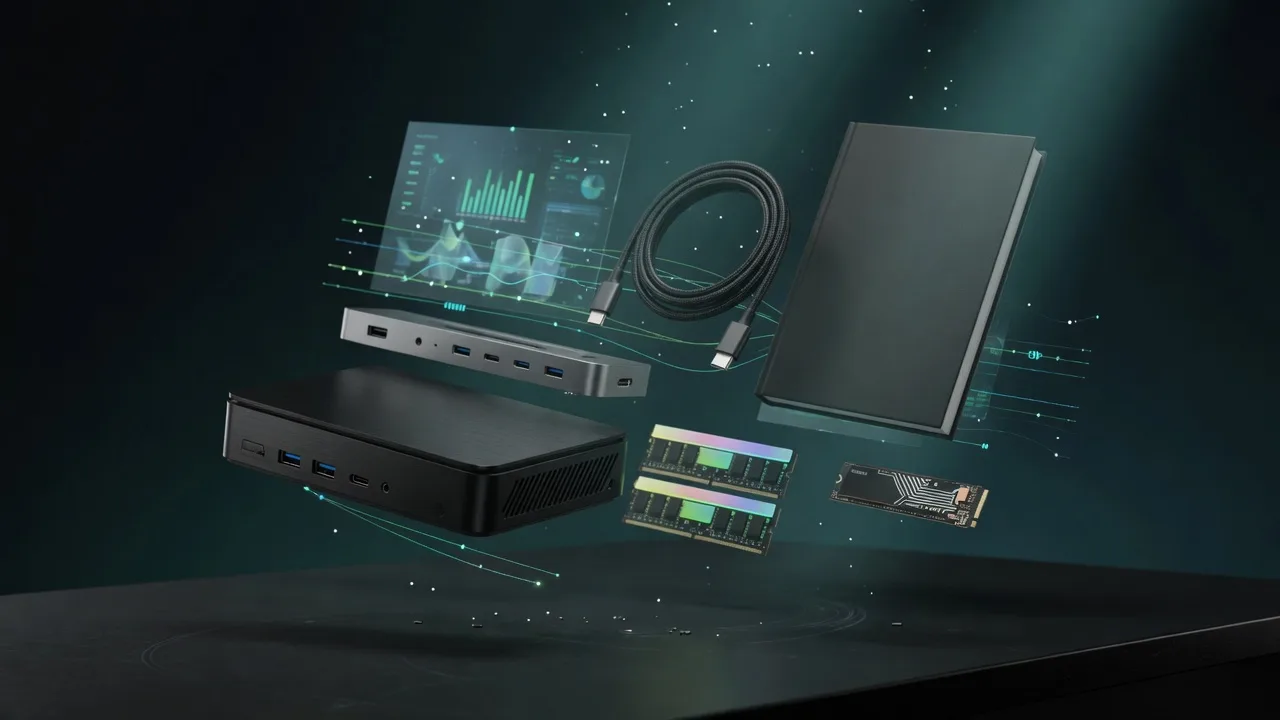
Docks, fast storage, cables, and a UPS sized for a local AI machine.
Rent this class of GPU by the hour before you buy. Live prices from RunPod and Vast.ai.
Find the break-even between buying this hardware and paying for a cloud API.
Mac vs NVIDIA for local inference, if you are still choosing a platform.