- Services
Advertising disclosure: we earn commissions when you shop through the links below.
Apple's Mac mini with the M6 chip, announced August 25, 2026 and available September 22, 2026. It is a compact desktop aimed at everyday work and always-on on-device AI workloads, with a 12-core CPU, 12-core GPU with Neural Accelerators, a dual 16-core Neural Engine and 153GB/s memory bandwidth. Base configuration is 16GB unified memory and a 256GB SSD, starting at $899. Apple claims up to 4x faster AI performance and 40 percent faster CPU performance than the previous model.
Good balance for indie developers running local copilots and chat. 30B+ models are reachable but only with aggressive quantization and short context.
Generated from this product’s spec sheet. Editor reviews refine it over time.
Apple's Mac mini (M6) is the 2026 refresh of the company's smallest desktop, announced August 25, 2026 and shipping September 22, 2026. It starts at $899 with 16GB of unified memory and a 256GB SSD. The directory entry lists the manufacturer as unknown, but this is Apple's machine through and through: a 5 x 5 inch aluminum box with the power supply built in, sitting in the consumer-to-prosumer tier rather than the workstation or data center tier.
For AI work, the interesting part is not the CPU. It's the memory architecture. The M6 pairs a 12-core CPU (2 super cores, 4 performance cores, 6 efficiency cores) with a 12-core GPU that includes Neural Accelerators and hardware ray tracing, plus a dual 16-core Neural Engine. All of it draws from a single 16GB unified memory pool at 153GB/s. That pool behaves like a 16GB GPU for AI workloads, with the caveat that macOS reserves a slice for the operating system, so your practical model budget is closer to 11GB-12GB out of the box. Configure to 24GB or 32GB at purchase and that ceiling rises accordingly. Memory is soldered, so decide before you buy.
This machine exists because of a specific shift: agentic frameworks turned the previous Mac mini into a scarce commodity through 2026, and Apple responded with a chip that leans harder into on-device inference. Apple claims up to 4x faster AI performance and 40 percent faster CPU performance than the previous model. Reviewers broadly confirm the generational jump while flagging the $300 price increase over the $599 M4 base model as the real story.
The specs that determine inference behavior:
Bandwidth is the number that governs token generation. Decoding a transformer is memory-bound: every token requires reading the model weights once. At 153GB/s, an 8B model quantized to roughly 4.9GB has a theoretical ceiling near 31 tokens/sec, and real-world throughput typically lands in the 20-25 tokens/sec range once KV cache traffic, sampling, and framework overhead are included. Larger models scale down almost linearly with size.
Compute matters for prompt processing rather than generation. The 12-core GPU with Neural Accelerators handles prefill, and the dual 16-core Neural Engine is the right target for Core ML workloads: Whisper transcription, Vision framework pipelines, image generation, and anything Apple ships through its own inference stack. If you are running llama.cpp or MLX, the GPU is doing the work; the Neural Engine mostly sits idle. That is normal and not a defect, but it means the 32 Neural Engine cores should not be counted as general-purpose LLM throughput.
Efficiency is the quiet advantage. The Mac mini idles in the single-digit watts and pulls roughly 40W-60W under sustained inference load. A discrete-GPU tower delivering comparable small-model throughput draws several times that. For an always-on agent host, that difference shows up on your power bill and in the noise floor of the room.
At the 16GB base configuration, with roughly 11GB-12GB realistically available to the model:
The 32GB configuration opens up 32B-class models such as Qwen 2.5 32B at Q4 (~20GB) and DeepSeek-R1-Distill-Qwen-32B, with usable context remaining. That is the configuration most local-LLM users should target if the budget allows.
Quantization sweet spot: Q4_K_M is the right default. It costs roughly 2-4 percent quality against Q8 on most benchmarks while cutting memory footprint in half, which is the difference between running a 14B model and running an 8B one. Drop to Q5_K_M or Q6_K only when the model still fits after the upgrade; on a 16GB machine, that usually means staying at 7B-8B.
Multimodal and long context: vision-language models in the 7B-8B range (Qwen2.5-VL 7B, Llama 3.2 11B Vision at Q4) run, though image encoding adds latency. Long-context work is where 16GB hurts: an 8B model at 32K context can add several gigabytes of KV cache, so aggressive context windows push you toward the 24GB or 32GB configurations.
This is the best hardware for local AI agents in 2026 at the sub-$1,000 tier, provided your agents run 8B-14B models. Concretely:
Training is out of scope. LoRA fine-tunes on models up to about 3B are possible but slow. Anything beyond that belongs on rented GPUs or a workstation with discrete accelerators. Buy this for inference and deployment, not for training.
Versus an NVIDIA RTX 5060 Ti 16GB build: a comparable PC lands near or above $1,000 once you add CPU, board, RAM, PSU, and case. You gain CUDA, which matters if you need vLLM, TensorRT-LLM, or serious fine-tuning. You lose the 5 x 5 inch footprint, the near-silent operation, and the efficiency. If your stack is CUDA-native, build the PC. If it is Metal, MLX, or Core ML, take the Mac.
Versus the previous M4 Mac mini at $599: the M4 remains the value pick if you can find one. The M6 delivers meaningfully better AI throughput and a wider core mix, but the $300 gap is real. Buy the M6 if AI inference is the primary workload; buy the M4 if it is a side task.
Versus AMD Strix Halo mini PCs: those offer up to 128GB of unified memory and can run 70B models, which the Mac mini cannot at any configuration. They cost considerably more and their software stack is less mature than MLX or llama.cpp on Apple Silicon. If 70B local inference is a hard requirement, that is the category to shop, not this one.
The top models this device can run at 4-bit, ranked by fit and speed.
| Model | Grade | Speed | VRAM |
|---|---|---|---|
| Holo4-35B-A3BHcompany | SS | 52.7 tok/s | 2.3 GB |
| LFM2.5-8B-A1BLiquid AI | AA | 42.4 tok/s | 2.9 GB |
| Qwen3-30B-A3BAlibaba | AA | 22.9 tok/s | 5.4 GB |
| AliceAI-Foundation-80B-A3B-Baseyandex | AA | 14.4 tok/s | 8.5 GB |
| North Mini CodeCohere | AA | 14.7 tok/s | 8.4 GB |
Also in Our Store
Docks, fast storage, cables, and a UPS sized for a local AI machine.
Rent this class of GPU by the hour before you buy. Live prices from RunPod and Vast.ai.
Find the break-even between buying this hardware and paying for a cloud API.
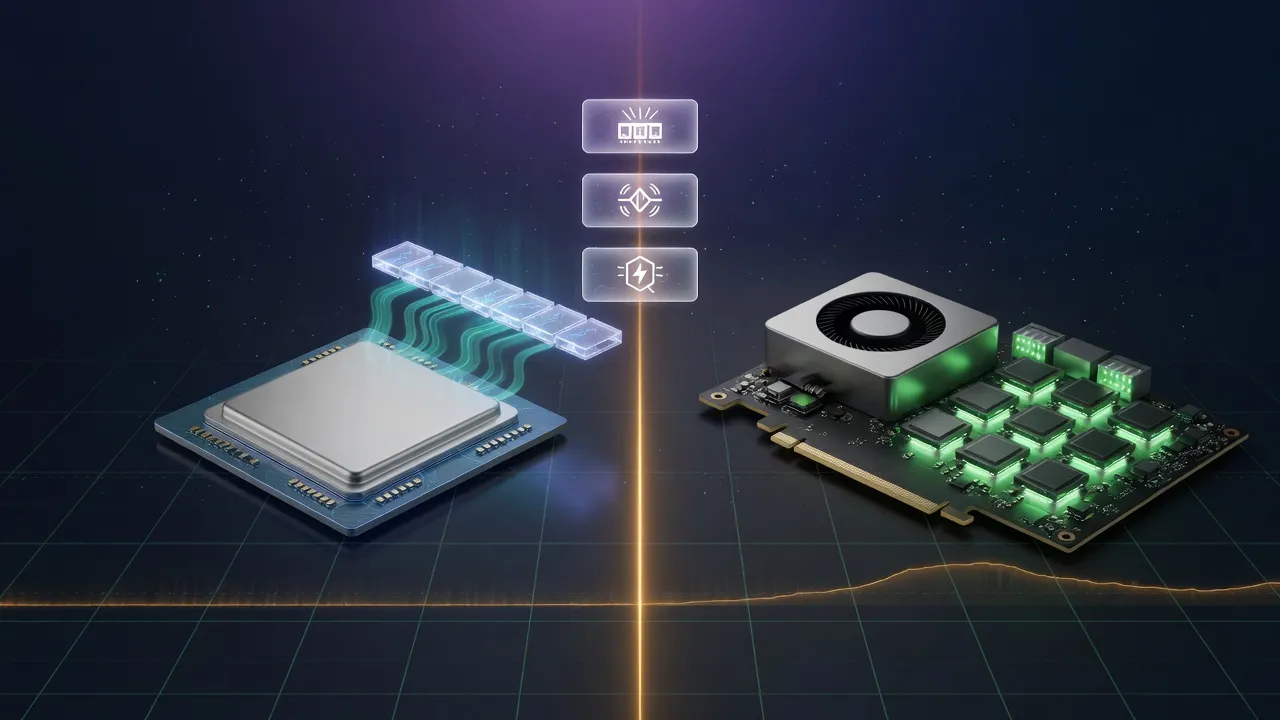
Mac vs NVIDIA for local inference, if you are still choosing a platform.