
- Services
Advertising disclosure: we earn commissions when you shop through the links below.
NVIDIA RTX A2000 is a compact Ampere workstation GPU announced by NVIDIA in August 2021. It has 3,328 CUDA cores, 104 Tensor Cores, 26 RT Cores and 6 GB of GDDR6 memory with ECC. The low-profile dual-slot card uses 70 W and provides 288 GB/s memory bandwidth. It launched at $450 for professional visualization and AI-accelerated workstation workloads.
Manufacturer's suggested retail price. Current prices can be higher or lower. This is not a live price.
Below 8 GB the practical model menu is small (sub-3B distilled models, classic CV/ASR). Useful in robotics or low-power edge contexts, not for general LLM work.
Generated from this product’s spec sheet. Editor reviews refine it over time.
The NVIDIA RTX A2000 is an entry-level workstation graphics card built on NVIDIA's Ampere architecture. Released at an MSRP of $450, it targets small-form-factor (SFF) workstations, edge nodes, and low-power lab servers. The standout characteristic of the card is its packaging: it delivers modern Tensor Core compute and ECC-backed VRAM in a half-height, dual-slot form factor drawing just 70 W directly from the PCIe slot without external power cables.
For AI practitioners and engineers, the card occupies a specific niche. It is not designed to replace high-wattage desktop GPUs like the RTX 3080 or dedicated data center accelerators. Instead, deploying the NVIDIA RTX A2000 for AI makes sense when physical footprint, thermal constraints, and operational reliability take precedence over raw batch throughput. It brings workstation-grade stability, certified enterprise drivers, and 6 GB of error-correcting GDDR6 memory to machines that cannot house full-size, auxiliary-powered GPUs.
While hardware enthusiasts often cross-shop consumer cards, the RTX A2000 provides third-generation Tensor Cores and broad CUDA ecosystem support for edge AI inference, low-footprint background agents, and dedicated visual embedding models. When evaluating Unknown hardware for AI development or repurposing office-grade OEM desktops into lightweight inference boxes, the A2000 remains one of the few slot-powered options offering hardware-level reliability.
Understanding the A2000's real-world AI utility requires looking past traditional graphics metrics to memory capacity, bandwidth, and Tensor throughput.
In local LLM execution, token generation speed during the auto-regressive decoding phase is almost entirely memory bandwidth bound. At 288 GB/s over a 192-bit bus, the RTX A2000 outperforms lower-tier consumer cards that are bottlenecked on 128-bit interfaces. This allows it to offload intermediate-sized weights quickly. However, the hard ceiling remains its 6 GB capacity: once weights exceed this limit, offloading layers to system RAM over PCIe cuts token generation to single digits.
The 104 third-generation Tensor Cores provide hardware acceleration for mixed-precision math, supporting FP16, BF16, INT8, and INT4 data types through TensorRT and native PyTorch workflows. Delivering 63.9 Tensor TFLOPS within a 70 W thermal envelope yields exceptional efficiency per watt. In home servers, edge gateways, or 1U rackmount chassis where power consumption and heat dissipation matter, the RTX A2000 AI inference performance provides an optimal thermal profile compared to 200W+ enterprise boards.
When evaluating the NVIDIA RTX A2000 VRAM for large language models, the 6 GB buffer dictates strict boundaries. As a 6GB GPU for AI, the card cannot be used as hardware for running 70B parameter models in full or partial GPU offload; a 70B model requires at least 35 GB to 40 GB of VRAM even at INT4 quantization.
Instead, the card functions best with modern compact foundation models (1B to 8B parameters) running through runtimes like llama.cpp, Ollama, vLLM, or TensorRT-LLM.
Compact models fit completely inside the 6 GB VRAM pool alongside adequate context buffers:
Running 7B to 8B models on a 6 GB card requires aggressive quantization and strict limits on context lengths:
The A2000 excels at non-generative or narrow generative tasks:
For teams looking for the best hardware for local AI agents 2026 within small-form-factor deployments, the RTX A2000 operates as a low-profile worker. It can run dedicated 24/7 routing agents, triage inbound webhooks, and execute local tool calls without requiring external PCIe power lines or specialized thermal control.
Developers building software with local AI integrations can install the A2000 in compact office PCs (such as Dell OptiPlex, Lenovo ThinkCentre, or HP Elitedesk micro-towers). It provides a full CUDA development environment, allowing engineers to test TensorRT pipelines, write PyTorch modules, and run local LLM unit tests without incurring cloud API costs.
Unlike consumer GeForce models, the RTX A2000 includes ECC (Error-Correcting Code) memory. This feature prevents silent data corruption caused by memory bit flips. For industrial inference, medical imaging prototypes, or enterprise edge nodes operating unattended for months, ECC memory ensures long-term operational integrity.
This card is not suitable for model pre-training or standard fine-tuning of multi-billion parameter models. While parameter-efficient fine-tuning (PEFT/LoRA) is theoretically possible on models under 3B parameters using INT4 quantization (QLoRA), training memory overhead from gradients, activations, and optimizer states rapidly exceeds 6 GB. Its primary domain is inference and local development.
The RTX 3060 12GB is often viewed by hobbyists as the best hardware for running AI models locally on an entry-level budget.
The T1000 and T400 represent NVIDIA's previous Turing-based budget workstation options.
If you are looking for the best AI chip for local deployment where chassis volume is capped under 10 liters and power draw must stay strictly below 75 watts, the NVIDIA RTX A2000 remains one of the most capable, easily integrated low-profile GPUs available.
The top models this device can run at 4-bit, ranked by fit and speed.
| Model | Grade | Speed | VRAM |
|---|---|---|---|
| PersonaPlex 7BNVIDIA | SS | 48.4 tok/s | 4.8 GB |
| Llama 2 7B ChatMeta | SS | 48.4 tok/s | 4.8 GB |
| MiniCPM-V 4.7 1Bopenbmb | SS | 49.9 tok/s | 4.6 GB |
| Gemma 4 E2B ITGoogle | SS | 62.5 tok/s | 3.7 GB |
| MiniCPM5-2Bopenbmb | SS | 50.4 tok/s | 4.6 GB |
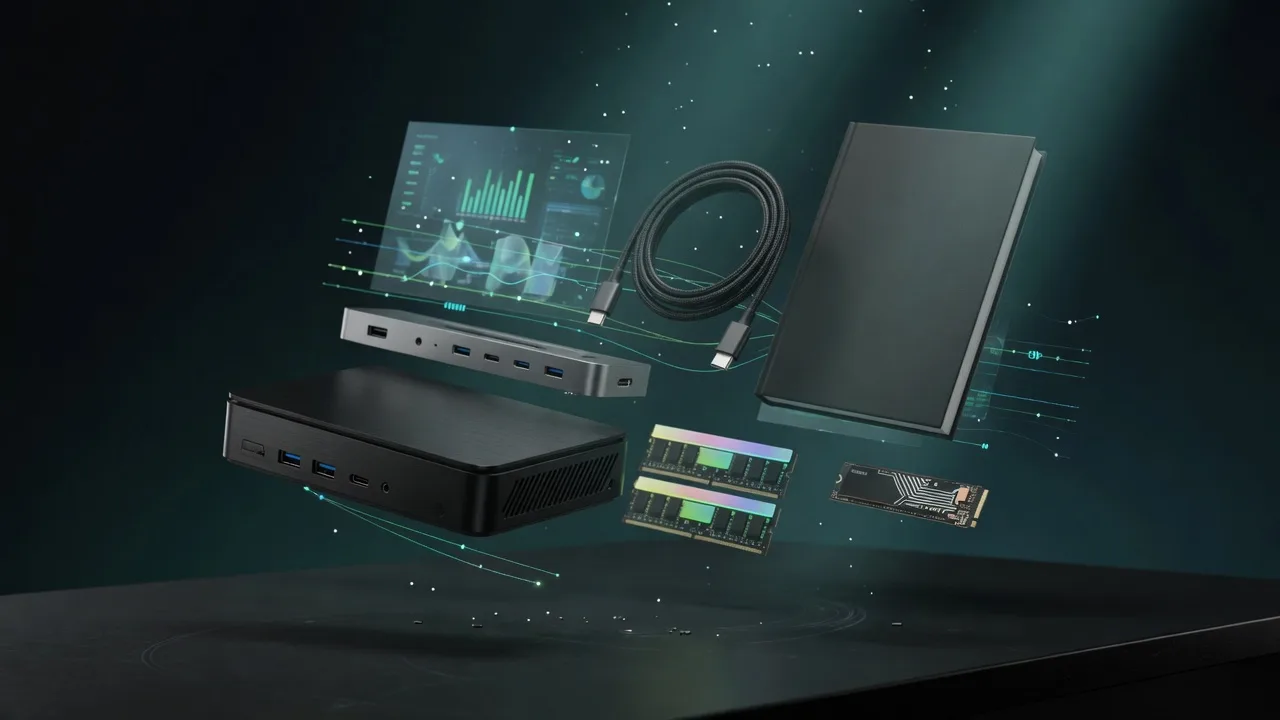
Also in Our Store
Docks, fast storage, cables, and a UPS sized for a local AI machine.
Rent this class of GPU by the hour before you buy. Live prices from RunPod and Vast.ai.
Find the break-even between buying this hardware and paying for a cloud API.
Mac vs NVIDIA for local inference, if you are still choosing a platform.
