- Services
Advertising disclosure: we earn commissions when you shop through the links below.
The ASUS XA P2N-E2 is a 2U NVIDIA MGX server announced at OCP Global Summit 2026 for agentic AI and reinforcement learning workloads. It runs on two NVIDIA Vera CPUs, each with 88 custom Olympus cores and 176 threads, and supports up to two dual-slot NVIDIA RTX PRO 6000 Blackwell Server Edition GPUs. The air-cooled chassis holds 16 SOCAMM2 memory modules, 8 hot-swap E1.S drive bays and 2+2 redundant 2000W 80 PLUS Titanium power supplies. Pricing and general availability were not announced.
The XA P2N-E2 represents a deliberate architectural pivot in high-density enterprise infrastructure: balancing massive GPU compute with dedicated high-throughput host execution. Engineered on the NVIDIA MGX modular specification, this 2U rackmount server is designed specifically to resolve the severe CPU bottlenecks that emerge in autonomous agentic loops, code execution sandboxes, and reinforcement learning environments. Rather than treating the host processor as a simple scheduler for accelerator tasks, the XA P2N-E2 pairs up to two dual-slot NVIDIA RTX PRO 6000 Blackwell Server Edition GPUs with two NVIDIA Vera CPUs, creating a platform capable of both heavy tensor mathematics and high-concurrency serialized logic.
For enterprise teams evaluating hardware for AI development, the system targets a tier well above prosumer workstations while bypassing the massive facility requirements of liquid-cooled 8-way HGX clusters. By integrating 176 custom Olympus cores across two sockets with up to 1.8 TB/s of coherent CPU-to-CPU bandwidth, the platform targets autonomous workloads where local agent execution involves running arbitrary Python scripts, orchestrating multi-step API chains, and handling vector parsing concurrently alongside model forward passes. It is engineered from the ground up as a candidate for the best hardware for local AI agents in 2026, delivering dense computing without abandoning standard enterprise air-cooling constraints.
Operating within a 2U chassis powered by 2+2 redundant 2000W 80 PLUS Titanium power supplies, the platform addresses total cost of ownership at the rack level. It bridges the gap between raw dense inference and real-world system orchestration, positioning itself against traditional dual-socket x86 AI servers that suffer from memory latency and thread contention when scaling dense multi-agent workflows.
The compute engine of the XA P2N-E2 is split across specialized execution domains: the host execution fabric powered by dual NVIDIA Vera processors, and the tensor acceleration tier managed by Blackwell-generation RTX PRO hardware.
1+-------------------------------------------------------------------------+2| XA P2N-E2 (2U) |3| |4| +------------------------+ +----------------------------+ |5| | 2x NVIDIA Vera | | Up to 2x NVIDIA RTX PRO | |6| | Processors | | 6000 Blackwell Server | |7| | (176 Cores / 352 Th.) | +----------------------------+ |8| +-----------+------------+ | |9| | (1.8 TB/s NVLink-C2C) | (PCIe Gen6 x16) |10| +-----------+------------+ | |11| | 16x SOCAMM2 (LPDDR5X) | | |12| | Up to 1.2 TB/s BW | v |13| +------------------------+ Unified Orchestration Tier |14| |15| Cooling: 6x 6056 Fans (Air-cooled) | Power: 2+2 2000W Titanium PSUs |16| Storage: 8x E1.S NVMe Bays | Networking: 2x NIC + 1x DPU/NIC |17+-------------------------------------------------------------------------+
For practitioners looking at XA P2N-E2 AI inference performance, the memory subsystem represents a critical design choice. The use of SOCAMM2 LPDDR5X memory delivers up to 1.2 TB/s of host bandwidth while cutting memory power draw up to 50 percent compared to conventional DDR5 RDIMM configurations. When combined with the high-bandwidth NVLink-C2C interconnect, tasks that require offloading data between host memory and accelerator memory operate with minimal latency penalties.
When deploying the XA P2N-E2 for AI workloads, model capacity and execution strategy depend on the deployment configuration of the two RTX PRO 6000 Blackwell Server Edition GPUs and the system's massive 1.5TB LPDDR5X host tier.
For mid-range dense foundation models, this hardware operates natively entirely within high-speed GPU VRAM:
High-capacity architectures reveal the practical benefits of the system's unified bandwidth profile:
For pure inference throughput, FP8 (using Blackwell native tensor scaling) is the clear sweet spot on this platform. It delivers virtually lossless accuracy compared to 16-bit baselines while fitting 70B models cleanly inside the accelerator pool with adequate memory headroom for dynamic agent context windows. For teams deploying the XA P2N-E2 local LLM stack, running FP8 on the Blackwell GPUs alongside a large 1.5TB host cache enables dense retrieval-augmented generation (RAG) loops without paging bottlenecks.
The XA P2N-E2 is strictly data-center and server-room equipment. It is not built for home hobbyists running local chatbots on a desk, nor is it meant for silent office environments given its six high-RPM 6056 fan modules.
Instead, this system is optimized for:
In standard enterprise x86 AI servers, dual AMD EPYC processors supply ample PCIe lanes, but inter-socket and host-to-memory channels rely on standard DDR5 configurations. The XA P2N-E2 outperforms these setups in agentic efficiency due to its 16 x SOCAMM2 LPDDR5X memory subsystem (1.2 TB/s bandwidth) and custom Olympus cores. Standard x86 platforms hit execution stalls when running hundreds of concurrent isolated compiler sandboxes while feeding GPUs over standard PCIe buses. The Vera CPUs keep GPUs fully saturated by executing the pre-processing and post-processing stages of the agent loop at lower per-token latency.
Compared to massive HGX platforms (such as 8-way H100, H200, or B200 systems), the XA P2N-E2 prioritizes deployability and architectural balance over raw, single-model cluster pre-training. An HGX cluster offers far higher aggregate FP8/FP16 matrix compute for multi-hundred-billion parameter models, but demands liquid-cooling facility overhauls and draws 10kW or more per chassis. The XA P2N-E2 draws a fraction of that power, operates on a standard air-cooled 2U thermal envelope, and delivers superior host CPU compute per GPU accelerator, making it the more pragmatic choice for targeted inference, tool use, and multi-agent coordination.
The top models this device can run at 4-bit, ranked by fit and speed.
Specs not available for scoring. This product is missing VRAM or memory bandwidth data.
Also in Our Store
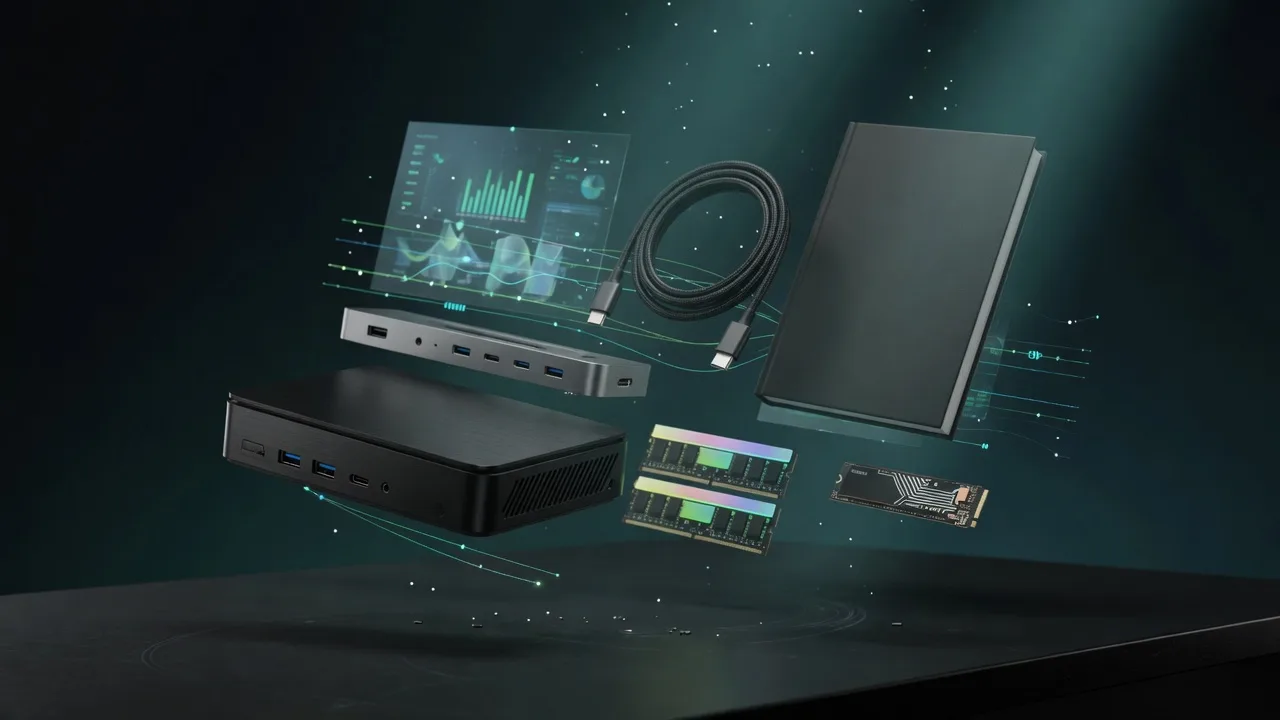
Docks, fast storage, cables, and a UPS sized for a local AI machine.

Rent this class of GPU by the hour before you buy. Live prices from RunPod and Vast.ai.

Find the break-even between buying this hardware and paying for a cloud API.
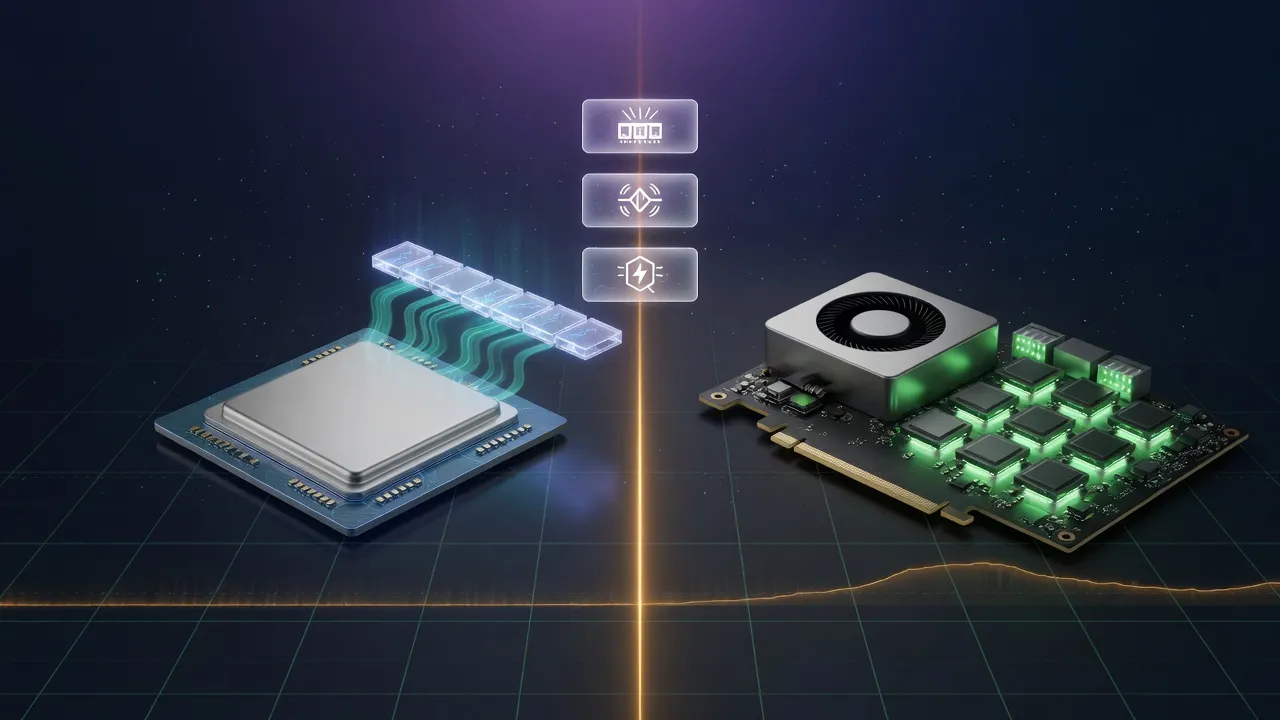
Mac vs NVIDIA for local inference, if you are still choosing a platform.