- Services
AI agents in no-code automation platforms: Make vs n8n. Learn what tool offers better integration, flexibility and value for business automation needs

📝 Audio Version
Listen to this AI-generated podcast summarizing the article content for easier digestion
Automation tools are evolving rapidly with the integration of AI agents that can perform complex tasks without human intervention. For business and technical teams looking to implement these tools, two platforms stand out: Make.com and n8n. Both offer AI agent capabilities within their no-code automation environments, but they differ in their approach, flexibility, and use cases.
In this comparison, I'll examine the approach of building AI agents on these platforms and the integration with existing systems.
Let's clarify what AI agents are in the context of automation tools before diving in.
AI agents are autonomous software programs powered by large language models (LLMs) that can understand instructions and can decide which actions to perform across various systems. Unlike conventional automation workflows that follow predefined paths, AI agents can:
Both Make.com and n8n implement AI agents as entities with a system prompt and connected "tools" that they can invoke to reach specific goals.
Make's approach to AI agents centers around a no-code visual builder with centralized agent management. It's important to note that Make's AI agent feature is currently in beta. It may have some unexpected behaviors – something to consider for production deployments.
On Make, an AI agent is defined as an entity with:
The platform offers a clean, visual interface for creating and managing agents, with all components centralized within the Make environment.
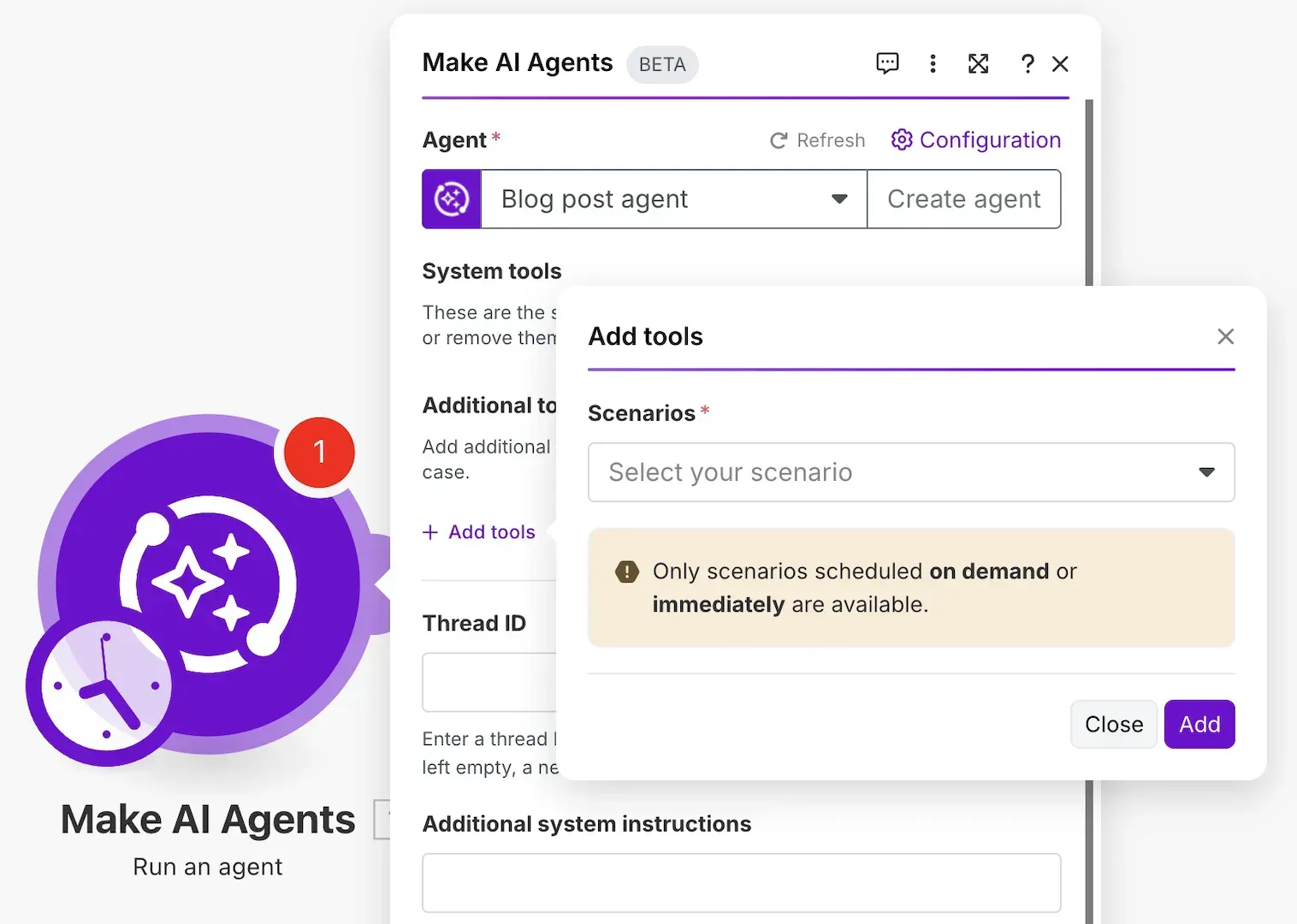
AI agent module in the scenario builder
n8n takes a more modular, open-source approach to AI agents. In n8n, an AI agent is represented as a node within a workflow, with:
The platform offers significant flexibility in how agents are configured and deployed.
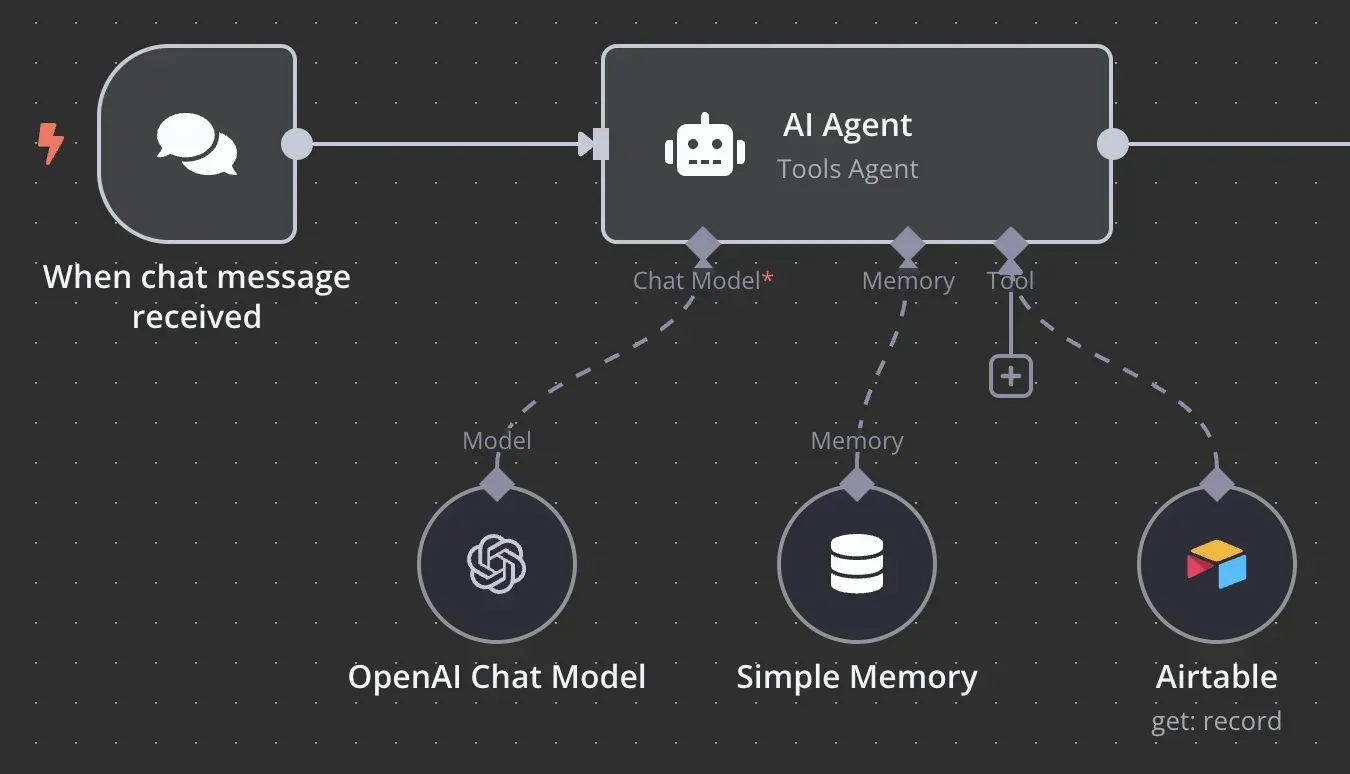
AI agent node in n8n workflow builder
Make.com:
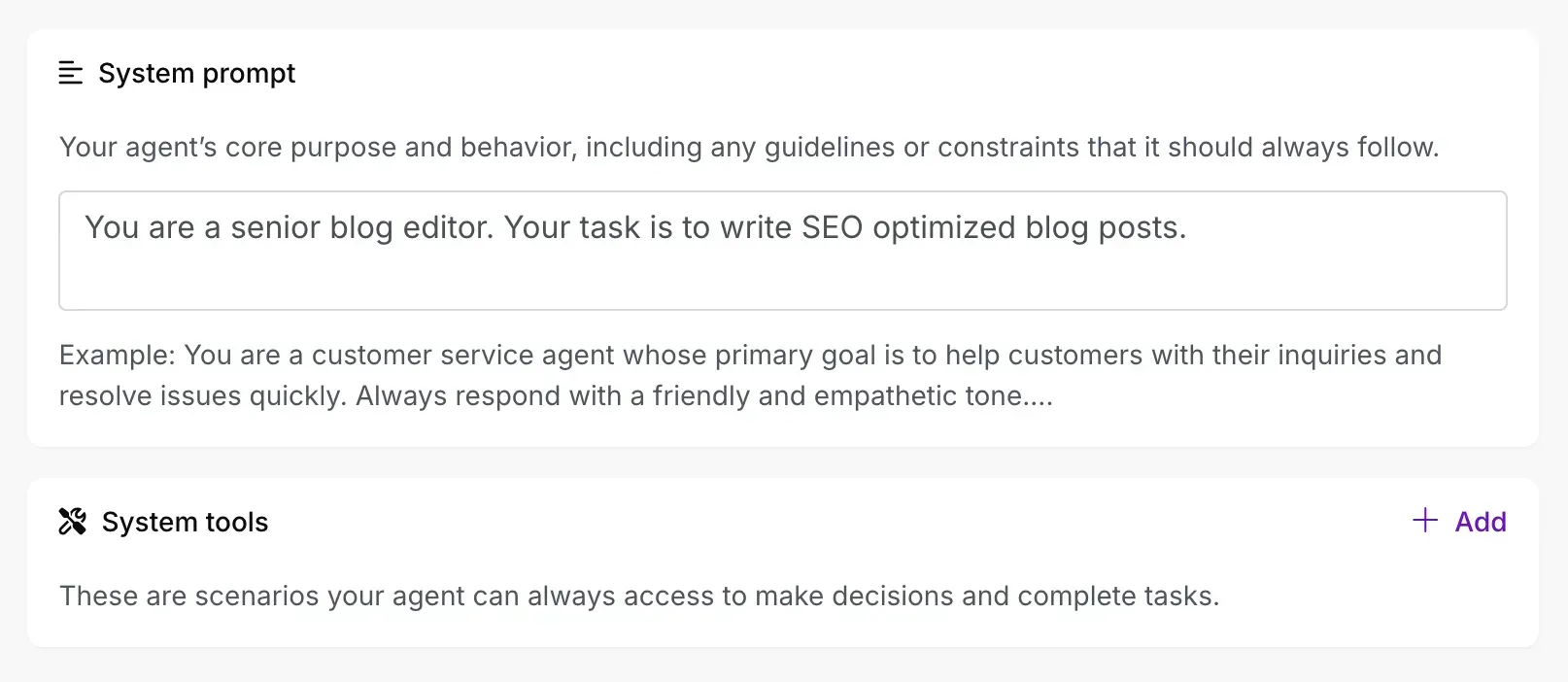
Make AI agent section
n8n:
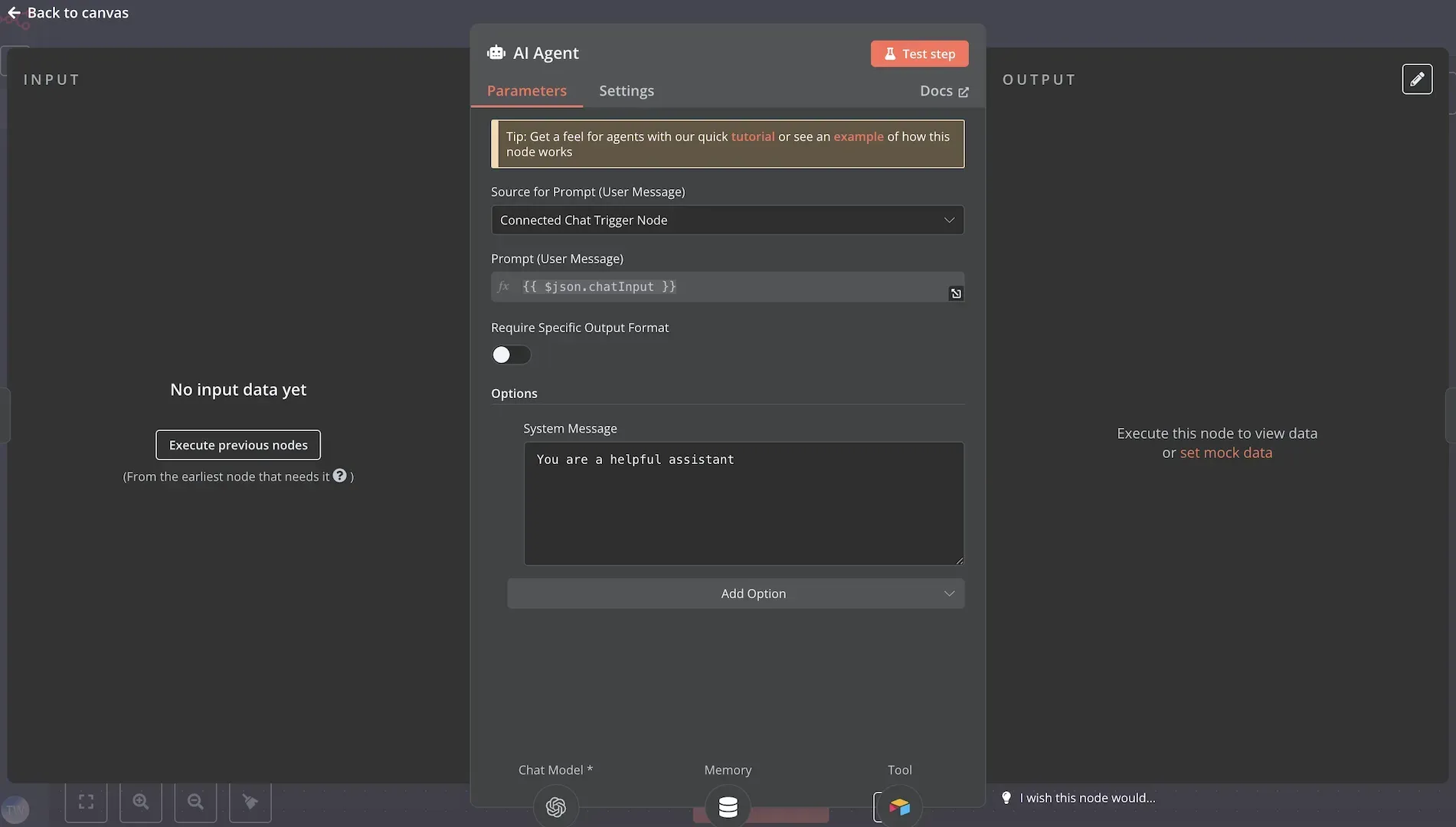
n8n AI agent node settings
Make's approach centralizes agent management in a dedicated section, while n8n integrates agents more deeply into existing workflow structures. This fundamental difference affects how teams organize and maintain their automation ecosystems.
Make.com:
n8n:
The key distinction here is that Make requires agents to access tools through scenarios you've previously built, while n8n allows connecting apps directly or linking to other workflows, offering more flexibility in implementation.
Make.com:
n8n:
n8n leverages its Tools Agent to provide enhanced functionality with various AI models, while Make offers a more standardized approach across different LLM providers.
Make.com:
n8n:
This represents one of the most significant differences between the platforms. Make offers a fully managed cloud solution, while n8n provides options for both cloud and self-hosted deployments, giving organizations greater control over their data and infrastructure.
Make.com:
n8n Cloud:
Both platforms incur additional costs for LLM API usage, typically a few cents per query when using models like OpenAI's GPT-4. The total cost will depend on your implementation and usage patterns.
Choose Make.com if you value:
Opt for n8n when you need:
Both platforms dramatically reduce time to market for AI-driven automation and empower technical teams to deliver intelligent solutions. The right choice depends on your specific organizational needs, technical requirements, and preferences regarding hosting and management.
Ready to explore AI agents in automation tools? Here are some recommended next steps:
This article was based on our "The Agent Roundup" newsletter, helping you stay up-to-date with developments in AI agent technology.
About the author

Tobias Wupperfeld
Tobias is an independent AI engineer and operator who has shipped AI systems inside startups and scale-ups across fintech, procurement, engineering, and more. He runs Made By Agents focused on agentic coding and consults for companies, where he leads AI integration across processes and product lines.
Keep Reading
We write about coding agents, multi-agent systems, AI pair programming, and the engineering practices we use with clients. Hands-on lessons from real projects, not high-level theory.
Browse All Articles