
- Services
Advertising disclosure: we earn commissions when you shop through the links below.
AMD introduced the Ryzen AI Halo Developer Platform on October 12, 2026. It is a compact desktop system for running large language models and agentic AI workloads locally, built on the Ryzen AI Max+ PRO 495 processor. It combines up to 16 Zen 5 CPU cores, 40 RDNA 3.5 GPU compute units and a 55 TOPS NPU with up to 192GB of LPDDR5x unified memory, of which up to 160GB can be allocated to the GPU as VRAM. AMD says it runs 300-billion-parameter and larger models at 4-bit quantization, and it supports Windows and Linux with AMD ROCm software.
Sized for production serving of 70B–200B class models at full or lightly-quantized precision. Overkill for a homelab; right call when the workload pays for itself in token volume.
Generated from this product’s spec sheet. Editor reviews refine it over time.
The AMD Ryzen AI Halo Developer Platform is a purpose-built desktop workstation engineered specifically for developers running massive local language models and autonomous agent swarms. Powered by the AMD Ryzen AI Max+ PRO 495 processor, this system bridges the gap between high-end consumer workstations and multi-thousand-dollar enterprise servers. It combines 16 Zen 5 CPU cores, 40 AMD RDNA 3.5 GPU compute units, and a dedicated 55 TOPS neural processing unit (NPU) into a single, compact footprint. For developers looking for Unknown hardware for AI development, this workstation delivers a fully unified memory architecture capable of running local models that previously required multi-GPU server clusters.
What sets the platform apart is its memory configuration. The system integrates up to 192GB of high-speed LPDDR5x unified memory, allowing developers to allocate up to 160GB directly to the GPU as dedicated VRAM. In an ecosystem where local model size has historically been capped by standard 16GB or 24GB PCIe GPUs, having an effective 160GB GPU for AI in a compact desktop changes local inference economics completely. It positions the hardware as one of the best hardware for local AI agents 2026 options on the market, avoiding the high subscription fees, latency spikes, and data privacy risks associated with hosted cloud APIs.
Software support spans both Windows and Linux environments powered by AMD ROCm software. This dual-OS capability is critical for developers who need flexibility: ROCm provides native support for PyTorch, vLLM, Ollama, and llama.cpp, while Windows support accommodates desktop agentic workflows and local assistant prototyping. For practitioners assessing the AMD Ryzen AI Halo Developer Platform for AI workloads, it delivers the raw memory capacity needed to push local parameter boundaries without requiring rackmount server infrastructure.
The core of the AMD Ryzen AI Halo Developer Platform AI inference performance lies in its tight integration between the compute engine and its unified memory bus. AI inference on large language models is predominantly memory-bandwidth and capacity bound rather than compute bound. By leveraging up to 192GB of unified LPDDR5x memory, the Ryzen AI Max+ PRO 495 eliminates the PCIe transfer bottlenecks that plague traditional multi-card desktop rigs.
Memory allocation is flexible, but its standout feature is the ability to map up to 160GB strictly for graphics and tensor workloads. This AMD Ryzen AI Halo Developer Platform VRAM for large language models ensures that massive parameter weights remain resident in memory alongside extensive context windows.
The compute pipeline is distributed across three specialized tiers:
Because the system consolidates compute onto an integrated APU architecture, power consumption remains a fraction of standard multi-GPU server setups. Typical desktop power draw under heavy prompt evaluation and generation stays well below the thermal limits of compact chassis designs. This makes the platform viable for standard desk setups where high-draw 1500W multi-GPU rigs are impractical due to heat and acoustic constraints.
Having 160GB of allocatable VRAM transforms this machine into specialized hardware for running 300B+ parameter models locally on a developer desk. While traditional prosumer cards top out at 70B parameter models at low bitrates, the Ryzen AI Halo Developer Platform accommodates massive parameter frontiers.
The system runs varying architectures comfortably across diverse precision levels:
When evaluating AMD Ryzen AI Halo Developer Platform tokens per second, memory bandwidth dictates generation speed while the 40 RDNA 3.5 compute units drive prompt processing (time-to-first-token).
For dense 70B models running at 4-bit quantization, users can expect responsive interactive speeds between 15 and 25 tokens per second, which easily exceeds typical human reading speeds. For smaller 8B models, throughput scales well above 60 tokens per second, making it ideal for high-speed agent loops and code completion tasks. When scaling to 300B+ parameter models at 4-bit, throughput lands in the 3 to 7 tokens per second range: sufficiently fast for background reasoning runs, autonomous batch tasks, and validation pipelines, though slower than enterprise H100 clusters.
The optimal sweet spot for this hardware is running 70B to 120B parameter models at 4-bit or 8-bit precision. In this configuration, developers achieve an optimal balance of reasoning quality, low prompt processing latency, and high context capacity.
Thanks to the unified memory pool, large multimodal models (such as Qwen 2.5-VL and stable diffusion / Flux pipelines) run without running into out-of-memory errors during cross-attention layers. Image generation pipelines like Flux.1 Schnell and Stable Diffusion XL execute directly in GPU memory while leaving space for an LLM text-inversion assistant to run alongside them.
The platform serves distinct engineering workflows:
Understanding where this platform fits requires comparing it directly with current alternatives in local inference:
The Mac Studio has long been the primary choice for local developers requiring large unified memory pools (up to 192GB on top-tier Ultra configurations). The AMD Ryzen AI Halo Developer Platform directly challenges this position by offering up to 160GB of usable VRAM alongside native support for both Windows and Linux. While Apple's unified memory uses Metal, AMD's platform leverages ROCm, which shares closer API parity with the NVIDIA CUDA ecosystem used in production server software. For practitioners who deploy to Linux-based cloud infrastructure, testing against ROCm locally provides an easier translation path to production than Metal.
The NVIDIA DGX Spark targets workstation users within the CUDA ecosystem. While NVIDIA holds a software ecosystem advantage with TensorRT-LLM and pervasive CUDA optimizations, the AMD system offers distinct advantages in operating system flexibility. The DGX Spark is typically Linux-only, whereas the Ryzen AI Halo supports native Windows 11 alongside standard enterprise Linux distributions. Furthermore, the inclusion of a dedicated 55 TOPS NPU on the Ryzen AI Max+ PRO 495 allows the host system to offload persistent background audio and vision routines, keeping the primary compute units clear for LLM prompt processing.
When evaluated purely as an investment for local model deployment, the AMD Ryzen AI Halo Developer Platform stands out as one of the best hardware for running AI models locally. By combining a 160GB allocatable memory footprint with standard desktop usability and cross-platform flexibility, it establishes itself as a serious contender for any engineering team seeking the best AI chip for local deployment without moving to rack-based infrastructure.
The top models this device can run at 4-bit, ranked by fit and speed.
Specs not available for scoring. This product is missing VRAM or memory bandwidth data.
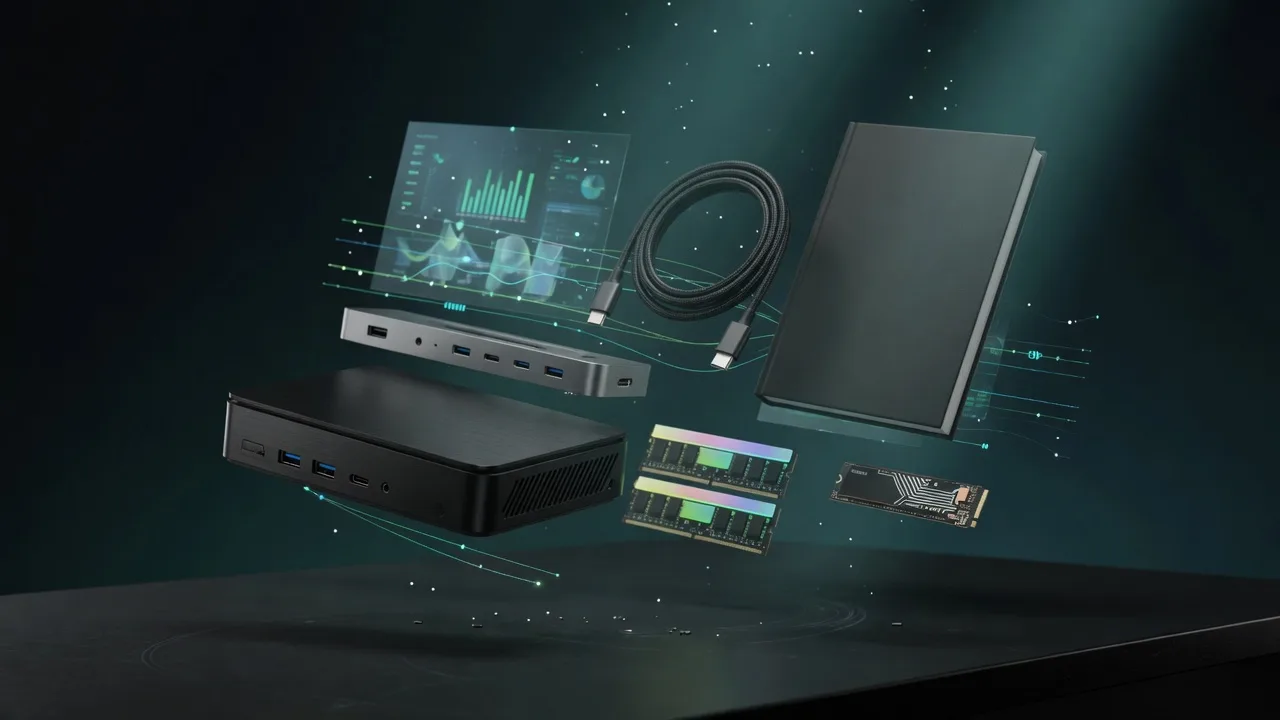
Also in Our Store
Docks, fast storage, cables, and a UPS sized for a local AI machine.

Rent this class of GPU by the hour before you buy. Live prices from RunPod and Vast.ai.
Find the break-even between buying this hardware and paying for a cloud API.
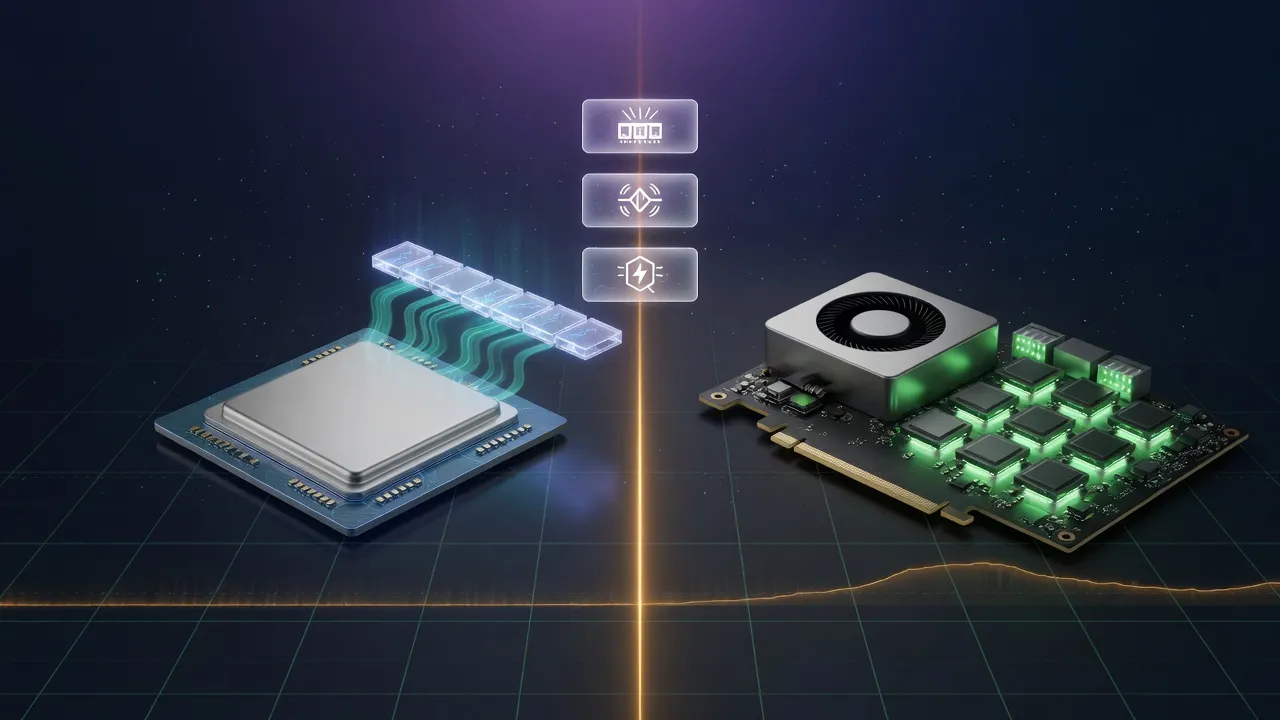
Mac vs NVIDIA for local inference, if you are still choosing a platform.
