
- Services
Advertising disclosure: we earn commissions when you shop through the links below.
ASUS announced the Vivobook S14 (S5408), a 14-inch Copilot+ PC laptop built around the Snapdragon X X1 26 101 processor with an 8-core CPU and a Qualcomm Hexagon NPU rated at up to 45 TOPS. It pairs 16GB of onboard LPDDR5X memory with a 512GB PCIe 4.0 SSD and a 14-inch WUXGA OLED display. The all-metal chassis weighs 1.28 kg and ASUS claims up to 30 hours of battery life. It ships with Windows 11 Home and is listed as available.
The ASUS Vivobook S14 (S5408) is an ultra-portable Copilot+ PC designed for developers and practitioners who need lightweight, energy-efficient on-device compute. Built on Qualcomm's entry-tier Snapdragon X platform (the 8-core Snapdragon X X1 26 101), this laptop positions itself in the consumer-to-prosumer tier. Rather than aiming for raw workstation-level throughput, it focuses on delivering sustained on-device inference for everyday developer tasks, small language models (SLMs), and background agentic operations under a constrained 30W thermal envelope.
For engineers seeking the best hardware for running AI models locally in a mobile form factor, the S5408 balances battery efficiency with practical client-side acceleration. ASUS packs an 8-core CPU, an Adreno GPU, and a dedicated Qualcomm Hexagon NPU rated at up to 45 TOPS into an all-metal, 1.28 kg chassis. While it does not replace a dedicated desktop GPU rig or high-end server hardware, it represents an accessible entry point for evaluating how Windows on ARM and NPU toolchains handle modern edge AI workloads.
When sourcing Unknown hardware for AI development and evaluating thin-and-light platforms, hardware selection hinges on memory architecture and execution runtimes. The Vivobook S14 provides 16GB of LPDDR5X onboard memory and a PCIe 4.0 SSD, giving mobile developers sufficient headroom to run quantized local assistants, test agent loops, and evaluate embeddings directly on device without tethering to a wall outlet.
Understanding the ASUS Vivobook S14 (S5408) AI inference performance requires looking closely at how its compute blocks divide tasks. Local AI workloads depend on memory capacity, memory bandwidth, and the runtime software stack backing the silicon.
The key spec for inference is the ASUS Vivobook S14 (S5408) VRAM for large language models. Because the Snapdragon X platform uses unified memory, the 16GB LPDDR5X pool is shared between Windows 11, display buffers, system background processes, and AI model weights. In practice, after accounting for OS overhead (typically 3.5GB to 4.5GB), you have approximately 10GB to 11GB of usable memory for loading model weights, runtime contexts, and key-value (KV) caches.
Memory bandwidth on the 8-core Snapdragon X platform is lower than the flagship Snapdragon X Elite variants, hovering around 84 GB/s. Because autoregressive token generation is primarily memory-bandwidth bound, this limits maximum token generation speeds relative to high-tier ARM silicon or discrete desktop GPUs.
Compute acceleration is divided between the 45 TOPS Hexagon NPU and the Adreno GPU. To leverage the NPU, developers must compile or run models using the Qualcomm AI Engine Direct SDK (QNN) or the ONNX Runtime with the QNN Execution Provider. Standard uncompiled frameworks running generic llama.cpp builds will typically fall back to CPU execution using ARM NEON optimizations unless targeted specifically for the Qualcomm Hexagon backend. The 30W TDP ensures that even under sustained inference passes, thermal throttling remains minimal compared to 15W fanless designs.
When selecting the ASUS Vivobook S14 (S5408) for AI development, model sizing must align strictly with the 16GB memory ceiling and execution runtime support.
Small architectures run comfortably on this machine with rapid generation rates:
This is the practical upper limit for local LLM execution on the Vivobook S14:
The Vivobook S14 is categorically not suitable hardware for running 70B parameter models. A 70B model (like Llama 3.1 70B or Qwen 2.5 70B) requires at least 38GB to 42GB of memory even under aggressive INT4 quantization. Attempting to load a 70B model on a 16GB device will crash the process or force massive OS swapping, halting inference completely.
The actual ASUS Vivobook S14 (S5408) tokens per second will vary based on execution backend:
Lightweight vision models like Moondream2 or SmolVLM fit within the memory budget and run reliably for image classification and screen reading. For developers building agentic pipelines, the machine handles multi-step tool-use chains when driven by 3B models, though orchestrating complex multi-agent frameworks with multiple concurrent 8B models will lead to memory contention.
The Vivobook S14 (S5408) is targeted at specific mobile developer workflows rather than heavy production serving:
Note on Training: This device is strictly an inference and light fine-tuning evaluation machine. It cannot be used for pre-training or LoRA fine-tuning on medium-to-large models due to unified memory size, thermal targets, and lack of native ROCm/CUDA support.
The 16GB M3 MacBook Air is the primary ultraportable alternative for local inference. Apple's Metal framework and unified memory integration in llama.cpp and MLX are currently more mature than the Windows on ARM AI stack. The M3 offers higher memory bandwidth (100 GB/s vs ~84 GB/s), delivering slightly faster tokens per second on 8B parameter models. However, the Vivobook S14 features an OLED 16:10 display, active single-fan cooling to prevent sustained thermal throttling, and a dedicated 45 TOPS NPU ready for Microsoft Copilot+ ecosystem features.
Higher-end Snapdragon X Elite machines (such as the X1E-78-100 or X1E-80-100) feature 12 CPU cores, higher clock speeds, wider memory channels (up to 135 GB/s), and configurations offering 32GB of RAM. The S14 S5408 runs an 8-core Snapdragon X variant capped at 16GB of non-upgradable RAM. If your goal is evaluating the best hardware for local AI agents 2026 or running 14B parameter models like Qwen 2.5 14B at INT4, step up to a 32GB Snapdragon X Elite configuration. If your goal is a sub-1.3 kg, low-power test machine for small models and Copilot+ development, the S14 offers a budget-conscious, power-efficient alternative.
The top models this device can run at 4-bit, ranked by fit and speed.
Specs not available for scoring. This product is missing VRAM or memory bandwidth data.
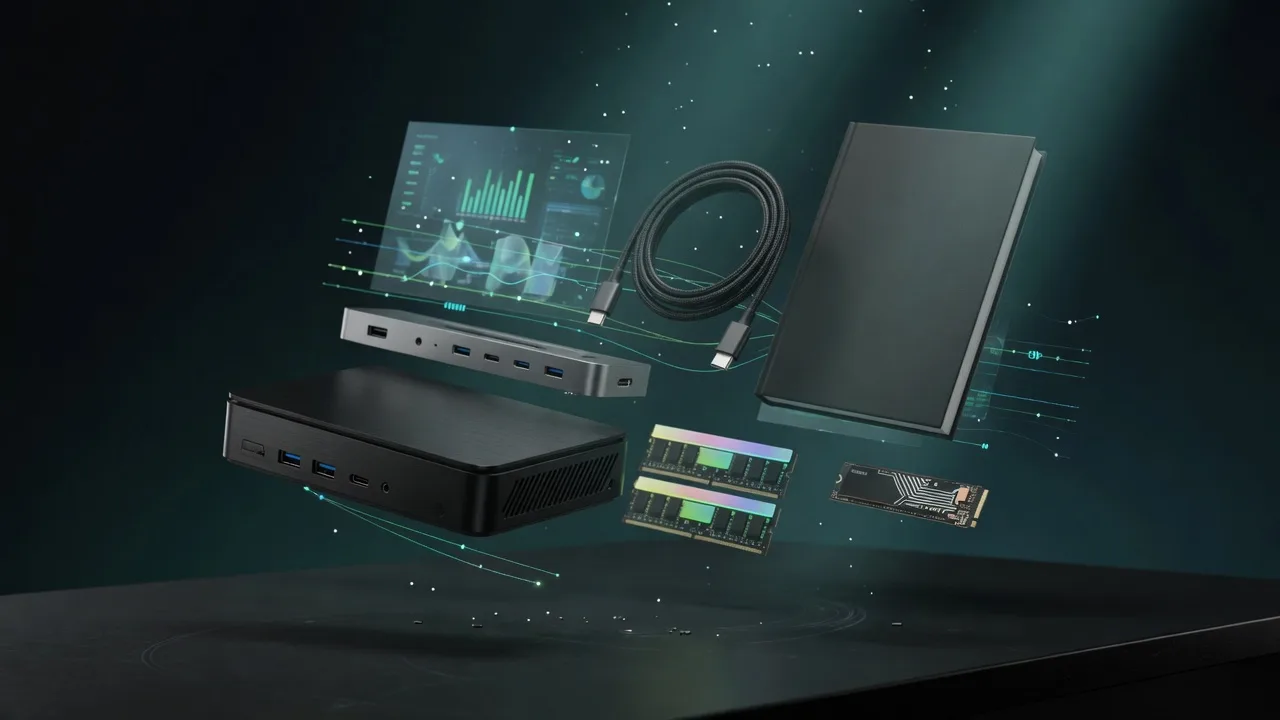
Also in Our Store
Docks, fast storage, cables, and a UPS sized for a local AI machine.

Rent this class of GPU by the hour before you buy. Live prices from RunPod and Vast.ai.
Find the break-even between buying this hardware and paying for a cloud API.
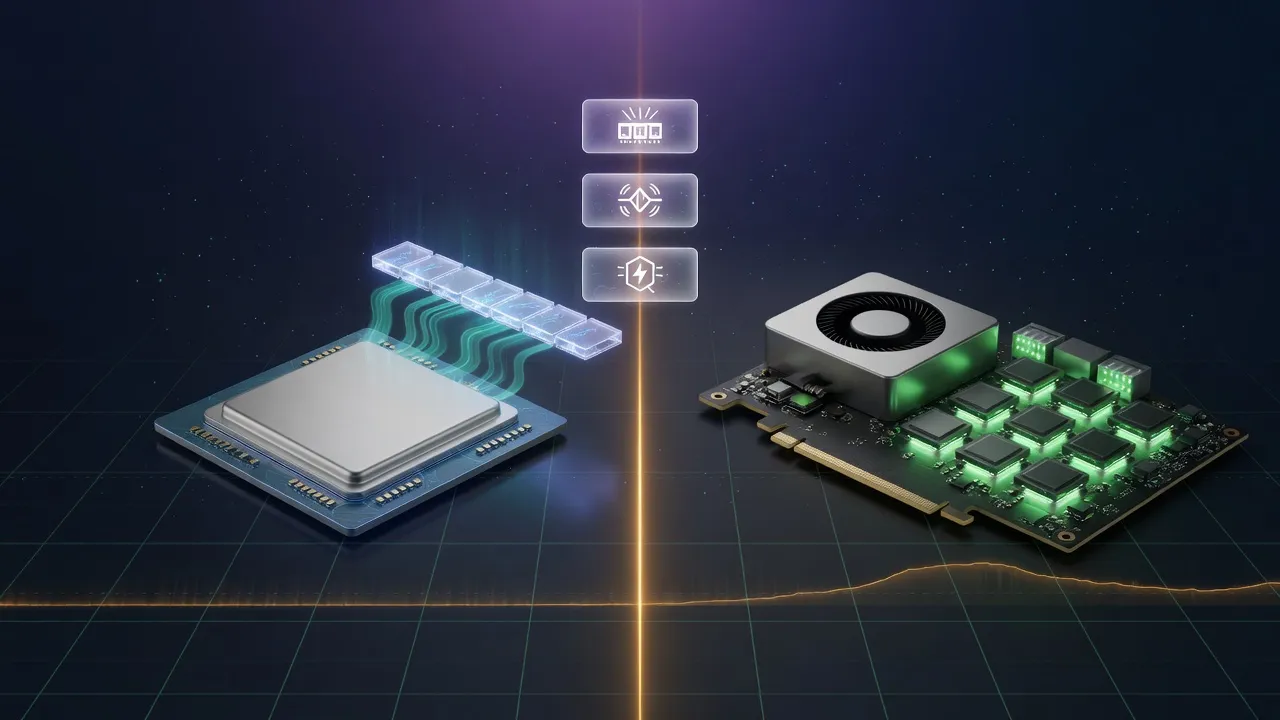
Mac vs NVIDIA for local inference, if you are still choosing a platform.
