
- Services
Advertising disclosure: we earn commissions when you shop through the links below.
A premium creator laptop from Lenovo powered by the Nvidia RTX Spark superchip, pairing a Grace CPU with up to 20 cores and an integrated Blackwell RTX GPU with up to 6,144 cores. It is aimed at creators and developers running AI development, content creation and software development workloads locally. The 15.3-inch 2.5K OLED display runs at 48-165Hz with variable refresh, and the system supports up to 128GB of LPDDR5x-9400 unified memory and up to 4TB of storage across two SSD slots. It launched in India on 22 October 2026; pricing was not stated.
The Lenovo Yoga Pro 9n (15-inch, Gen 11) marks a distinct shift in mobile computing for artificial intelligence practitioners. By combining Nvidia's RTX Spark superchip with up to 128GB of high-speed unified memory in a 1.65 kg clamshell chassis, this machine addresses the primary bottleneck mobile developers face: memory capacity. Traditional mobile workstations force engineers to choose between high-bandwidth discrete GPUs restricted to 16GB of VRAM or slower host system RAM. The Yoga Pro 9n bypasses this trade-off by offering workstation-grade memory architecture within a premium consumer form factor.
Engineered around a Grace CPU with up to 20 cores and an integrated Blackwell RTX GPU featuring up to 6,144 cores, the Yoga Pro 9n positions itself as a specialized platform for local AI agents, large language model (LLM) inference, and full-stack software development. For engineers evaluating Unknown hardware for AI development, this system represents a unique intersection of ARM-based Grace processing, Blackwell tensor performance, and full CUDA ecosystem support on Windows 11.
While conventional thin-and-light laptops throttle aggressively under sustained tensor math, Lenovo pairs this 80W TDP platform with an upgraded thermal layout comprising dual fans, four heat pipes, and expanded venting. The result is a device built specifically for practitioners who need to run local models, test multi-agent architectures, and iterate on complex pipelines without relying on remote API clusters.
Evaluating the Lenovo Yoga Pro 9n (15-inch, Gen 11) for AI workloads requires looking past traditional CPU clock speeds and focusing directly on unified memory bandwidth, tensor core capability, and sustained thermal envelopes.
In local LLM execution, memory bandwidth dictates generation speed (tokens per second), while total unified capacity determines the maximum parameter count and context window length. The Lenovo Yoga Pro 9n (15-inch, Gen 11) VRAM for large language models functions as a pooled resource: the entire 128GB LPDDR5x-9400 pool is dynamically addressable by the Blackwell GPU compute units.
Operating at an effective bandwidth of approximately 300 GB/s, the memory subsystem avoids the standard PCIe bus transfer latency common to discrete GPU configurations. While 300 GB/s is lower than desktop discrete cards like the RTX 4090 (1,008 GB/s), it vastly outpaces standard dual-channel laptop configurations (typically 80 to 120 GB/s). Most crucially, having access to up to 128GB of unified memory allows developers to load models that simply crash standard 8GB, 12GB, or 16GB laptop GPUs.
Sustained inference generates continuous thermal load. Lenovo implements its X Power thermal architecture featuring four heat pipes, enlarged vents, and a dual-fan array capable of dissipating the full 80W superchip TDP while maintaining acoustic levels as low as 22 dB under moderate loads. This prevents the severe thermal throttling that commonly disrupts long-running batch inference jobs on standard ultrabooks.
The practical value of this system centers on raw deployment capability. With 128GB of unified memory and Blackwell compute, the Yoga Pro 9n handles parameter sizes that previously demanded desktop workstations or multi-GPU servers.
For daily coding assistants, real-time agent loops, and quick iteration, models in the 3B to 14B range execute with high responsiveness:
Models like Qwen 2.5 32B or DeepSeek-R1 distilled 32B represent the current sweet spot for local reasoning:
At 10 to 13 tok/s, 32B models run faster than typical reading speeds, making this machine a reliable development station for complex local workflows.
When functioning as hardware for running 70B parameter models, the Yoga Pro 9n provides capability that conventional laptops cannot match:
For high-speed agentic execution where tools must be called rapidly, 8B models at Q8 or 14B models at Q4 offer the best latency-to-quality profile. For code synthesis, deep research tasks, and complex reasoning, running 32B models at Q4_K_M provides enterprise-grade outputs while sustaining double-digit token generation.
Because the system supports up to 128GB of memory, it handles massive context windows. An 8B model at Q4 can sustain context lengths beyond 700k tokens before memory pressures force swap offloading.
The Lenovo Yoga Pro 9n (15-inch, Gen 11) for AI development targets specialized engineering workflows rather than casual computing:
Understanding where the Yoga Pro 9n sits among the best hardware for running AI models locally requires comparing it against its closest mobile workstation alternatives.
The primary competitor in unified memory computing is Apple's MacBook Pro 16 configured with 128GB of unified memory.
Standard x86 gaming and creator laptops pair high-power CPUs with discrete mobile GPUs like the RTX 4090 or RTX 5090 mobile.
For engineers seeking the best AI chip for local deployment inside a highly portable Windows environment, the Lenovo Yoga Pro 9n delivers unmatched parameter capacity per gram.
The top models this device can run at 4-bit, ranked by fit and speed.
Specs not available for scoring. This product is missing VRAM or memory bandwidth data.
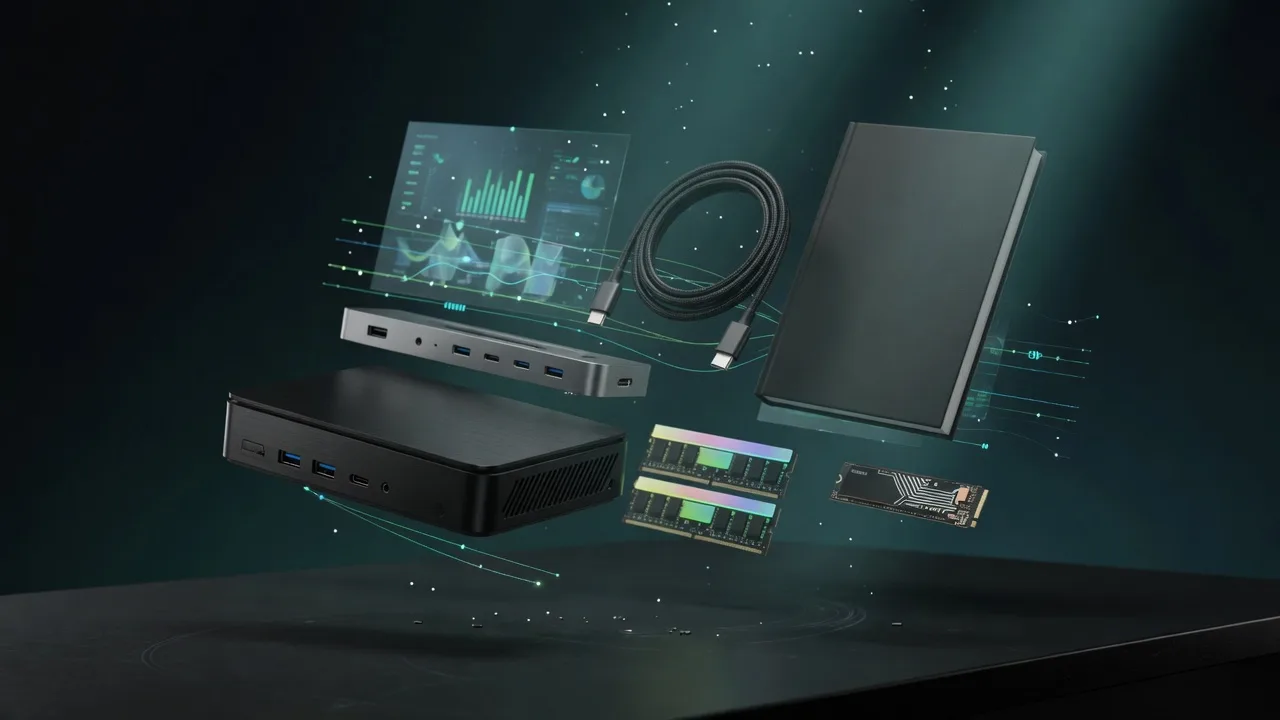
Also in Our Store
Docks, fast storage, cables, and a UPS sized for a local AI machine.
Rent this class of GPU by the hour before you buy. Live prices from RunPod and Vast.ai.
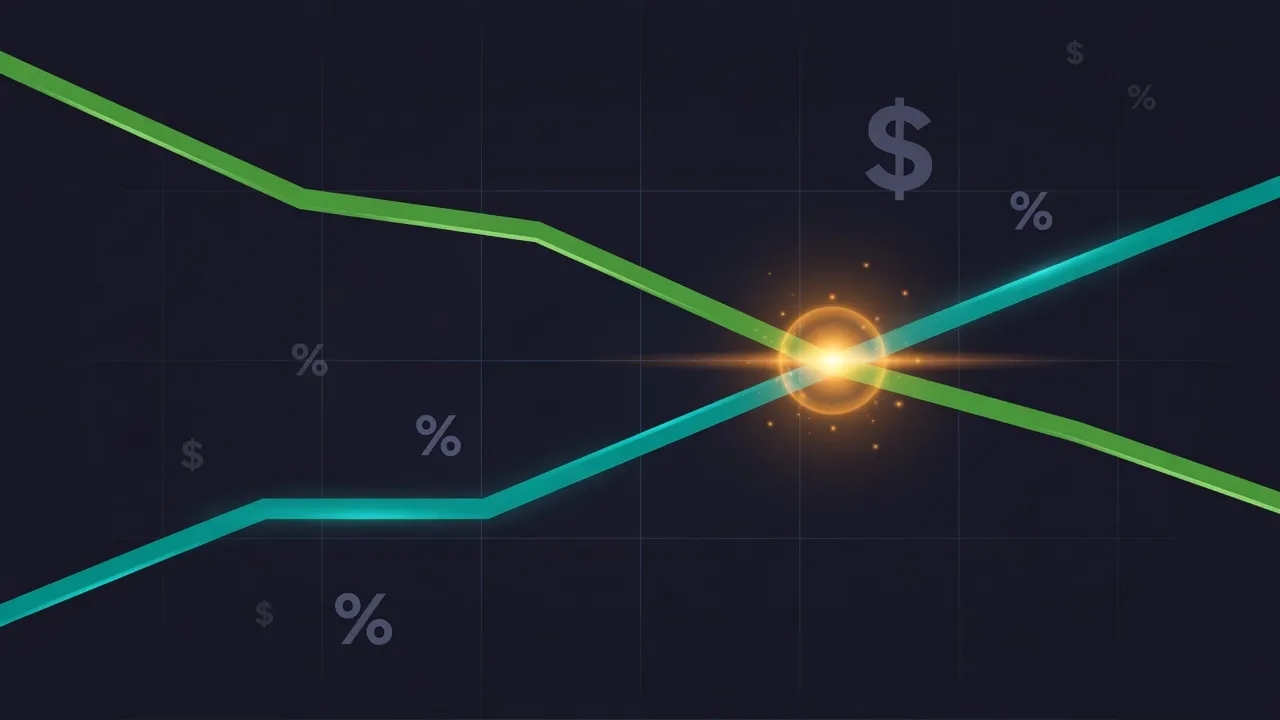
Find the break-even between buying this hardware and paying for a cloud API.
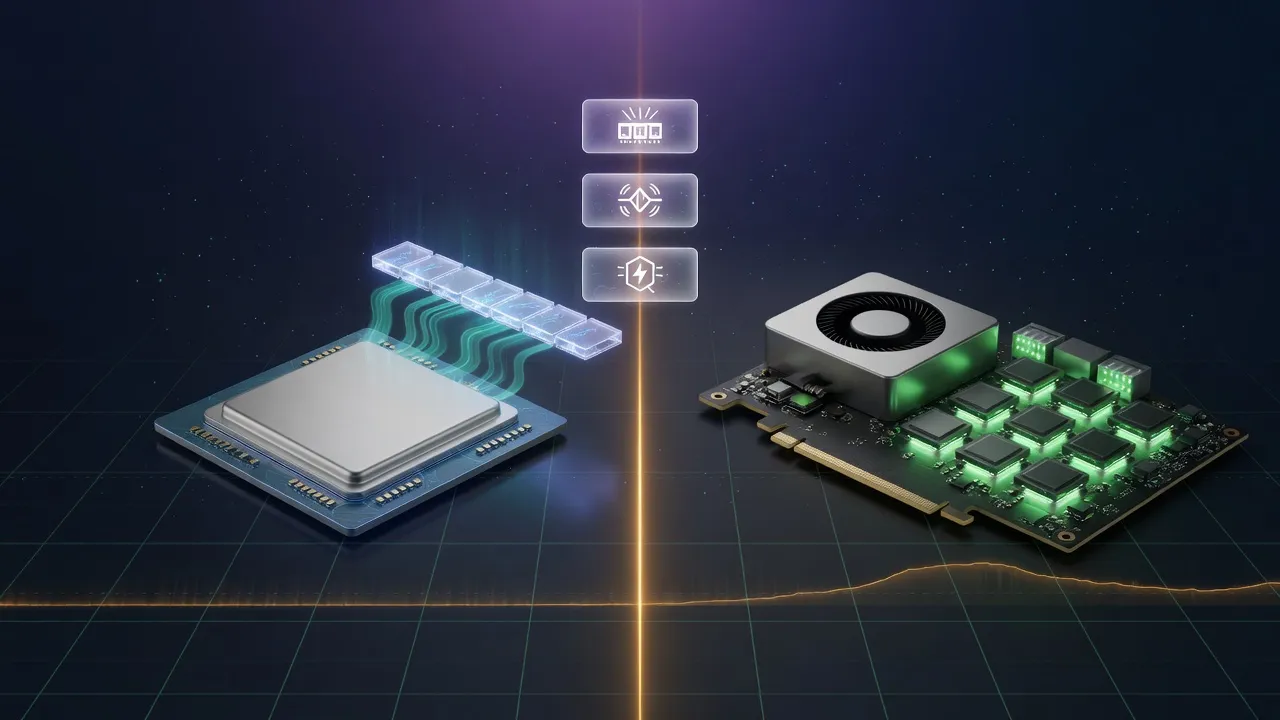
Mac vs NVIDIA for local inference, if you are still choosing a platform.
