
- Services
Advertising disclosure: we earn commissions when you shop through the links below.
Mouse Computer's DAIV CX-A9A60 is a compact desktop made for running AI models locally instead of in the cloud. It pairs an AMD Ryzen AI Max+ 395 processor with 128GB of LPDDR5X-8000 unified memory, of which up to 96GB can be assigned to the integrated Radeon 8060S GPU. It ships with Windows 11 Pro, a 2TB WD_BLACK SN850X NVMe SSD and a 3-year warranty, priced from 949,800 yen including tax. The maker says it comfortably handles 12B to 32B local models and can also run 70B-class LLMs.
Sized for production serving of 70B–200B class models at full or lightly-quantized precision. Overkill for a homelab; right call when the workload pays for itself in token volume.
Generated from this product’s spec sheet. Editor reviews refine it over time.
The DAIV CX-A9A60 by Mouse Computer is a compact prosumer desktop purpose-built to eliminate the single biggest bottleneck in edge artificial intelligence: video memory capacity. Powered by the AMD Ryzen AI Max+ 395 processor, this system bypasses conventional PCIe graphics cards by pairing a 16-core Zen 5 CPU and an integrated 40-compute-unit Radeon 8060S GPU with 128GB of soldered LPDDR5X-8000 unified memory. Up to 96GB of this memory pool can be statically allocated to the GPU, effectively turning the integrated graphics subsystem into a 96GB GPU for AI workloads.
Priced from 949,800 yen (including tax) with Windows 11 Pro, a 2TB Western Digital WD_BLACK SN850X PCIe 4.0 NVMe SSD, and a 3-year warranty, the DAIV CX-A9A60 targets researchers, software engineers, and privacy-focused teams who need local inference for large models. By packaging high-capacity unified memory into a vertical mini-PC chassis weighing roughly 1.98kg, it provides an alternative to multi-GPU workstations that consume excessive power and require enterprise rack space.
For engineers evaluating the best hardware for running AI models locally, the DAIV CX-A9A60 occupies a distinct tier between mainstream consumer desktops and dedicated data center nodes. Where consumer flagships like the GeForce RTX 4090 and RTX 5090 hit hard limits at 24GB and 32GB of VRAM, the CX-A9A60 allows developers to load dense 70-billion-parameter language models and large mixture-of-experts (MoE) architectures completely into memory without offloading layers to system RAM or relying on network latency.
Evaluating the DAIV CX-A9A60 for AI workloads requires looking past traditional discrete GPU compute metrics and examining memory subsystems, sustained power delivery, and execution runtimes.
Memory bandwidth is the fundamental gating factor for autoregressive token generation. At approximately 256 GB/s, the DAIV CX-A9A60 cannot match the raw throughput of discrete graphics cards equipped with GDDR6X or GDDR7 memory (which frequently exceed 1,000 GB/s). However, discrete GPUs run out of physical memory when loading weights beyond 24GB to 32GB. For large weights, the CX-A9A60 maintains steady processing across its entire 96GB boundary, avoiding the severe performance drops that happen when standard systems offload layers across the PCIe bus.
The DAIV CX-A9A60 VRAM for large language models changes what is possible on a sub-200W desktop. Local execution via llama.cpp, LM Studio, Ollama, and DirectML/ROCm platforms allows practitioners to target distinct parameter tiers based on their speed and latency requirements.
1+------------------------------------+---------------------+--------------------+-----------------------+2| Model Class | Quantization Level | Memory Footprint | Approx. Token Speed |3+------------------------------------+---------------------+--------------------+-----------------------+4| 8B (Llama 3.1, Qwen 2.5) | FP16 / Q8_0 | ~16GB - 18GB | 35 - 50+ tokens/s |5| 14B - 32B (Qwen 2.5 32B, DeepSeek) | Q8_0 / Q4_K_M | ~20GB - 36GB | 18 - 28 tokens/s |6| 70B - 72B (Llama 3.1 70B, Qwen) | Q4_K_M / Q5_K_M | ~43GB - 54GB | 8 - 12 tokens/s |7| 120B / MoE (Mixtral 8x22B) | Q3_K_M / Q4_K_M | ~65GB - 85GB | 3 - 6 tokens/s |8+------------------------------------+---------------------+--------------------+-----------------------+
For smaller architectures such as Llama 3.1 8B, Gemma 2 9B, and Qwen 2.5 14B, the DAIV CX-A9A60 AI inference performance provides an exceptional interactive experience. Because these models consume less than 20GB even at 16-bit precision, you can load unquantized weights or Q8_0 quantizations while allocating tens of thousands of tokens to context windows (such as full 64k or 128k KV caches) directly in VRAM without degradation.
The 32-billion parameter class (notably Qwen 2.5 32B and DeepSeek-R1-Distill-Qwen-32B) is the ideal balance on this hardware. At Q8_0 or Q4_K_M quantization, these models consume 20GB to 36GB of VRAM. The system generates between 18 and 28 tokens per second, easily outpacing comfortable reading speeds and delivering the analytical depth required for code generation, structured data extraction, and document processing.
The defining capability of the system is functioning as viable hardware for running 70B parameter models. Loading Llama 3.1 70B or Qwen 2.5 72B quantized to Q4_K_M requires approximately 43GB to 48GB of space. On a 24GB RTX 4090, these models cannot run locally without aggressive layer offloading that cripples output to sub-token speeds. On the DAIV CX-A9A60, the entire 70B graph sits in unified memory alongside an expanded context window, yielding DAIV CX-A9A60 tokens per second rates between 8 and 12 tok/s. While not fast enough for real-time customer-facing chatbots, it is thoroughly practical for background agent tasks, reasoning loops, and multi-turn workflows.
Because 96GB is assignable to the GPU, researchers can experiment with dense 120B parameter models or quantized MoE setups like Mixtral 8x22B at 3-bit or 4-bit quantizations. Token speeds land in the 3 to 6 tokens/s bracket: slow, but executed completely offline within a localized security perimeter.
The DAIV CX-A9A60 is an operational tool designed for specific development and business environments where cloud inference is either legally prohibited, cost-prohibitive, or technically impractical.
Understanding the trade-offs of the DAIV CX-A9A60 requires comparing it directly to existing workstation alternatives at similar price and capability tiers.
The Mac Studio is the closest architectural equivalent, utilizing unified LPDDR memory with high GPU capacity. An Apple Silicon system equipped with 96GB or 128GB of memory provides higher memory bandwidth (up to 400 GB/s on Max chips and 800 GB/s on Ultra chips), yielding faster token generation for 70B models.
However, the DAIV CX-A9A60 runs native Windows 11 Pro and Linux environments. Practitioners working within established x86_64 software toolchains, specialized Windows-based enterprise software, or workflows reliant on DirectML, Vulkan, and native AMD ROCm frameworks will find the DAIV significantly easier to integrate than navigating Apple's Metal ecosystem and macOS container constraints.
Building a dual-GPU desktop featuring two 24GB or 32GB consumer cards can achieve 48GB to 64GB of combined VRAM via tensor parallelism. A dual discrete setup provides far higher raw memory bandwidth (exceeding 1,000 GB/s per card), yielding tokens/second figures up to three times faster for models that fit within that memory ceiling.
The trade-offs, however, are footprint, thermals, and memory ceilings. A dual-GPU rig consumes between 850W and 1,200W under load, requires a full-tower ATX case, generates high thermal output, and caps your usable VRAM at 48GB to 64GB unless you invest in enterprise-tier workstation cards like the NVIDIA RTX 6000 Ada (which cost significantly more than the CX-A9A60 on their own). The DAIV CX-A9A60 provides 96GB of addressable graphics memory in an unobtrusive, 250W package that sits comfortably on an office desk.
For practitioners looking for the best AI chip for local deployment where VRAM capacity and small-form-factor deployment take priority over blisteringly fast generation speeds, the DAIV CX-A9A60 represents a specialized, highly capable workstation for local LLM orchestration.
The top models this device can run at 4-bit, ranked by fit and speed.
Specs not available for scoring. This product is missing VRAM or memory bandwidth data.
Also in Our Store
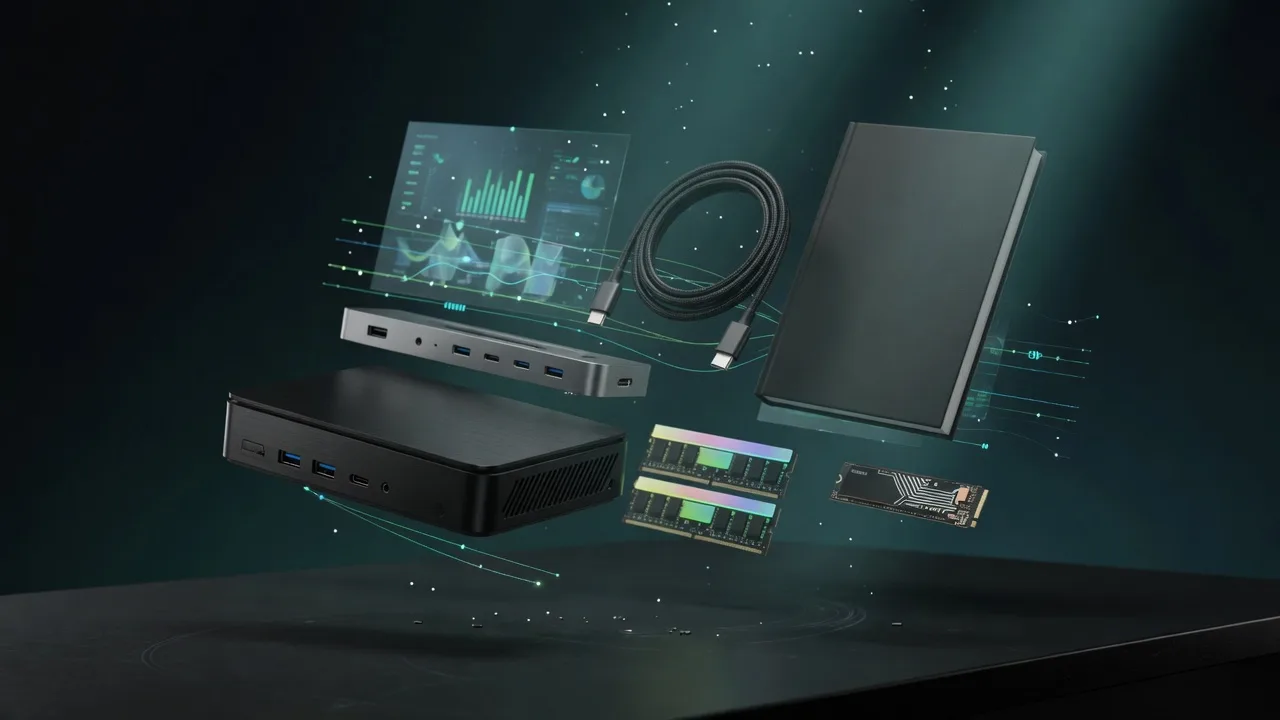
Docks, fast storage, cables, and a UPS sized for a local AI machine.

Rent this class of GPU by the hour before you buy. Live prices from RunPod and Vast.ai.
Find the break-even between buying this hardware and paying for a cloud API.
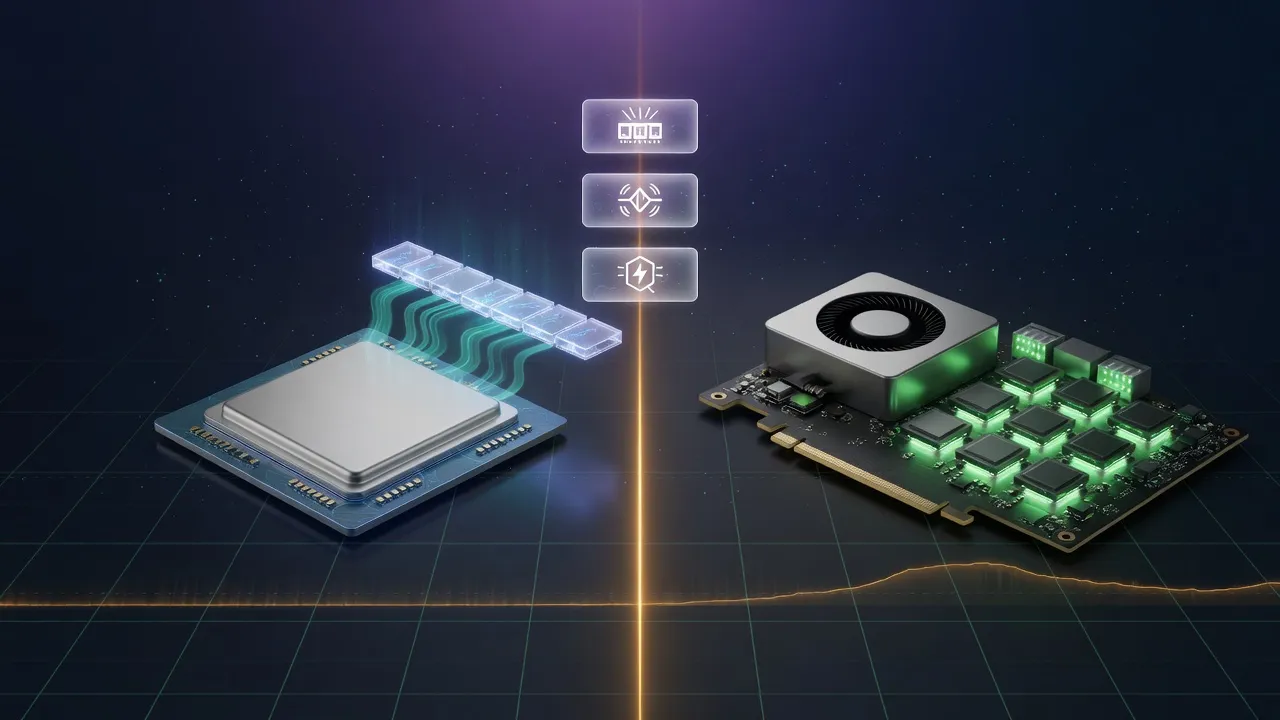
Mac vs NVIDIA for local inference, if you are still choosing a platform.


