- Services
Advertising disclosure: we earn commissions when you shop through the links below.
Dell announced the XPS 16 Creator Edition on October 7, 2026, its first XPS laptop built around NVIDIA RTX Spark. The platform pairs an Arm-based NVIDIA Grace CPU with up to 20 cores and a Blackwell RTX GPU with up to 6,144 cores, sharing up to 128GB of unified memory. Dell positions it for creators and AI developers who want to run large models locally on Windows, plus AAA gaming. Preorders opened at $3,799.99 for a 32GB/512GB configuration through Best Buy.
Manufacturer's suggested retail price. Current prices can be higher or lower. This is not a live price.
Sized for production serving of 70B–200B class models at full or lightly-quantized precision. Overkill for a homelab; right call when the workload pays for itself in token volume.
Generated from this product’s spec sheet. Editor reviews refine it over time.
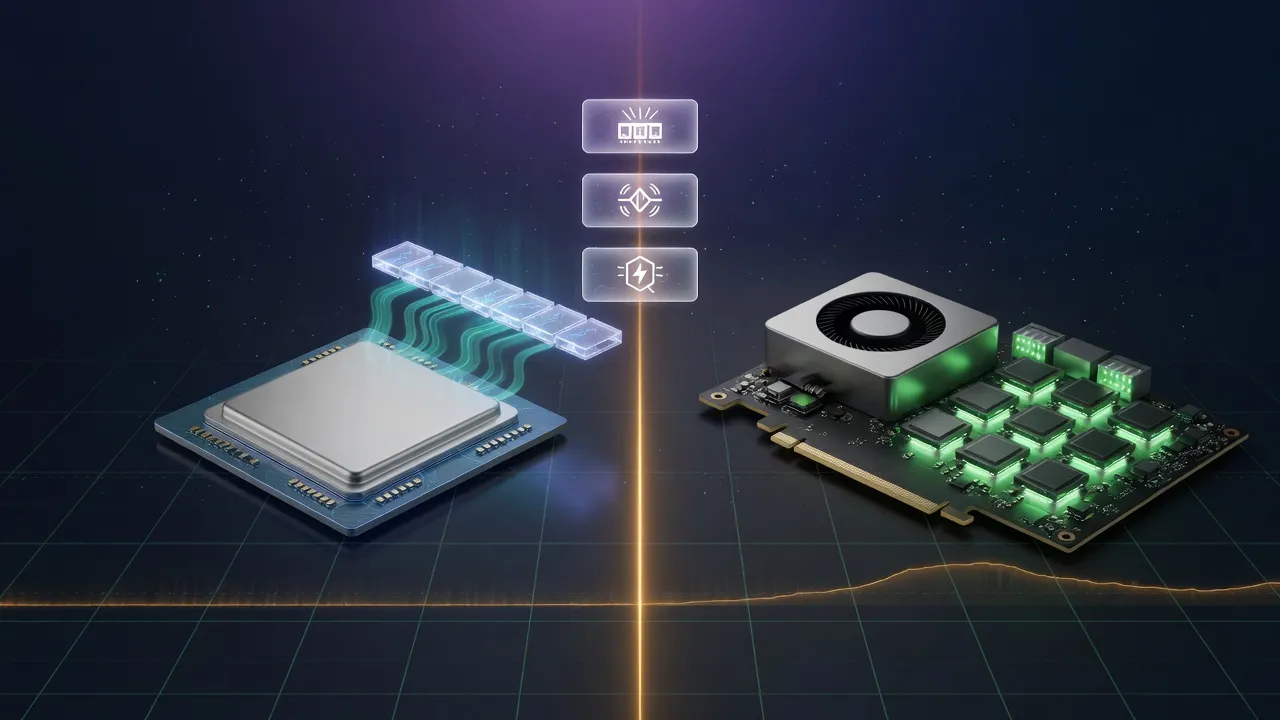
The Dell XPS 16 Creator Edition represents a fundamental shift in mobile compute architecture for machine learning engineers. Built around NVIDIA RTX Spark, this machine pairs an Arm-based NVIDIA Grace CPU featuring up to 20 cores with an NVIDIA Blackwell RTX GPU packing up to 6,144 cores. Instead of dividing memory between standard system RAM and a discrete GPU buffer, the platform utilizes up to 128GB of unified memory shared coherently between the CPU and GPU. At 0.7 inches (17.8 mm) thick, it brings workstation-class memory capacity into a premium mobile form factor starting at an MSRP of $3,799.99.
For practitioners looking for the best hardware for running AI models locally, the XPS 16 targets a persistent blind spot in the Windows ecosystem. Previously, running large-parameter open weights on a laptop required either compromising on software compatibility by using Apple Silicon unified memory, or accepting the severe 16GB VRAM limit typical of discrete mobile GPUs. By bringing a native 128GB GPU for AI to Windows with full CUDA acceleration, Dell and NVIDIA deliver a serious development machine for running local inference, serving complex multi-agent architectures, and executing localized fine-tuning without cloud dependency.
Whether evaluated as a standalone developer rig or indexed alongside specialized silicon, deploying the Dell XPS 16 Creator Edition for AI bridges the gap between desktop workstations and portable development environments. It offers researchers a native CUDA deployment target that runs directly on bare metal without the API translation layers required on non-NVIDIA platforms.
Evaluating Dell XPS 16 Creator Edition AI inference performance comes down to its memory subsystem and Tensor Core architecture. Local language model execution is largely memory-bandwidth bound during the autoregressive token generation phase, and capacity bound when allocating parameter weights and KV caches for extended contexts.
The primary limitation of traditional mobile workstations is the physical separation of RAM and VRAM over a constrained PCIe bus. By treating system memory as a unified pool, the Dell XPS 16 Creator Edition VRAM for large language models removes typical out-of-memory errors when initializing 70B+ weights. Compute-heavy operations benefit from the fifth-generation Tensor Cores in the Blackwell architecture, enabling high matrix-multiplication throughput while drawing substantially less power than an x86 desktop counterpart.
With 128GB of addressable memory, the XPS 16 Creator Edition shifts local execution capabilities away from small helper models toward frontier-grade open-weight architectures.
Finding portable hardware for running 70B parameter models historically meant resorting to extreme quantization (IQ2/IQ3) to squeeze under 16GB or 24GB limits. With 128GB of unified memory, models like Llama 3.1 70B, Qwen 2.5 72B, and DeepSeek-R1 distilled variants fit comfortably:
Running dense pipelines simultaneously is viable on this platform. An operator can load a 70B reasoning model, an embedding model like bge-large-en-v1.5, a vision model like Qwen2-VL-7B, and a diffusion pipeline such as FLUX.1 or SDXL at the same time. The unified memory space eliminates the need to continuously page models in and out of system RAM over PCIe.
The XPS 16 Creator Edition addresses specialized local computing requirements across several distinct groups:
llama.cpp, vLLM, TensorRT-LLM, or Ollama can develop, test, and profile models in a native Windows environment while maintaining full compatibility with CUDA tooling.Understanding where the XPS 16 stands requires evaluating it against its only true competitors: Apple Silicon and discrete x86 mobile workstations.
Apple has long held a near-monopoly on unified memory laptops for local inference, offering up to 128GB or 192GB configurations. However, Apple machines rely on Metal Performance Shaders (MPS) and MLX. While performant, macOS lacks native NVIDIA CUDA support. The Dell XPS 16 Creator Edition delivers the same unified memory advantage while supporting the industry standard CUDA ecosystem, native TensorRT optimization, and immediate compatibility with cutting-edge open-source tooling often written CUDA-first.
Standard high-performance Windows laptops pair Intel or AMD CPUs with discrete NVIDIA mobile GPUs. While these GPUs deliver high raw compute, their dedicated VRAM hard-caps at 16GB. Once an LLM exceeds 16GB, the system offloads layers to system DDR5 RAM over PCIe, causing generation speeds to collapse from 40 t/s down to 1-2 t/s. The XPS 16 with RTX Spark eliminates this memory cliff by allocating up to 128GB directly to the Blackwell GPU cores, making it the superior architecture for running large-scale local AI.
The top models this device can run at 4-bit, ranked by fit and speed.
Specs not available for scoring. This product is missing VRAM or memory bandwidth data.
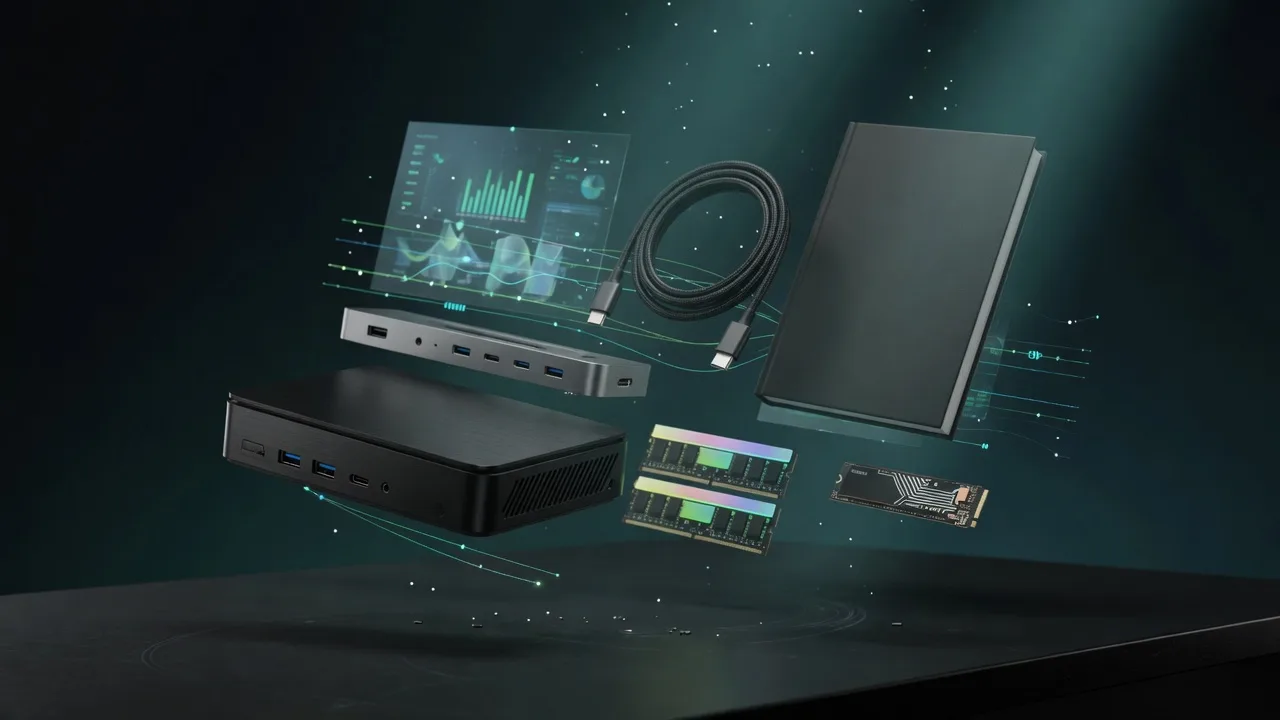
Also in Our Store
Docks, fast storage, cables, and a UPS sized for a local AI machine.
Rent this class of GPU by the hour before you buy. Live prices from RunPod and Vast.ai.
Find the break-even between buying this hardware and paying for a cloud API.
Mac vs NVIDIA for local inference, if you are still choosing a platform.