- Services
Advertising disclosure: we earn commissions when you shop through the links below.
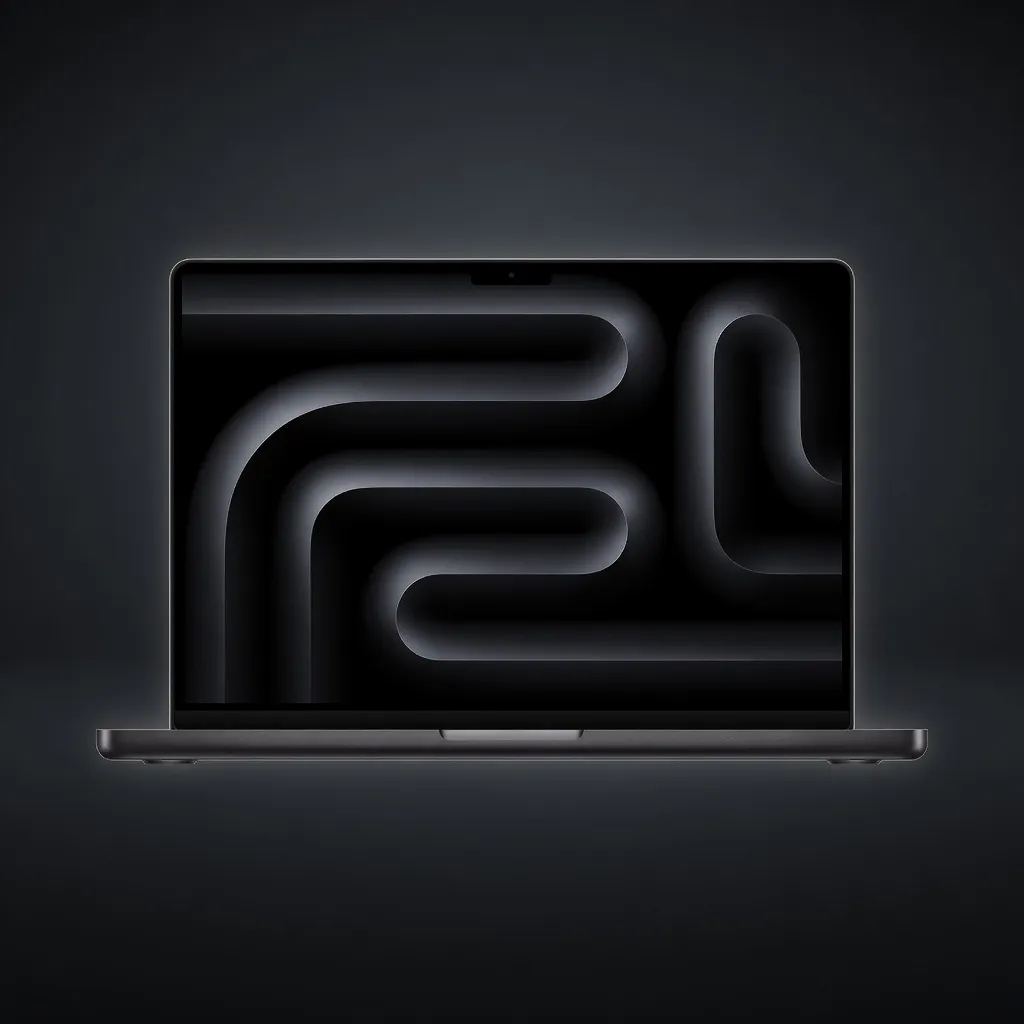
Apple's premium 14-inch laptop with M4 Max, up to 128GB unified memory at 546 GB/s, and 40-core GPU. The benchmark for on-device LLM inference in a portable form factor.
Manufacturer's suggested retail price. Current prices can be higher or lower. This is not a live price.
Generated from this product’s spec sheet. Editor reviews refine it over time.
The MacBook Pro 14-inch M4 Max (2024) represents the current ceiling for portable AI compute. While marketed by Apple as a premium pro laptop, for the AI engineer, it functions as a mobile workstation capable of running dense models that previously required dedicated server hardware or multi-GPU desktop setups. Built on a 3nm process, the M4 Max architecture integrates the CPU, GPU, and memory into a single package, eliminating the PCIe bottleneck typically found in discrete GPU systems.
In the landscape of best AI PCs & laptops for running AI models locally, the 14-inch M4 Max occupies a unique niche. It competes directly with high-end Windows workstations equipped with NVIDIA RTX 50-series mobile GPUs, yet it pulls ahead in one critical metric: VRAM capacity. While most mobile GPUs are capped at 16GB of VRAM, the M4 Max can be configured with up to 128GB of unified memory, allowing it to load models that are physically impossible to run on other laptops. It is the definitive choice for practitioners who need to develop, test, and deploy local AI agents without being tethered to a desk or a cloud provider.
The hardware profile of the MacBook Pro 14-inch M4 Max (2024) is defined by its memory architecture. In AI inference, the primary bottleneck is almost always memory bandwidth, not raw compute. The M4 Max addresses this with a 546 GB/s memory bandwidth, a figure that rivals entry-level data center hardware and significantly outperforms the 100-200 GB/s found in standard consumer laptops.
When evaluating MacBook Pro 14-inch M4 Max (2024) AI inference performance, the integration of the MLX framework is vital. MLX allows the GPU to utilize the unified memory architecture efficiently, providing a performance profile that makes the 14-inch M4 Max the best AI chip for local deployment in a mobile form factor.
The standout feature of this machine is its ability to handle hardware for running ~200B parameter LLMs with 128GB unified parameter models. While a 16GB GPU is limited to 7B or 8B parameter models at high precision, the 128GB M4 Max opens the door to the industry's most capable open-weight models.
Based on the 546 GB/s bandwidth, the MacBook Pro 14-inch M4 Max (2024) tokens per second typically range as follows:
For multimodal models like LLaVA or CogVLM, the 40-core GPU handles image encoding and text generation with negligible latency, making it an ideal platform for vision-language research.
The MacBook Pro 14-inch M4 Max (2024) is not a general-purpose consumer laptop; it is a specialized tool for AI development.
When evaluating the MacBook Pro 14-inch M4 Max (2024) vs. competitors, the landscape is divided between raw compute power and memory capacity.
The upcoming RTX 5090 mobile (and the current 4090 mobile) offers higher raw TFLOPS, which can result in faster processing for small models (sub-20B). However, NVIDIA mobile chips are capped at 16GB of VRAM. If your workload involves models larger than 20B parameters, the M4 Max is the objective winner because it can actually load the weights into memory, whereas the NVIDIA laptop will be forced to use system RAM (GTT), slowing inference to a crawl (1-2 tokens/sec).
The 14-inch and 16-inch models share the same M4 Max chip and 128GB memory ceiling. The 14-inch is the preferred choice for practitioners prioritizing mobility and "edge" development. However, the 16-inch model has a larger thermal envelope, which may result in slightly less fan noise during sustained, multi-hour inference sessions. For most AI workloads, which are bursty in nature, the 14-inch model provides identical performance in a much more portable 3.4 lbs frame.
While a desktop with an RTX 6000 Ada (48GB VRAM) will offer faster token generation, a single card still cannot match the 128GB capacity of the M4 Max. To exceed the M4 Max's memory capacity in a PC, you would need a dual-GPU setup (e.g., 2x RTX 3090/4090), which consumes over 800W of power and requires a dedicated desktop chassis. The M4 Max achieves its results at a fraction of the power (92W), making it the most efficient Apple AI PC for AI development.
The top models this device can run at 4-bit, ranked by fit and speed.
| Model | Grade | Speed | VRAM |
|---|---|---|---|
| AliceAI-Foundation-80B-A3B-Baseyandex | SS | 51.5 tok/s | 8.5 GB |
| Mixtral 8x7B InstructMistral AI | SS | 38.7 tok/s | 11.4 GB |
| DiffusionGemma 26B-A4BGoogle | SS | 41.9 tok/s | 10.5 GB |
| Gemma 4 26B-A4B ITGoogle | SS | 39.9 tok/s | 11.0 GB |
| North Mini CodeCohere | SS | 52.4 tok/s | 8.4 GB |
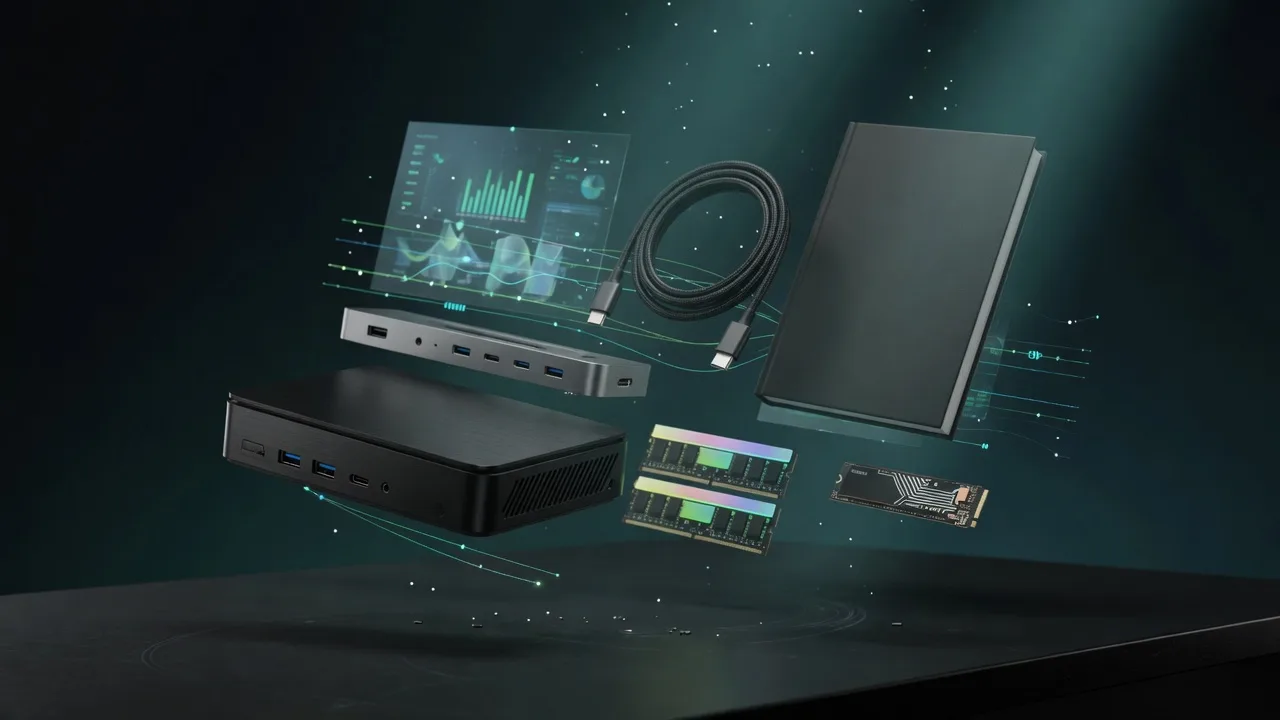
Also in Our Store
Docks, fast storage, cables, and a UPS sized for a local AI machine.

Rent this class of GPU by the hour before you buy. Live prices from RunPod and Vast.ai.
Find the break-even between buying this hardware and paying for a cloud API.
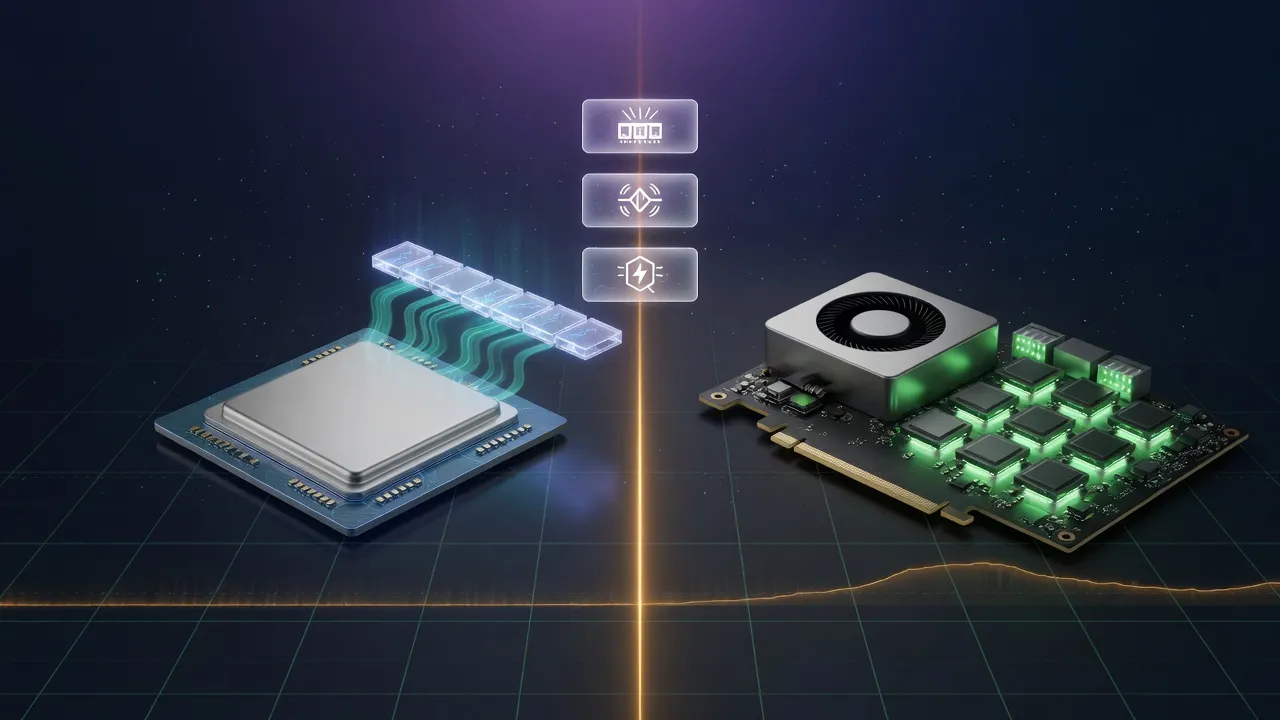
Mac vs NVIDIA for local inference, if you are still choosing a platform.