- Services
Advertising disclosure: we earn commissions when you shop through the links below.
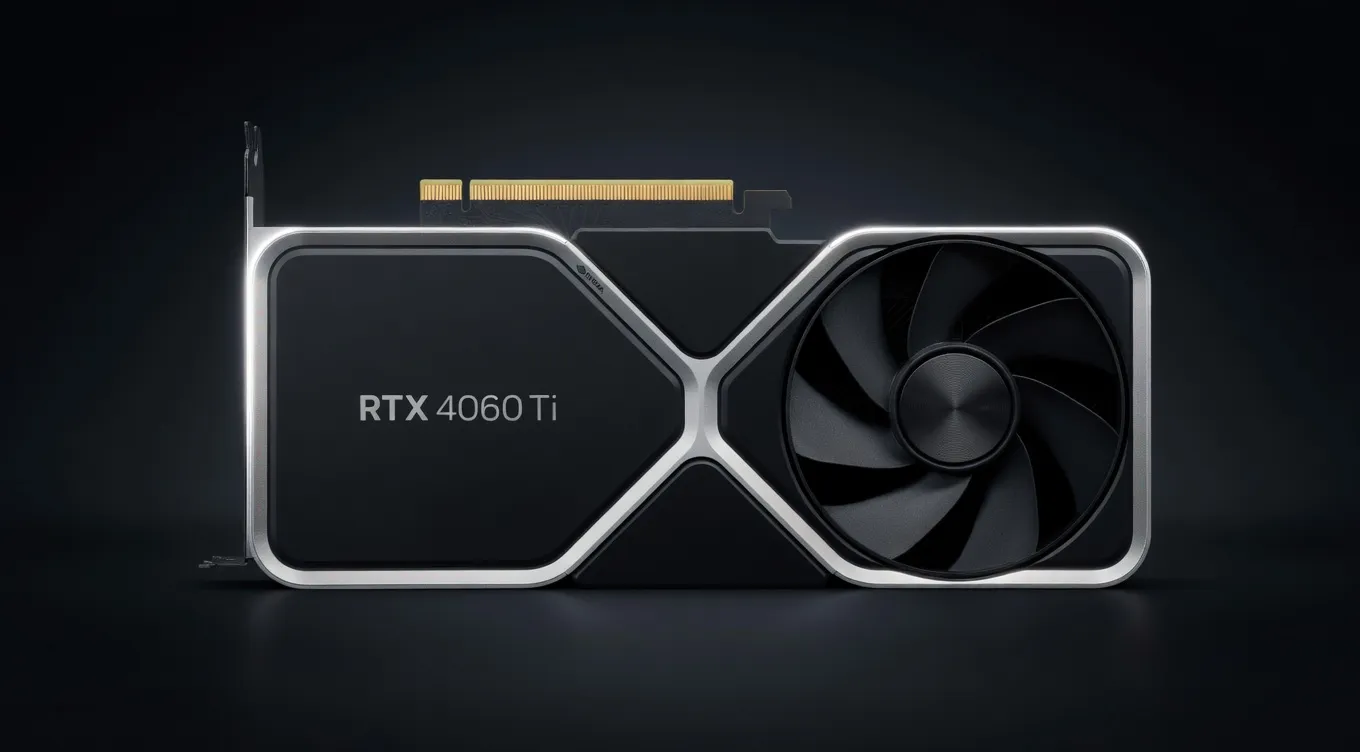
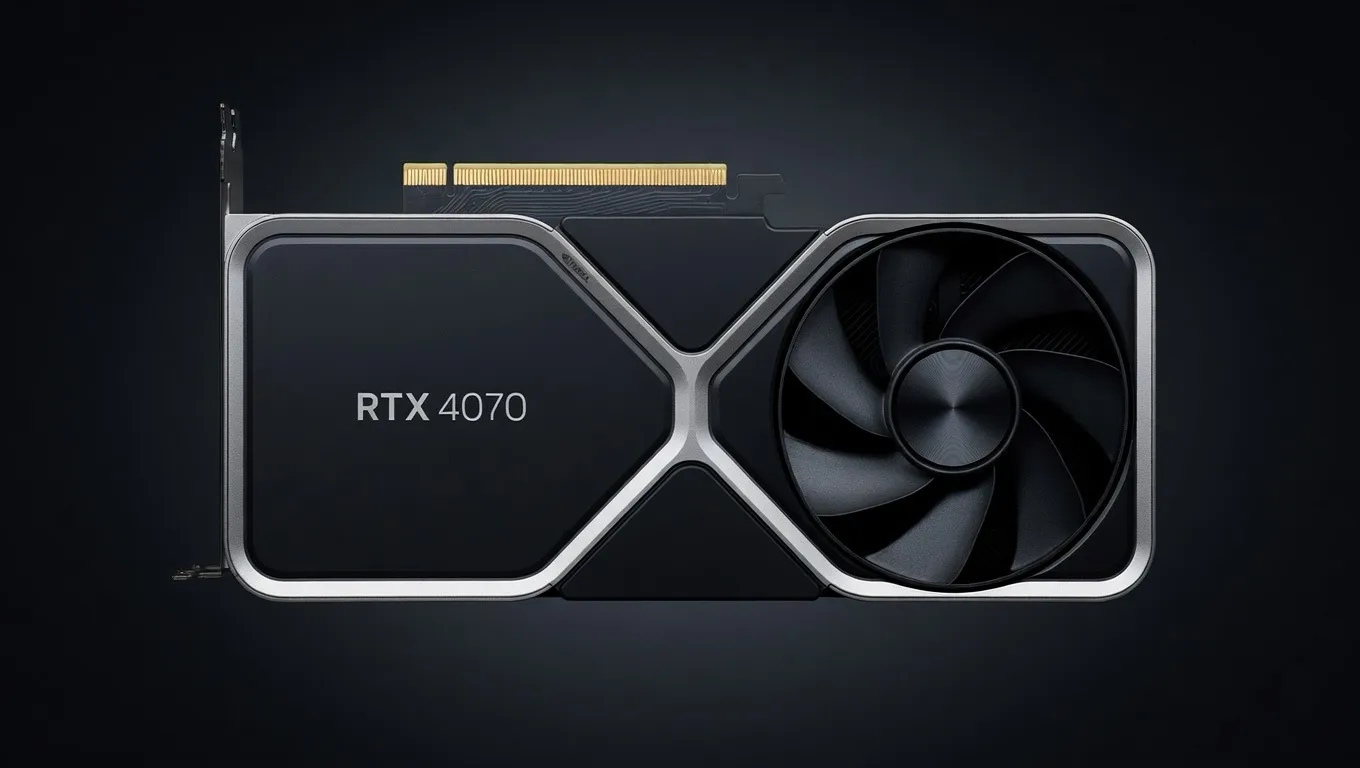
Mainstream Ada Lovelace GPU with 4,352 CUDA cores and 16GB GDDR6. Good 1080p/1440p performer with generous VRAM for local AI experiments.
Manufacturer's suggested retail price. Current prices can be higher or lower. This is not a live price.
Good balance for indie developers running local copilots and chat. 30B+ models are reachable but only with aggressive quantization and short context. Pricing puts it well above average on raw compute-per-dollar, which matters more than peak FLOPS for steady inference loads.
Generated from this product’s spec sheet. Editor reviews refine it over time.
The NVIDIA GeForce RTX 4060 Ti 16GB is a specialized entry in the Ada Lovelace consumer lineup that occupies a unique niche for AI practitioners. While its 128-bit memory bus limits its utility as a high-end gaming card, the 16GB of GDDR6 VRAM makes it one of the most cost-effective options for local AI development and inference. For engineers building agentic workflows or researchers testing computer vision models, this card provides the necessary memory headroom that standard 8GB or 12GB consumer cards lack.
Manufactured by NVIDIA on the TSMC 4N process, the RTX 4060 Ti 16GB is a mainstream "prosumer" bridge card. It competes directly with the older RTX 3060 12GB in terms of value-per-GB of VRAM and sits as a more efficient, albeit narrower, alternative to the RTX 4070. While NVIDIA has officially discontinued the reference production, third-party models remain a staple for budget-conscious practitioners looking for the best NVIDIA GPUs for running AI models locally without jumping to the $800+ price bracket.
When evaluating the NVIDIA GeForce RTX 4060 Ti 16GB for AI, the primary constraint is memory bandwidth, while the primary advantage is capacity. At 288 GB/s, the bandwidth is lower than the previous generation's RTX 3060 Ti, which means token generation speeds (inference latency) will be slower than higher-tier cards. However, the 16GB VRAM buffer allows it to load models that simply would not fit on an RTX 4070 (12GB) or the base 4060 Ti (8GB).
The 4th Generation Tensor Cores are a significant upgrade for NVIDIA GPUs for AI development, as they support FP8 precision. This allows for reduced memory footprints and increased throughput during inference for supported frameworks. Furthermore, the 165W TDP makes this card exceptionally efficient; it can run in small form factor (SFF) builds or workstations with modest power supplies, making it a prime candidate for local AI agents in 2025 that need to run 24/7.
The NVIDIA GeForce RTX 4060 Ti 16GB VRAM for large language models is sufficient for most modern 7B and 8B parameter models at high precision, as well as mid-sized models when quantized.
In terms of NVIDIA GeForce RTX 4060 Ti 16GB tokens per second, users can expect:
This card is best for Computer Vision tasks in its price class. The 16GB VRAM allows for training YOLOv8/v10 models with larger batch sizes compared to the 8GB variant. It also handles multimodal models like Llava 1.6 7B or Moondream2 with ease, making it an excellent choice for visual reasoning agents.
The NVIDIA GeForce RTX 4060 Ti 16GB AI inference performance makes it a specialized tool rather than a general-purpose powerhouse.
For those running Ollama, LM Studio, or LocalAI, this is the cheapest entry point into the 16GB VRAM ecosystem. It allows for experimenting with larger context windows (up to 32k or 64k on 8B models) which is often the bottleneck for 8GB and 12GB cards.
If you are building local AI agents, you often need to run multiple models simultaneously (e.g., an embedding model, a small routing model, and a primary LLM). The 16GB capacity allows you to keep these models resident in VRAM, eliminating the latency of swapping models from system RAM.
Because of the low 165W TDP, this is an ideal AI chip for local deployment in edge servers. It provides enough TFLOPS for real-time video analytics or serving a small team’s internal chatbot without requiring specialized cooling or high-amperage circuits.
While it is excellent for inference, it is not the best AI GPU for agent training if you are looking at full fine-tuning. For LoRA or QLoRA fine-tuning of 7B/8B models, it is adequate, but the 288 GB/s bandwidth will make the training process significantly slower than on an RTX 3090 or 4090.
The RTX 3060 12GB was the previous king of budget AI. The 4060 Ti 16GB offers 4GB more VRAM and significantly better power efficiency. While the 3060 12GB is much cheaper on the used market, the 4060 Ti 16GB is the superior choice for developers who need to squeeze in larger context windows or multimodal models.
This is a classic "Capacity vs. Speed" trade-off. The RTX 4070 Super has a much faster memory bus and more CUDA cores, leading to higher tokens per second. However, the 12GB limit is a hard ceiling. If your model + context requires 14GB, the 4070 Super will offload to system RAM and its performance will crater, while the 4060 Ti 16GB will continue to run smoothly.
When comparing the RTX 4060 Ti 16GB vs. AMD Radeon RX 7600 XT (16GB), NVIDIA remains the preferred choice for practitioners. While the AMD card offers 16GB at a lower price point, NVIDIA’s CUDA ecosystem and the mature support for libraries like TensorRT, vLLM, and bitsandbytes make the 4060 Ti a much more "plug-and-play" experience for AI workloads. AMD's ROCm has improved, but for agentic frameworks and experimental model architectures, NVIDIA remains the industry standard.
The top models this device can run at 4-bit, ranked by fit and speed.
| Model | Grade | Speed | VRAM |
|---|---|---|---|
| Qwen3-30B-A3BAlibaba | SS | 43.0 tok/s | 5.4 GB |
| Llama 3 8B InstructMeta | SS | 40.9 tok/s | 5.7 GB |
| Apertus 8BEPFL, ETH Zurich, CSCS | SS | 42.9 tok/s | 5.4 GB |
| LensVLM-9BApple | SS | 38.5 tok/s | 6.0 GB |
| Carnice-9b for Hermes agentkai-os | SS | 38.5 tok/s | 6.0 GB |
Also in Our Store
Docks, fast storage, cables, and a UPS sized for a local AI machine.

Rent this class of GPU by the hour before you buy. Live prices from RunPod and Vast.ai.
Find the break-even between buying this hardware and paying for a cloud API.
Mac vs NVIDIA for local inference, if you are still choosing a platform.