
- Services
Advertising disclosure: we earn commissions when you shop through the links below.
Thunderobot's AI Master M7000 is a 16-inch mobile workstation built for running large language models locally. It pairs an AMD Ryzen AI Max+ 395 processor with 64GB of LPDDR5X-8000 memory and Radeon 8060S integrated graphics, and uses Phison aiDAPTIV+ to treat 85GB of a 1TB SSD as an AI cache, which Thunderobot says is enough to run GPT-OSS-120B. The XDNA 2 NPU is rated at 50 TOPS and the system sustains a 160W power profile. It ships with FlowAI PC and Herdsman local inference software and sells in China from 24,999 yuan.
The first tier where 70B-class models stop feeling cramped. Headroom for KV cache means 32K+ context on Q4 quants without falling off the GPU.
Generated from this product’s spec sheet. Editor reviews refine it over time.
The AI Master M7000 represents a direct pivot in mobile hardware design toward dedicated local inference. Engineered around AMD's Strix Halo architecture, this 16-inch mobile workstation pairs the flagship AMD Ryzen AI Max+ 395 processor with 64GB of unified LPDDR5X-8000 memory. By allowing the integrated Radeon 8060S GPU to dynamically carve out up to 48GB of capacity as addressable VRAM, the machine bypasses the standard 16GB mobile GPU ceiling that has long constrained mobile developers to small parameter models.
What elevates the platform beyond a standard high-RAM laptop is its hybrid memory architecture. In addition to high-bandwidth system memory, the M7000 integrates Phison aiDAPTIV+ middleware linked to an 85GB dedicated SLC-mode AI cache partitioned from its 1TB NVMe drive. This enables the machine to serve as specialized hardware for running 120B MoE parameter models locally without running out of memory. Starting at 24,999 yuan in China, it occupies a distinct prosumer tier, challenging both high-end mobile workstations equipped with discrete Nvidia Ada GPUs and Apple Silicon unified memory systems.
For teams building autonomous workflows and developers seeking the best hardware for local AI agents in 2026, the AI Master M7000 delivers desktop-grade model headroom in a 2.45kg portable chassis. It arrives configured with the Herdsman local inference engine and FlowAI PC toolchains, lowering the friction of running multi-agent orchestrations and long-context language tasks without cloud dependencies.
Evaluating the AI Master M7000 for AI requires analyzing how its unified architecture handles memory bandwidth, compute density, and sustained thermal dissipation.
When evaluating AI Master M7000 VRAM for large language models, the 48GB GPU buffer changes what is possible on a battery-powered device. Memory capacity dictates context window size and parameter limits far more than raw TFLOPS.
1+------------------------------------+----------------+------------------+2| Model Architecture | Quantization | Memory Footprint |3+------------------------------------+----------------+------------------+4| Llama 3.1 8B / Qwen 2.5 7B | FP16 / BF16 | ~16GB |5| Mistral Small 24B / Gemma 2 27B | Q8_0 | ~28GB - 32GB |6| Llama 3.1 70B / Qwen 2.5 72B | Q4_K_M | ~42GB - 45GB |7| Mixtral 8x7B (MoE) | Q5_K_M | ~34GB |8| GPT-OSS-120B / DeepSeek-V2 MoE | Q4 / aiDAPTIV+ | ~48GB + Cache |9+------------------------------------+----------------+------------------+
For 70B-class models like Llama 3.1 70B or DeepSeek-R1-Distill-Llama-70B, the sweet spot on this machine is 4-bit medium quantization (Q4_K_M or IQ4_XS). These quants consume approximately 42GB to 44GB, leaving 4GB to 6GB for KV-cache context allocations up to 16,000 tokens inside pure VRAM.
The AI Master M7000 tokens per second metrics reflect its unified memory bandwidth:
With 48GB allocated to the graphics core, running multimodal systems such as Qwen 2.5-VL 72B (quantized) or CogVLM is well within spec. For pure text models in the 8B to 14B range, you can scale context windows out to 64k or 128k tokens using FlashAttention-optimized runtimes like llama.cpp or ROCm-ported vLLM without running up against out-of-memory errors.
The AI Master M7000 is engineered for specific operational profiles where mobile VRAM constraints normally force reliance on cloud APIs:
The most relevant competitor in unified mobile computing is the 16-inch Apple MacBook Pro configured with the M3 or M4 Max chip and 64GB or 128GB of unified memory. Apple Silicon delivers superior memory bandwidth (300 to 400 GB/s on Max variants), yielding higher tokens per second on raw generation. However, macOS locks you into Metal-based ecosystems. The AI Master M7000 runs on native x86-64 Linux and Windows environments, making it far simpler to compile standard CUDA-to-ROCm branches, integrate native C++ runtimes, and interface with broader open-source driver stacks.
When matched against traditional PC workstations packing an Nvidia GeForce RTX 4090 Mobile, the tradeoffs invert. The RTX 4090 Mobile offers raw compute speed via Tensor cores, but it is fundamentally bottlenecked by its hard 16GB VRAM limit. An RTX 4090 laptop cannot load an unquantized 32B model, let alone a quantized 70B model or a 120B MoE. The M7000 sacrifices peak tokens per second on small models to gain the ability to load model tiers that otherwise require a desktop workstation with multiple graphics cards.
Choose the AI Master M7000 if your priority is running medium to large models locally within an x86 Linux or Windows environment, and you need the largest possible addressable VRAM buffer available in a portable footprint.
The top models this device can run at 4-bit, ranked by fit and speed.
Specs not available for scoring. This product is missing VRAM or memory bandwidth data.
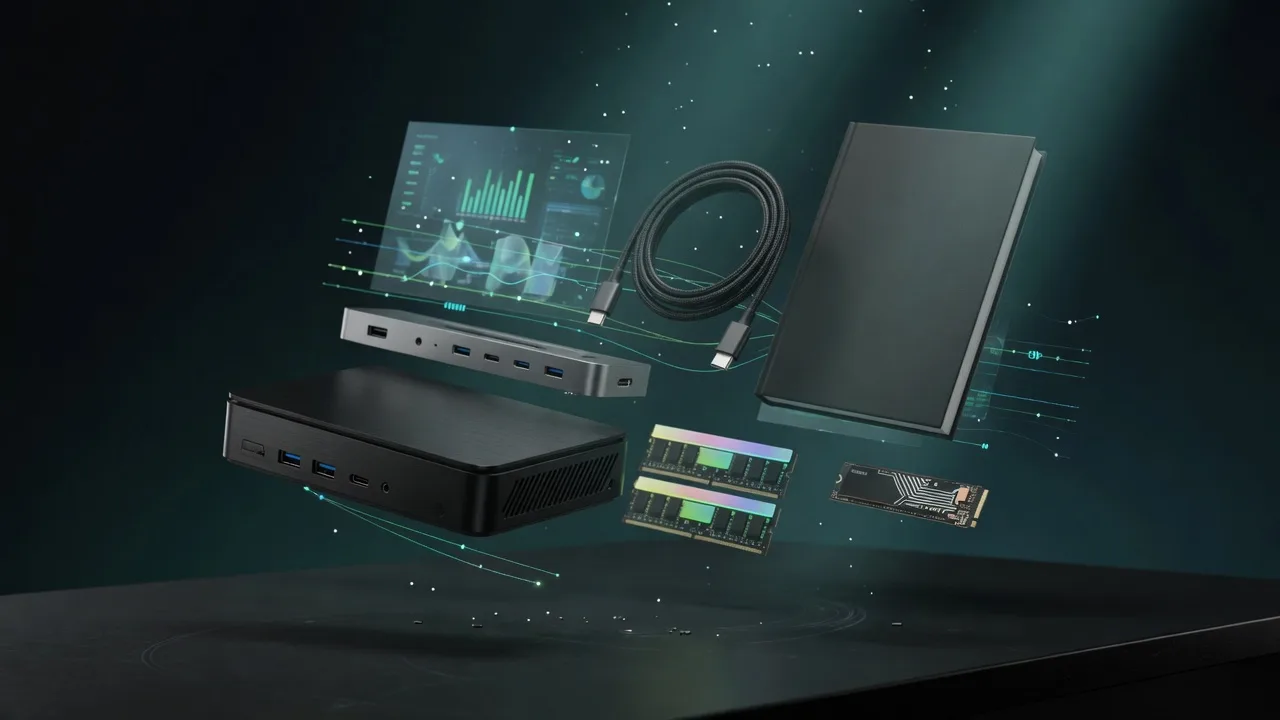
Also in Our Store
Docks, fast storage, cables, and a UPS sized for a local AI machine.
Rent this class of GPU by the hour before you buy. Live prices from RunPod and Vast.ai.
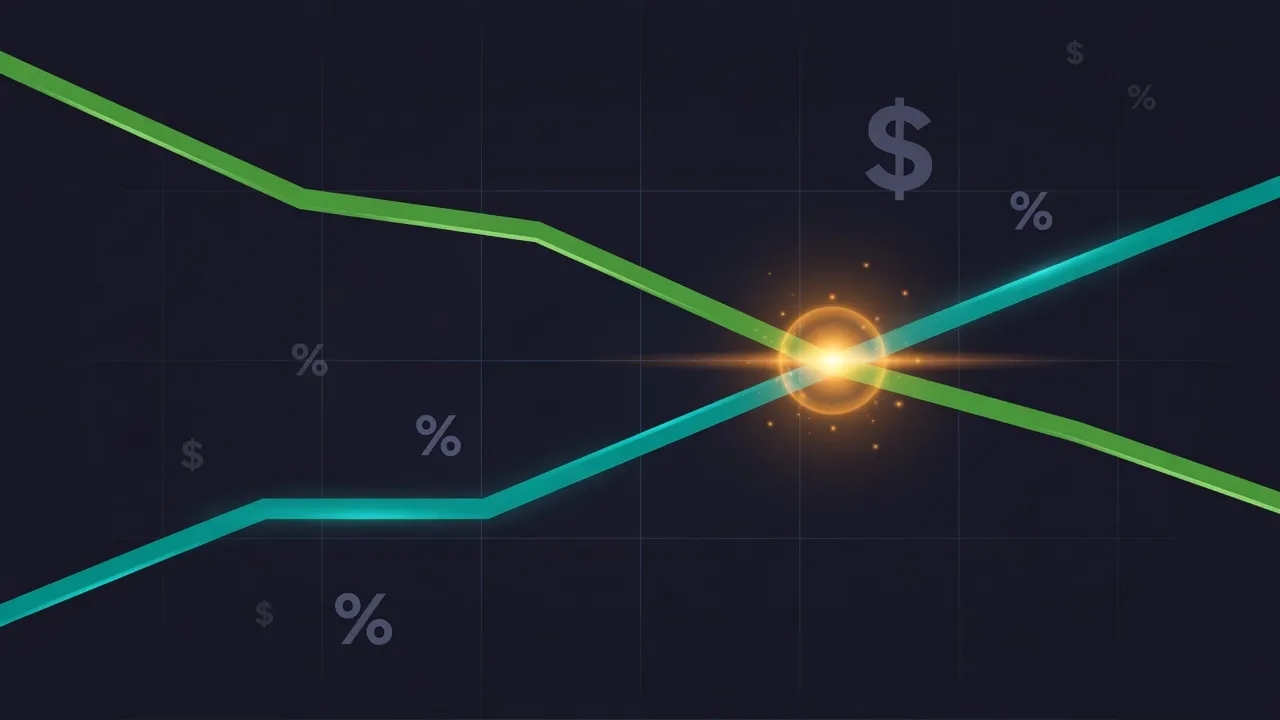
Find the break-even between buying this hardware and paying for a cloud API.
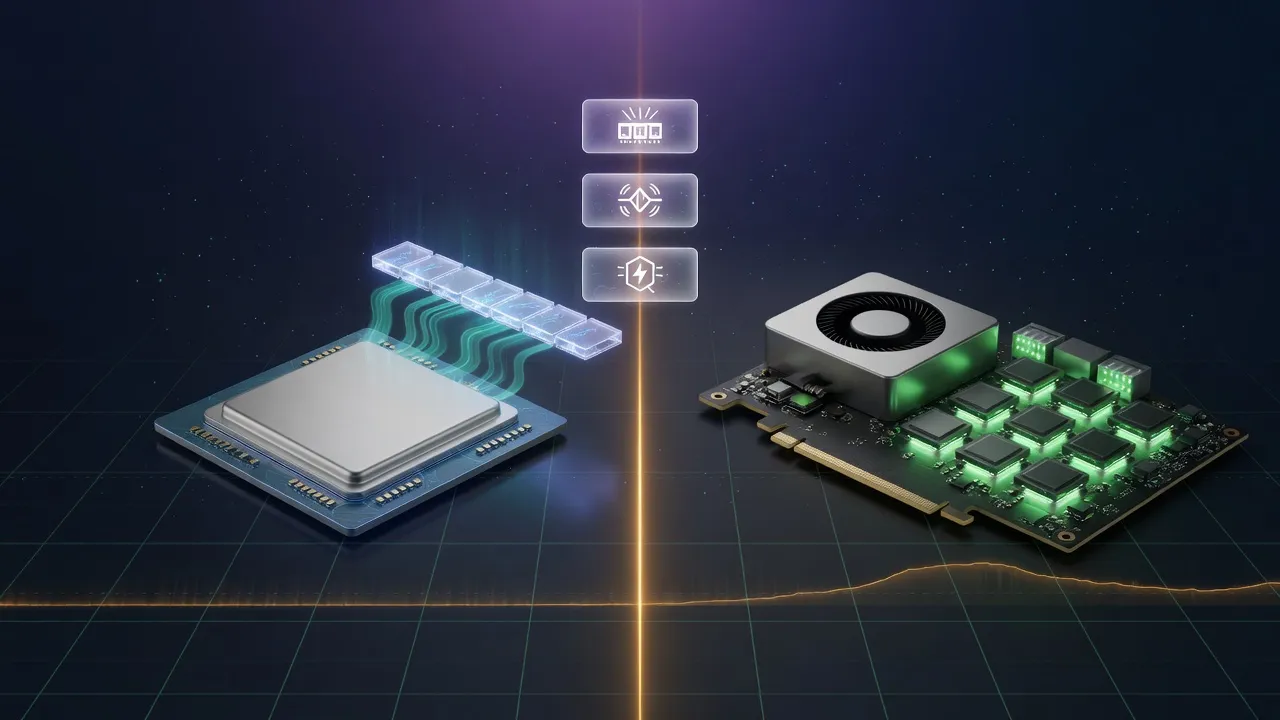
Mac vs NVIDIA for local inference, if you are still choosing a platform.
