
- Services
Advertising disclosure: we earn commissions when you shop through the links below.
GMKtec's EVO-X5 Pro is a mini PC made for running large language models locally. It combines an AMD Ryzen AI Max+ PRO 495 (16 cores, up to 5.2 GHz), Radeon 8065S graphics, a 55 TOPS NPU and 192GB of LPDDR5X memory shared with the GPU. GMKtec says it runs 320B parameter LLMs locally, and it ships with Windows 11 Pro and a 2TB NVMe SSD. Price is $6,799 on GMKtec's store, or 1,250,000 yen in Japan where release is planned for late November 2026.
Manufacturer's suggested retail price. Current prices can be higher or lower. This is not a live price.
Sized for production serving of 70B–200B class models at full or lightly-quantized precision. Overkill for a homelab; right call when the workload pays for itself in token volume.
Generated from this product’s spec sheet. Editor reviews refine it over time.
The EVO-X5 Pro-192/2T-W11Pro(AI495) is a purpose-built, compact workstation engineered to solve the primary bottleneck in local machine learning: addressable high-speed memory. Built around AMD's Strix Halo platform, the system pairs the flagship AMD Ryzen AI Max+ PRO 495 processor with 192GB of unified LPDDR5X-8533 memory, of which up to 160GB can be dynamically allocated as dedicated VRAM to the integrated Radeon 8065S graphics. Priced at $6,799 on pre-order, this machine sits in a distinct prosumer and enterprise-edge tier, offering workstation-scale memory density within an 8-liter desktop chassis measuring 195 x 80 x 221 mm and weighing 2.5 kg.
For practitioners looking for the best hardware for running AI models locally, the appeal of this architecture lies in memory consolidation. Traditional multi-GPU setups require distributing tensor weights across multiple discrete PCIe boards, introducing interconnect latency, high thermal output, and substantial power draw. The EVO-X5 Pro bypasses discrete multi-GPU clustering by unifying system memory and graphics memory under a shared 256-bit bus, creating a viable 160GB GPU for AI workloads that operates within a sustained 120W TDP envelope (160W peak in performance mode).
The machine is explicitly targeted at AI engineers, autonomous agent developers, and research labs that demand complete data sovereignty for massive parameters. Running local LLMs at the 70B to 320B scale has historically required dual or quad high-tier enterprise GPUs (such as dual Nvidia RTX 6000 Ada or A100s) or top-spec Apple silicon desktops. The EVO-X5 Pro provides an alternative x86_64 environment, shipping with Windows 11 Pro and supporting native Linux environments, eliminating the compatibility translation layers often encountered on ARM platforms while delivering out-of-band management via AMD DASH and dual 10GbE network interfaces.
The core engine of the EVO-X5 Pro is the AMD Ryzen AI Max+ PRO 495, manufactured on TSMC's Zen 5 architecture. It features 16 physical cores and 32 threads operating at a 3.1 GHz base clock with boost ceilings up to 5.2 GHz, backed by an 80MB cache structure (16MB L2 + 64MB L3). AI acceleration is split across three distinct processing domains: the CPU vector units, the integrated XDNA 2 NPU capable of up to 55 TOPS of INT8 compute, and the 40 Compute Unit (CU) AMD Radeon 8065S GPU running at clock speeds up to 3000 MHz.
1+-------------------------------------------------------------------------+2| EVO-X5 Pro Hardware Architecture |3+-------------------------------------------------------------------------+4| Compute: |5| - CPU: AMD Ryzen AI Max+ PRO 495 (16C/32T Zen 5, up to 5.2 GHz) |6| - GPU: AMD Radeon 8065S (40 Compute Units RDNA 3.5 @ 3000 MHz) |7| - NPU: AMD XDNA 2 Neural Processing Unit (55 TOPS INT8) |8+-------------------------------------------------------------------------+9| Memory Subsystem: |10| - Total System Memory: 192GB LPDDR5X-8533 (256-bit memory bus) |11| - Allocatable VRAM: Up to 160GB assigned to Radeon 8065S |12| - Theoretical Peak Bandwidth: ~273 GB/s |13+-------------------------------------------------------------------------+14| Power & Interconnect: |15| - Sustained TDP: 120W (160W Peak) via 330W external adapter |16| - Networking: 2 x 10GbE RJ45 (one DASH-managed), Wi-Fi 7, BT 5.4 |17| - Expansion: 2 x USB4 V2 (80Gbps), 2 x USB4 (40Gbps), 3 x M.2 (24TB max)|18+-------------------------------------------------------------------------+
When evaluating EVO-X5 Pro-192/2T-W11Pro(AI495) AI inference performance, memory bandwidth is the primary operational metric. With LPDDR5X-8533 across a wide 256-bit memory interface, the system achieves a theoretical peak throughput of approximately 273 GB/s. While this bandwidth is lower than discrete high-bandwidth memory (HBM3) or wide-bus GDDR6X on standalone desktop cards, the massive 160GB capacity avoids the steep performance cliffs caused by PCIe offloading.
Power delivery is maintained via a 330W external power supply. A triple-fan cooling array paired with a custom vapor chamber manages thermals under full synthetic loads, allowing the system to run continuous inference pipelines without thermal throttling. Storage architecture includes a pre-installed 2TB PCIe 4.0 x4 NVMe SSD, alongside two additional M.2 2280 slots, allowing developers to expand local storage up to 24TB to host raw model weights, fine-tuning datasets, and retrieval-augmented generation (RAG) vector stores locally.
The EVO-X5 Pro-192/2T-W11Pro(AI495) VRAM for large language models eliminates traditional memory bounds for consumer-scale inference. With 160GB dedicated to the GPU runtime (via ROCm, Vulkan, or DirectML runtimes) and 32GB retained for system operations, the hardware can fit models that previously demanded multi-GPU clusters.
In autoregressive token generation, performance is bounded by memory bandwidth rather than raw TFLOPS:
The sweet spot for this hardware is running 70B parameter models at Q4_K_M or Q5_K_M, or 32B models at full FP16. At these configurations, the trade-off between semantic precision, generation latency, and available context length is fully optimized. Multimodal architectures such as Qwen2-VL or LLaVA-NeXT are fully supported, with sufficient memory overhead to ingest ultra-high-resolution images and long-form video frames without out-of-memory exceptions.
The EVO-X5 Pro fits into precise developer and operational environments:
When cross-shopping hardware for local AI development, the EVO-X5 Pro-192/2T-W11Pro(AI495) vs Mac Studio comparison is the most direct parallel.
1+------------------------+--------------------+---------------------+----------------------+2| Metric | GMKtec EVO-X5 Pro | Apple Mac Studio | Dual Nvidia RTX 4090 |3| | | (M2/M4 Ultra 192GB) | Custom Build |4+------------------------+--------------------+---------------------+----------------------+5| MSRP | $6,799 | $6,999 - $7,999 | ~$5,500 - $6,500 |6| Usable VRAM | Up to 160GB | Up to 150GB-192GB | 48GB (2 x 24GB) |7| Architecture | x86_64 (AMD Zen 5) | ARM64 (Apple Silicon)| x86_64 (PCIe Rig) |8| Memory Bandwidth | ~273 GB/s | ~800 GB/s | 2 x 1,008 GB/s |9| Total System Power | 120W - 160W | 150W - 220W | 700W - 900W |10| Max Model Fit (Q4) | ~320B | ~320B - 405B | ~70B (Split Tensor) |11| Dual 10GbE Native | Yes | No (Single 10GbE) | Dependent on Mobo |12| USB4 V2 (80Gbps) | Yes (Clustering) | Thunderbolt 4/5 | No |13+------------------------+--------------------+---------------------+----------------------+
Apple's unified memory desktop provides substantially higher memory bandwidth (~800 GB/s on Ultra configurations), delivering faster token generation speeds on models like Llama 70B (often reaching 15-20 tok/s). However, the EVO-X5 Pro operates natively on the x86_64 instruction set under Windows 11 Pro and Linux. This bypasses the operational friction of Apple's MLX ecosystem when developers rely on standard CUDA-dependent libraries, specific ROCm toolchains, Windows enterprise software, or native Linux container stacks. Additionally, the EVO-X5 Pro provides dual native 10GbE networking, DASH management, and high-speed USB4 V2 (80Gbps) channels capable of linking multiple nodes for distributed inference clusters.
A workstation with dual Nvidia RTX 4090 GPUs offers unmatched compute throughput (CUDA tensor cores) and 1,008 GB/s of bandwidth per card. However, it tops out at 48GB of total VRAM, severely limiting the execution of models exceeding 70B parameters without aggressive offloading. A dual RTX 6000 Ada (96GB total VRAM) setup can run larger models, but costs well north of $14,000 and requires high-draw power supplies, custom server rack space, and substantial cooling infrastructure.
The EVO-X5 Pro-192/2T-W11Pro(AI495) delivers a unique compromise: it trades the blistering raw token generation speeds of high-wattage discrete cards for an immense, low-power 160GB memory envelope capable of hosting massive language models completely offline.
The top models this device can run at 4-bit, ranked by fit and speed.
Specs not available for scoring. This product is missing VRAM or memory bandwidth data.
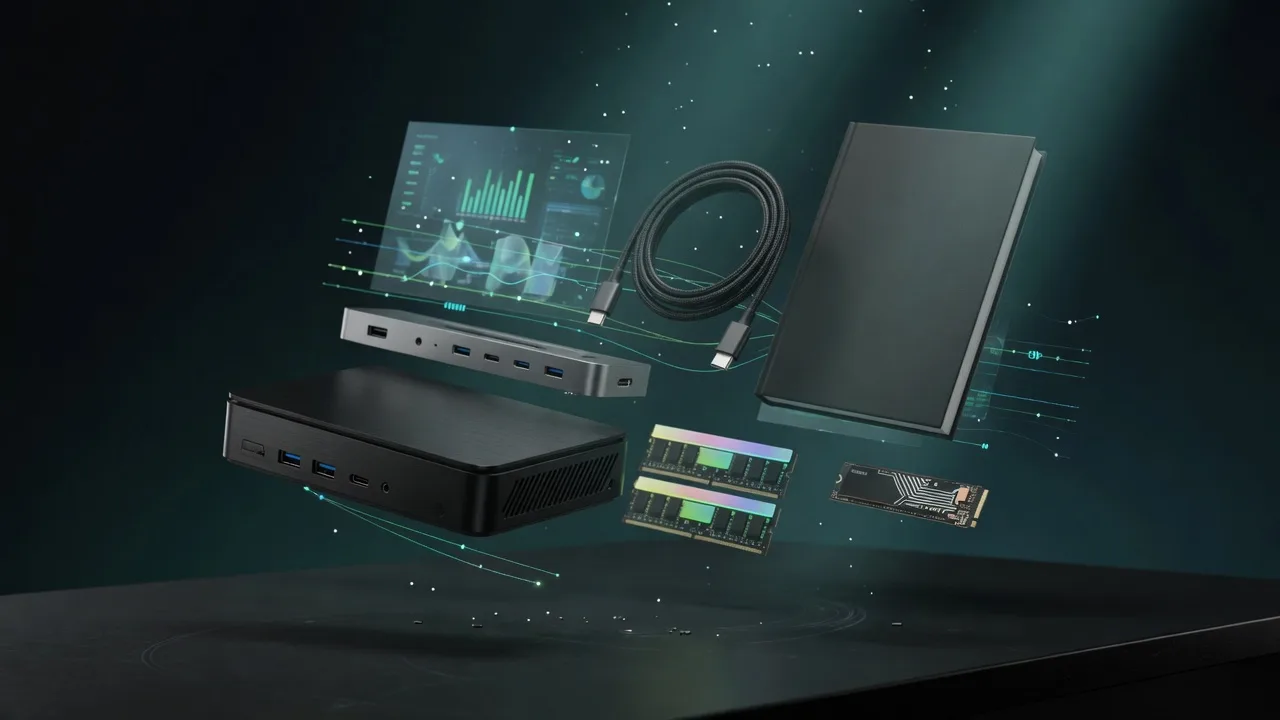
Also in Our Store
Docks, fast storage, cables, and a UPS sized for a local AI machine.

Rent this class of GPU by the hour before you buy. Live prices from RunPod and Vast.ai.

Find the break-even between buying this hardware and paying for a cloud API.
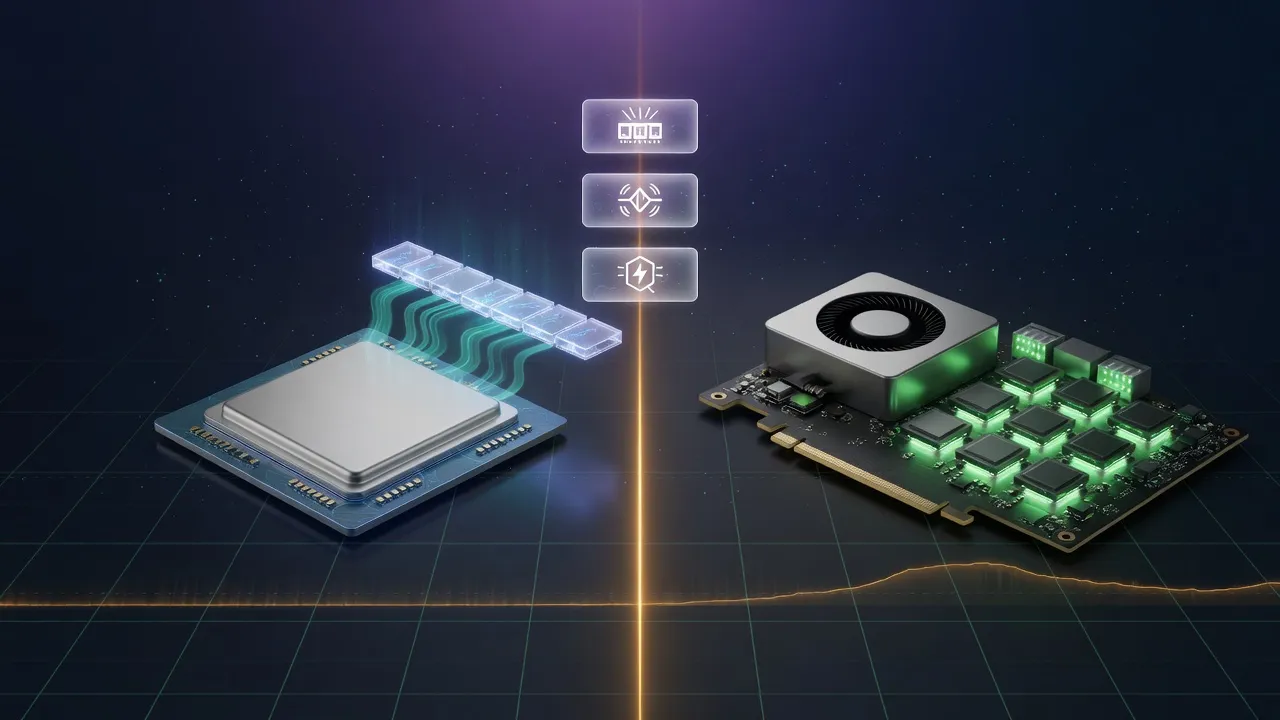
Mac vs NVIDIA for local inference, if you are still choosing a platform.
