
- Services
Advertising disclosure: we earn commissions when you shop through the links below.
GIGABYTE launched the AI TOP AERO on November 10, 2026. It is a one-litre Windows 11 desktop for local AI development, content creation and gaming, built on the NVIDIA RTX Spark N1X Superchip with a 20-core NVIDIA Grace CPU and a Blackwell RTX GPU. Configurations offer up to 128GB of LPDDR5X unified memory and up to a 4TB PCIe Gen5 SSD, and NVIDIA rates the platform at up to 1 petaflop of FP4 AI performance. GIGABYTE has not announced pricing or regional availability; the Linux-based AI TOP ATOM starts at $4,999 for a 64GB memory and 2TB SSD configuration.
Sized for production serving of 70B–200B class models at full or lightly-quantized precision. Overkill for a homelab; right call when the workload pays for itself in token volume.
Generated from this product’s spec sheet. Editor reviews refine it over time.
The AI TOP AERO packages data-center-derived architecture into a one-litre compact chassis designed specifically for local inference and agentic development. Built on the NVIDIA RTX Spark N1X Superchip, the system pairs a 20-core ARM-based NVIDIA Grace CPU with an NVIDIA Blackwell RTX GPU featuring 6,144 CUDA cores. What makes the machine immediately relevant for machine learning engineers is its 128GB of high-speed LPDDR5X unified memory. Instead of routing tensors across a constrained PCIe bus between separate system RAM and dedicated GPU VRAM, the unified memory pool allows the Blackwell GPU direct access to the entire address space.
Operating in the prosumer and desktop workstation tier, the system bridges the gap between power-hungry dual-GPU desktop workstations and compact Mac Studio setups. While Apple hardware has historically dominated compact, high-capacity unified memory configurations, it relies on Apple Silicon and Metal framework optimizations. The AI TOP AERO delivers an equivalent high-capacity unified memory profile natively on Windows 11 with full NVIDIA CUDA acceleration. For engineers searching for Unknown hardware for AI development or turnkey compact nodes, this platform brings native access to the entire NVIDIA AI software stack, including TensorRT, TensorRT-LLM, CUDA-X libraries, and local deployment frameworks like Ollama, LM Studio, and NVIDIA Nemotron.
With an AI compute rating reaching up to 1 petaflop of FP4 tensor performance, the AI TOP AERO addresses one of the most persistent bottlenecks in local AI: loading and serving high-parameter models on a single local machine without splitting weights across multiple discrete graphics cards or quantizing down to unusable accuracy levels.
Evaluating hardware for local AI requires looking beyond raw compute clock speeds. Model serving performance depends almost entirely on memory capacity, memory bandwidth, and low-precision tensor execution.
At the heart of the system is the NVIDIA RTX Spark N1X Superchip, an integrated SoC combining enterprise Grace CPU cores with consumer-accessible Blackwell GPU silicon:
For practitioners running local inference, memory bandwidth dictates how fast an engine reads model weights into cache during the autoregressive decoding phase. The 128GB LPDDR5X unified memory architecture allows the system to act as a 128GB GPU for AI tasks, eliminating the traditional 16GB or 24GB VRAM ceiling found on standard consumer graphics cards.
Because memory is unified, system memory overhead from Windows 11 and background processes leaves roughly 110GB to 118GB of usable address space dedicated purely to model weights, KV caches, and context windows. The unified memory pool completely bypasses host-to-device PCIe transfer overhead, simplifying weight loading and reducing pipeline latency during agentic loops.
Achieving up to 1 petaflop of FP4 performance in a 1-litre chassis demonstrates the efficiency gains of the Blackwell architecture. Blackwell includes dedicated hardware support for micro-tensor float operations (FP4/FP8), which halves or quarters memory bandwidth pressure while doubling mathematical throughput compared to FP16. The high-efficiency thermal cooling system sustains heavy inference loads without throttling, keeping operating noise and power draw well below typical multi-GPU workstations that draw 800W to 1500W from the wall.
The practical value of the AI TOP AERO comes down to model compatibility. With up to 128GB of unified memory, this machine is among the best hardware for running 70B parameter models and mid-sized mixture-of-experts (MoE) architectures locally.
When evaluating AI TOP AERO tokens per second, performance scales based on quantization precision and context depth:
The primary sweet spot for this hardware is 4-bit (FP4/INT4) and 8-bit (FP8/INT8) quantization. Blackwell's native FP4 execution pipeline delivers maximum throughput with negligible perplexity degradation on modern architectures like Llama 3.1 and Qwen 2.5.
Because vision-language models (VLMs) like Llama 3.2 Vision, Pixtral, or Qwen2-VL require substantial context space to hold image embeddings alongside model weights, standard 24GB GPUs quickly hit out-of-memory errors. The AI TOP AERO handles high-resolution image processing and video frames without context truncation.
Engineers constructing multi-agent architectures (using AutoGen, CrewAI, or LangGraph) require hardware capable of running an orchestration model alongside specialized worker models concurrently. The AI TOP AERO local LLM capacity enables hosting a 70B reasoning model alongside multiple smaller 8B sub-agents in a single memory space, making it a strong candidate for the best hardware for local AI agents 2026 workflows.
Teams handling healthcare, legal, or proprietary intellectual property cannot send prompt data to third-party cloud APIs. The AI TOP AERO provides enterprise-grade inference locally without data leaving the physical premises. The onboard 10GbE interface ensures fast integration into local internal networks for secure team-wide API serving via vLLM or Ollama.
While full-parameter pre-training of massive models remains the domain of data center clusters, this device is well-suited for parameter-efficient fine-tuning (PEFT), QLoRA, and LoRA adaptation. Engineers can fine-tune 8B to 70B parameter models locally on specialized enterprise datasets without spinning up expensive cloud instances.
Understanding where the AI TOP AERO sits against existing platforms helps identify if it matches your deployment requirements.
The Mac Studio has long been the default recommendation for running 70B+ parameter models locally due to its unified memory options (64GB, 128GB, and 192GB).
A traditional approach to achieving near-50GB VRAM involves pairing two RTX 4090 cards via PCIe.
GIGABYTE's own catalog features the AI TOP ATOM alongside the AI TOP AERO. Both share the RTX Spark platform, but target distinct operator environments:
For ML practitioners seeking a dedicated, space-efficient, and CUDA-native environment capable of running production-scale LLMs without cloud fees, the AI TOP AERO stands out as one of the best AI chip for local deployment options available in an ultra-small form factor.
The top models this device can run at 4-bit, ranked by fit and speed.
Specs not available for scoring. This product is missing VRAM or memory bandwidth data.
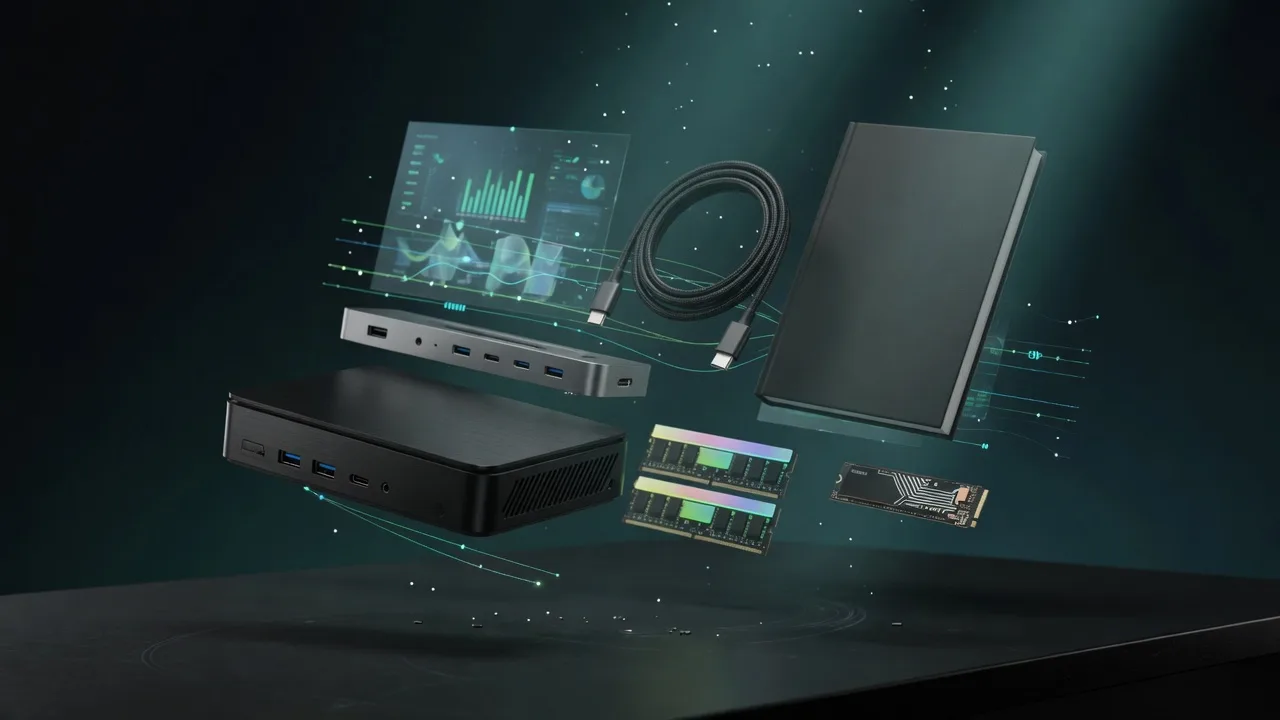
Also in Our Store
Docks, fast storage, cables, and a UPS sized for a local AI machine.

Rent this class of GPU by the hour before you buy. Live prices from RunPod and Vast.ai.

Find the break-even between buying this hardware and paying for a cloud API.
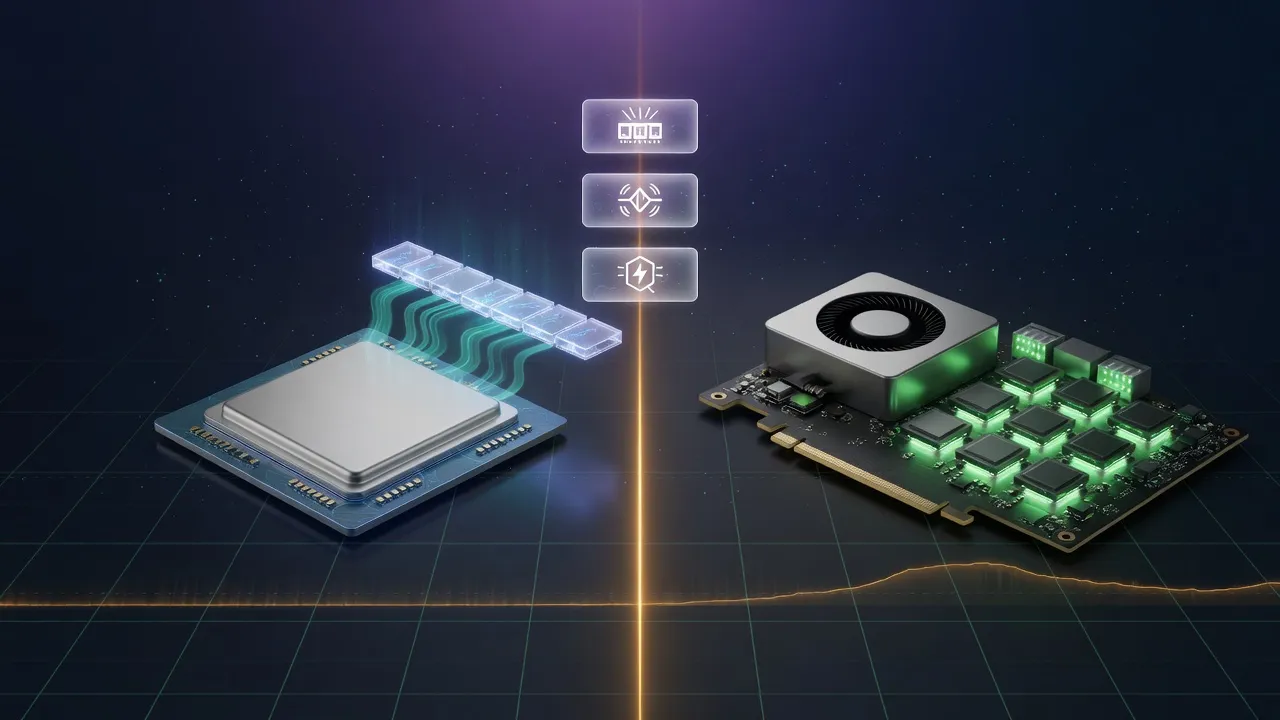
Mac vs NVIDIA for local inference, if you are still choosing a platform.
