- Services
Advertising disclosure: we earn commissions when you shop through the links below.
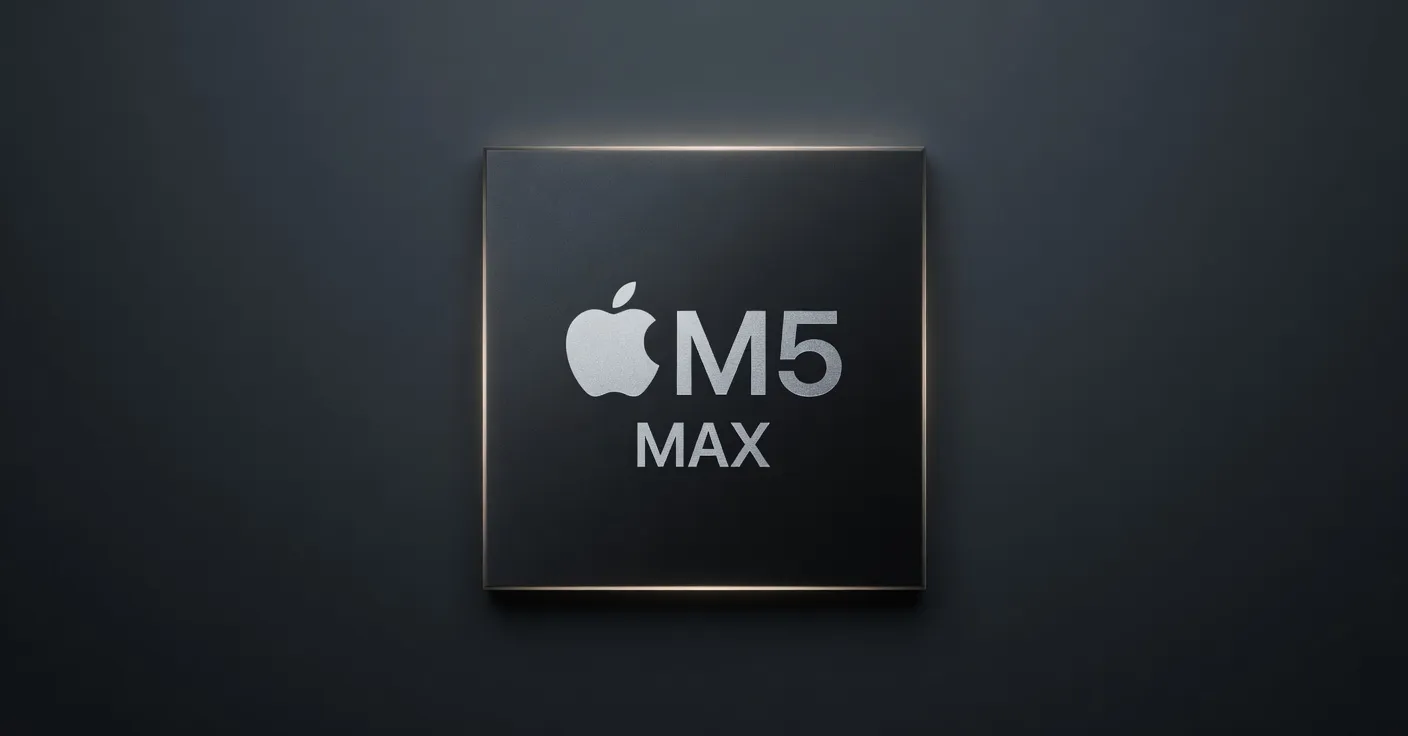
Apple's most powerful laptop chip with Fusion Architecture, 40-core GPU with Neural Accelerators, up to 128GB unified memory at 614 GB/s. Delivers 4x AI compute vs M4 Max and up to 50% faster graphics.
Sized for production serving of 70B–200B class models at full or lightly-quantized precision. Overkill for a homelab; right call when the workload pays for itself in token volume.
Generated from this product’s spec sheet. Editor reviews refine it over time.
The Apple M5 Max (18-core CPU, 40-core GPU) represents the current ceiling for mobile AI compute, transitioning the MacBook Pro from a creative workstation into a dedicated local inference node. Built on a 3rd-generation TSMC 3nm process, the M5 Max utilizes a "Fusion" dual-die architecture that effectively doubles the internal interconnect speeds of previous generations. For AI engineers, this chip is the primary alternative to dedicated NVIDIA desktop GPUs, offering a unique "memory-first" approach to local model execution.
While consumer hardware often hits a wall at 16GB or 24GB of VRAM, the M5 Max configuration supports up to 128GB of unified memory. This makes it a high-end prosumer and professional tool, competing directly with multi-GPU setups for developers who need to run large-scale models without the power draw or footprint of a server rack. It is currently the best Apple Silicon for running AI models locally in a mobile form factor, providing a balance of massive memory capacity and high-bandwidth throughput.
The defining metric for Apple M5 Max (18-core CPU, 40-core GPU) AI inference performance is its memory architecture. Unlike traditional PC architectures that bottleneck data transfer between the CPU and a discrete GPU, the M5 Max uses a Unified Memory Architecture (UMA). With 614 GB/s of memory bandwidth, the 40-core GPU can access the full 128GB pool of LPDDR5X RAM with minimal latency.
Compared to the previous generation, the 15% increase in multithreaded CPU performance assists in pre-fill and prompt processing, while the 50% jump in graphics throughput directly impacts the speed of matrix multiplications in transformer-based architectures.
The M5 Max with 128GB of unified memory fundamentally changes the scope of what is possible on a laptop. While most mobile chips are limited to 7B or 8B parameter models, this hardware is capable of running ~200B parameter LLMs with 128GB unified memory.
For a Llama 3.1 70B (Q4_K_M), users can expect approximately 12–18 tokens per second, which exceeds average human reading speed and is suitable for real-time agentic workflows. For smaller models like Llama 3.1 8B, the M5 Max can exceed 100+ tokens per second, making it ideal for high-throughput tasks like document summarization or batch processing.
The 128GB VRAM for large language models allows for massive context windows. Using llama.cpp or MLX, developers can allocate 32k or 64k context windows for models like Qwen 2.5 without running out of memory, a feat impossible on consumer NVIDIA cards like the RTX 4090 (24GB).
The Apple M5 Max (18-core CPU, 40-core GPU) for AI is built for practitioners who prioritize the "RAM-to-Dollar" ratio over raw TFLOPS.
When evaluating the M5 Max, practitioners typically look at two alternatives: a dedicated NVIDIA workstation or a higher-tier Apple Ultra chip.
The RTX 4090 is significantly faster in terms of raw compute (TFLOPS) and will generate tokens faster for small models. However, the RTX 4090 is strictly limited to 24GB of VRAM. To match the 128GB capacity of the M5 Max, a developer would need to link five RTX 4090s via NVLink/PCIe, requiring a massive power supply, specialized cooling, and a desktop chassis. The M5 Max is the superior choice for capacity-heavy workloads, while the 4090 wins on speed-heavy workloads for small models.
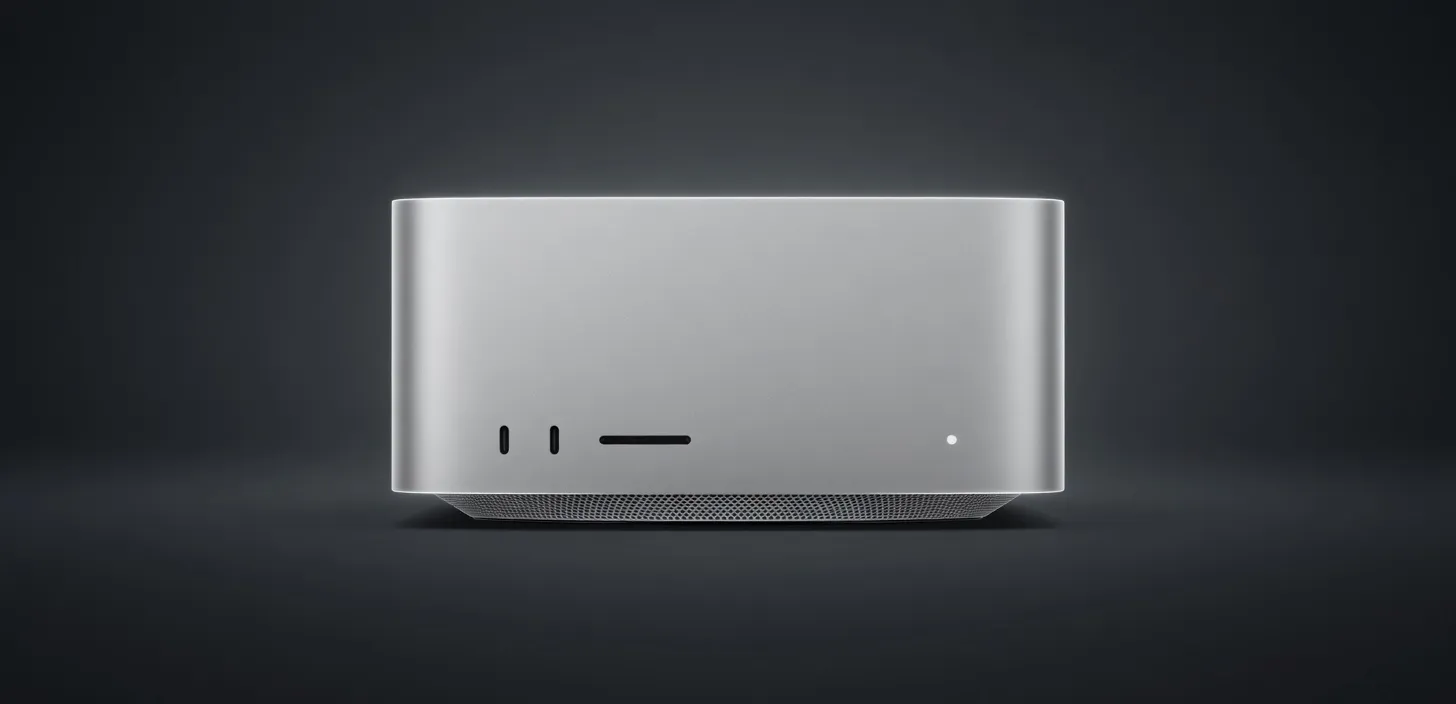
While the Ultra-series chips (found in the Mac Studio and Mac Pro) offer higher memory bandwidth (up to 800 GB/s) and more GPU cores, they are not portable. The M5 Max brings "Ultra-level" memory capacity (128GB) to a laptop form factor. For developers who need to demonstrate local AI capabilities on-site or work while traveling, the M5 Max is the current market leader.
The M5 Pro is a capable chip but is often limited in memory bandwidth (usually half of the Max) and maximum RAM configurations. For running ~200B parameter models, the M5 Pro is insufficient; the M5 Max is the required baseline for serious local LLM development.
The top models this device can run at 4-bit, ranked by fit and speed.
| Model | Grade | Speed | VRAM |
|---|---|---|---|
| Mixtral 8x7B InstructMistral AI | SS | 43.5 tok/s | 11.4 GB |
| AliceAI-Foundation-80B-A3B-Baseyandex | SS | 57.9 tok/s | 8.5 GB |
| Gemma 4 26B-A4B ITGoogle | SS | 44.9 tok/s | 11.0 GB |
| Xing4.0-29B-A4BChina Telecom AI | SS | 44.1 tok/s | 11.2 GB |
| DiffusionGemma 26B-A4BGoogle | SS | 47.1 tok/s | 10.5 GB |
Among 6 similar devices, the Apple M5 Max (18-core CPU, 40-core GPU) ranks #3 for memory and #3 for memory bandwidth.
Also in Our Store
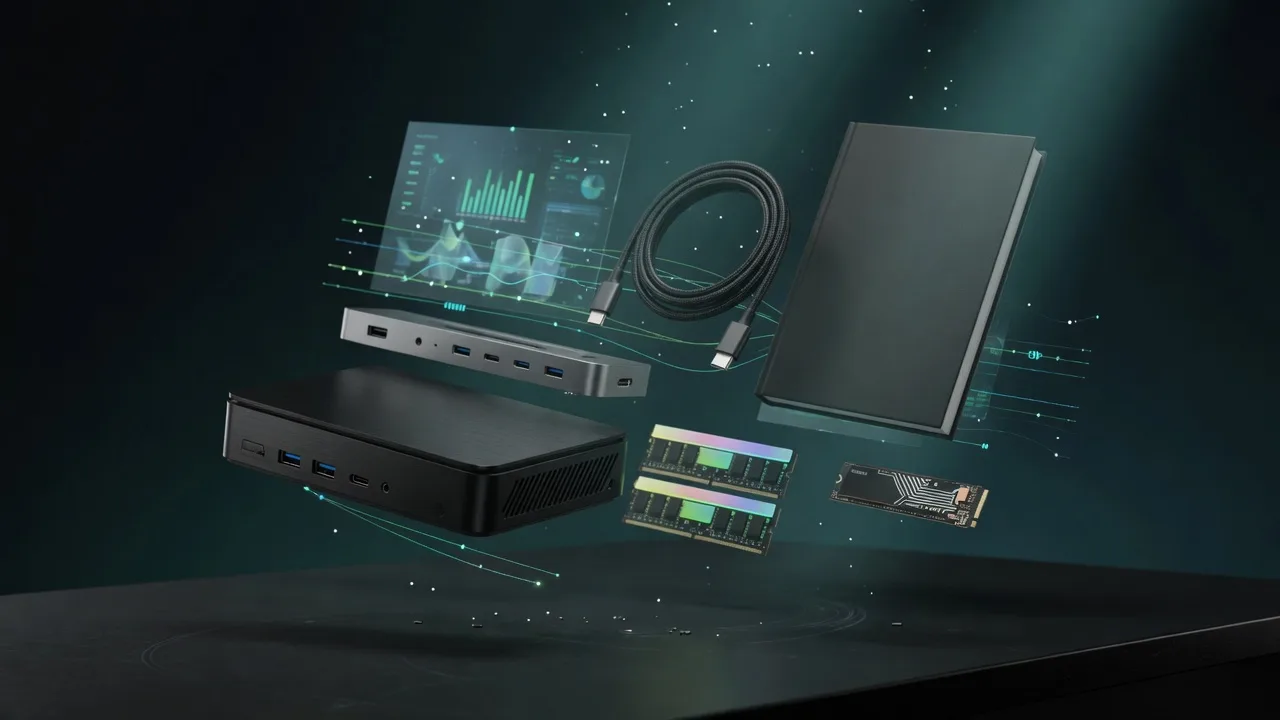
Docks, fast storage, cables, and a UPS sized for a local AI machine.

Rent this class of GPU by the hour before you buy. Live prices from RunPod and Vast.ai.
Find the break-even between buying this hardware and paying for a cloud API.
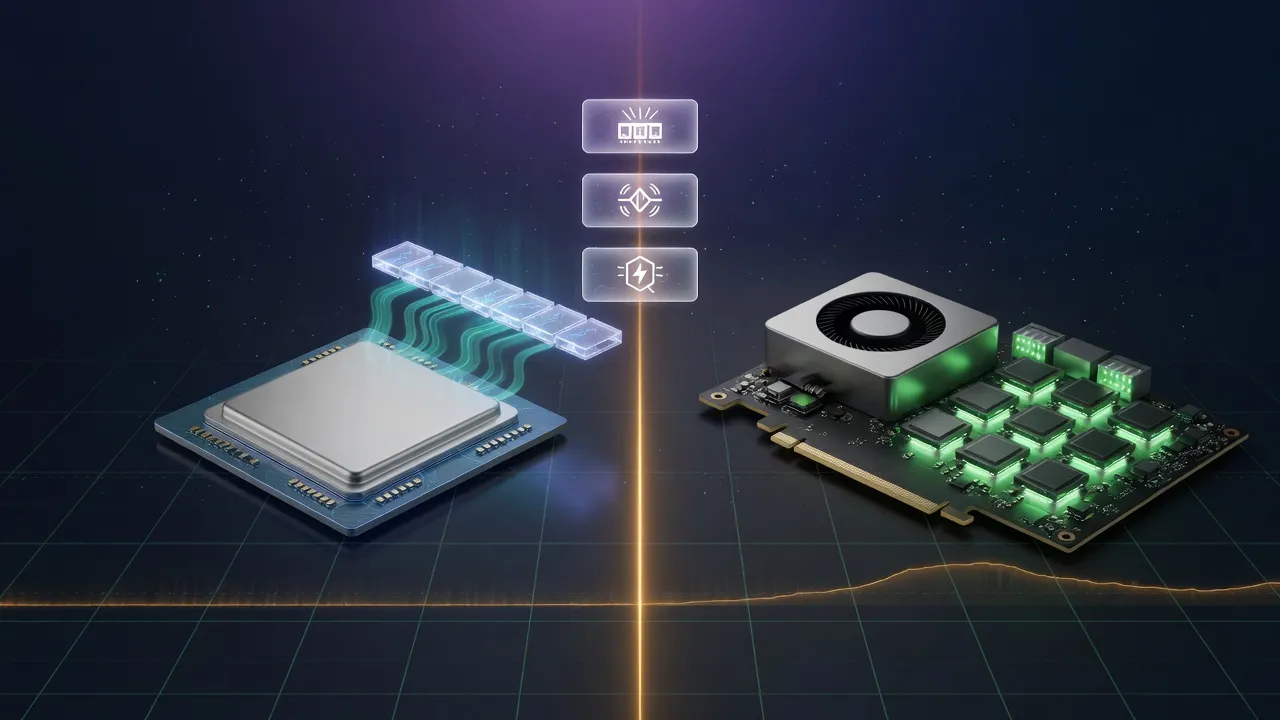
Mac vs NVIDIA for local inference, if you are still choosing a platform.