- Services
Advertising disclosure: we earn commissions when you shop through the links below.
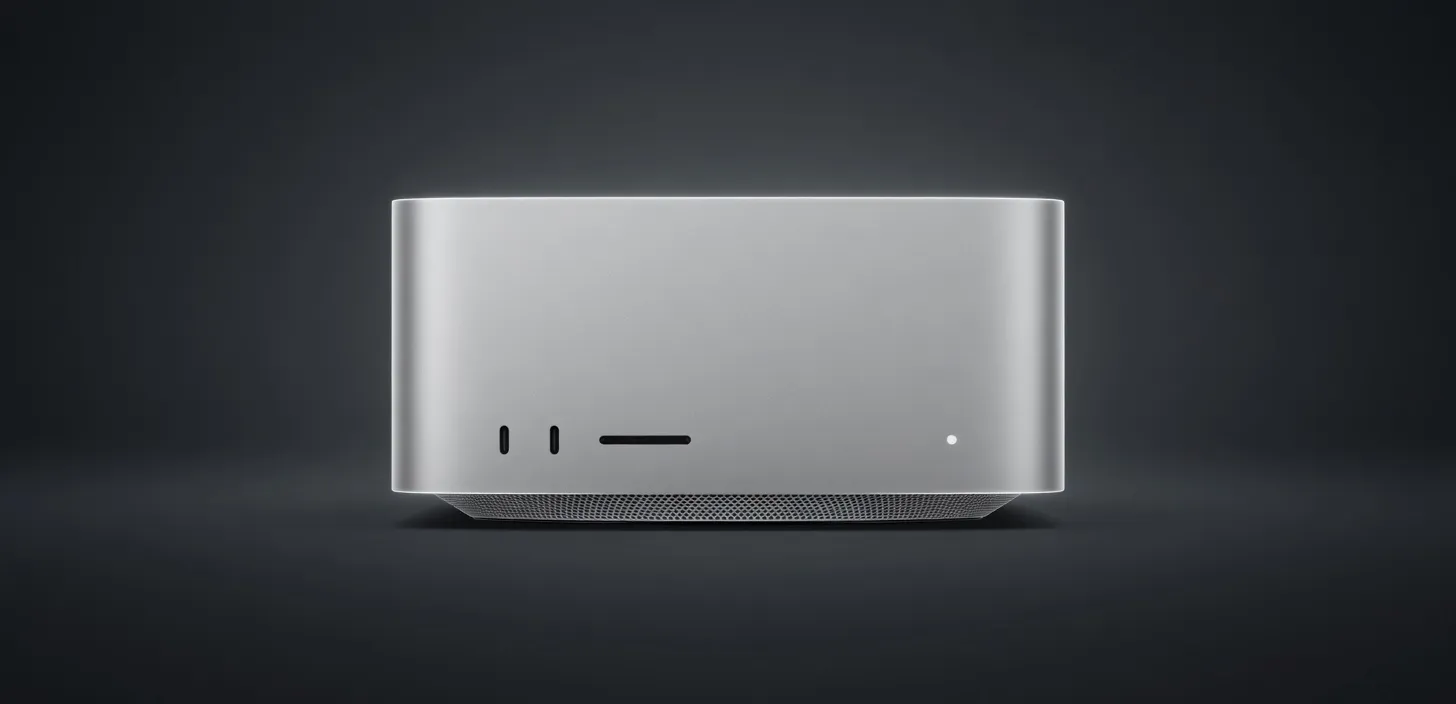
Second-gen Mac Studio with M2 Max bringing 12-core CPU, up to 38-core GPU, and up to 96GB unified memory at 400 GB/s. Added WiFi 6E, Bluetooth 5.3, and support for up to six 6K displays.
Sized for production serving of 70B–200B class models at full or lightly-quantized precision. Overkill for a homelab; right call when the workload pays for itself in token volume.
Generated from this product’s spec sheet. Editor reviews refine it over time.
The Apple Mac Studio (M2 Max, 2023) represents a critical mid-tier performance bracket in the Apple Silicon ecosystem. While the "Ultra" variant often captures headlines for raw compute, the M2 Max model serves as the practical entry point for professional AI development and local LLM inference without the $4,000+ price tag of the flagship configurations. Built on TSMC’s second-generation 5nm process, this machine is designed for engineers who need high VRAM capacity in a compact, power-efficient desktop form factor.
For practitioners evaluating Apple Mac Studio (M2 Max, 2023) for AI, the primary draw is the unified memory architecture. Unlike traditional PC builds where you are limited by the VRAM of a discrete GPU (typically 12GB to 24GB in consumer cards), the Mac Studio allows the GPU to access the entire system memory pool. With the M2 Max, this peaks at 96GB of unified memory. This makes it one of the best hardware options for local AI agents and researchers who need to fit large model weights into memory that would otherwise require multi-GPU server setups.
Although officially discontinued by Apple in favor of the M3 series, the M2 Max Mac Studio remains a "Production Ready" workhorse. It competes directly with high-end NVIDIA-based workstations. While it lacks the raw CUDA throughput of a dedicated RTX 4090, its 400 GB/s memory bandwidth and massive memory ceiling make it a superior choice for specific high-parameter inference tasks where VRAM capacity is the primary bottleneck.
When analyzing Apple Mac Studio (M2 Max, 2023) AI inference performance, three metrics dictate its utility: VRAM capacity, memory bandwidth, and the 16-core Neural Engine.
The standout feature is the 96GB GPU for AI workloads. In the Apple Silicon architecture, the CPU and GPU share a single pool of LPDDR5 memory. For AI practitioners, this means you can allocate up to approximately 75-80% of that 96GB specifically for model weights (the rest being reserved for the OS and active displays). This allows for the local execution of models that are physically impossible to run on a single NVIDIA 4090 or 3090.
LLM inference is almost always memory-bandwidth bound rather than compute-bound. The M2 Max provides 400 GB/s memory bandwidth. While this is half the bandwidth of the M2 Ultra (800 GB/s), it is significantly higher than standard consumer CPUs and rivals many mid-range data center GPUs. This bandwidth directly translates to tokens per second, ensuring that even 30B+ parameter models generate text at speeds faster than a human can read.
The 12-core CPU (8 performance, 4 efficiency) and up to 38-core GPU provide the necessary TFLOPS for matrix multiplications. However, the real efficiency lies in the 16-core Neural Engine, which is optimized for CoreML tasks. For engineers building agentic workflows, the Mac Studio’s ability to remain silent and cool under 100% load is a significant advantage over loud, power-hungry rack servers or multi-GPU towers.
The M2 Max Mac Studio is a versatile machine for running 30B+ at Q4 with 96GB unified memory parameter models. Because of the 96GB ceiling, you are not limited to "small" models like Llama 3.1 8B or Mistral 7B.
The Apple Mac Studio (M2 Max, 2023) for AI is positioned for specific professional personas:
If you are building local AI agents or integrating LLMs into software, you need a machine that can run the model, the dev environment, and the application simultaneously. The 96GB of unified memory allows you to keep a 70B model resident in VRAM while you compile code and run Docker containers in the background.
For those prototyping new architectures or fine-tuning small models using MLX (Apple’s machine learning framework), the M2 Max provides a stable, Unix-based environment. It is particularly useful for evaluating how models behave at different quantization levels before deploying them to cloud-based H100 clusters.
For teams that cannot use OpenAI or Anthropic APIs due to data sensitivity, the Mac Studio serves as a "private AI box." It is powerful enough to run a sophisticated local chatbot or document analysis tool for an entire small department when used as a local inference server.
The RTX 4090 is faster in raw compute (TFLOPS) and has higher memory bandwidth (1,008 GB/s). However, it is capped at 24GB of VRAM. If you need to run a 70B parameter model, the 4090 will fail or require slow offloading to system RAM. The Mac Studio (M2 Max) wins on VRAM for large language models, allowing you to run models that the 4090 simply cannot.
The M2 Ultra doubles the GPU cores and memory bandwidth (800 GB/s) and can scale to 192GB of VRAM. For users whose primary bottleneck is speed (tokens per second) or who need to run 100B+ parameter models, the Ultra is the better choice. However, for most local LLM development, the M2 Max provides the best price-to-performance ratio in the Apple Silicon lineup.
While the M3 Max and M4 Pro/Max offer incremental improvements in single-core speed and ray tracing, the M2 Max Mac Studio remains a top-tier recommendation for best hardware for local AI agents in 2025 due to its availability in the secondary market and its robust thermal performance compared to the MacBook Pro equivalents.
The top models this device can run at 4-bit, ranked by fit and speed.
| Model | Grade | Speed | VRAM |
|---|---|---|---|
| AliceAI-Foundation-80B-A3B-Baseyandex | SS | 37.7 tok/s | 8.5 GB |
| Qwen3-30B-A3BAlibaba | SS | 59.8 tok/s | 5.4 GB |
| North Mini CodeCohere | AA | 38.4 tok/s | 8.4 GB |
| Holo4-35B-A3BHcompany | AA | 137.7 tok/s | 2.3 GB |
| Nemotron 3 Nano OmniNVIDIA | AA | 37.7 tok/s | 8.5 GB |
Among 6 similar devices, the Apple Mac Studio (M2 Max, 2023) ranks #5 for memory and #5 for memory bandwidth.
Also in Our Store
Docks, fast storage, cables, and a UPS sized for a local AI machine.

Rent this class of GPU by the hour before you buy. Live prices from RunPod and Vast.ai.
Find the break-even between buying this hardware and paying for a cloud API.
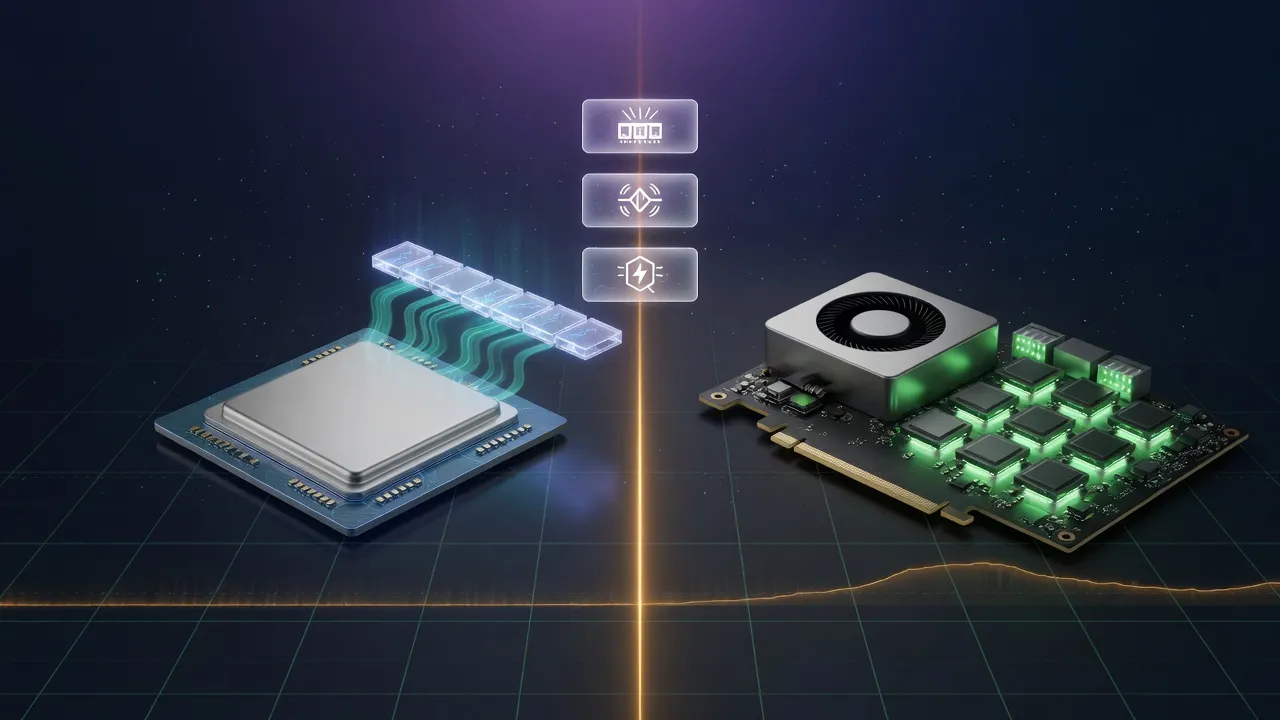
Mac vs NVIDIA for local inference, if you are still choosing a platform.