- Services
Advertising disclosure: we earn commissions when you shop through the links below.
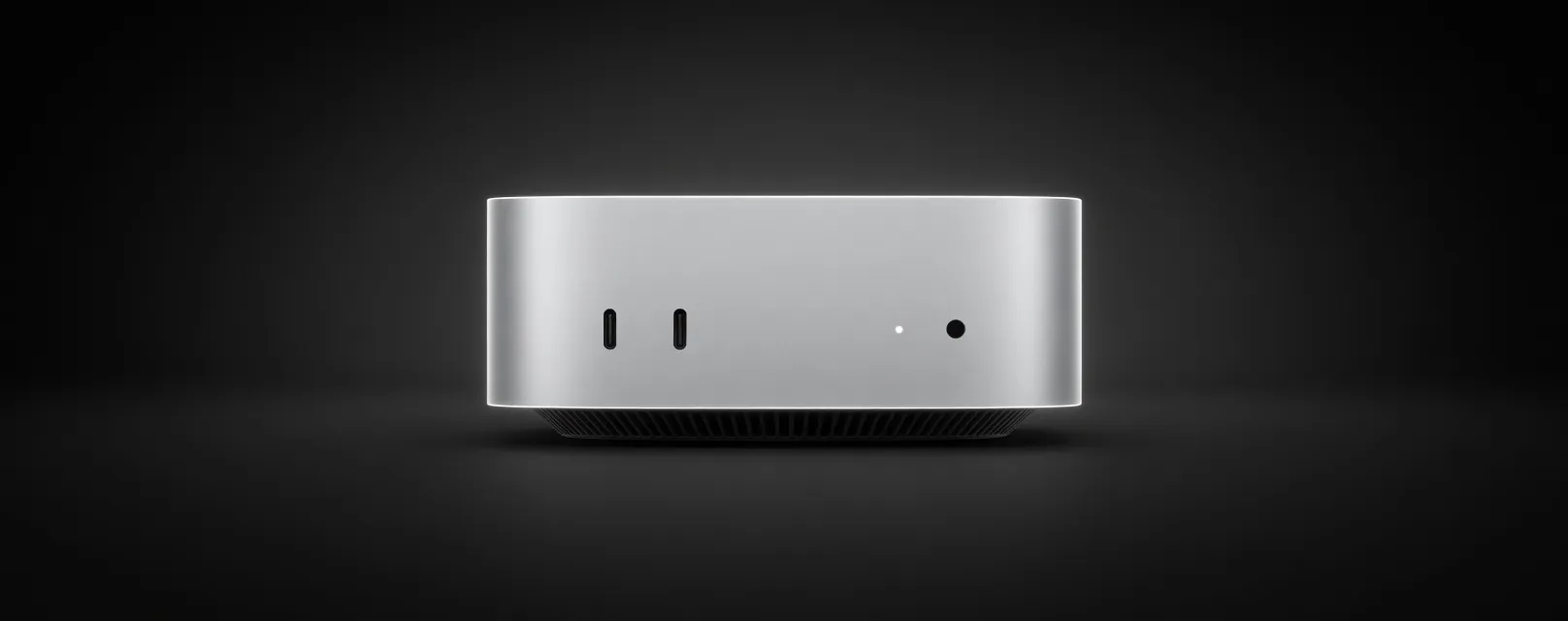
Pro-tier Mac Mini in the new compact 5×5-inch design with M4 Pro, up to 14-core CPU, 20-core GPU, and 64GB unified memory at 273 GB/s. First Mac Mini with Thunderbolt 5.
The first tier where 70B-class models stop feeling cramped. Headroom for KV cache means 32K+ context on Q4 quants without falling off the GPU.
Generated from this product’s spec sheet. Editor reviews refine it over time.
The Apple Mac Mini (M4 Pro, 2024) represents a significant shift in the price-to-performance ratio for local AI development. By moving to a ultra-compact 5x5-inch enclosure while simultaneously increasing memory bandwidth to 273 GB/s, Apple has created a dense inference node that serves as a viable alternative to mid-range discrete GPU setups. For AI engineers and researchers, this machine is a dedicated "inference appliance" capable of running large language models (LLMs) that typically require multi-GPU configurations in the PC space.
While the base M4 Mac Mini is a consumer-grade device, the M4 Pro variant is a prosumer powerhouse specifically optimized for memory-intensive workloads. It competes directly with NVIDIA RTX 4080/4090 desktop setups in terms of accessible VRAM, though it operates at a fraction of the power draw (75W TDP). For practitioners building agentic workflows or local RAG (Retrieval-Augmented Generation) systems, the M4 Pro offers a "production-ready" environment in a form factor that fits on a desk or in a high-density server rack.
The defining metric for Apple Mac Mini (M4 Pro, 2024) AI inference performance is its unified memory architecture. Unlike traditional PCs where the CPU and GPU have separate memory pools, the M4 Pro allows the GPU to access up to 64GB of unified memory. For AI workloads, this means the entire 64GB can be treated as VRAM (minus a small overhead for the OS), enabling the execution of models that are physically impossible to load on standard consumer GPUs like the RTX 4070 Ti (12GB) or even the RTX 4090 (24GB).
The M4 Pro features a 273 GB/s memory bandwidth, a substantial jump from the previous generation. In LLM inference, the primary bottleneck is almost always memory bandwidth rather than raw compute. At 273 GB/s, the M4 Pro can stream model weights to the GPU fast enough to maintain high tokens-per-second (t/s) rates even on models with high parameter counts.
The Apple Mac Mini (M4 Pro, 2024) with 64GB unified memory is the "sweet spot" hardware for running ~70B at Q4 with 64GB unified memory parameter models. While a 70B model in FP16 would require 140GB of VRAM, GGUF-based quantization allows these massive models to run locally with high precision.
The Mac Mini M4 Pro is arguably the best hardware for local AI agents in 2025. Agents require consistent, low-latency access to a "brain" (the LLM) and often multiple auxiliary models for embeddings and tool-calling. The 64GB capacity allows a developer to keep a 30B or 70B model resident in memory while simultaneously running a vector database and local development environment without swapping to disk.
For researchers and engineers, this is a "silent" workstation. Unlike a PC with multiple 3090s that requires a 1200W PSU and significant cooling, the M4 Pro stays quiet under load. It is the ideal machine for fine-tuning smaller models (up to 7B or 13B parameters) using LoRA or QLoRA techniques directly in a macOS environment.
Teams building internal AI-powered tools can use the M4 Pro as a localized inference server. Because it supports 10Gb Ethernet and Thunderbolt 5, it can serve as a high-speed hub for a small office, providing LLM access via an API (using Ollama or vLLM) to multiple team members without the recurring costs or privacy concerns of OpenAI or Anthropic APIs.
When evaluating the Apple Mac Mini (M4 Pro, 2024) vs competitors, the primary trade-off is between memory capacity and raw compute speed.
For any practitioner looking for the best Apple Silicon for running AI models locally, the M4 Pro Mac Mini is currently the most efficient entry point into high-VRAM AI development. It eliminates the "VRAM wall" that plagues most consumer hardware, making it a definitive choice for 2025 AI workloads.
The top models this device can run at 4-bit, ranked by fit and speed.
| Model | Grade | Speed | VRAM |
|---|---|---|---|
| Qwen3-30B-A3BAlibaba | SS | 40.8 tok/s | 5.4 GB |
| Holo4-35B-A3BHcompany | AA | 94.0 tok/s | 2.3 GB |
| Apertus 8BEPFL, ETH Zurich, CSCS | AA | 40.7 tok/s | 5.4 GB |
| Llama 3 8B InstructMeta | AA | 38.8 tok/s | 5.7 GB |
| LFM2.5-8B-A1BLiquid AI | AA | 75.6 tok/s | 2.9 GB |
Among 6 similar devices, the Apple Mac Mini (M4 Pro, 2024) ranks #5 for memory and #6 for memory bandwidth.
Also in Our Store
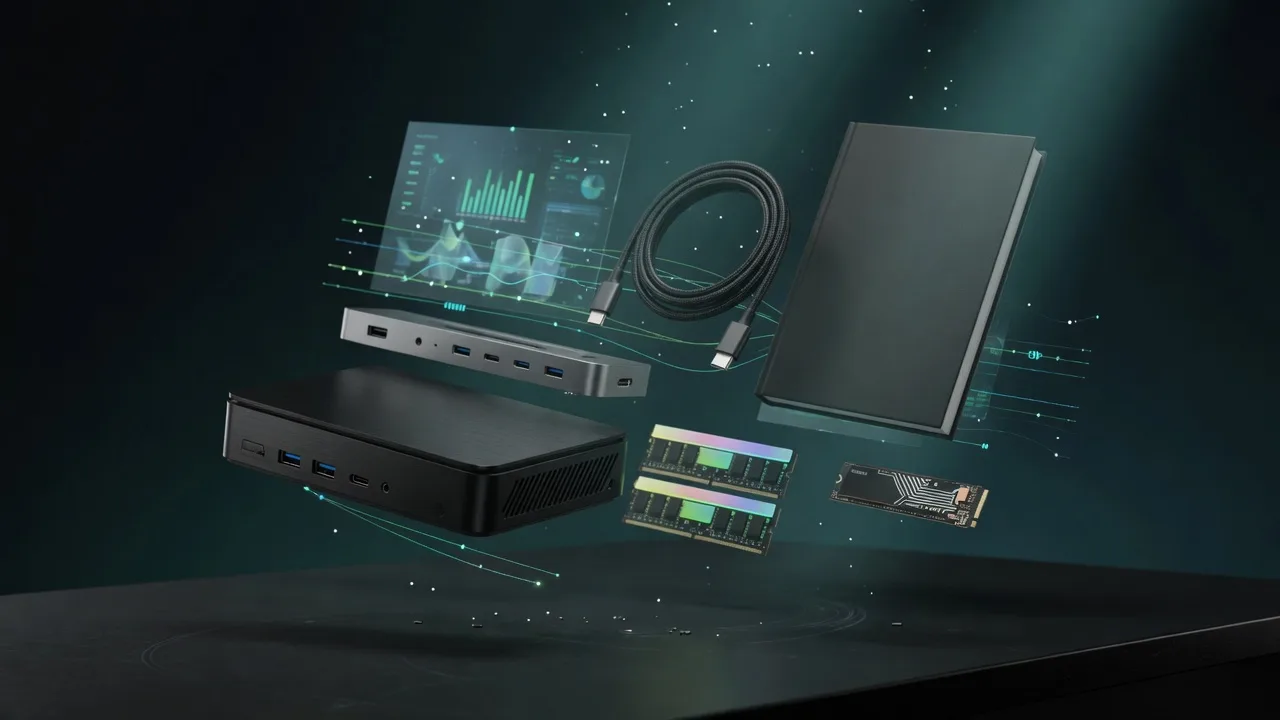
Docks, fast storage, cables, and a UPS sized for a local AI machine.
Rent this class of GPU by the hour before you buy. Live prices from RunPod and Vast.ai.
Find the break-even between buying this hardware and paying for a cloud API.
Mac vs NVIDIA for local inference, if you are still choosing a platform.