- Services
Advertising disclosure: we earn commissions when you shop through the links below.
Microsoft announced Azure Maia 300 on 2026-10-12, the third generation of its custom AI inference chip. It is built for long-context reasoning, latency-sensitive conversational workloads and sustained multi-step agentic tasks, and is expected to deliver 40% more tokens per megawatt and up to 7x the rack-scale token throughput of Maia 200. Microsoft plans multi-gigawatt Azure Maia deployments starting in 2027, when Maia 300 becomes the primary AI inference system for Microsoft products and services. No price or general availability date has been announced.
The Azure Maia 300 represents Microsoft's third-generation custom accelerator designed exclusively for hyperscale AI inference. Announced on October 12, 2026, the chip shifts away from traditional general-purpose GPU computing to focus on specialized execution for large language models, long-context reasoning, and sustained multi-step agentic workflows. Built on a Software Defined Locally Accessed Dataflow Architecture (SDLA), Maia 300 is engineered to solve the memory wall and data movement bottlenecks that plague modern generative AI systems.
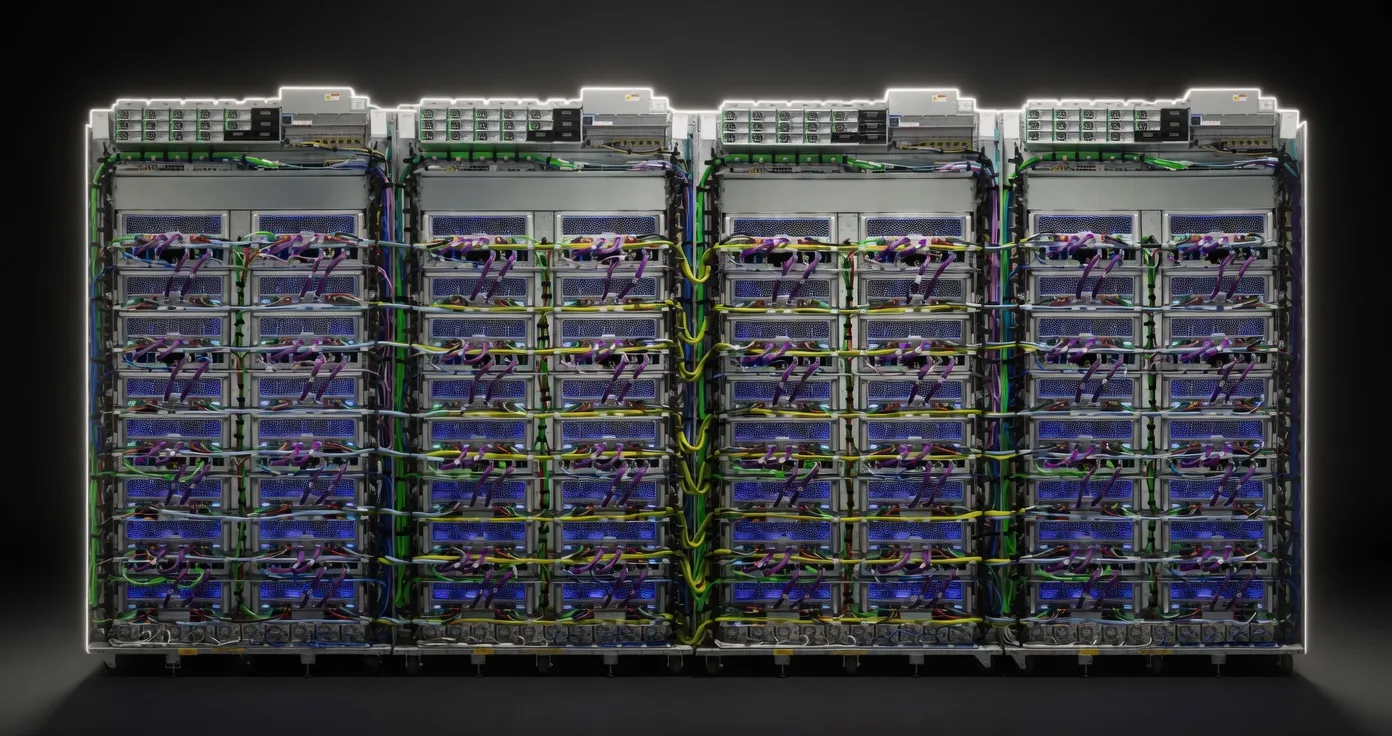
Unlike standard consumer GPUs or workstation accelerators evaluated for on-premises rigs, Maia 300 is built as an integrated rack-scale datacenter system. Microsoft designed the silicon, cooling, interconnect, and power delivery as a unified appliance to power production services including Microsoft Copilot, GitHub Copilot, and Azure AI Foundry. With multi-gigawatt deployments targeted to begin in 2027, the platform aims to provide up to 40% more tokens per megawatt than leading GPU clusters and deliver up to 7x the rack-scale token throughput of its predecessor, the Maia 200.
For teams tracking enterprise infrastructure and evaluating cloud versus dedicated on-premises hardware, Azure Maia 300 sets a new benchmark for cloud-hosted inference density. While engineers looking for the best hardware for running AI models locally typically focus on PCIe or SXM workstations, understanding Maia 300's architecture provides critical insight into how cloud providers plan to serve massive reasoning models and agent loops at scale.
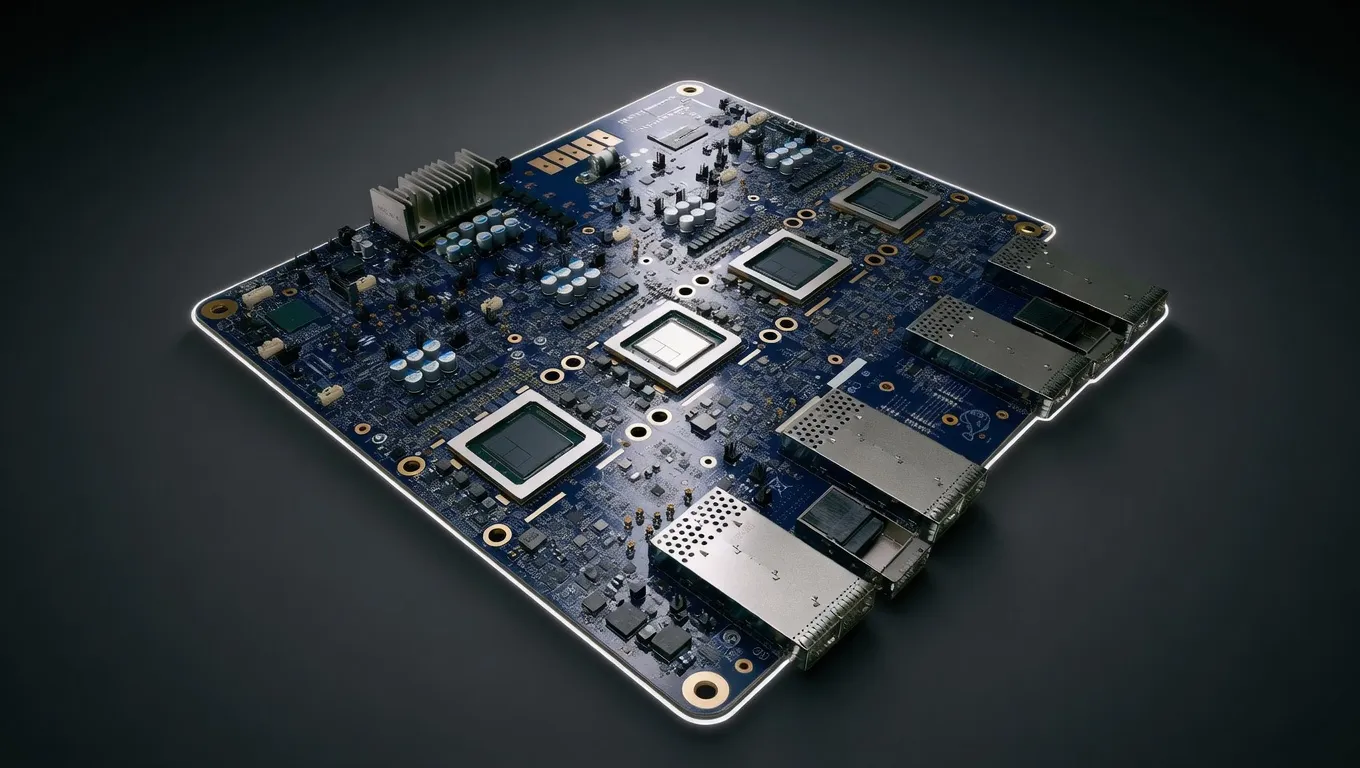
At the heart of the Azure Maia 300 is an aggressive memory subsystem paired with a specialized dataflow execution pipeline. Rather than prioritizing dense FP32 or FP64 matrix operations required for foundational training, the silicon allocates its transistor budget to memory bandwidth, KV cache capacity, and rapid execution of autoregressive decode phases. Compute chiplets are fabricated on TSMC's N2P node, coupled with advanced packaging to connect memory controllers and I/O logic.
Memory capacity and bandwidth dictate token generation speed and maximum sequence lengths. Azure Maia 300 VRAM for large language models sets a massive footprint per accelerator:
This 18 TB/s bandwidth represents a dramatic uplift over previous generations, directly addressing the memory-bound decode phase where accelerators generate tokens one at a time. The locality-aware NUMA configuration ensures that intermediate activations and attention keys/values remain physically close to the compute units processing them, slashing inter-chip communication overhead.
Inference efficiency depends heavily on low-bit arithmetic. Maia 300 incorporates native hardware support for narrow-precision formats, including microscaling data types like FP4 and FP8, backed by on-chip conversion logic that translates between precisions on the fly without burdening the host CPU.
The high 950W TDP per module requires dedicated liquid cooling infrastructure within the custom rack chassis. By consolidating 96 chips into a 167 kW envelope, the platform packs high compute density into standard datacenter footprints, making it viable for multi-gigawatt rollouts.
Because each accelerator delivers 288 GB of HBM4, a single Maia 300 node comfortably hosts models that traditionally require multi-GPU tensor parallel configurations.
Engineers planning deployments around open-weight models will find that Maia 300 eliminates the memory constraints common on local setups:
The sweet spot for Maia 300 lies in long-context decoding and deep reasoning models. When handling extended reasoning chains like those produced by DeepSeek-R1 or OpenAI o-series models, intermediate generation steps generate gigabytes of KV cache data. The SDLA dataflow architecture prevents cache thrashing by streaming context blocks directly through localized scratchpads, sustaining stable Azure Maia 300 tokens per second even as context windows cross past 128k tokens.
Evaluating the Azure Maia 300 requires understanding the boundary between local edge hardware and cloud-hosted capacity.
Understanding Azure Maia 300 AI inference performance requires measuring it against the primary datacenter hardware it is built to displace.
NVIDIA's GB200 NVL72 is the gold standard for full-stack AI acceleration, combining 72 Blackwell GPUs with 36 Grace CPUs over an NVLink spine.
Google's Trillium (TPU v6e) represents the closest architectural parallel in the hyperscaler space, focusing on cost-effective, high-throughput cloud serving.
For practitioners architecting production software, Azure Maia 300 demonstrates how specialized, inference-first ASICs are transforming cloud economics. While local AI development in 2026 continues to depend on accessible desktop silicon, backend production traffic on Microsoft's cloud will run on hyper-dense, dataflow-optimized hardware designed to make token generation significantly cheaper and faster at scale.
The top models this device can run at 4-bit, ranked by fit and speed.
Specs not available for scoring. This product is missing VRAM or memory bandwidth data.
Also in Our Store
Docks, fast storage, cables, and a UPS sized for a local AI machine.

Rent this class of GPU by the hour before you buy. Live prices from RunPod and Vast.ai.

Find the break-even between buying this hardware and paying for a cloud API.
Mac vs NVIDIA for local inference, if you are still choosing a platform.