- Services
Advertising disclosure: we earn commissions when you shop through the links below.
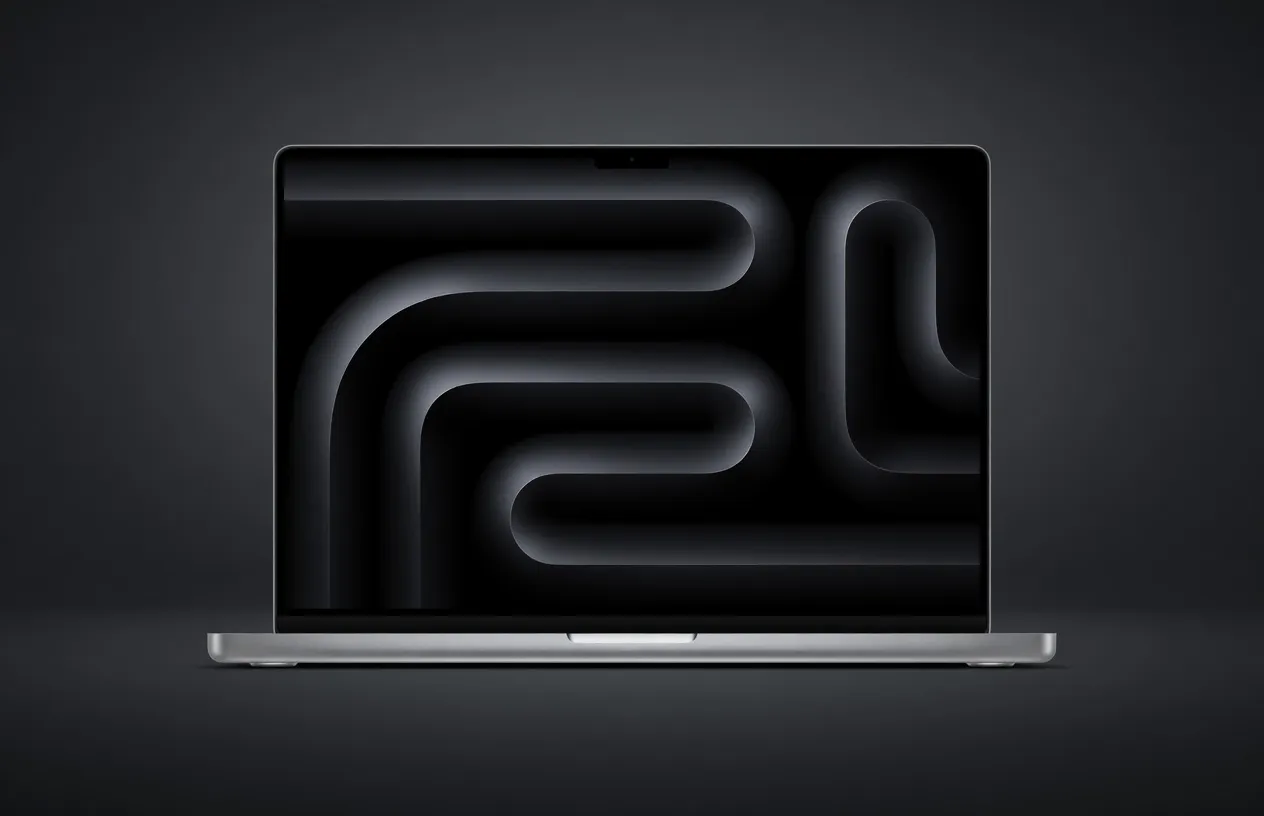
Apple's 16-inch pro laptop with M4 Max chip, up to 128GB unified memory, Liquid Retina XDR display, and up to 24-hour battery life. The benchmark for local LLM inference on a laptop.
Sized for production serving of 70B–200B class models at full or lightly-quantized precision. Overkill for a homelab; right call when the workload pays for itself in token volume.
Generated from this product’s spec sheet. Editor reviews refine it over time.
The MacBook Pro 16" M4 Max (2024) is the current gold standard for mobile AI development and local inference. While marketed as a creative powerhouse, its true value for the machine learning community lies in its unified memory architecture. By allowing the GPU to access up to 128GB of high-bandwidth VRAM, Apple has created a device that bridges the gap between consumer laptops and dedicated workstation GPUs.
For AI engineers and researchers, the M4 Max represents the most capable "AI PC" on the market, specifically for those who need to iterate on large language models (LLMs) without being tethered to a cloud provider or a 450W desktop rig. It competes directly with high-end Windows workstations equipped with NVIDIA RTX 5000-series Ada Generation mobile GPUs, though it holds a distinct advantage in total addressable VRAM and power efficiency.
The hardware profile of the M4 Max is defined by three critical metrics for AI workloads: memory capacity, memory bandwidth, and compute throughput.
The headline feature for the 2024 M4 Max is the 128GB unified memory configuration. In the context of local LLM inference, this is effectively a 128GB GPU for AI. Unlike traditional PC architectures where the GPU is limited by the VRAM on the discrete card (typically 16GB or 24GB), the M4 Max allows the 40-core GPU to utilize the majority of the system RAM for model weights. This enables the execution of models that would otherwise require multiple A100 or H100 GPUs in a data center environment.
LLM inference is almost always memory-bandwidth bound, not compute-bound. The M4 Max delivers 546 GB/s of memory bandwidth. This is a significant leap that ensures high tokens-per-second (tk/s) performance, even when running dense models. While a desktop RTX 4090 offers higher bandwidth (~1 TB/s), the M4 Max provides the highest bandwidth available in a laptop form factor, ensuring that large-scale models remain responsive during interactive chat or agentic workflows.
The M4 Max features a 16-core CPU and a 40-core GPU, supported by an enhanced 16-core Neural Engine delivering 38 TOPS of INT8 performance. While the Neural Engine handles background tasks and CoreML-optimized models, the GPU is the primary workhorse for heavy-duty inference via Metal Performance Shaders (MPS). With a TDP of just 92 W, the M4 Max maintains these performance levels on battery, a feat currently unmatched by x86-based competitors.
The MacBook Pro 16" M4 Max (2024) is one of the few mobile devices capable of running ~200B parameter LLMs on the 128GB model configuration. This opens the door to top-tier open-weights models that previously required enterprise-grade hardware.
The 128GB VRAM allows for massive context windows (up to 128k or more) on 8B and 30B parameter models. This makes it the premier choice for RAG (Retrieval-Augmented Generation) applications where large amounts of documentation must be ingested into the prompt. It also handles multimodal models like Llava 1.6 and image generation via Stable Diffusion XL or Flux.1 with ease, generating high-resolution images in seconds.
The MacBook Pro 16" M4 Max is not a general-purpose consumer laptop; it is a professional-grade tool for specific AI workflows.
The primary audience for this machine is developers building local AI agents. Running agents requires low-latency inference and often involves running multiple models simultaneously (e.g., a reasoning model, an embedding model, and a vision model). The 128GB unified memory allows for this multi-model orchestration without the "swapping" lag found on lower-spec machines.
While training large-scale models still requires H100 clusters, the M4 Max is perfect for LoRA (Low-Rank Adaptation) fine-tuning. Researchers can fine-tune 7B or 14B parameter models locally to test hypotheses before committing to expensive cloud compute runs.
For teams working with sensitive data that cannot leave the local network, the M4 Max provides the necessary "headroom" to run highly capable models (70B+) entirely offline. It is the best hardware for local AI deployment in legal, medical, or proprietary software engineering environments.
When evaluating the MacBook Pro 16" M4 Max (2024) for AI, it is important to compare it against its only real rivals in the mobile and workstation space.
You choose this hardware when your primary constraint is VRAM for large language models but you require a mobile form factor. If you are running 7B or 14B models, the M4 Pro or standard M4 may suffice. But for anyone serious about running state-of-the-art 70B+ models locally in 2025, the 16-inch M4 Max with 128GB of memory is the only viable laptop choice.
The top models this device can run at 4-bit, ranked by fit and speed.
| Model | Grade | Speed | VRAM |
|---|---|---|---|
| AliceAI-Foundation-80B-A3B-Baseyandex | SS | 51.5 tok/s | 8.5 GB |
| Mixtral 8x7B InstructMistral AI | SS | 38.7 tok/s | 11.4 GB |
| DiffusionGemma 26B-A4BGoogle | SS | 41.9 tok/s | 10.5 GB |
| Gemma 4 26B-A4B ITGoogle | SS | 39.9 tok/s | 11.0 GB |
| North Mini CodeCohere | SS | 52.4 tok/s | 8.4 GB |
Also in Our Store
Docks, fast storage, cables, and a UPS sized for a local AI machine.

Rent this class of GPU by the hour before you buy. Live prices from RunPod and Vast.ai.
Find the break-even between buying this hardware and paying for a cloud API.
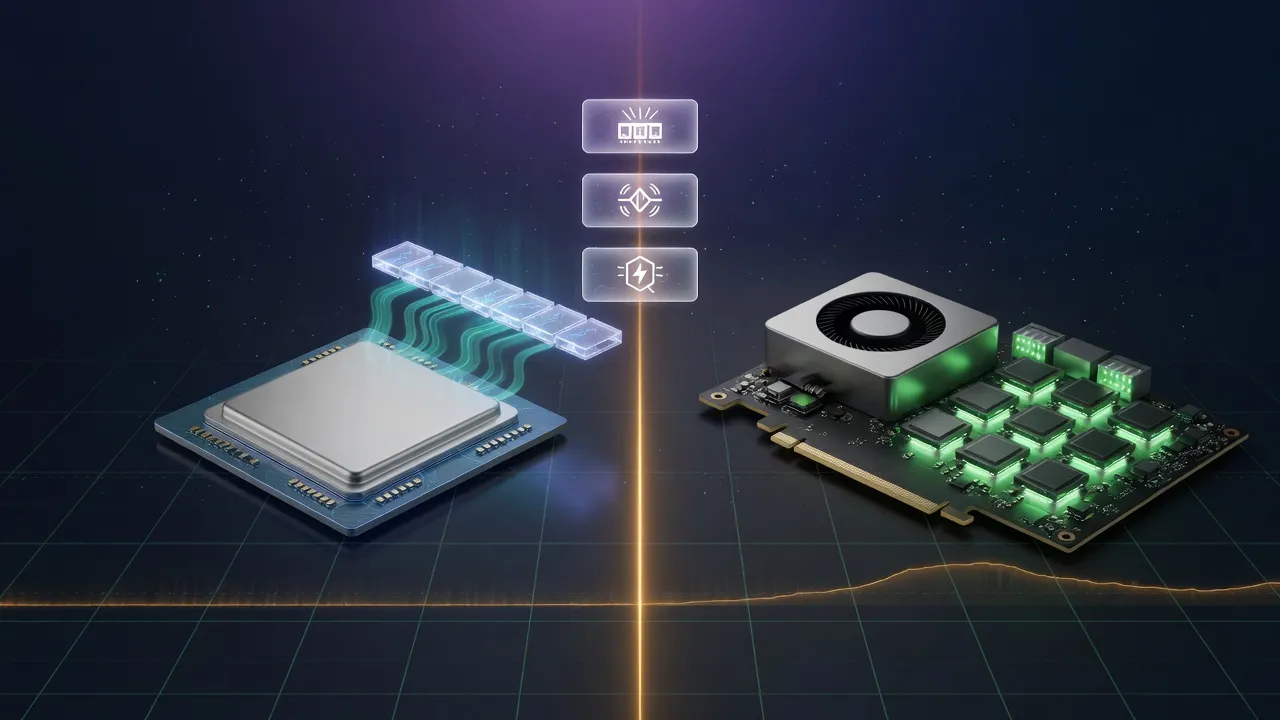
Mac vs NVIDIA for local inference, if you are still choosing a platform.