- Services
Advertising disclosure: we earn commissions when you shop through the links below.
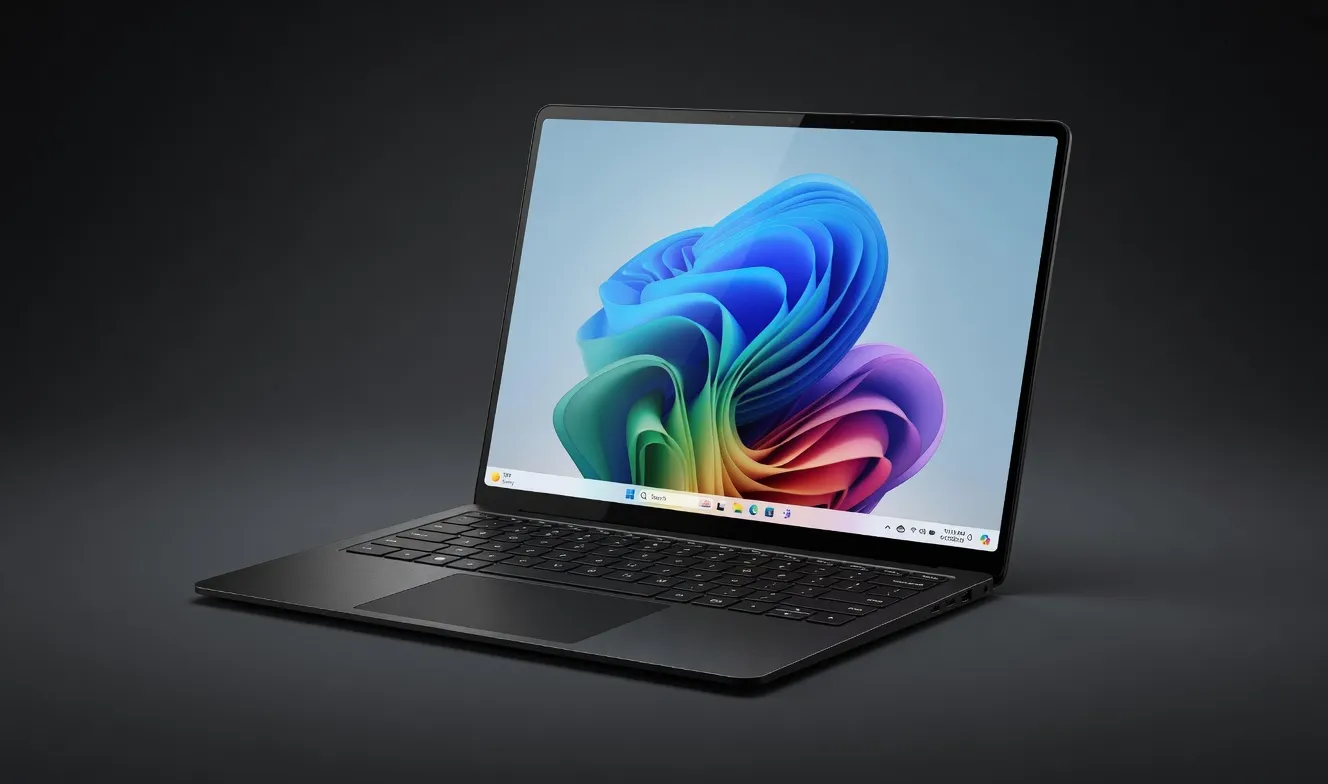
Microsoft's flagship Copilot+ PC powered by Snapdragon X Elite with 45 TOPS NPU. Thin, fanless design with up to 22 hours battery life and native Windows on Arm for on-device AI workflows.
Manufacturer's suggested retail price. Current prices can be higher or lower. This is not a live price.
The Microsoft Surface Laptop 7 (Snapdragon X Elite) represents a shift in the Windows ecosystem toward dedicated silicon for local inference. As Microsoft’s flagship Copilot+ PC, it is built around the Qualcomm Snapdragon X Elite, a platform designed to offload AI workloads from the CPU and GPU to a dedicated Hexagon NPU. For practitioners, this device is a highly portable, energy-efficient entry point for running local LLMs and agentic workflows without the thermal overhead or battery drain typical of x86-based laptops.
Positioned as a direct competitor to the Apple MacBook Air (M3), the Surface Laptop 7 is a prosumer-grade machine optimized for "on-device AI." While it isn't a replacement for a discrete GPU workstation, it is one of the best AI PCs & laptops for developers who need to test and deploy small-to-medium language models (SLMs) in a mobile environment. Its primary value proposition is the 45 TOPS NPU, which allows for background AI tasks, such as live translation, image generation, or RAG-based search, to run with minimal impact on system responsiveness.
The core of the Microsoft Surface Laptop 7 (Snapdragon X Elite) AI inference performance is the Qualcomm Hexagon NPU. Delivering 45 TOPS of INT8 performance, this NPU is currently the benchmark for the Copilot+ standard. For AI engineers, the shift to Arm-based architecture means prioritizing power efficiency; with a TDP of just 23W, the device maintains high inference throughput without the aggressive throttling seen in high-wattage gaming laptops.
Memory is the primary bottleneck for local AI. The Surface Laptop 7 offers 16GB or 32GB of LPDDR5X RAM. Unlike traditional PCs where VRAM is isolated on a GPU, this device uses a unified memory architecture where the NPU and CPU share the system pool.
While the Adreno GPU is capable, the Hexagon NPU is the intended target for production-ready local AI. Using the ONNX Runtime or the Qualcomm AI Hub, developers can compile models specifically for the NPU to achieve the best tokens-per-second while preserving battery life. In terms of raw compute, the 45 TOPS NPU is specifically tuned for INT8 operations, making it highly efficient for quantized models compared to running the same workloads on a standard laptop CPU.
The Surface Laptop 7 is optimized for the current generation of Small Language Models (SLMs) and quantized LLMs. When evaluating hardware for running 13B on-device via NPU parameter models, the 32GB RAM variant is the minimum requirement to avoid heavy swapping.
While exact "Microsoft Surface Laptop 7 (Snapdragon X Elite) tokens per second" vary based on the software stack (e.g., LM Studio, Ollama, or native ONNX), users can generally expect 15-25 tokens per second on 7B-8B models when properly optimized for the NPU. This is more than sufficient for reading-speed interaction and automated agent tasks.
The Surface Laptop 7 is not a training rig; it is a deployment and development target. It is one of the best hardware options for local AI agents in 2025 for users who prioritize mobility.
When choosing Microsoft ai pcs & laptops for AI development, the Surface Laptop 7 sits in a unique position between the MacBook Air and high-end NVIDIA-based laptops.
The MacBook Air is the primary rival. While the M3's Neural Engine is powerful, the Snapdragon X Elite's NPU offers higher raw TOPS (45 vs 18). However, the Apple ecosystem currently has more mature tooling for local LLMs via MLX. The Surface Laptop 7 is the better choice for those committed to the Windows/ONNX ecosystem or those who require WiFi 7 and native USB4 connectivity for high-speed data transfer.
A laptop with a dedicated NVIDIA RTX GPU will outperform the Surface Laptop 7 in raw inference speed (tokens per second) and offers CUDA support, which remains the industry standard. However, the Surface Laptop 7 wins on portability, thermals (it runs much cooler), and battery life. If your workflow requires heavy model fine-tuning, choose the RTX-based system. If your workflow is focused on local deployment and inference of SLMs, the Surface Laptop 7 is the more efficient tool.
The Microsoft Surface Laptop 7 (Snapdragon X Elite) for AI is a specialized tool. It excels in efficiency and NPU-driven inference, making it a top-tier choice for practitioners who need to integrate local AI into their daily productivity without being tethered to a power outlet.
The top models this device can run at 4-bit, ranked by fit and speed.
Specs not available for scoring. This product is missing VRAM or memory bandwidth data.
Also in Our Store
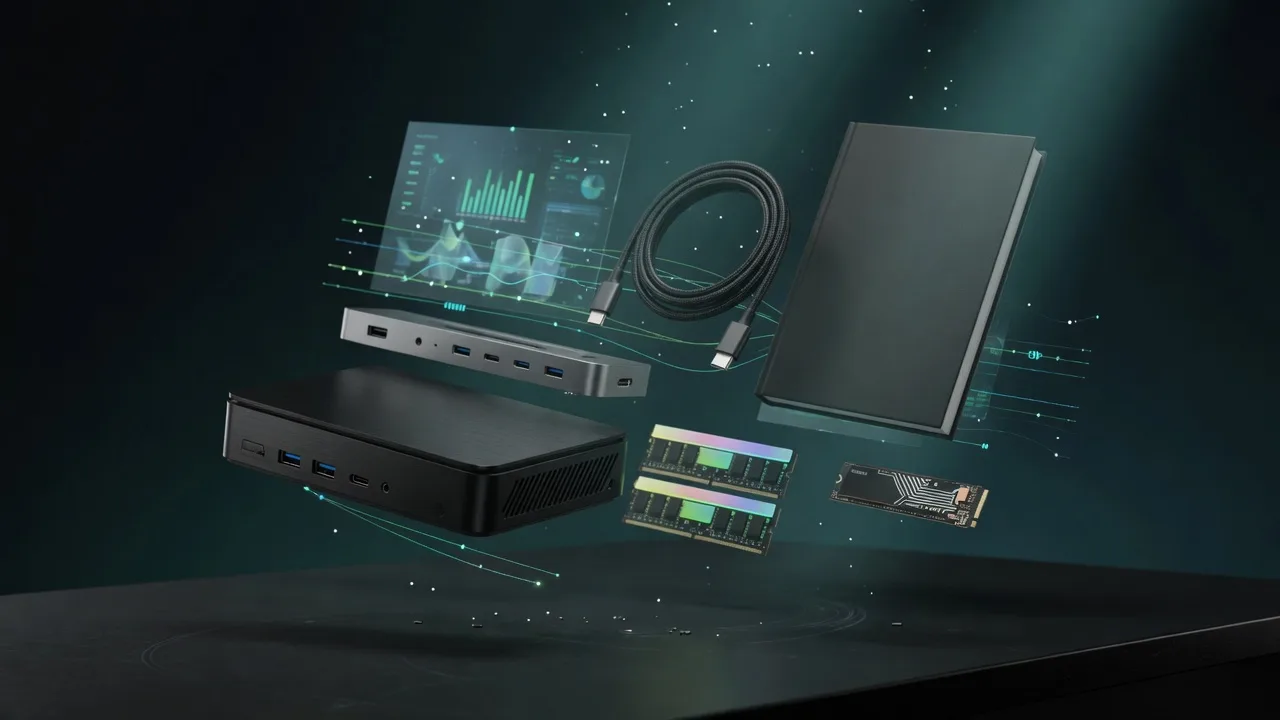
Docks, fast storage, cables, and a UPS sized for a local AI machine.
Rent this class of GPU by the hour before you buy. Live prices from RunPod and Vast.ai.
Find the break-even between buying this hardware and paying for a cloud API.
Mac vs NVIDIA for local inference, if you are still choosing a platform.