- Services
Advertising disclosure: we earn commissions when you shop through the links below.
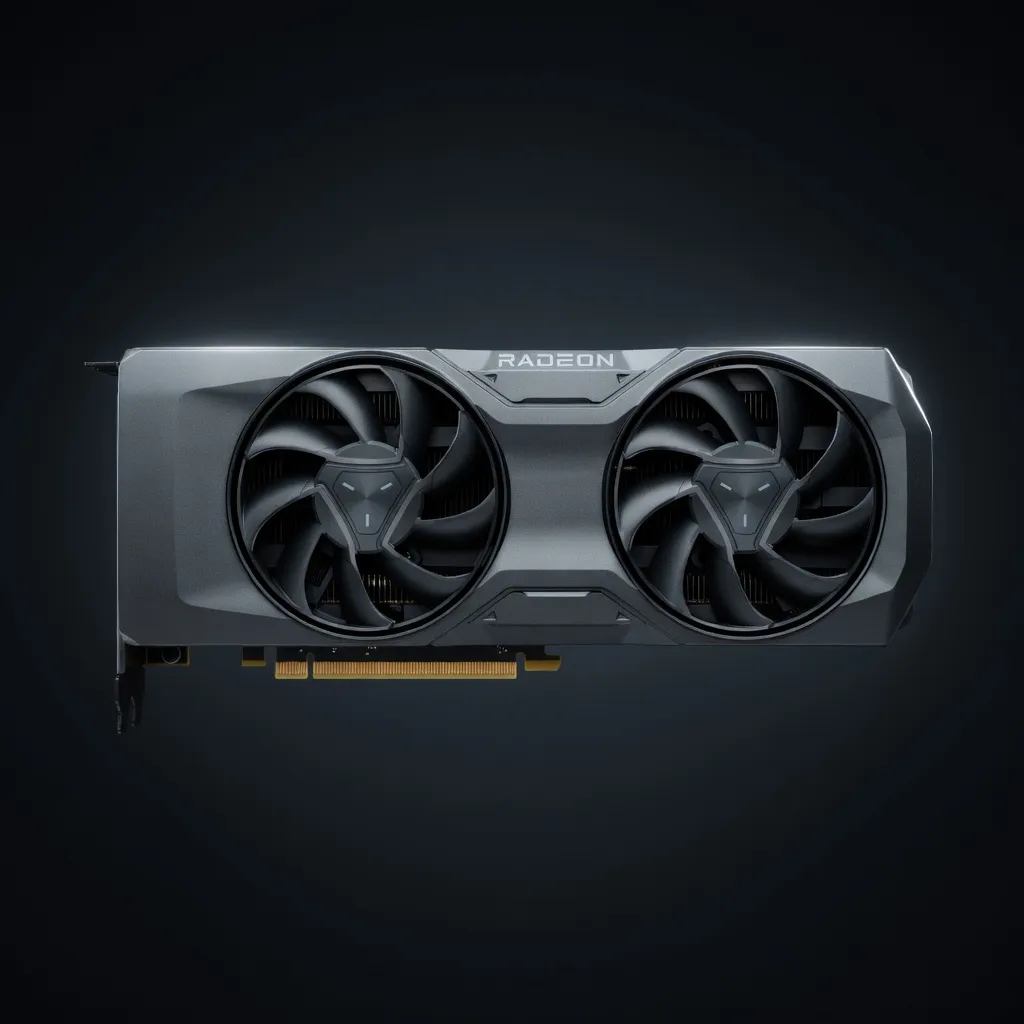
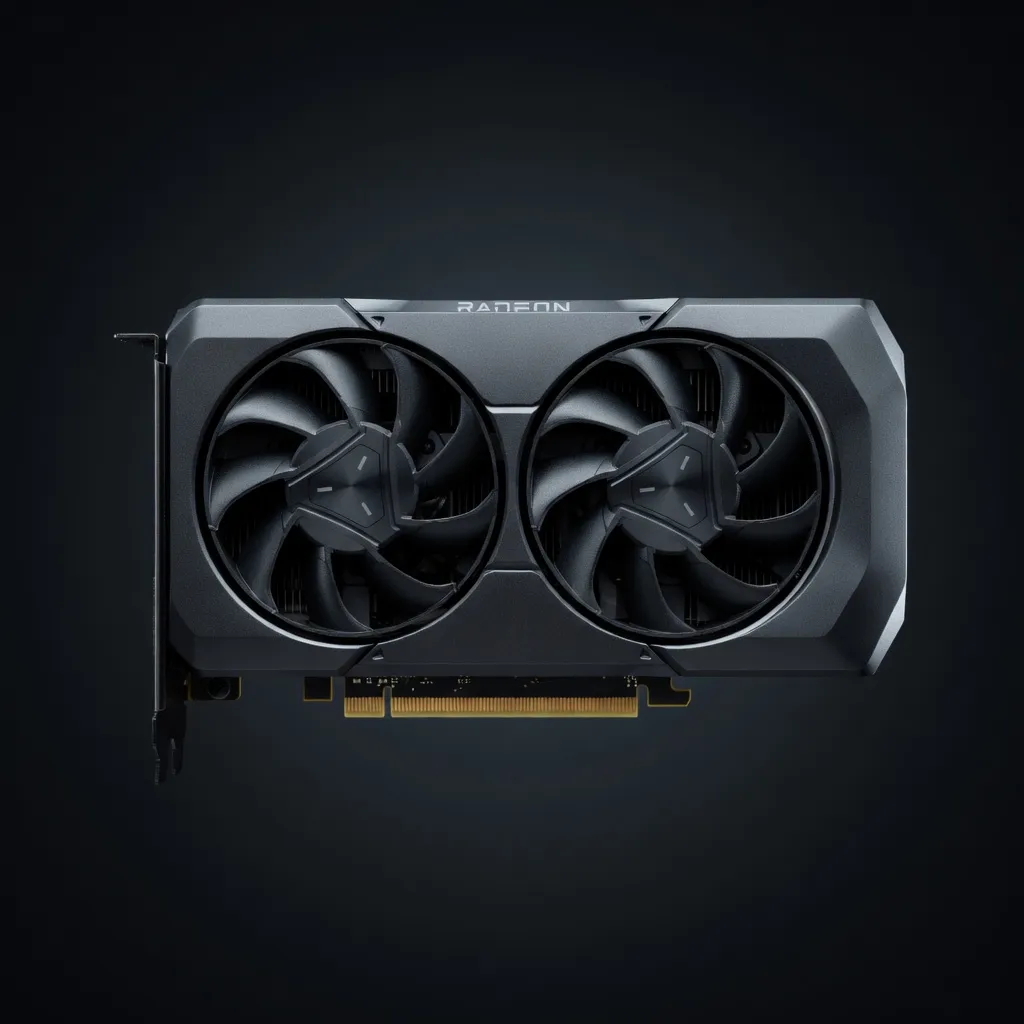
AMD Instinct MI350P is a PCIe add-in accelerator card from AMD built on the CDNA 4 architecture and made on TSMC 3nm and 6nm FinFET. It ships with 144 GB of HBM3E memory running at 4 TB/s, 128 compute units and a 600W board power that can be configured down to 450W. AMD positions it for on-premises inference and RAG pipelines in existing air-cooled servers, with up to eight cards per system, and it supports MXFP4 and MXFP6 plus the ROCm software stack. No list price was published.
Sized for production serving of 70B–200B class models at full or lightly-quantized precision. Overkill for a homelab; right call when the workload pays for itself in token volume. Notably efficient for its compute class — strong perf-per-watt makes it a natural pick for always-on inference.
Generated from this product’s spec sheet. Editor reviews refine it over time.
The AMD Instinct MI350P brings AMD's flagship CDNA 4 data center architecture to a standard dual-slot PCIe 5.0 form factor. Positioned squarely in the enterprise AI accelerator tier, it targets organizations running private inference, retrieval-augmented generation (RAG), and agentic workflows without requiring specialized liquid-cooled infrastructure or dedicated OAM (Open Accelerator Module) baseboards. By packaging 144 GB of high-bandwidth memory into a 10.5-inch, passively cooled chassis card, it functions as a drop-in accelerator for standard 2U to 4U rackmount servers.
For engineering teams evaluating the best hardware for running AI models locally, the MI350P directly addresses the memory capacity bottleneck that limits standard consumer and workstation GPUs. Built on a hybrid TSMC 3nm and 6nm FinFET process, the card packs 73 billion transistors, 128 compute units, and native hardware acceleration for emerging microscaling data formats including MXFP4, MXFP6, and MXFP8. It directly rivals enterprise cards like the NVIDIA H200 NVL and RTX PRO 6000 Blackwell, giving practitioners a high-density, air-cooled alternative for private data centers and local developer clusters.
Running on the ROCm software stack and integrating into popular runtimes like vLLM and Hugging Face TGI, the card is designed to execute massive foundation models on premises. Whether deploying multi-step autonomous pipelines or hosting departmental inference APIs, evaluating the AMD Instinct MI350P for AI workloads centers on two massive advantages: raw memory density on a single PCIe bus and memory bandwidth that keeps token generation latency minimal.
Evaluating hardware for local AI agents in 2026 requires looking beyond raw compute TFLOPS. Memory capacity dictates whether a model fits in memory, while memory bandwidth determines single-batch autoregressive decode speeds. The MI350P is built around those exact priorities:
The headline specification is the 144GB GPU for AI memory footprint. Supplying 144 GB of HBM3E over a 4096-bit bus enables an unprecedented 4 TB/s of peak memory bandwidth in a single PCIe slot. In memory-bound generation phases, token latency scales almost linearly with memory bandwidth. At 4 TB/s, the MI350P delivers roughly four times the throughput of standard GDDR6X workstation setups and outpaces standard PCIe H100 cards.
Compute is equally tuned for low-precision inference. Native microscaling support delivers up to 4.6 PFLOPS in MXFP4 and MXFP6 formats. For teams running mixed-precision pipelines, 1.15 PFLOPS of dense FP16 compute prevents prefill phases from stalling during massive context processing. The card operates within a 600W power envelope, but system administrators can configure it down to 450W in BIOS/ROCm settings to match existing server power and cooling limits without introducing severe thermal throttling.
The AMD Instinct MI350P VRAM for large language models completely alters single-card deployment math. Because 144 GB sits on a single physical accelerator, engineers bypass the multi-GPU tensor parallelism overhead that typically degrades latency when deploying medium-to-large foundation models.
The architectural sweet spot for the MI350P is FP8 and MXFP4. Under native ROCm kernels with vLLM, the card delivers exceptional prompt processing and generation throughput:
The MI350P is not a consumer card for desktop towers; its passive cooling requires high static-pressure server chassis fans, and its 600W dual-slot design requires enterprise-grade EPS/PCIe power delivery. For practitioners cataloging unknown hardware for AI development or planning dedicated local infrastructure, target deployments fall into distinct production categories:
When evaluating the AMD Instinct MI350P vs NVIDIA H200 NVL or the RTX PRO 6000 Blackwell, the deployment decision comes down to software ecosystems, memory capacity, and physical form factor.
For teams running standard transformers via vLLM, SGLang, or Hugging Face on modern Linux servers, the MI350P stands as arguably the best AI chip for local deployment where maximizing single-chassis memory density and token generation speed is the primary operational objective.
The top models this device can run at 4-bit, ranked by fit and speed.
| Model | Grade | Speed | VRAM |
|---|---|---|---|
| Qwen3.5-122B-A10BAlibaba | SS | 118.1 tok/s | 92.2 GB |
| Mixtral 8x22B InstructMistral AI | SS | 73.9 tok/s | 102.7 GB |
| KolibriAleph Alpha | SS | 122.7 tok/s | 69.7 GB |
| Carnice-V2-27bkai-os | SS | 44.2 tok/s | 72.8 GB |
| Qwen3.6-27BAlibaba | SS | 44.2 tok/s | 72.8 GB |
Among 6 similar devices, the AMD Instinct MI350P ranks #2 for memory and #2 for memory bandwidth.
Also in Our Store
Docks, fast storage, cables, and a UPS sized for a local AI machine.

Rent this class of GPU by the hour before you buy. Live prices from RunPod and Vast.ai.

Find the break-even between buying this hardware and paying for a cloud API.
Mac vs NVIDIA for local inference, if you are still choosing a platform.