- Services
Advertising disclosure: we earn commissions when you shop through the links below.
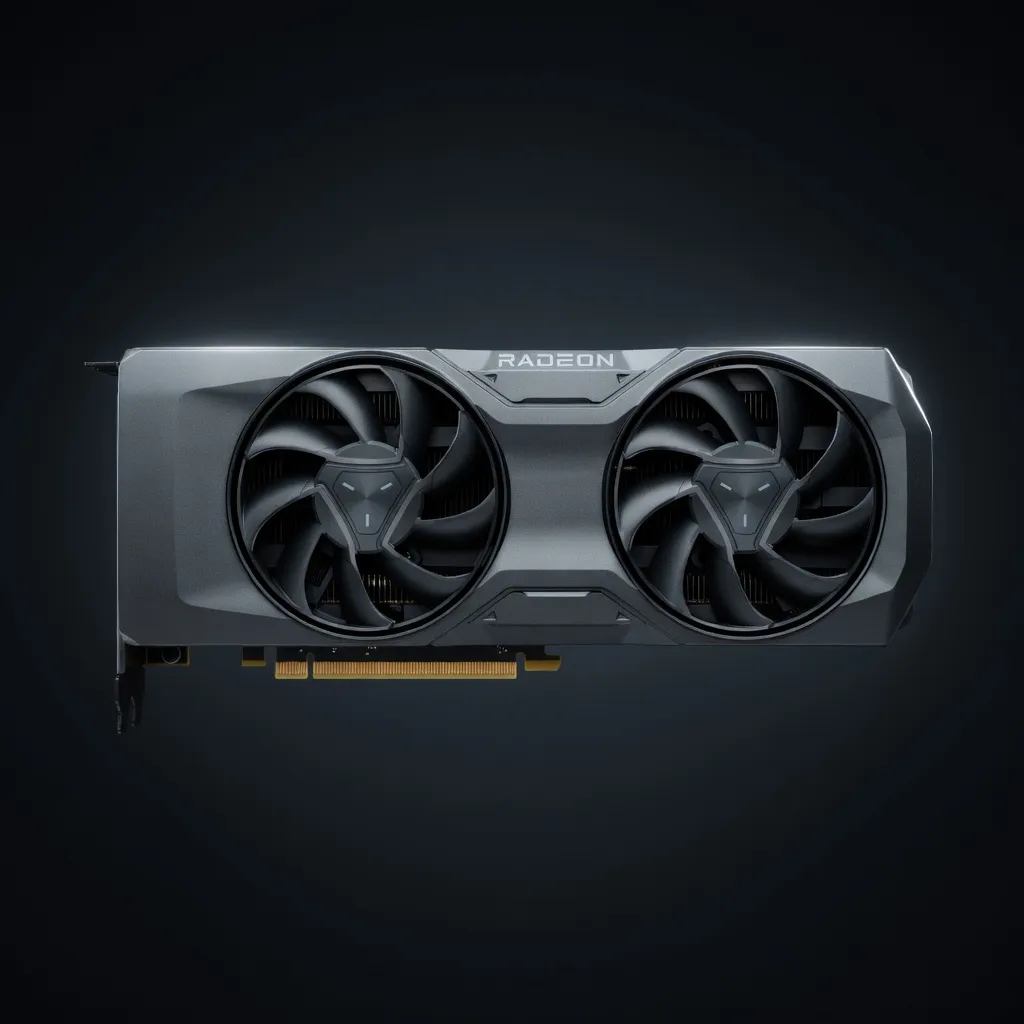
ASRock's Radeon AI PRO R9700 Creator is a workstation GPU based on AMD's RDNA 4 Navi 48 chip. It has 32GB GDDR6 VRAM, 382.7 TFLOPS FP8, and a 2-slot blower design for multi-GPU setups. AMD lists the Radeon AI PRO R9700 at $1299.
A 70B Q4 quant fits with usable context budget left over. Sweet spot if you want a single card that handles every open model worth running locally today.
Generated from this product’s spec sheet. Editor reviews refine it over time.
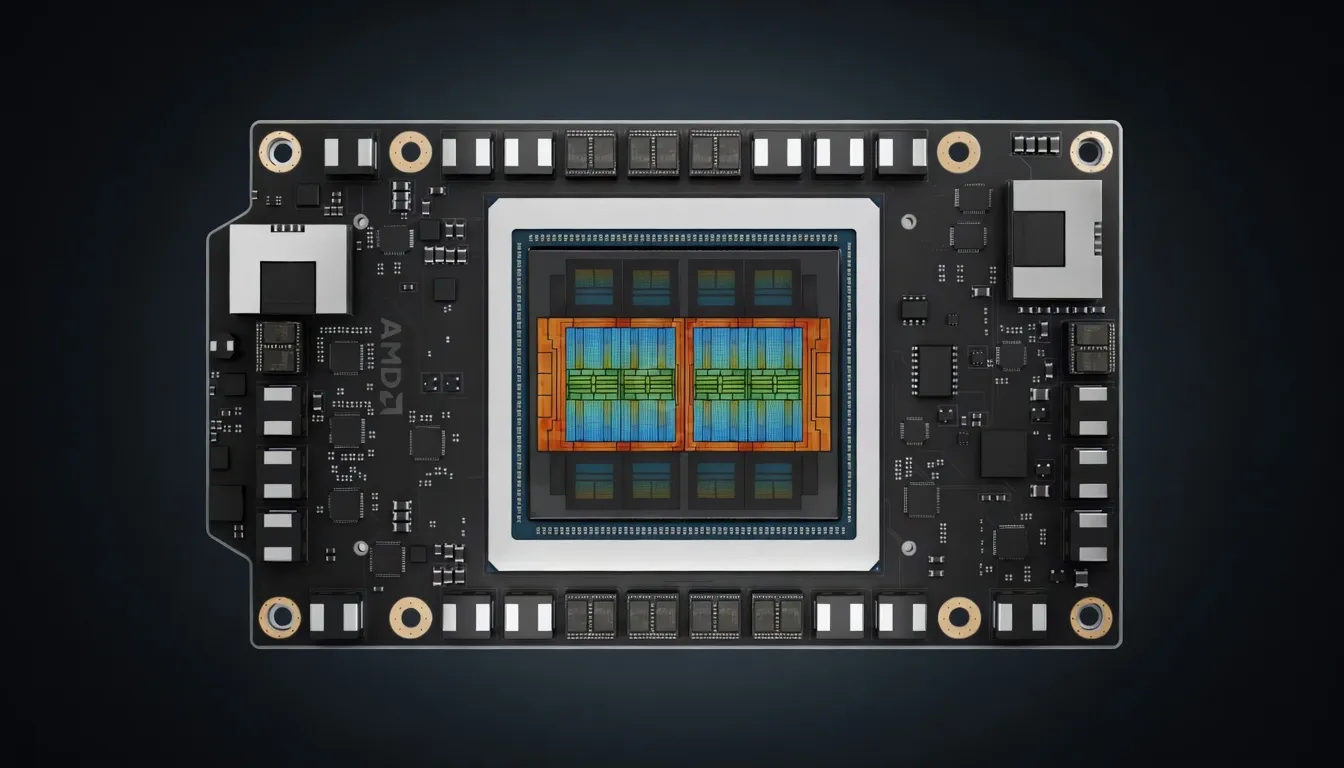
The ASRock Radeon AI PRO R9700 Creator is a workstation GPU purpose-built for local inference, generative AI development, and dense multi-GPU clustering. Built on AMD's RDNA 4 Navi 48 silicon using TSMC's N4P process node, the card delivers 32GB of GDDR6 memory on a clean, dual-slot blower footprint. With AMD positioning the base Radeon AI PRO R9700 at a competitive $1,299 MSRP, ASRock packages this silicon specifically for practitioners who need workstation form factors without the extreme pricing traditionally associated with enterprise accelerators.
For AI engineers evaluating the best hardware for running AI models locally, VRAM capacity is the single biggest bottleneck. Consumer cards have long topped out at 24GB, forcing developers to split models or drop down to aggressive quantization levels that hurt accuracy. By providing a true 32GB GPU for AI in a standard workstation package, ASRock targets the gap between standard desktop gaming hardware and premium data center cards. The inclusion of hardware-level FP8 compute and native ROCm stack support makes this board an accessible foundation for teams running self-hosted intelligence.
The physical design reflects its compute-first orientation. ASRock equips the Creator with a vapor chamber heatsink, Honeywell PTM7950 phase-change thermal interface material, and a lateral blower fan that exhausts all hot air directly out of the rear I/O plate. Powered by a single 16-pin 12V-2x6 connector, the 2-slot card avoids the massive 3.5-slot cooler dimensions of high-end gaming hardware. This makes it an ideal building block for multi-GPU workstations where two, three, or four accelerators must fit into adjacent PCIe slots without suffocating each other.
Understanding the ASRock Radeon AI PRO R9700 Creator AI inference performance requires looking at raw matrix throughput alongside memory subsystem bandwidth. LLM token generation is predominantly memory bandwidth-bound during the decode phase, while prompt processing (prefill) scales with compute density.
The headline architectural change in RDNA 4 is the upgraded matrix execution pipeline. With 382.7 TFLOPS of FP8 throughput, the card provides the math capabilities required for modern low-precision model serving. FP8 cuts memory consumption in half relative to FP16 while maintaining near-lossless output quality across modern architectures.
At 640 GB/s, the 256-bit memory bus matches the throughput necessary to keep inference responsive on mid-sized parameters. While memory bandwidth is lower than cards featuring wider 384-bit buses or HBM, the 32GB capacity lets you run complete models locally that simply crash on 16GB and 24GB cards. When deploying the ASRock Radeon AI PRO R9700 Creator for AI development under Linux with ROCm 7.0, the hardware acts as a high-density, low-friction node for PyTorch, vLLM, and llama.cpp workloads.
With 32GB of VRAM, the ASRock Radeon AI PRO R9700 Creator VRAM for large language models eliminates the awkward trade-offs common to 24GB hardware. It sits comfortably as dedicated hardware for running ~44B parameter models and mid-range mixtures of experts.
During practical ASRock Radeon AI PRO R9700 Creator local LLM benchmarks via ROCm:
Multimodal architectures like LLaVA-1.6, Pixtral 12B, and Qwen2-VL run locally without memory exhaustion. High-resolution image embeddings expand KV cache requirements rapidly, but having 32GB rather than 24GB ensures that document analysis and image-to-text workflows do not trigger out-of-memory errors.
The card targets engineers and builders searching for the best hardware for local AI agents 2026 demands.
When shopping for workstation and desktop accelerators in this price tier, developers typically evaluate the ASRock Radeon AI PRO R9700 Creator vs GeForce RTX 4090, RTX 4080 Super, and the NVIDIA RTX 4000 Ada Generation.
The RTX 4090 offers higher memory bandwidth (1,008 GB/s vs 640 GB/s) and faster raw token generation on small models. However, the RTX 4090 is hamstrung by its 24GB VRAM ceiling, massive 3.5-slot axial cooler footprint, and higher price tag. The ASRock R9700 Creator gives you 33% more VRAM (32GB vs 24GB) at a lower base MSRP ($1,299 vs $1,599+), along with a true 2-slot blower design that enables clean multi-GPU stacking. If your workload requires loading models larger than 24GB without offloading, the R9700 is the functionally superior choice.
The RTX 4000 Ada is NVIDIA's compact workstation card with 20GB of VRAM and a 70W-130W power envelope, retailing around $1,250. While the RTX 4000 Ada excels in power efficiency, the ASRock R9700 Creator delivers 60% more VRAM (32GB vs 20GB), significantly higher FP8 compute throughput, and wider memory bandwidth (640 GB/s vs 360 GB/s). For high-throughput inference and running ~44B parameter models, the R9700 provides substantially better compute value per dollar.
For developers seeking the best AI chip for local deployment where VRAM capacity and thermal predictability take priority over brand ubiquity, the ASRock Radeon AI PRO R9700 Creator represents one of the most cost-effective hardware choices in the 32GB class.
The top models this device can run at 4-bit, ranked by fit and speed.
| Model | Grade | Speed | VRAM |
|---|---|---|---|
| LFM2.5-24B-A2BLiquid AI | SS | 114.7 tok/s | 17.0 GB |
| DiffusionGemma 26B-A4BGoogle | SS | 49.1 tok/s | 22.9 GB |
| Gemma 4 26B-A4B ITGoogle | SS | 46.8 tok/s | 23.8 GB |
| Nemotron 3.5 LightningNvidia | SS | 220.3 tok/s | 18.0 GB |
| North Mini CodeCohere | SS | 61.5 tok/s | 24.0 GB |
Among 6 similar devices, the ASRock Radeon AI PRO R9700 Creator ranks #2 for memory and #3 for memory bandwidth.
Also in Our Store
Docks, fast storage, cables, and a UPS sized for a local AI machine.

Rent this class of GPU by the hour before you buy. Live prices from RunPod and Vast.ai.
Find the break-even between buying this hardware and paying for a cloud API.
Mac vs NVIDIA for local inference, if you are still choosing a platform.